 Blaine Roofing
 Grandview Homes Face a Tougher Climate Than the Rest of the Siding Industry Assumes
Most siding products sold in this country are engineered for an "average" American climate — moderate humidity, moderate temperature swings, occasional storms. Grandview, in Blaine and greater Whatcom County, does not get an average climate. Homes here sit close enough to saltwater that salt air is a constant, low-grade corrosive presence on anything metal or poorly sealed. Rain doesn't just fall here, it drives sideways for days at a time off Pacific storm systems. And for a good stretch of the year, shaded north- and west-facing walls stay damp long enough for moss and algae to take hold and spread.
Siding that isn't built for that combination doesn't fail all at once. It fails slowly — a soft spot behind a downspout, a stretch of trim that's swelled and never gone back down, a green-black film that keeps returning no matter how many times it's washed off. By the time it's visible from the curb, the damage underneath is usually further along than it looks.
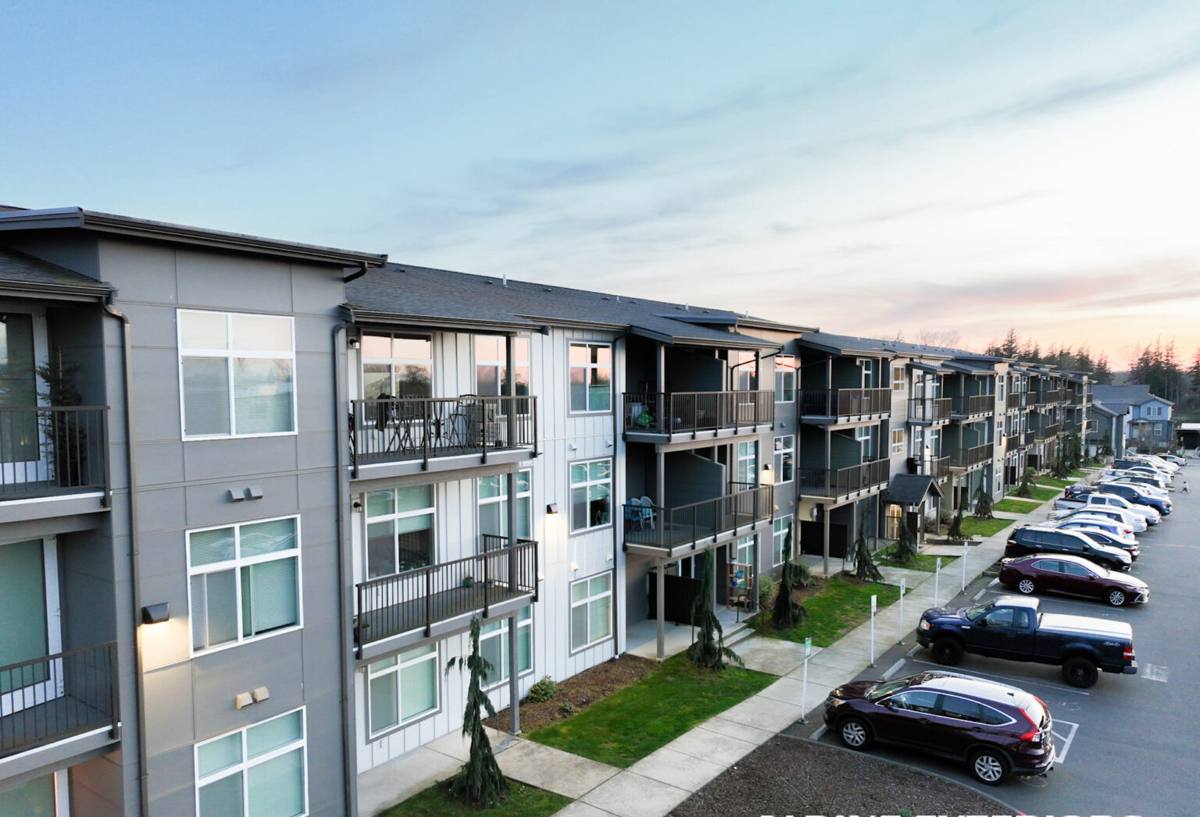
What Salt Air, Driving Rain, and Moss Actually Do to Siding
Salt Air
Airborne salt accelerates corrosion on fasteners, flashing, and any exposed metal trim, and it degrades certain paint and coating systems faster than inland climates would. Siding materials and finishes that aren't formulated to resist it can chalk, fade, or develop surface breakdown years ahead of schedule.
Driving Rain
Wind-driven rain doesn't behave like rain falling straight down. It gets pushed up and under laps, around inside corners, and into any gap in flashing or caulking that wouldn't matter in a calmer climate. Siding systems and installation details that aren't built with that in mind are the ones that develop hidden moisture problems first.
Moss and Algae
Shaded, damp wall sections in this part of Whatcom County support moss and algae growth for much of the year. Beyond the cosmetic issue, sustained organic growth holds moisture against the siding surface, which is exactly the condition that causes rot in wood-based products and coating failure in lower-grade composites.
Signs a Grandview Home Needs Siding Replaced, Not Just Patched
Some siding problems are legitimately repairable. Others are a sign the whole system — siding, house wrap, flashing — has reached the end of its useful life and patching it just delays a bigger repair. Watch for:
- Soft, spongy, or crumbling spots when you press on the siding, especially near the bottom courses and around windows
- Paint that keeps failing in the same spots within a year or two of repainting
- Visible gaps, warping, or buckling in panels or lap boards
- Moss or algae that returns within months of cleaning, particularly on shaded walls
- Rust streaking below nail heads or metal trim
- A musty smell or visible staining on interior walls that share an exterior with damaged siding
- Siding that's original to a home built more than 20-25 years ago and has never been fully replaced
Any one of these on its own might be a repair. Several at once, or damage that keeps recurring in the same area, usually means it's time to talk about full replacement rather than another round of patchwork.
How Different Siding Materials Hold Up Under These Conditions
Homeowners in Grandview are usually choosing between a handful of common siding materials. Here's how they actually perform under sustained salt air, wind-driven rain, and moss pressure — not in a showroom, but on a wall that faces the water.
| Material | Moisture & Rot Behavior | Salt Air Resistance | Moss/Algae Resistance | Typical Maintenance |
|---|---|---|---|---|
| Vinyl | Doesn't rot itself, but seams and gaps let moisture reach the wall behind it undetected | Can become brittle and fade faster in coastal exposure | Growth sits on the surface and is hard to fully remove without damaging the finish | Low, but hides problems rather than preventing them |
| Cedar / primed spruce | Natural wood; absorbs moisture and is vulnerable to rot without diligent upkeep | No inherent resistance; finish breaks down faster near saltwater | Organic material is exactly what moss and algae colonize | High — regular refinishing and sealing required |
| Engineered wood (LP-type) | Better than raw wood but still wood-based; edge and cut-end swelling is a known risk if not perfectly sealed | Moderate; depends heavily on coating integrity | Better than cedar, still an organic substrate | Moderate; installation quality matters a great deal |
| James Hardie fiber cement | Non-combustible, dimensionally stable, engineered to resist moisture-related swelling and rot | Formulated coating systems designed for harsh, coastal-type exposure | Dense, non-organic surface resists sustained growth far better | Low — periodic washing, no refinishing cycle in most cases |
This is exactly why our company made the decision to install James Hardie fiber cement exclusively. We're not saying the other materials are junk — vinyl, cedar, and engineered wood all have a place, and plenty of homes carry them without incident. But for the specific conditions Grandview homes face, we didn't want to keep installing products where the failure mode is "fine for years, then a slow, hidden problem." We wanted one system we could stand behind in this climate, install the same correct way every time, and back with a real warranty.
Why James Hardie Is What We Install in Grandview
James Hardie fiber cement is engineered for exactly the stresses this area produces. It's non-combustible, dimensionally stable so it doesn't swell and shrink the way wood-based products can, and it carries a factory-applied ColorPlus finish that's baked on under controlled conditions rather than field-painted — which matters in a climate where field-applied coatings get tested hard by salt air and driving rain from day one.
Hardie also produces climate-engineered product lines specifically for regions like the Pacific Northwest, built to perform in cold, wet, high-moisture conditions rather than a generic national spec. Combined with a strong transferable warranty, it's the one siding system we're comfortable putting our name behind on every job in Blaine and the surrounding Whatcom County coastline — not just the easy ones.
We install the common Hardie profiles Grandview homeowners tend to choose: horizontal lap siding for a traditional look, panel siding for a more modern or accent application, and shingle-style siding where a textured, dimensional look fits the home. All of it comes in factory-finished ColorPlus colors, which means no repainting cycle the way cedar or field-painted products require.
What a Correct Siding Replacement Actually Involves
Siding replacement is not just removing old boards and nailing up new ones. In a climate like this, what happens underneath the visible siding matters as much as the siding itself. A correct job includes:
- Full tear-off and inspection — removing the old siding down to the sheathing so any hidden rot, soft spots, or previous water damage gets found and dealt with, not covered over.
- Sheathing repair — replacing any damaged sheathing before anything new goes back on. Installing new siding over compromised sheathing just resets the clock on the same problem.
- Weather-resistive barrier — installing a proper house wrap or moisture barrier system as the actual line of defense against wind-driven rain, with correct overlaps and sealing at every seam.
- Flashing at every penetration — windows, doors, hose bibs, vents, and any other wall penetration need correct flashing detail. This is where driving rain finds its way in if it's rushed.
- Proper fastening and gapping — Hardie siding has manufacturer-specified nailing patterns, clearances, and gaps for expansion. Skipping these is the single most common cause of premature failure on fiber cement jobs, and it's almost always an installation error, not a product one.
- Caulking and sealant at transitions — trim boards, corners, and butt joints sealed with products rated for the exposure, not whatever's on hand.
- Final inspection and cleanup — checking every course, corner, and penetration before calling the job done.
Skip or rush any one of these steps and you can end up with siding that looks right for a year or two before problems start showing up behind it — which is exactly the outcome we're trying to prevent by controlling every step of the process ourselves.
What Drives the Cost of a Siding Replacement in Grandview
Every home is different, so we don't quote pricing without seeing the job, but a few factors consistently move the cost up or down on projects in this area:
| Factor | Why It Matters |
|---|---|
| Home size and wall complexity | More square footage and more corners, dormers, and gables mean more cutting, flashing, and labor time |
| Number of existing siding layers | Tear-off and disposal cost scales with how much material has to come off, especially on older homes |
| Sheathing and structural condition | Hidden rot found during tear-off, common on homes that have taken on wind-driven rain for years, adds repair scope |
| Siding profile chosen | Lap, panel, and shingle-style Hardie products differ in material and labor cost |
| Trim and detail work | Window and door trim, corner boards, and fascia detail add labor beyond the flat wall area |
| Access and site conditions | Height, landscaping, and how close the home sits to the water or a slope can affect staging and time on site |
We walk every one of these through with the homeowner before any work starts, so there are no surprises once the crew is on site.
Why Hiring a Crew That Already Works in Grandview Matters
Siding installation isn't just a manufacturer's spec sheet — it's judgment calls made on the wall, in the weather that's actually hitting it. A crew that regularly works Grandview and the rest of the Blaine coastline already knows which walls take the worst of the wind-driven rain, where moss tends to establish first, and how much clearance and sealing detail this specific exposure calls for versus a drier inland job. That's the kind of knowledge that shows up in the small decisions — flashing details, fastener choice, where extra sealant goes — that decide whether siding holds up for decades or starts having problems in year three.
Local, permanent crews also mean accountability. If a question comes up after the job is done, you're calling a company that's still working in your neighborhood, not chasing down a crew that moved on to a different region.
Get a Free, No-Pressure Estimate
If your Grandview home's siding is showing wear from salt air, driving rain, or a moss problem that keeps coming back, it's worth having it looked at before small issues turn into structural ones. Fill out the form below for a free estimate — we'll walk the exterior with you, explain exactly what we see, and lay out what a correct James Hardie replacement would involve for your home, with no pressure either way.