 Blaine Roofing
 Siding Repair in Grandview: A Different Kind of Wear
Grandview sits in the rural, wind-exposed stretch of Whatcom County just south and east of Blaine, close enough to Drayton Harbor and the Strait of Georgia that salt air is part of daily life, not an occasional nuisance. Add in driving rain that comes sideways off the water during winter storms and a moss season that can stretch from October well into spring, and you have a climate that is genuinely harder on exterior siding than most inland parts of Washington. Homes here don't fail because the siding was a bad product — they fail because that product wasn't matched to this climate, or wasn't installed with this climate in mind.
We work Grandview regularly, which means we're not learning the area's weather patterns on your dime. We already know which elevations catch the worst wind-driven rain, which rooflines shed water onto siding instead of away from it, and which north-facing walls hold moisture long enough to grow moss every single year. That local knowledge changes how we diagnose and repair a damaged wall — and it's the difference between a patch that lasts and one you'll be calling about again in two winters.
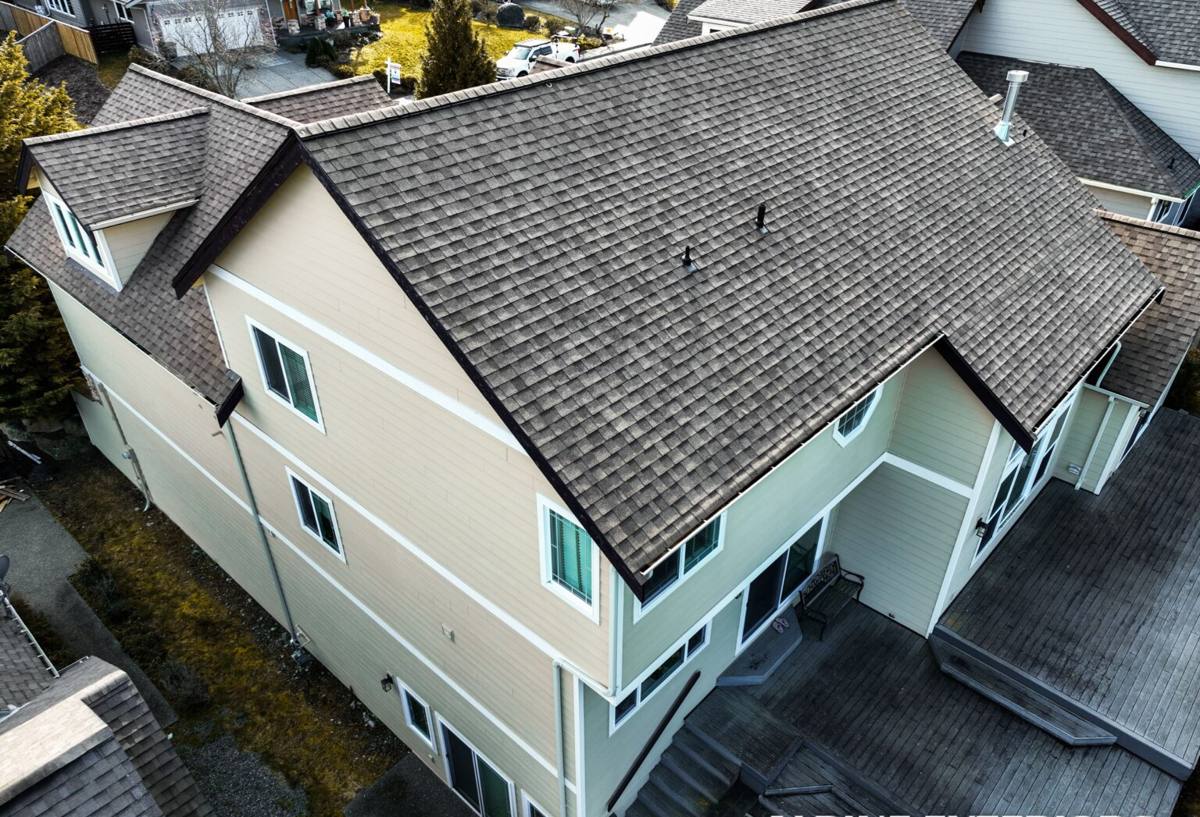
Signs Your Grandview Home Needs Siding Repair
Siding damage in this climate rarely announces itself with a dramatic failure. It shows up as small, easy-to-ignore symptoms that get worse every wet season they go unaddressed. Walk your exterior — especially the sides that face prevailing wind and rain — and look for the following:
- Cracked, split, or chipped siding panels, especially near corners and window trim
- Soft, spongy, or discolored spots when you press on the siding by hand
- Paint that's peeling, bubbling, or chalking well ahead of schedule
- Caulk joints that have shrunk, cracked, or pulled away from trim and seams
- Persistent green or black staining that comes back within weeks of cleaning
- Visible gaps at butt joints where panels meet, letting water track behind the siding
- Warping or bowing along a panel's length, particularly on shaded, damp walls
Any one of these on its own might be cosmetic. Several together, especially on the same wall, usually means moisture has been getting behind the siding for a while — and that's a problem that grows underneath the surface faster than it shows on top.
Why Moisture Intrusion Is the Real Concern
Fiber cement siding itself handles rain well. What fails is almost always the system around it — flashing, house wrap, caulking, or fastening — not the panel material. Once water finds a way behind the siding through a bad joint or missing flashing, it can sit against the sheathing and framing for months at a time in a climate like Blaine's, where things simply don't dry out quickly between storms. That's why we always check what's happening behind a damaged section, not just what's visible on the surface.
Repair or Replace? How We Make the Call
Not every damaged section needs a full re-side, and not every crack is a quick fix. The right call depends on how far the damage has spread, what condition the material underneath is in, and how old the existing siding is. Here's how we generally weigh it:
| Situation | Typical Approach | What We're Checking |
|---|---|---|
| Isolated crack, impact damage, or a single failed joint | Targeted panel or section repair | Sheathing behind the damaged area is dry and sound |
| Repeated moss/algae staining on one wall, siding otherwise intact | Cleaning, caulk renewal, possible spot repair | Airflow, shading, and drainage around that wall |
| Multiple soft spots or widespread cracking across one or more walls | Larger-scale repair or partial re-side | How far moisture has traveled behind the siding |
| Original siding is near or past its expected service life | Full replacement recommended | Whether repair cost approaches replacement cost |
| Sheathing or framing shows rot when opened up | Replacement of affected framing, then new siding | Structural soundness, not just surface appearance |
We'll always tell you honestly when a repair is the right, cost-effective answer — and just as honestly when patching a section would be throwing money at a wall that needs more. There's no benefit to us in overselling a job, and a poorly matched repair on an aging wall usually costs a homeowner more in the long run than doing it right the first time.
What a Correct Siding Repair Actually Involves
A repair that holds up through another decade of Blaine winters takes more steps than swapping a cracked board for a new one. Done right, it looks like this:
1. Open It Up and Check Behind the Siding
Before anything gets replaced, we pull the damaged section and inspect the house wrap, flashing, and sheathing behind it. If there's hidden moisture or soft sheathing, that gets addressed first — patching over a wet wall just traps the problem.
2. Match Material and Profile
We repair exclusively with James Hardie fiber cement, matched to your home's existing plank width, exposure, and texture. Where the original siding carries a factory ColorPlus finish, we match the color line rather than guessing with field-mixed paint, which weathers differently over time and creates a visible patch.
3. Correct Flashing and Fastening
Every seam, joint, and penetration gets proper flashing and fastened according to Hardie's installation specifications — not just caulked over. Fastener placement and spacing matter for both the panel's long-term performance and its warranty coverage.
4. Seal, Prime, and Finish
Cut edges get sealed, joints get properly caulked with a product rated for exterior movement, and any exposed material is primed to manufacturer standard before final finishing. Skipping this step is one of the most common reasons a "repair" fails again within a year or two.
Why We Repair Only With James Hardie Products
We install and repair exclusively with James Hardie fiber cement — we don't carry vinyl, LP SmartSide, cedar, or other fiber cement brands as repair material, even for a small patch. That's a deliberate standard, not a lack of options.
Mixing siding materials on one wall creates real problems in a climate like this: different products expand, contract, and absorb moisture at different rates, which stresses the joints between them over time. A vinyl or wood patch on a fiber cement wall also weathers differently, so the color and texture mismatch becomes more visible every year, not less. And patching a Hardie installation with a non-Hardie product can affect your existing warranty coverage on the surrounding, undamaged siding.
James Hardie's HZ5 product line is engineered for the kind of marine, moisture-heavy climate Whatcom County sits in, with moisture and mold resistance built into the fiber cement formulation itself. When we repair with the same system your home already has — or transition a full wall to it — everything ages the same way, at the same rate, with one coherent warranty behind it.
Our Grandview Siding Repair Process
We keep the process straightforward because a siding repair shouldn't feel like a mystery:
- Free on-site inspection. We look at the damage, check behind it where needed, and take moisture readings if there's any sign of intrusion.
- Honest scope and written estimate. You get a clear explanation of what's actually wrong, what we recommend, and why — repair or replace, no upsell.
- Scheduled repair work. We match material, correct any underlying flashing or moisture issues, and install to Hardie's specifications.
- Finish and cleanup. Caulking, priming, and color finishing are completed to blend with the existing wall, and the site is left clean.
Why a Crew That Already Works Grandview Matters
Siding repair isn't one-size-fits-all across Whatcom County. A wall that faces open water in Grandview takes a different beating than a sheltered wall a mile inland, and the moss patterns on a shaded north side here don't behave the same way they would in a drier part of the state. A crew that already works this specific area brings a few practical advantages:
- We recognize which walls and elevations are most exposed to wind-driven rain before we even open them up
- We know how aggressively moss and algae establish here and what maintenance actually keeps it off
- We can respond faster to a call because we're not driving in from far outside the area
- We've seen how different flashing and joint details hold up over multiple wet seasons locally, not just in a manufacturer's spec sheet
That familiarity shows up in fewer surprises once a wall is opened, and in repairs that are built for the specific conditions your home actually faces, not a generic set of assumptions.
Keeping Repaired Siding Protected Going Forward
A good repair buys you years, but a little upkeep afterward buys you more. A short annual routine goes a long way in this climate:
- Keep gutters clear so water sheds off the roofline instead of running down the siding face
- Trim back shrubs and trees that trap moisture against a wall or block airflow
- Rinse moss and algae growth before it has a chance to establish, especially on shaded walls
- Check caulk joints once a year and re-seal any that have shrunk or cracked
- Walk the exterior after major windstorms and check for new impact damage or loosened panels
None of this takes much time, and it's the cheapest insurance you have against the next repair call.
If you're seeing cracking, staining, soft spots, or failing caulk on your Grandview home, we're happy to take a look and give you a straight answer on what it needs. Reach out for a free, no-pressure estimate using the form below.