 Blaine Roofing
 Why Siding Takes a Beating in Grandview
Grandview sits close enough to the water that salt-laden air is a constant, low-grade stress on every exterior surface in the neighborhood. Add in the driving rain that blows sideways during Whatcom County's winter storms and the long stretch of damp, low-sun months that let moss and algae get a foothold on north-facing walls, and you've got a climate that finds every weakness in a siding system. This isn't a page about siding in general — it's about what siding installation needs to look like specifically for homes in Grandview, given what this particular stretch of Blaine throws at a house year after year.
Most siding failures we see in this area aren't really about the siding material itself. They're about installation shortcuts that don't show up as problems for a year or two, then compound quietly behind the wall until a homeowner is looking at soft trim, stained sheathing, or a professional building assessment they wish they'd stumbled into sooner.
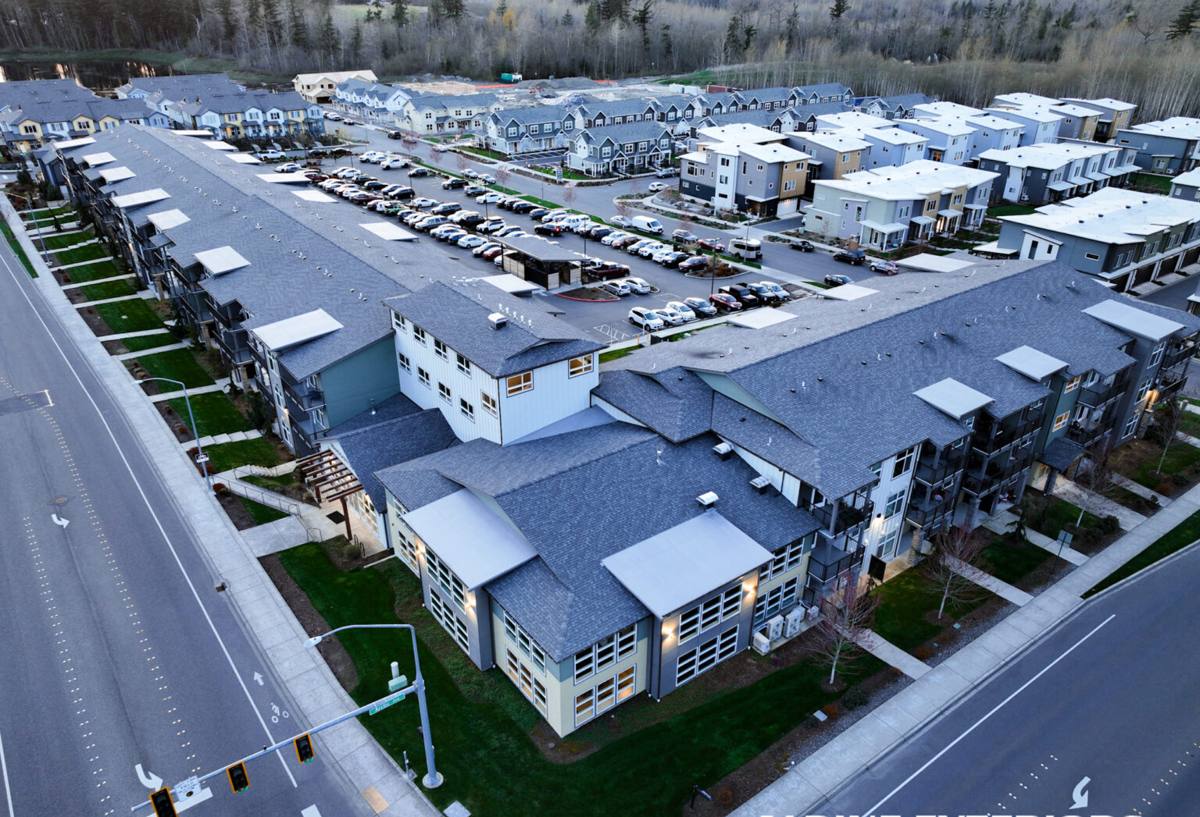
What Grandview's Climate Actually Demands From a Siding Job
Salt Air and Corrosion
Coastal salt air accelerates corrosion on fasteners, flashing, and trim hardware that isn't rated for it. Standard interior-grade fasteners or mismatched metals at flashing joints will show rust streaks and early failure well before a comparable installation further inland. Every fastener and flashing detail on a Grandview job needs to be selected with that exposure in mind, not just whatever's fastest to install.
Driving, Wind-Driven Rain
Rain that comes in sideways doesn't behave like rain that falls straight down. It gets pushed up under laps, into butt joints, and around window and door trim that would stay dry in a calmer climate. A siding system built for this needs a real drainage plane behind it — not just careful caulking on the surface — so that any water that does get past the cladding has somewhere to go besides your sheathing.
Moss, Algae, and the Long Wet Season
Shaded and north-facing walls in this part of Whatcom County stay damp for months at a stretch, which is exactly what moss and algae need to establish themselves. Porous or absorbent siding materials hold that moisture at the surface, feeding the growth cycle. The right material and finish resist that colonization instead of hosting it.
Signs Your Grandview Home's Siding Is Losing the Battle
- Soft or spongy spots when you press on siding near the bottom courses or around window trim
- Visible moss or dark streaking that returns within months of being cleaned off
- Paint that's bubbling, peeling, or wearing unevenly on the walls that face prevailing wind and rain
- Gaps opening up at butt joints, corners, or trim where caulking has failed
- Rust staining running down from fasteners, flashing, or trim hardware
- A musty smell or visible staining on interior walls that back up to exterior siding
Any one of these on its own might be minor. Several together, especially on the sides of the house that take the worst of the weather, usually mean the siding system has been letting moisture in for a while.
Why We Install Only James Hardie Fiber Cement
We standardized on James Hardie fiber cement siding and don't install vinyl, LP SmartSide, Cemplank, Allura, or unfinished cedar or spruce. That's a deliberate choice, not a lack of options. Fiber cement is non-combustible, dimensionally stable in wet-dry cycling, and doesn't feed mold or moss the way wood-based products can. James Hardie's ColorPlus factory finish is baked on under controlled conditions rather than field-applied, which means better adhesion and more consistent protection against the exact salt-air and UV exposure this part of Blaine deals with.
Hardie also engineers specific product lines for different climate zones — including an HZ5 designation built for regions with more moisture and freeze-thaw cycling, which fits Whatcom County's marine climate better than a one-size-fits-all product. And the warranty is transferable, which matters to homeowners in Grandview who may sell within the product's service life.
We're not going to tell you vinyl or engineered wood products are junk — they have real uses and plenty of homes wear them fine in gentler climates. But for what this neighborhood's weather does to a wall over 20-plus years, we've made our call, and we stand behind it with what we put on our own customers' homes.
What a Correct Installation Actually Involves
The material is only half the equation. A James Hardie installation done to spec in a coastal, high-rain environment includes several details that are easy to skip and hard to notice until they fail:
- A drainage rainscreen gap behind the siding so incidental moisture drains and airs out instead of sitting against the sheathing
- A continuous water-resistive barrier, properly lapped and sealed at every penetration
- Corrosion-resistant fasteners, correctly spaced and driven per Hardie's published installation instructions
- Flashing at every window, door, and roof-to-wall intersection — not caulk used as a substitute for flashing
- Factory-cut edges and field cuts sealed per Hardie's specifications so the fiber cement's protection isn't compromised at the cut
- Minimum ground clearance maintained so splash-back moisture doesn't sit against the bottom course
- Caulking used only where Hardie specifies it — over-caulking traps moisture rather than shedding it
Skip any one of these and the siding can still look fine going up. The problems show up later, and by then they're behind a finished wall.
Our Installation Process
1. Assessment and Moisture Check
We start by inspecting the existing siding, trim, and — where accessible — the sheathing underneath for signs of trapped moisture or rot. This tells us what we're actually working with before a single panel comes off.
2. Tear-Off and Substrate Repair
Old siding comes off, and any damaged sheathing or framing gets repaired or replaced before anything new goes up. Installing new siding over compromised substrate just hides the problem.
3. Weather Barrier and Rainscreen
We install a continuous water-resistive barrier and a rainscreen drainage gap, sized and detailed for the exposure that particular wall gets — a north-facing wall in Grandview often needs different attention than a sheltered south wall on the same house.
4. Hardie Panel or Lap Installation
Siding goes up to James Hardie's published fastening and clearance specifications, with corrosion-resistant hardware appropriate for this coastal air.
5. Trim, Flashing, and Sealant
All flashing gets installed before trim goes on, and sealant is applied only where the manufacturer calls for it — sealed correctly, not just liberally.
6. Final Walkthrough
We walk the finished job with the homeowner, point out what was done and why, and leave you with a clear picture of what maintenance — if any — the ColorPlus finish will need going forward.
Cost Factors for Siding Installation in Grandview
| Factor | Why It Matters | What to Expect Locally |
|---|---|---|
| Home size and story count | More wall area and higher work require more material, labor, and staging | Two-story homes with wraparound exposure see higher totals than single-story ranch layouts |
| Tear-off and sheathing condition | Rot or moisture damage found during tear-off adds repair scope before new siding goes up | Homes with long-neglected siding or past moisture intrusion often need some sheathing repair |
| Trim and architectural detail | Corners, window surrounds, and decorative trim add labor time beyond flat wall runs | Varies widely by home style — simpler elevations install faster and cost less |
| Wind and rain exposure by elevation | Walls facing prevailing weather need more careful flashing and drainage detailing | Grandview homes with unobstructed exposure to wind-driven rain need extra attention on those elevations |
| Site access | Tight lots, fencing, or landscaping can slow material staging and cleanup | Typical suburban lots in the area are straightforward; heavily landscaped yards take longer |
We give firm, itemized numbers after an in-person assessment — broad ranges without seeing the actual condition of your walls aren't useful to you, and we'd rather not guess.
Why It Matters That We Already Work in Grandview
A crew that's installed siding on other homes in this neighborhood already knows how the wind moves across these lots, which elevations take the worst of the salt spray and driving rain, and how Blaine's permitting and inspection process works for exterior work. That's not a marketing point — it changes real decisions on the job, like where to add extra flashing attention or which walls warrant a wider rainscreen gap. A crew seeing this microclimate for the first time is guessing at details that a crew with local experience already has dialed in.
Living With Hardie Siding After Installation
One advantage of the ColorPlus factory finish is that it's built to hold color and resist the fading, chalking, and moss staining that field-applied paint struggles with in this climate. Maintenance is mostly periodic rinsing to keep salt residue and organic growth from building up, and a visual check after major storms for any damaged panels or open joints. It's a meaningfully lower-maintenance system than repainting cycles on wood siding, which matters in a climate that doesn't give paint an easy time.
If your Grandview home's siding is showing its age, or you're planning ahead rather than waiting for a problem, we're glad to walk your property, look at what your walls are actually dealing with, and give you a straight, no-pressure estimate. Use the form below to get started.