 Blaine Roofing
 Building New in Grandview Means Getting the Windows Right the First Time
When you're framing a new home in Grandview, the windows aren't an upgrade you can revisit in a few years — they're part of the building envelope from day one. Get the installation right during construction and you've got a weathertight house for decades. Get it wrong, and the mistake gets buried behind siding and trim, where it quietly does damage until someone finds a stain on a wall or soft trim around a sill. Grandview's location near the water in Blaine, Whatcom County, makes that first installation more important than it would be in a drier, more sheltered part of the state. Salt-laden air off the bay, wind-driven rain, and a moss season that runs most of the year all put steady pressure on a window's flashing, frame, and hardware.
This page focuses specifically on new-construction window installation for Grandview properties — not repairs, not pocket replacements in an existing wall, but windows going into open framing as part of a new build or a major addition. That distinction matters more than most homeowners realize, and it changes almost everything about how the job should be done.
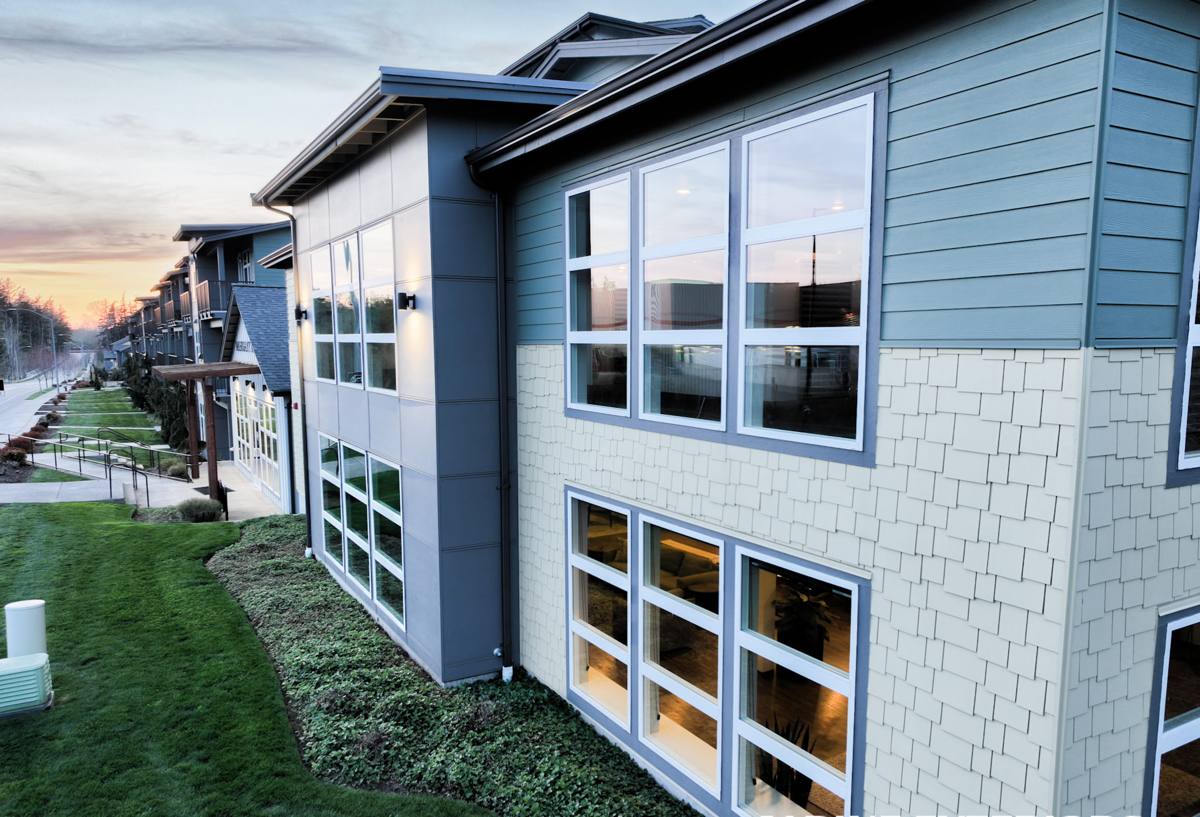
New Construction vs. Replacement: Why the Distinction Matters
A replacement window gets fitted into an existing, already-sided opening, working around what's already there. A new-construction window is installed before the siding goes on, with a nailing fin that gets integrated directly into the wall's water-resistive barrier (WRB) and flashing system. That open access is an advantage — it lets us build a proper drainage path around every opening instead of patching one in — but it also means there's no room for shortcuts. Whatever gets built into the wall at this stage is what the house lives with.
- Replacement windows rely on the existing opening and trim; new-construction windows are flashed directly into the sheathing and WRB.
- New-construction installs happen before siding, so the flashing sequence is fully visible and inspectable — there's no guessing what's behind the wall.
- Mistakes at this stage (missed sill pan, wrong flashing order, unsealed fastener heads) don't show up for years, but they're far more expensive to fix once siding and interior finishes are in place.
What Grandview's Climate Actually Demands
Salt Air and Corrosion
Grandview's proximity to the water means homes here deal with a level of airborne salt that inland Whatcom County properties simply don't. Salt accelerates corrosion on fasteners, window hardware, and unprotected metal flashing. Standard fasteners and hardware that hold up fine 20 miles inland can start showing pitting and rust within a few seasons this close to the bay. We spec corrosion-resistant fasteners and hardware for coastal Blaine builds as a standing practice, not an upsell.
Driving Rain
Storms coming off the Strait of Georgia and Boundary Bay don't just drop rain — they push it sideways into the wall. A window that would stay dry in a calm rain can take on water at the sill and side jambs when wind is driving the water horizontally. That's exactly the load case that new-construction flashing details are meant to handle, provided they're built correctly from the start.
The Long Moss Season
Whatcom County's moss season stretches long — mild temperatures and near-constant moisture give moss and algae months to establish themselves on north-facing walls, sills, and anywhere water sits instead of draining. Around a window, moss growth is usually a symptom of a drainage problem: water isn't shedding away from the opening the way it should. A correctly sloped sill pan and properly lapped flashing keep water moving off the wall instead of lingering long enough for moss to take hold.
What a Correct New-Construction Installation Actually Involves
The window itself is only one part of the assembly. The flashing and drainage details around it are what actually keep water out, and they have to be built in a specific order so each layer sheds onto the one below it — never the reverse.
- Rough opening prep — checking the opening is square, correctly sized, and structurally sound before anything goes in.
- Sill pan flashing — a sloped, back-dammed pan under the window that catches any water that gets past the frame and directs it back outside, rather than into the wall cavity.
- Jamb (side) flashing — installed over the sill pan legs, tying the window's sides into the WRB in the correct shingle-lap order.
- Window installation — set, leveled, and fastened per the manufacturer's specific instructions, since fastening patterns affect warranty coverage.
- Head flashing — installed last, lapping over the jamb flashing and integrated with the WRB above the opening so water is directed out and over the window, never behind it.
- Sealant at the right points only — modern flashing systems rely on a drainage plane, not a fully sealed frame. Sealing the wrong spots can trap water instead of letting it drain, which is a common mistake we specifically avoid.
Every step in that order matters. Flashing installed out of sequence — head flashing before jamb flashing, for instance — creates a lap that directs water into the wall instead of away from it. It looks fine from the outside and fails quietly, which is exactly the kind of mistake that's cheap to avoid during construction and expensive to fix afterward.
A Quick Pre-Siding Checklist
- Sill pan is sloped to the exterior and back-dammed, not flat.
- Flashing is lapped shingle-style — sill, then jambs, then head, in that order.
- Fasteners are corrosion-resistant, appropriate for a coastal, marine-influenced site.
- Window is fastened per the manufacturer's schedule, not "close enough."
- WRB is properly lapped and taped into the flashing system at every seam.
- Sealant is used only at manufacturer-specified points — not smeared across the whole flange.
- Rough opening dimensions match the window unit before it's set, with no forcing or shimming to make an ill-fitting unit work.
Choosing a Window Frame Material for This Site
Frame material matters more here than it would on a sheltered inland lot, because salt air and constant damp affect materials differently over time. There's no single right answer for every home — it depends on your budget, your home's design, and how much long-term maintenance you want to take on.
| Frame Material | Coastal/Salt-Air Performance | Maintenance | General Cost Position |
|---|---|---|---|
| Vinyl | Good — won't corrode or rot; UV-stable options hold up well | Low | Most affordable |
| Fiberglass | Very good — dimensionally stable, resists moisture and salt exposure well | Low | Mid to upper-mid |
| Aluminum-clad wood | Good exterior protection, but cladding seams and fasteners need attention near salt air | Moderate | Upper-mid to high |
| Solid wood | Requires the most protection and upkeep in a damp, salt-influenced climate | High | High |
We'll talk through these trade-offs against your design goals rather than pushing one product line. The honest answer is that any of these can perform well in Grandview if it's specified correctly and installed with the flashing details above — but they carry very different long-term maintenance expectations.
How We Approach New-Construction Window Work in Grandview
We coordinate directly with your builder or general contractor so window installation lines up with the framing and siding schedule instead of becoming a bottleneck. On a typical new-construction job in this area, that looks like:
- Reviewing rough openings against window schedules before units arrive, catching sizing issues before they become framing problems.
- Installing sill pans and flashing in the correct sequence, photographed at each stage for the record before siding covers it.
- Setting and fastening each window to the manufacturer's specification, which protects your warranty coverage.
- Coordinating with the WRB and siding trades so laps and seams tie together correctly rather than being left as someone else's problem.
- Walking the finished openings with you or your builder before siding closes them in, since this is the one point where every detail is still visible.
What Drives Cost on a New-Construction Window Job
| Factor | Why It Matters |
|---|---|
| Number and size of openings | More and larger windows mean more units, more flashing runs, and more labor hours |
| Frame material | Vinyl, fiberglass, and clad-wood options carry different unit costs and installation needs |
| Glazing package | Higher-performance glass for energy code compliance or noise reduction adds cost per unit |
| Wall height and access | Second-story and vaulted openings take more time and equipment than ground-floor windows |
| Site exposure | Wind- and rain-exposed elevations facing the water may warrant extra flashing detail |
| Scheduling coordination | Tight coordination with framing and siding crews affects labor efficiency |
We're happy to walk through specifics with your plans in hand rather than quoting broad numbers that don't reflect your actual home.
Why Working With a Crew That Already Knows Grandview Matters
A window installer who mainly works drier, inland parts of Whatcom County can do a technically correct install and still under-spec it for a site like Grandview — using standard fasteners where corrosion-resistant ones belong, or not paying extra attention to the elevations that take the brunt of wind-driven rain off the bay. Crews who work this area regularly know which walls face the weather, how much moss pressure to expect on shaded and north-facing elevations, and where the local building department wants extra documentation on flashing details before they'll sign off on a rough-in inspection. That local familiarity doesn't replace doing the installation correctly — it just means fewer surprises and fewer callbacks once the house is finished and lived in.
Get a Straight Answer on Your Windows
If you're framing a new home or addition in Grandview and want your windows installed the right way the first time, we're glad to take a look at your plans and talk through what your specific site needs. There's no pressure and no obligation — just a straightforward estimate and an honest rundown of your options. Use the form below to get started.