 Blaine Roofing
 Why Ferndale Roofs Take a Different Kind of Beating
Ferndale sits close enough to the water that salt air is a real factor in how roofing materials age, and it's far enough into Whatcom County's wet belt that driving rain off winter storms hits roofs at an angle, not just straight down. Add a moss season that can stretch from fall through spring in shaded, north-facing sections of a roof, and you've got three separate stressors working on the same shingles, flashing, and decking at the same time. Most storm damage repair calls we get in Ferndale aren't the result of one dramatic event — they're the result of a roof that was already weakened by salt exposure and moss moisture, then finally gave way during a windstorm or heavy rain event.
That combination matters when you're deciding how to repair storm damage correctly. A patch that would hold up fine in a drier inland climate can fail here within a season or two if the underlying moisture and salt-air corrosion issues aren't addressed at the same time.
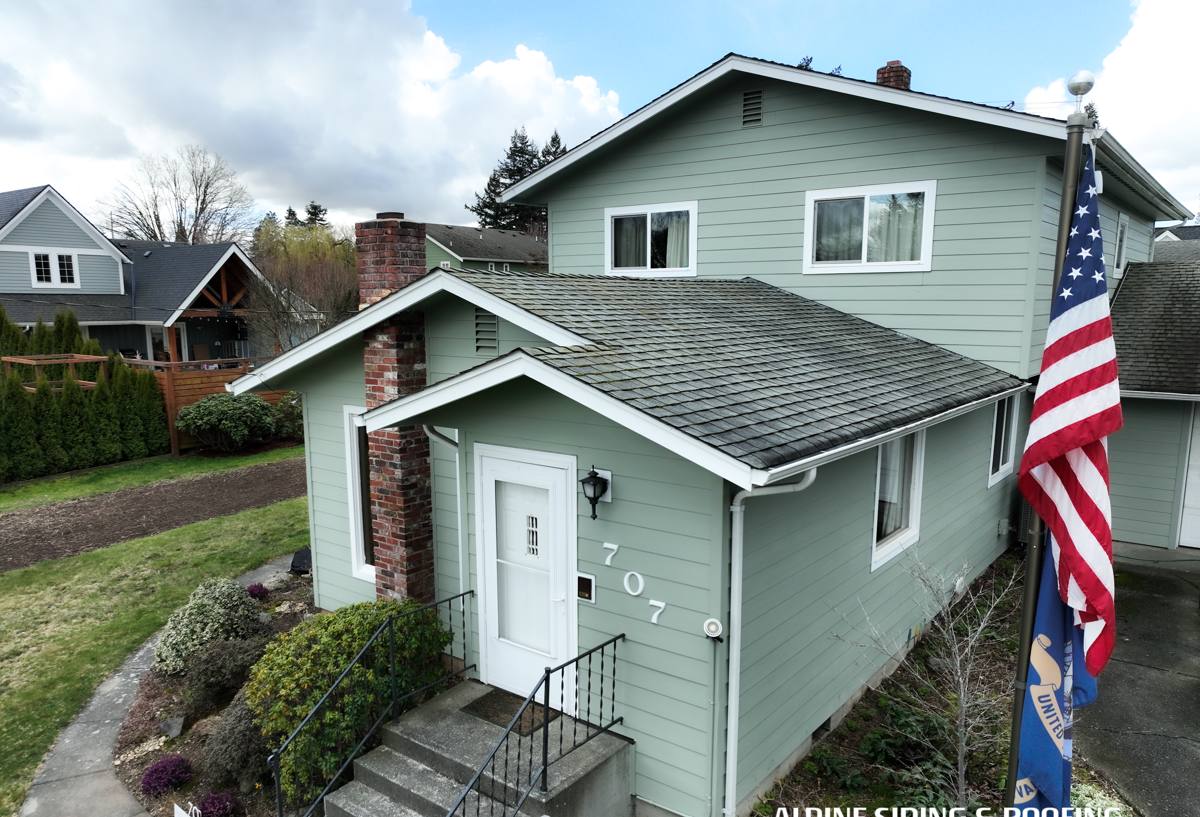
Signs Your Ferndale Roof Has Storm Damage
Some storm damage is obvious — missing shingles, a hole from a falling limb, a section of flashing peeled back by wind. A lot of it isn't. Wind-driven rain and slow moss growth cause damage that shows up as a stain on a ceiling weeks or months after the storm that actually caused it. After any significant wind or rain event, it's worth checking for the following:
- Shingles that look lifted, curled, or creased, especially along roof edges and ridges where wind pressure is highest
- Granules collecting in gutters or at downspout outlets — a sign of impact damage or accelerated wear
- Flashing around chimneys, vents, and skylights that looks bent, separated, or has visible gaps
- Soft or discolored ceiling drywall, especially near exterior walls or below roof valleys
- Moss buildup along the north or shaded slopes that's thick enough to hold water against the shingle surface
- Gutters pulling away from the fascia or sagging under debris weight
- Daylight visible through the attic roof deck in the evening, or damp insulation when you check the attic after a storm
If you see any of these after a storm, it's worth getting a roof looked at before the next round of weather moves through — a small, contained repair now is a lot cheaper than a full deck replacement later.
What a Correct Storm Damage Repair Actually Involves
Inspection Before Anything Gets Touched
A proper storm damage repair starts with a full inspection, not just a look at the obviously damaged spot. Wind and rain damage rarely stays contained to one area — if a section of shingles lifted on one slope, it's worth checking the ridge, the adjacent slopes, and the flashing details nearby, because the same wind event likely stressed all of them.
Checking What's Under the Shingles
Shingles are the visible layer, but the underlayment and decking underneath are what actually keep water out once shingles are compromised. If wind-driven rain has been getting under lifted shingles for any length of time, the underlayment and even the plywood decking can be wet or soft. Repairing the shingle layer without checking what's beneath it is one of the most common shortcuts that leads to a repeat call a year later.
Flashing and Transition Points
Chimneys, vent pipes, skylights, and roof-to-wall transitions are where storm damage repairs most often go wrong if they're rushed. These details need to be re-sealed and re-flashed correctly, not just caulked over, especially in an area where salt air accelerates the corrosion of exposed metal fasteners and flashing.
Matching Materials, Not Just Patching
Where possible, we match existing shingle type, color, and exposure so a repair doesn't stand out as an obvious patch. Where the existing roofing is old enough that an exact match isn't available, we'll tell you that honestly upfront rather than promise a seamless blend we can't deliver.
Common Storm Damage Types We See in Whatcom County
Wind Uplift
Whatcom County storms often bring sustained wind rather than just gusts, and sustained wind is what actually works shingles loose over time. Roof edges, ridges, and any roof plane facing the prevailing storm direction take the most uplift stress.
Wind-Driven Rain Intrusion
Rain that comes in at an angle can get up under shingle tabs and behind flashing in ways that straight-down rain never would. This is one of the more deceptive types of storm damage because the exterior can look mostly intact while water is actually getting into the roof system.
Moss and Trapped Moisture Damage
Moss itself doesn't punch holes in a roof, but it holds moisture against the shingle surface for extended periods, which softens shingles, degrades granule adhesion, and can work its way under shingle edges over a long moss season. Storm damage and moss damage often overlap and compound each other on the same roof.
Impact Damage from Debris
Falling branches and wind-blown debris cause the most visually obvious damage — punctures, cracked shingles, dented flashing or gutters — but the surrounding area often has secondary damage from the same storm that's easy to miss if the inspection stops at the visible impact point.
Repair or Replace? What Actually Determines the Right Call
Not every storm-damaged roof needs full replacement, and not every roof can be reasonably patched. The honest answer depends on a handful of factors that we walk through with you during the inspection.
| Factor | Favors Repair | Favors Replacement |
|---|---|---|
| Age of existing roof | Under 10-12 years, otherwise sound | Nearing or past expected lifespan |
| Extent of damage | Isolated to one area or slope | Spread across multiple slopes or the ridge |
| Decking condition | Dry, solid plywood under damaged section | Soft, delaminated, or water-stained decking |
| Moss/moisture history | Minimal prior moss or ponding issues | Long-term moss buildup or repeat leak history |
| Material availability | Matching shingles still obtainable | Discontinued style or badly faded existing roof |
We'll give you our honest read on where your roof falls on this table rather than defaulting to whichever option costs more. A well-executed repair on a roof with a lot of useful life left is often the right call, and a full replacement is only worth pushing when the numbers and the roof's condition actually support it.
Our Storm Damage Repair Process
1. Inspection and Documentation
We inspect the full roof, not just the reported problem area, and document what we find with photos so you have a clear record of the damage and its likely cause.
2. Straightforward Written Estimate
You get a written scope of work and price before anything is repaired — what's being replaced, what's being resealed, and why.
3. Temporary Protection If Needed
If a roof is actively leaking or has an open section, we can install temporary protection to stop further water intrusion while a full repair is scheduled, especially useful during an active storm pattern when back-to-back systems are moving through.
4. The Repair Itself
Work is done down to solid decking wherever damage is found, with proper underlayment, flashing, and matched shingle materials — not a surface-only patch.
5. Final Walkthrough
We walk the completed repair with you so you can see exactly what was done and ask any questions before we consider the job finished.
Storm Damage and Insurance Claims
Many storm-related roof repairs in Ferndale involve a homeowner's insurance claim, particularly after a named windstorm or a significant weather event. We provide clear, dated photo documentation and a detailed written estimate that you can submit to your adjuster. We're glad to be on site or on the phone when an adjuster inspects the roof so the scope of damage is represented accurately, but the claim itself is between you and your insurance company — we won't inflate a scope of work to chase a bigger payout, since that kind of pressure tends to create disputes and delays that end up costing homeowners more time than it's worth.
Why It Matters That We Already Work in Ferndale
A crew that regularly works Ferndale and the surrounding Whatcom County area already knows what the local salt-air exposure does to fasteners and flashing over time, how long the moss season here actually runs, and which roof orientations tend to take the worst of the driving rain in a given storm pattern. That local pattern recognition speeds up the inspection and helps us catch secondary damage that an out-of-area crew unfamiliar with these conditions might miss. It also means we're realistically available when storm damage needs attention quickly — not booking a trip from out of the area days after the water's already gotten into your attic.
Reducing Repeat Storm Damage After the Repair
A good repair should reduce how much damage the next storm can do, not just fix the last one. A few maintenance habits make a real difference in this climate:
- Keep gutters and downspouts clear so wind-driven rain has somewhere to go instead of backing up under roof edges
- Address moss buildup on shaded slopes before it thickens enough to hold standing moisture
- Trim back tree limbs that overhang the roof, since these are a repeat source of both debris impact and shade that feeds moss growth
- Have the roof looked at after any major windstorm, even if nothing looks obviously wrong from the ground
- Keep an eye on attic ventilation, since poor airflow traps moisture that makes shingles and decking more vulnerable to storm stress over time
If your Ferndale roof has taken damage from a recent storm, or you'd just like an honest inspection before the next system rolls in, we're happy to take a look. The form below gets you a free, no-pressure estimate with a clear explanation of what we find and what it would take to fix it right.