 Blaine Roofing
 Why Ferndale Homeowners Are Looking at Metal Roofing
Ferndale sits close enough to the water and far enough into farm and river-bottom country that its homes take on a mix of weather most roofing materials weren't designed to handle for the long haul. Salt-laden air drifts in off the Strait, rain comes sideways more often than most homeowners expect, and shaded, damp lots hold moisture long after a storm has passed. Metal roofing has become a serious option here not because it's trendy, but because it holds up to that specific combination better than asphalt shingles do over a 30-to-50-year span.
We install and repair metal roofs throughout the Ferndale area as part of our regular service territory around Blaine and Whatcom County. That matters more than it sounds like it should — a roof detailed for a dry inland climate doesn't perform the same way once it's dealing with our wind, rain volume, and moss pressure.
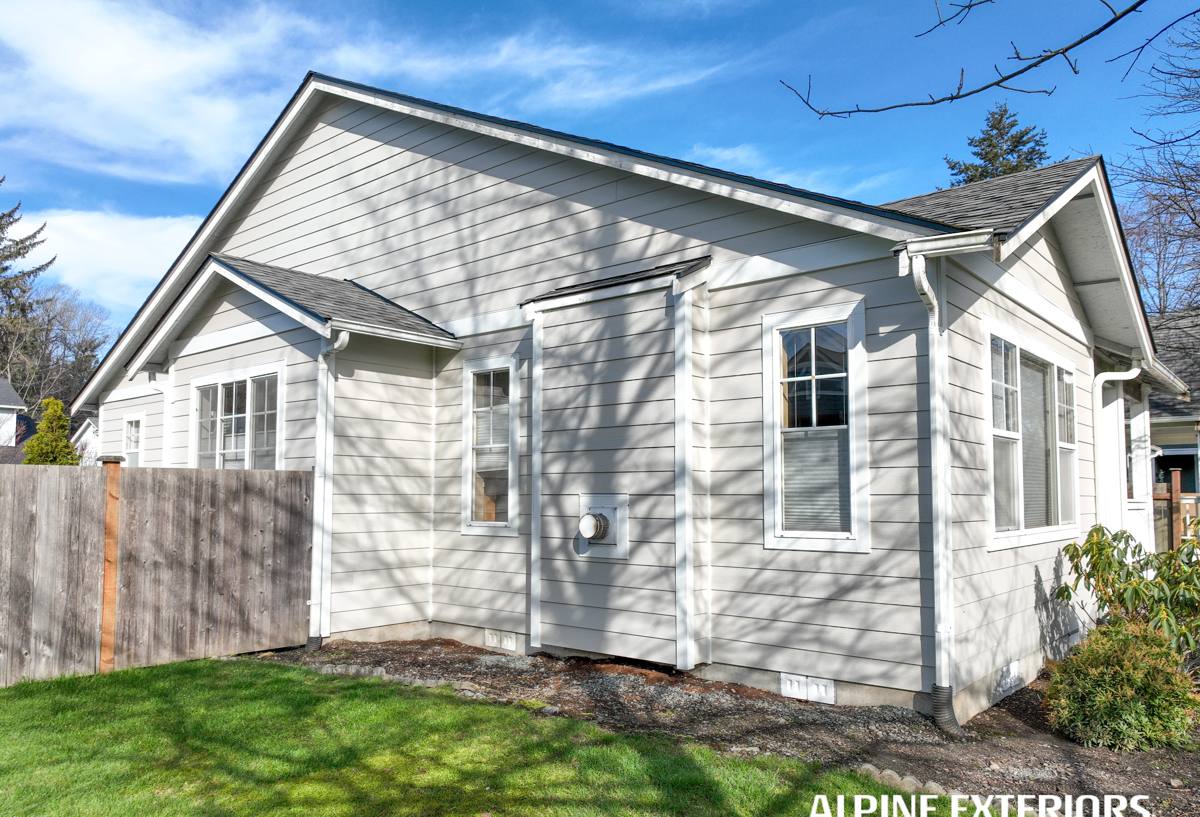
What This Climate Actually Does to a Roof
Salt Air and Corrosion
Proximity to Puget Sound and the Strait of Georgia means airborne salt is a real factor for Ferndale roofs, even a few miles inland. Salt exposure accelerates corrosion on any exposed metal — fasteners, flashing, panel edges — if the coatings and metal grade weren't chosen with that in mind. This is one of the main reasons we're selective about panel and fastener specs for homes in this area rather than defaulting to whatever's cheapest.
Driving Rain
Storms here don't always fall straight down. Wind-driven rain pushes water sideways and upward under laps, ridge caps, and around penetrations that would stay dry in calmer weather. A metal roof is only as water-tight as its flashing details and fastening pattern — the panel material itself is rarely the weak point, the connections are.
Moss Season
Whatcom County's long wet stretch from fall through spring gives moss and algae months of ideal growing conditions, especially on north-facing slopes and anything shaded by fir or cedar cover. Moss holds moisture against a roof surface and, on the wrong material, works into seams over time. Metal sheds moss growth far better than shingles because there's no granulated surface for spores to root into, but valleys, low-slope sections, and areas with organic debris buildup still need attention.
Metal Roofing Options That Make Sense for Ferndale Homes
Standing Seam vs. Exposed Fastener
The two main systems homeowners choose between are standing seam (concealed fasteners, raised interlocking seams) and exposed-fastener panels (screws driven through the panel face, typically with rubber-washered screws). Both can perform well, but they carry different maintenance realities in a wet, salty climate.
| Factor | Standing Seam | Exposed Fastener |
|---|---|---|
| Fastener exposure | Hidden, not exposed to weather | Exposed, washers degrade over time |
| Long-term maintenance | Minimal | Washer/screw checks every several years |
| Upfront cost | Higher | Lower |
| Best fit | Long-term ownership, full re-roofs | Outbuildings, budget-driven projects |
| Salt air resilience | Better, fewer penetration points | Requires periodic washer inspection |
For a primary residence in Ferndale that we expect to hold up for decades without repeat maintenance visits, we typically recommend standing seam. Exposed-fastener panels aren't wrong — they're a legitimate lower-cost option — but the trade-off is that someone needs to check and eventually replace washers as they age, and in a salt-air environment that clock runs a bit faster.
Steel vs. Aluminum
Steel panels with a quality factory coating are the more common choice and hold up well when the coating system is intact. Aluminum naturally resists corrosion and is worth considering for homes closest to the water, since it doesn't rely on a coating to resist salt the way steel does. The trade-off is cost and, in some cases, a softer panel that dents more easily under impact. We'll walk through both options against your home's specific exposure rather than defaulting to one.
What a Correct Metal Roof Installation Actually Involves
Underlayment
Metal roofing needs a synthetic, high-temperature-rated underlayment beneath it — not the felt paper still sometimes used under shingles. In a climate where wind-driven rain can push moisture under panel edges, that underlayment is a real second line of defense, not a formality.
Fastening and Expansion
Metal panels expand and contract with temperature swings, and fastening has to account for that movement without creating stress points that eventually crack sealant or work fasteners loose. This is a detail that's easy to get wrong if a crew is more experienced with shingles than metal.
Flashing and Penetrations
Valleys, chimneys, vent pipes, and roof-to-wall transitions are where most metal roof leaks actually originate — almost never the flat panel field. Correct flashing here means matching metal types to avoid galvanic corrosion, proper overlap direction, and sealant used as a backup, not a substitute for mechanical lap.
Ventilation
A metal roof over a poorly ventilated attic can trap moisture underneath just as easily as any other roofing material. We check ridge and soffit ventilation as part of every metal roof project, since it protects both the roof deck and the panels from condensation-driven corrosion from underneath.
Common Mistakes We See on Existing Metal Roofs in This Area
- Exposed-fastener screws left unchecked for years, with washers cracked or missing
- Moss and organic debris allowed to build up in valleys, holding moisture against the panel
- Mismatched metals at flashing points causing accelerated corrosion (galvanic reaction)
- Sealant used to patch a flashing problem instead of correcting the underlying lap or slope
- Panels fastened too rigidly, restricting the natural expansion and contraction cycle
- Skipped or blocked ventilation, leading to condensation on the panel underside
Most of these aren't defects in the metal itself — they're installation or maintenance gaps that show up faster in a climate like ours than they would somewhere drier.
Our Process for Ferndale Metal Roofing Projects
Assessment
We start with an on-site look at slope, shading, existing ventilation, and how exposed the home is to prevailing wind and salt air. That assessment drives the panel type, gauge, and fastening recommendation — we don't quote a system before seeing the roof.
Installation
Our crews follow manufacturer specs for underlayment, fastening pattern, and flashing detail rather than treating metal roofing as a shingle job with different material. Every penetration and transition gets flashed to shed wind-driven rain, not just standing water.
Cleanup and Walkthrough
We clear the site of metal shavings and fasteners (which can rust and stain a roof or lawn if left behind) and walk the finished roof with the homeowner, including what routine maintenance — if any — the system will need going forward.
Cost Factors for Metal Roofing in Ferndale
| Factor | How It Affects Cost |
|---|---|
| Panel system | Standing seam runs higher than exposed-fastener panels |
| Material | Aluminum typically costs more than coated steel |
| Roof complexity | More valleys, dormers, and penetrations mean more flashing labor |
| Tear-off vs. overlay | Removing an old roof adds cost but is often the right call over shingles in poor condition |
| Ventilation upgrades | Adding or correcting ridge/soffit venting during the project |
| Access and pitch | Steep or hard-to-access roofs add labor time |
We give straightforward, itemized estimates rather than a single flat number, so you can see what's driving the cost and where there's room to adjust the scope if needed.
Maintenance Checklist for Metal Roofs in a Wet, Salty Climate
- Clear leaves, needles, and moss buildup from valleys and low-slope sections each fall
- Check exposed fasteners (if applicable) every few years for washer wear or loosening
- Look for streaking or discoloration near flashing points, which can signal a coating or corrosion issue starting
- Confirm gutters and downspouts are clear so water isn't backing up under roof edges
- Trim overhanging branches to reduce shade and organic debris that feed moss growth
- Have a professional look at flashing and seams after any major windstorm
Why Hire a Crew That Already Works in Ferndale
Metal roofing done right in this area isn't just about installing panels correctly — it's about understanding which slopes hold moss, which exposures take the worst of the salt air, and where wind-driven rain tends to find the weak point in a flashing detail. A crew that works Blaine and Whatcom County regularly has already seen how local conditions play out over years, not just at installation. That local track record shows up in fewer callbacks and a roof that's actually built for the weather it'll face, not a generic spec sheet.
If you're considering a metal roof for your Ferndale home, we're happy to take a look and walk you through honest options for your specific roof and budget. Use the form below to request a free, no-pressure estimate.