 Blaine Roofing
 Ferndale Siding Has to Deal With More Than Rain
Ferndale sits in a stretch of Whatcom County where the weather doesn't do a home's exterior any favors. You've got salt-laden air drifting in off the water, long stretches of driving rain that don't let up for days, and a moss and algae season that can run most of the year on shaded or north-facing walls. Any one of those on its own is manageable. Together, they wear through the wrong siding material faster than most homeowners expect, and they're exactly why we treat siding selection here differently than we would in a drier inland climate.
This page is about one thing: James Hardie fiber cement siding, installed correctly, on homes in the Ferndale area. Not a general overview of siding options — just what this product needs to do here, what a proper installation actually involves, and why the crew you hire matters as much as the material itself.
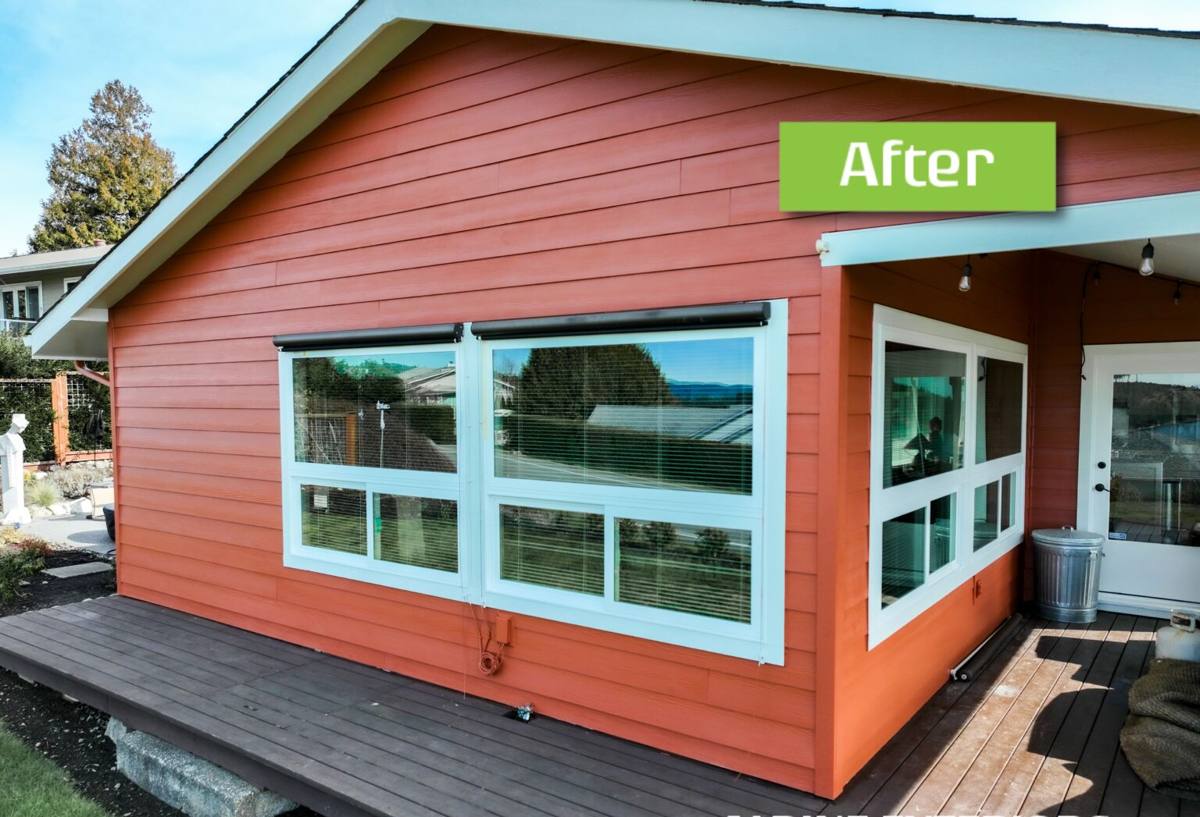
What Salt Air, Rain, and Moss Actually Do to a Wall
Salt Air
Salt in the air doesn't just sit on the surface — it works into seams, fastener heads, and any spot where a coating has thinned or worn. Over years, that accelerates corrosion of exposed metal fasteners and trim, and it can speed up the breakdown of finishes that weren't engineered to resist it. Siding that looks fine going up can start showing chalking, fading, or edge deterioration well ahead of schedule in a coastal-influenced climate like Ferndale's.
Driving Rain
Wind-driven rain doesn't fall straight down — it gets pushed sideways into laps, joints, and any gap in the water-resistive barrier behind the siding. If the assembly behind the cladding isn't detailed correctly, water finds its way in, and once moisture is trapped behind siding it doesn't dry out quickly in a climate this damp. That's when you start seeing rot in sheathing and framing long before the siding itself shows a problem.
Moss and Algae
Shaded walls, tree cover, and persistent damp conditions are a recipe for moss and algae growth. Beyond looking bad, sustained organic growth holds moisture against the siding surface, which is a slow but steady stress on any material that isn't dimensionally stable or that absorbs water into its core.
Why We Only Install James Hardie in This Climate
We install James Hardie fiber cement siding exclusively — not LP SmartSide, not vinyl, not Cemplank or Allura, not primed spruce or cedar. That's a deliberate standard, not a brand preference. Hardie's fiber cement is non-combustible, dimensionally stable, and manufactured in HZ (HardieZone) formulations engineered for specific climate exposures, including the wetter, moderate-temperature conditions found throughout the Pacific Northwest. It doesn't absorb water and swell the way wood-based products can, and it holds up to sustained damp and salt exposure better than materials that rely on a surface coating alone to keep moisture out.
We're not going to tell you every alternative product is worthless — wood siding has real appeal, and engineered wood products have improved over the years. But every one of those alternatives asks a homeowner to take on more maintenance, more moisture risk, or more long-term uncertainty than we're willing to put our name behind in a climate like this one. James Hardie, installed to spec, is the product we trust to hold up on Ferndale exteriors for decades with reasonable upkeep.
James Hardie Product Lines and Where They Fit
Not every part of a home calls for the same profile. Here's how the main Hardie product lines typically get used on homes in this area:
| Product Line | Typical Use | Why It Fits Ferndale Homes |
|---|---|---|
| HardiePlank Lap Siding | Primary wall surfaces on most home styles | The workhorse profile — proven weather resistance and a wide range of textures and exposures |
| HardiePanel Vertical Siding | Gables, accent walls, modern or farmhouse styles | Clean vertical lines that shed water well when flashed and joined correctly |
| HardieShingle | Accent gables, Craftsman-style detailing | Adds texture and character without the moisture concerns of real wood shingle |
| HardieTrim | Corners, fascia, window and door surrounds | Matches the siding's durability so trim doesn't become the weak point in the system |
Most Ferndale projects use a combination — lap siding as the field material with trim and an accent product to break up larger wall planes. We'll walk through what makes sense for your home's specific exposure during the estimate.
What a Correct Installation Actually Involves
James Hardie siding performs the way it's supposed to only when it's installed to the manufacturer's specifications — and this is where a lot of installation problems start, regardless of what material was used. Cutting corners on flashing, fastening, or clearances shows up as callbacks years later, not on install day.
- Correct starter strip placement and proper clearance from grade, roofing, decks, and other horizontal surfaces
- An intact, properly lapped weather-resistive barrier behind the siding — the drainage plane, not just the cladding, keeps a wall dry
- Flashing at every window, door, and penetration, and at horizontal joints where panels meet
- Fasteners driven into framing at the correct pattern and depth — not just into sheathing
- Factory-cut and field-cut edges sealed per Hardie's specifications to protect against moisture wicking
- Caulking used only where Hardie actually calls for it — over-caulking traps moisture instead of shedding it
- Minimum gaps maintained around trim, windows, and doors to allow the assembly to manage water properly
None of this is exotic. It's disciplined, by-the-book installation — which is exactly what protects the warranty and what determines whether the siding actually performs the way it's engineered to in a wet, salt-influenced climate.
Our Process, Start to Finish
We keep the process straightforward and communicate at each stage so there aren't surprises:
- On-site assessment — we look at your home's current siding, sheathing condition where accessible, exposure to weather and salt air, and any problem areas like moss buildup or past water intrusion
- Product and detail plan — we recommend the Hardie product lines, profiles, and colors that fit the home and the specific walls that take the most weather
- Written estimate — a clear scope covering tear-off, any sheathing or framing repair, the weather-resistive barrier, and the Hardie installation itself
- Tear-off and inspection — removing the old siding lets us actually see the sheathing and framing underneath and catch any hidden moisture damage before it's covered back up
- Installation to spec — barrier, flashing, fastening, and finish work done to James Hardie's requirements, not shortcuts
- Final walkthrough — we go over the finished work with you before calling the job complete
What Drives Cost on a Ferndale Siding Project
Every home is different, so we won't quote a number without seeing the property, but these are the factors that move a siding project's cost up or down:
| Factor | Why It Matters |
|---|---|
| Home size and wall complexity | More square footage and more corners, gables, and dormers mean more material and labor |
| Condition under the old siding | Rot or water damage found during tear-off needs to be repaired before new siding goes on |
| Product line and profile | Lap siding, panel, and shingle profiles differ in material and labor cost |
| Trim and detail work | Extensive trim, accent walls, or custom detailing adds time and material |
| Access and stories | Multi-story homes or difficult site access affect staging and labor time |
Why It Matters That We Already Work in This Area
A crew that regularly works Ferndale and the surrounding parts of Whatcom County has already seen how this climate treats siding — which walls take the worst of the wind-driven rain, where moss tends to build up fastest, and what happens to installations that weren't flashed or fastened correctly the first time. That's not something you learn from a manual; it's something you learn from doing the work in this specific coastal environment repeatedly. We bring that local pattern recognition to every estimate, not a generic install checklist that ignores what the salt air and rain actually do here.
Keeping Your Siding Looking Right After It's Installed
James Hardie siding is low-maintenance compared to wood, but "low-maintenance" doesn't mean "no maintenance," especially in a climate with a long moss season. A periodic gentle wash to keep organic growth from taking hold, prompt attention to any caulking or trim that gets damaged, and keeping gutters and downspouts clear so water isn't running down the wall face will go a long way toward getting the full lifespan out of the system. ColorPlus finishes hold their color well, but touch-up paint should always be Hardie-compatible product applied correctly, not a mismatched exterior paint pulled off the shelf.
If your Ferndale home's siding is aging, showing damage, or you're planning ahead for a replacement, we're happy to take a look and talk through what makes sense — no pressure, no obligation. Reach out for a free estimate using the form below.