 Blaine Roofing
 Siding in Everson Has to Handle More Than Just Rain
Everson sits within the same stretch of Whatcom County we serve out of Blaine, and homes here deal with a climate that is harder on exterior siding than most homeowners realize until they've lived through a few winters. It isn't just rain — it's a combination of salt-carrying marine air drifting inland off the Salish Sea, wind-driven storms that push moisture sideways into wall assemblies, and long stretches of overcast, damp weather that never quite let siding dry out between rain events. Generic siding advice written for a dry-climate market doesn't hold up here, and installers who don't work this area regularly tend to miss the details that matter most.
This page is specifically about James Hardie fiber cement siding for Everson properties — what the local climate demands of it, what correct installation looks like, and why we only install this one product system rather than offering a menu of siding materials.
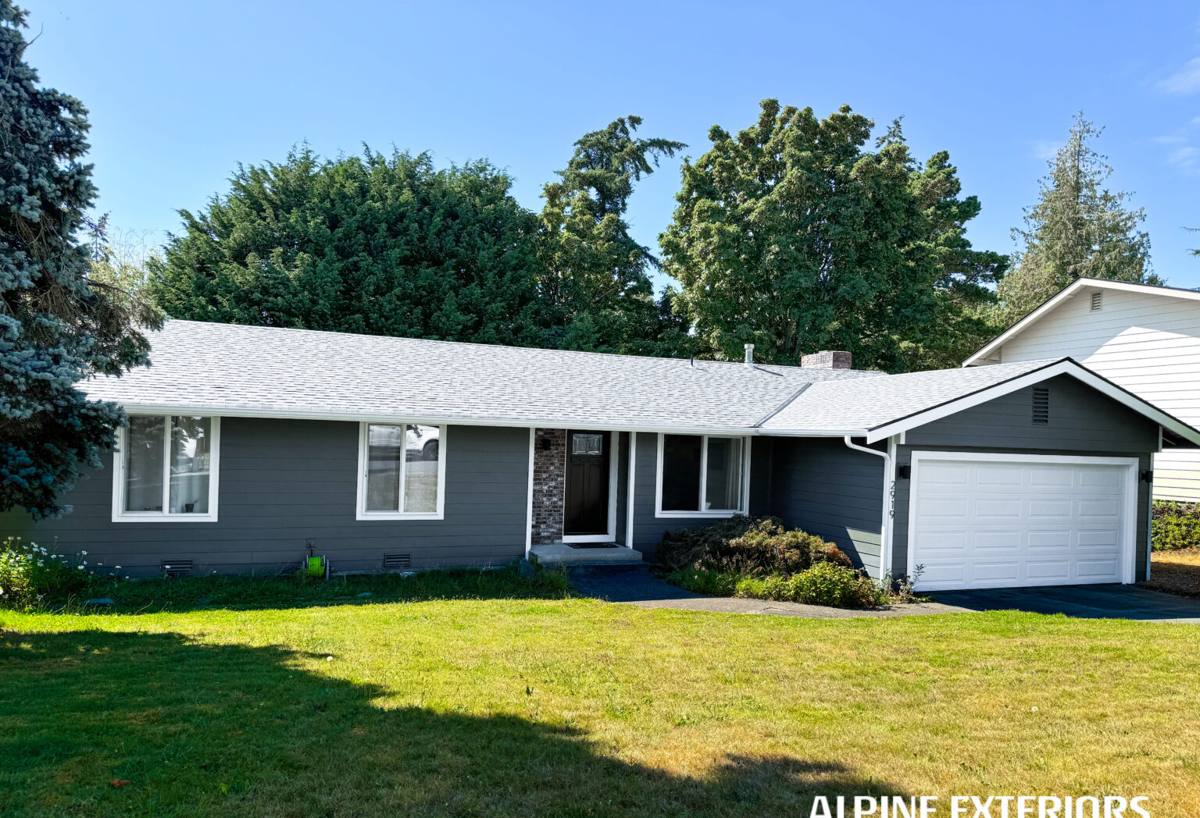
What Salt Air, Driving Rain, and Moss Season Actually Do to Siding
Salt-Laden Air and Surface Finishes
Homes within reach of the Salish Sea take on a slow, steady dose of salt-carrying air even when they aren't waterfront properties. Over years, that salt exposure accelerates the breakdown of cheaper paint finishes, corrodes exposed fasteners, and dulls color on products that weren't engineered to resist it. A siding system's factory finish and hardware need to be chosen with that exposure in mind, not treated as an afterthought.
Wind-Driven Rain and Water Intrusion
Rain that falls straight down is manageable for almost any siding product. Rain that gets pushed sideways by wind — which is common in this part of Whatcom County during fall and winter storms — finds every gap, uncaulked seam, and undersized flashing detail on a house. That's where siding failures actually start: not on the face of the board, but behind it, at the joints and penetrations.
Moss, Algae, and Prolonged Dampness
Long moss season here means siding, trim, and the shaded sides of a house stay damp for extended stretches, especially under tree cover or near landscaping that blocks airflow. Materials that absorb moisture or swell when wet create the conditions moss and algae need to take hold, and once established, that growth holds even more moisture against the wall.
Why We Install Only James Hardie Fiber Cement
We don't install vinyl, LP SmartSide, Cemplank, Allura, primed spruce, or cedar. That's a deliberate standard, not a limitation of what we're capable of installing. Every one of those alternatives asks a homeowner to accept some combination of moisture sensitivity, higher maintenance, shorter realistic lifespan in a wet climate, or a finish that degrades faster under UV and salt exposure than James Hardie's factory-baked ColorPlus finish does. Hardie fiber cement is non-combustible, dimensionally stable when it gets wet, and manufactured specifically for regional climate conditions rather than a one-size-fits-all national spec. For a climate like Whatcom County's, that combination is worth standardizing on rather than offering as one option among several.
The HZ5 Product Line: Engineered for This Climate
James Hardie manufactures its siding in different formulations under its HardiZone system, matched to regional climate zones. Homes in wetter, freeze-prone regions like the Pacific Northwest are specified with the HZ5 product line, which is engineered differently than the HZ10 line used in hot, dry climates. The distinction matters because it affects how the board handles moisture cycling, freeze-thaw stress, and long-term durability. Installing the wrong regional formulation — something that happens when a crew isn't paying attention to specs — undercuts the whole point of choosing fiber cement in the first place.
What a Correct Installation Actually Involves
James Hardie siding performs the way it's designed to only when it's installed to spec. The product itself is not the whole story — installation quality is where most long-term problems either get prevented or get built into the wall.
- Correct clearance between the bottom edge of the siding and grade, roofing, decks, and walkways so water can't wick upward
- Properly lapped and sealed weather-resistive barrier behind the siding, with flashing at every window, door, and penetration
- Fastener placement and spacing that matches Hardie's published installation instructions, using corrosion-resistant fasteners appropriate for a marine-influenced climate
- Correctly sized gaps at butt joints and trim, sealed with a high-quality, paintable sealant rather than caulked over tight to fight expansion and contraction
- Preserving the factory ColorPlus finish where possible rather than immediately painting over it, which is part of what makes the finish warranty meaningful
- Back-priming and sealing any field-cut edges so raw fiber cement isn't left exposed to moisture
Skipping any one of these doesn't usually cause an obvious problem on install day. It shows up two, five, or ten years later as a soft spot, a stain, or a warranty claim that gets denied because the installation didn't meet manufacturer requirements.
How Hardie Compares to Other Siding Materials
Homeowners in Everson often ask why we don't offer lower-cost alternatives. The honest answer is in how these materials perform over time in this specific climate, not just on day one.
| Factor | James Hardie Fiber Cement | Vinyl | Cedar / Wood | Engineered Wood (LP SmartSide) |
|---|---|---|---|---|
| Moisture behavior | Dimensionally stable, resists swelling | Doesn't absorb water but can warp/buckle | Absorbs moisture, prone to rot without upkeep | Wood-based core, sensitive to prolonged moisture |
| Maintenance | Low — factory finish, occasional rinse | Low, but fades and becomes brittle with age | High — regular sealing/staining required | Moderate — finish and edge sealing upkeep |
| Fire resistance | Non-combustible | Melts/deforms under heat | Combustible | Combustible (wood-based) |
| Typical realistic lifespan | 30+ years installed to spec | 15-25 years, shortens with UV/impact damage | 15-20 years with diligent maintenance | 20-25 years with proper upkeep |
| Coastal/salt-air suitability | Strong, engineered finish options | Adequate but fades faster near salt air | Weakest without constant upkeep | Moderate, edge sealing critical |
None of these alternative products are without their merits — vinyl is inexpensive and low-maintenance in mild climates, cedar has genuine visual appeal, and engineered wood siding has improved over the years. But weighed against Whatcom County's salt air, wind-driven rain, and moss season, none of them match what fiber cement delivers over the long run, which is why we've standardized on one product rather than offering all of them.
Our Process for Everson Siding Projects
Every project starts with an on-site look at the specific exposure the house faces — which walls take the most wind-driven rain, where moss and shade are already a problem, and where the existing siding or trim shows early signs of moisture damage. From there:
- Full exterior inspection, including trim, flashing, and any existing water damage behind the current siding
- Removal of old siding and repair of any sheathing or framing found compromised underneath
- Installation of a correctly lapped weather-resistive barrier and flashing at all penetrations
- James Hardie HZ5 panel or plank installation to manufacturer spec, with corrosion-resistant fasteners
- Sealing, trim work, and a final walk-through before the job is considered complete
Because we work this area regularly, we already know which details tend to get missed on houses exposed to this particular mix of wind, rain, and salt air — and we build the job around avoiding those specific failure points rather than following a generic checklist.
Keeping Hardie Siding Performing Long-Term: A Homeowner Checklist
Correctly installed Hardie siding is genuinely low-maintenance, but "low-maintenance" doesn't mean "no attention needed" in a climate like this one.
- Rinse siding once or twice a year to clear salt residue, pollen, and general grime buildup
- Walk the exterior after major windstorms to check for loose trim or gaps that weren't there before
- Keep landscaping trimmed back from siding to maintain airflow and reduce shaded, damp zones where moss takes hold
- Check caulked joints annually and have any cracked or missing sealant addressed before wet season
- Keep gutters clear so overflow doesn't run down and sit against the siding face
- Address any soft spots, staining, or discoloration promptly rather than waiting for it to spread
Why Hiring a Crew That Already Works This Area Matters
A siding crew that mainly works drier, inland climates brings assumptions with them that don't hold up in Whatcom County. They may under-flash for wind-driven rain, skip corrosion-resistant fasteners because they haven't had to think about salt air, or not account for how long a shaded wall actually stays wet during moss season. A crew that already works Everson and the surrounding Blaine area has already seen what this climate does to siding installed without those details in mind — and builds the job to avoid repeating it.
If you're planning a siding project in Everson and want a straight answer about what your home actually needs, we're glad to take a look and provide a free, no-pressure estimate using the form below.