 Blaine Roofing
 Deck Building in Everson, Built for the Weather We Actually Get
Everson sits inland from the coast, in the Nooksack River valley, but that doesn't mean it's spared from Whatcom County's defining weather pattern: long stretches of steady, driving rain, short dry summers, and a shoulder season on both ends where everything outdoors stays damp for weeks at a time. A deck built here has to shed water fast, dry out between storms, and resist the moss and algae that take hold anywhere shade and moisture overlap. Closer to the water around Blaine and Drayton Harbor, salt-laden air adds another layer of stress on fasteners and finishes; even in Everson, that same marine air pattern rolls through often enough that hardware choices matter. A deck built to a generic national spec, without accounting for any of this, will show problems within a few seasons — soft spots, black staining, loose railings, rust bleed from the wrong screws.
This page is about deck building specifically for Everson homes: what the local conditions demand, what a correctly built deck actually involves below the surface, and how we approach the job so it holds up rather than becoming a five-year redo.
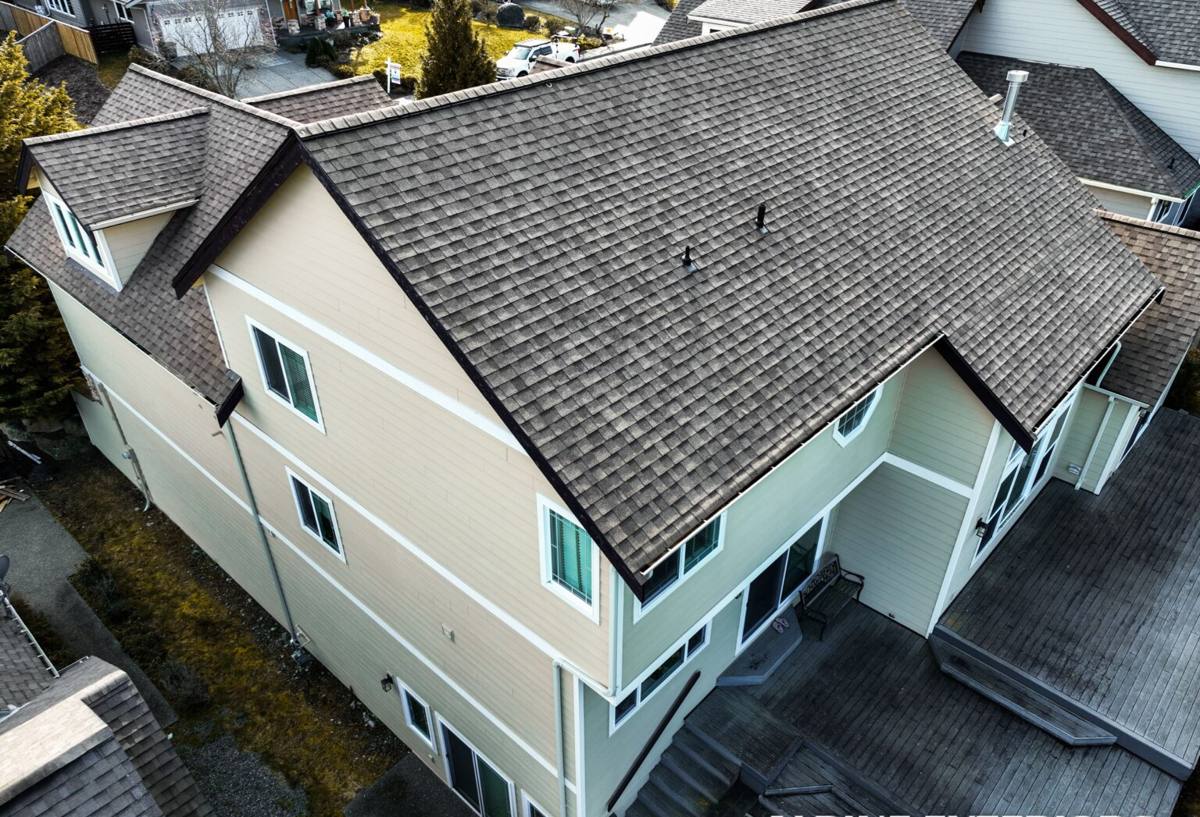
What Everson's Climate Actually Does to a Deck
Driving Rain and Standing Water
Whatcom County doesn't get dramatic downpours as often as it gets prolonged, wind-driven rain. That matters for deck building because water doesn't just fall straight down and run off — it gets pushed sideways into ledger connections, under railing posts, and into any gap where end grain is exposed. A deck that isn't detailed for driving rain will trap moisture in exactly the places you can't see until the wood underneath has already started to soften.
A Long Moss and Algae Season
Between the rain and the tree cover common on Everson lots, decks here spend a good part of the year damp and shaded — the exact conditions moss and algae need. Left unmanaged, that growth holds moisture against the deck surface, turns boards slick and unsafe underfoot, and slowly breaks down the wood fibers or the finish on composite material.
Freeze-Thaw and Seasonal Swings
Everson sees more cold snaps than the immediate coast, and wood and fasteners that stay saturated going into a freeze are more prone to splitting and loosening. A deck built with proper drainage and gapping handles these swings; one that traps water doesn't.
Marine Air Corrosion
Even away from the immediate shoreline, the marine-influenced air that moves through this part of Whatcom County accelerates corrosion on the wrong-grade fasteners and hardware. It's a smaller factor in Everson than it is right on Semiahmoo Bay, but it's still enough reason to spec hardware correctly rather than cut corners.
Choosing Decking Material for This Climate
There's no single "best" decking material — there's the right material for your budget, your maintenance appetite, and how much shade and moisture your specific yard holds onto. Here's how the common options stack up for an Everson property:
| Material | Upfront Cost | Moisture & Moss Behavior | Maintenance |
|---|---|---|---|
| Pressure-treated lumber | Lowest | Handles rain well if properly sealed; moss and mildew will grow on the surface without regular cleaning | Annual cleaning and re-sealing recommended |
| Cedar | Mid-range | Naturally rot-resistant, ages gracefully, but still needs finish maintenance to resist moss staining | Periodic cleaning, occasional refinishing |
| Composite decking | Higher | Won't rot or splinter; can still grow surface algae in shaded, damp spots and needs occasional washing | Low — mostly washing, no sealing |
| PVC decking | Highest | Fully moisture-resistant surface; best resistance to staining and moss adhesion | Lowest — occasional wash |
We'll talk through these trade-offs honestly rather than pushing whatever has the best margin. A shaded, tree-covered Everson lot is a different conversation than an open, sun-exposed one, even on the same street.
What Correct Deck Construction Looks Like Below the Surface
The decking boards are the part everyone sees, but the substructure is what determines whether the deck is still solid in ten years. For our climate, that means:
Footings Set Below Frost Depth and Bearing on Solid Soil
Footings that aren't set deep enough or that bear on disturbed fill will shift over a few wet-dry cycles, and that shift shows up as a bouncy or uneven deck long before it's a structural failure you can see from the yard.
Ledger Board Flashing Done Right
Where the deck attaches to the house is the single most common source of hidden rot in this region. A ledger board needs proper flashing — installed so water is directed out and away from the house band joist, not just caulked and hoped for. This is the detail that separates a deck that lasts from one that quietly rots the rim joist behind it.
Joist Protection
Exposed cut ends and joist tops are where treated lumber loses its protection fastest. Capping or taping joist tops and sealing cut ends keeps water from wicking into the framing from above, which matters more here than in drier climates because the wood rarely gets a long enough dry stretch to fully recover between rains.
Corrosion-Rated Fasteners and Hardware
Structural screws, joist hangers, and post hardware need to be rated for the chemicals in modern treated lumber and for the moisture and marine-influenced air common to this county. The wrong fastener grade rusts and stains the wood around it, and eventually loses holding strength.
Drainage, Spacing, and Keeping Moss From Taking Over
A lot of moss and rot problems trace back to decisions made during construction, not lack of homeowner maintenance. A few things we build in from the start:
- Correct board spacing so water drains through rather than pooling on the surface
- A slight slope away from the house on the substructure, so water sheds instead of collecting near the ledger
- Enough clearance under the deck for air movement, which slows moss and mildew growth on the underside
- Avoiding tight enclosures around the deck perimeter that trap humid air against the framing
- Positioning drainage away from foundation walls and walkways, not just off the edge of the deck
None of this is exotic — it's just detailing that's easy to skip if a crew is building to a generic checklist instead of thinking about how water actually moves across a specific lot.
Our Deck Building Process
- On-site assessment — we look at grade, drainage, sun and shade exposure, and how the deck ties into your home before we talk materials or layout.
- Design and material selection — we walk through the honest trade-offs of each decking option for your specific site, not a one-size answer.
- Permitting — we handle the paperwork with Whatcom County so the project is built and signed off correctly.
- Foundation and framing — footings, ledger flashing, joist protection, and hardware are all specified for our rain and moisture cycle, not a generic build sheet.
- Decking and railing installation — correct spacing, fastening, and finish work suited to the material you've chosen.
- Final walkthrough — we go over how to maintain your specific deck material through the wet season before we consider the job done.
Permits and Local Considerations in Whatcom County
Deck projects above certain heights or attached to the home typically require a permit and inspection in Whatcom County, and setback rules can come into play depending on your lot. We handle this as part of the job rather than leaving it for the homeowner to sort out, and we build to pass inspection the first time — including the structural details, like footing depth and ledger attachment, that inspectors specifically check.
Deck Maintenance for an Everson Property
Whatever material you choose, a little seasonal attention goes a long way in this climate:
- Clear leaves and debris from between boards before they trap moisture through fall and winter
- Sweep or wash off moss and algae before it stains or gets slick underfoot
- Check railings and stair connections annually for movement, especially after the wettest months
- Reapply sealant on wood decking on the schedule your specific product calls for — don't wait for visible graying
- Keep gutters and downspouts near the deck clear so runoff isn't dumping extra water onto or under it
Why Work With a Crew That Already Builds in This Area
Deck construction isn't complicated in theory, but building one that actually lasts through Whatcom County's rain, moss, and seasonal swings takes judgment that comes from working this specific climate repeatedly — knowing which flashing details actually hold up, which fastener grades are worth the extra cost, and which material choices fit a shaded Everson lot versus an open one. We're not applying a generic national spec to a regional problem; we're building decks for the weather that's actually going to hit them.
If you're planning a new deck or replacing one that's showing its age, we're happy to walk your property and give you a straight, no-pressure estimate — just fill out the form below.