 Blaine Roofing
 Why Decks in Cherry Point Wear Out Faster Than You'd Expect
Cherry Point sits right up against the water in Whatcom County, and that waterfront exposure changes how a deck ages. Homes a few miles inland in Blaine can get another five or six years out of a deck that would already be failing out here. The combination of salt-laden air, near-constant wind off the water, driving winter rain, and a long moss season means the wood, fasteners, and framing underneath a Cherry Point deck are working harder every single day than they would almost anywhere else in the county.
Most homeowners don't notice the damage until it shows up somewhere obvious — a soft board, a rusted railing bracket, a joist that flexes underfoot. By that point, the problem usually isn't cosmetic. It's structural, and it's been building for years underneath the parts of the deck you can see.
Salt Air and Fastener Corrosion
Salt in the air doesn't just sit on the surface of a deck — it works its way into every joint, every screw hole, and every spot where two pieces of lumber meet. Over time it accelerates corrosion in nails, screws, joist hangers, and post bases, even ones rated for exterior use. Once a fastener starts to corrode, it loses holding strength long before it looks obviously rusted. That's part of why a deck that "looks fine" from a few feet away can still have a genuinely weak structure underneath.
Moss, Algae, and Trapped Moisture
Whatcom County's long, wet moss season is hard on any exterior wood surface, and a horizontal deck is one of the worst-case shapes for it — flat boards, tight gaps, and constant shade under railings and furniture give moss and algae exactly the damp, low-light conditions they need. Moss holds moisture against the wood far longer than open air ever would, which softens fibers, feeds rot, and makes boards slick and unsafe underfoot. On older decks with narrow board spacing or no real drainage plan, moss buildup between boards can trap water against the joists below for weeks at a time without anyone realizing it.
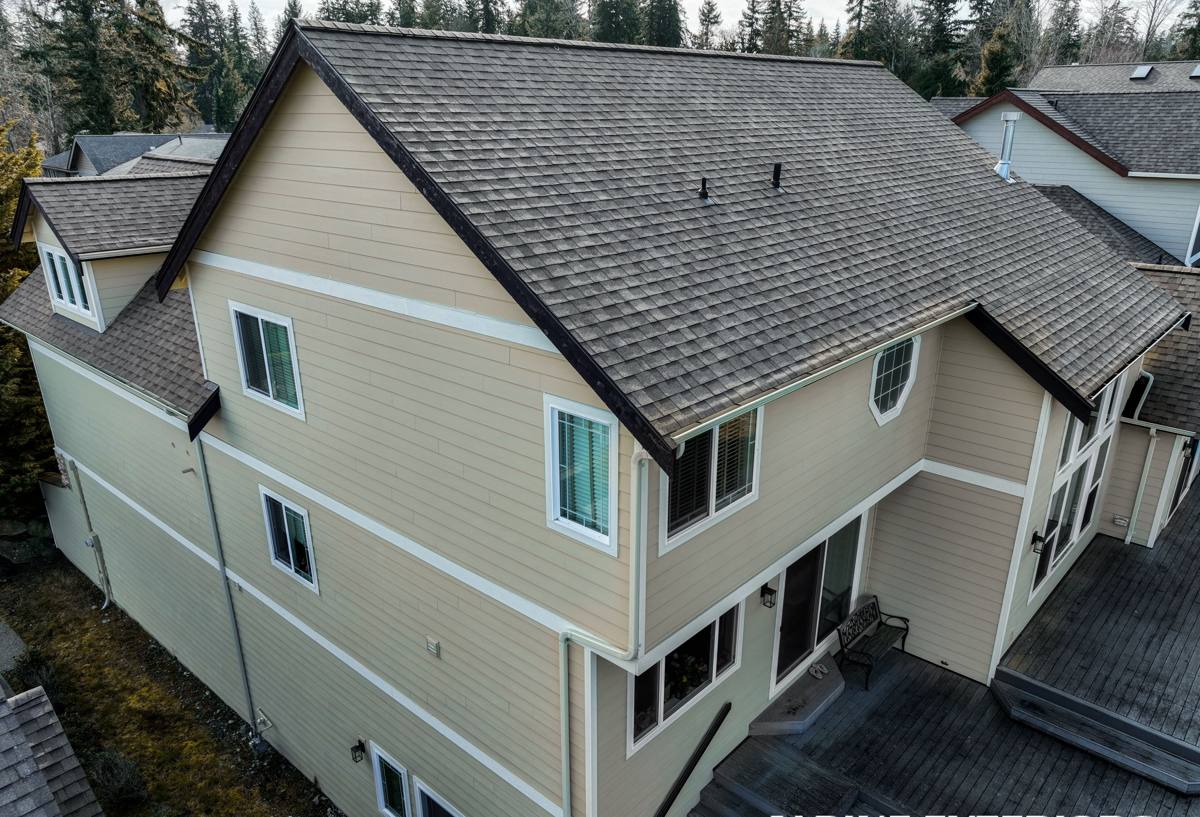
Signs a Cherry Point Deck Needs Replacement, Not Just Repair
Repair makes sense when the damage is limited to a board or two and the framing underneath is sound. Replacement becomes the honest recommendation once the problems are structural or spread across the whole deck. Here's what we look for:
- Soft or spongy spots anywhere on the decking, especially near the house or along the outer edge
- Ledger board (where the deck attaches to the house) showing water staining, rot, or gaps
- Joists or beams that flex noticeably when you walk across the deck
- Railing posts that wiggle at the base — often a sign the post anchoring has failed, not just the railing itself
- Persistent moss or algae staining that comes back within weeks of cleaning
- Fasteners with visible rust bleed staining the wood around the screw or nail heads
- A deck more than 20-25 years old that has never had the substructure inspected
If you're only seeing one or two of these and the rest of the deck is solid, a targeted repair is usually the right call. When several of these show up together, that's usually the framing telling you it's done, even if the surface boards still look presentable.
Choosing the Right Decking Material for a Marine Climate
There's no single "best" decking material — the right choice depends on how much maintenance you're willing to do, your budget, and how close the deck sits to the water. Here's an honest comparison of the main options we install:
| Material | Upfront Cost | Maintenance | How It Handles Salt Air & Moss |
|---|---|---|---|
| Pressure-treated wood | Lowest | Annual cleaning/sealing recommended | Needs consistent upkeep or moss and moisture will shorten its life |
| Cedar | Moderate | Periodic staining/sealing | Naturally more rot-resistant, but still needs care in constant moisture |
| Composite decking | Higher | Occasional washing, no sealing | Resists rot and doesn't feed moss the way wood does, though algae can still grow on the surface film if not rinsed |
| PVC/capped polymer decking | Highest | Minimal — washing only | Most consistent performance in salt air and damp shade; no organic material for moss to root into |
We don't push one material on every homeowner. A wood deck properly built and sealed can absolutely hold up in Cherry Point — it just asks more of the owner over time. Composite and PVC products trade a higher upfront cost for a lot less annual work, which matters more out here than in a drier, inland yard.
What a Correct Deck Replacement Actually Involves
A deck replacement isn't just pulling up old boards and screwing down new ones. In a climate like this, most of what determines how long the new deck lasts happens below the surface, in parts you'll never see once the project is done.
Substructure and Framing
We inspect and, where needed, rebuild the ledger board, joists, beams, and posts before any new decking goes down. The ledger board connection to the house is one of the most common failure points on older decks — it needs proper flashing to keep water from tracking behind it and into the house framing, not just a bolted-on board.
Fasteners and Hardware
Given how hard salt air is on standard fasteners, we use stainless steel or high-grade coated hardware rated for coastal exposure — hangers, screws, and post bases included. It costs more than standard hardware, but it's the difference between hardware that lasts the life of the deck and hardware that starts corroding within a few seasons.
Drainage and Board Spacing
Board spacing and slope matter more here than in a drier climate. Decking needs enough gap between boards to let water and debris pass through instead of collecting, and the frame needs a slight pitch away from the house so water sheds instead of pooling. Getting this wrong is exactly how moss and standing water get a foothold in the first place.
Our Process for a Cherry Point Deck Replacement
- On-site assessment. We check the decking, framing, ledger connection, posts, and footings, and tell you honestly whether you need a repair or a full replacement.
- Material walkthrough. We go over wood, composite, and PVC options against your budget and how much upkeep you actually want to do.
- Demo and framing inspection. Once old decking is removed, we inspect what's underneath before rebuilding anything, since that's the only way to see the real condition of the joists, beams, and ledger.
- Rebuild with coastal-rated hardware. New framing, flashing, and fasteners go in built for this environment, not generic inland specs.
- Decking, railing, and final walkthrough. We install the finished surface and railing system, then walk the deck with you before we call the job done.
Permits and Local Code Considerations
Deck replacement work in Whatcom County typically requires a permit, especially when it involves rebuilding framing, footings, or railing systems, since those are structural and safety-related components. Requirements can vary depending on the deck's height, size, and attachment to the house. We handle the permitting process as part of the job so you're not left figuring out county requirements on your own, and so the finished deck is inspected and built to code rather than just to eye.
Cost Factors for Deck Replacement in Cherry Point
Deck replacement costs vary a lot based on size, material, and how much of the substructure needs rebuilding — there's no honest way to quote a number without seeing the deck. That said, the main factors that move the price are consistent from job to job:
- Total square footage and shape of the deck (multi-level and non-rectangular decks cost more per square foot)
- Decking material chosen — wood, composite, or PVC
- Condition of the existing framing, posts, and footings, and how much needs to be rebuilt versus reused
- Railing style and material
- Height of the deck and any stairs involved
- Site access for equipment and material delivery
We give a firm, itemized estimate after seeing the deck in person, not a phone-quote guess. Given how much variability there is in what's actually happening under an older Cherry Point deck once you pull the boards up, an in-person look is the only way to give you a number you can trust.
Why Hire a Crew That Already Works in Cherry Point
Deck construction that works fine in a dry inland climate can fail early out here if it's built to generic specs instead of the conditions Cherry Point actually sees. A crew that already works this stretch of the Whatcom County coastline knows to spec coastal-rated hardware by default, knows how moss and shade patterns on waterfront lots affect board spacing and drainage decisions, and has already seen how a poorly flashed ledger board fails a few winters in. That local experience shows up in decisions you'd never think to ask about — the kind that quietly determine whether your new deck lasts 12 years or 25.
If your deck is showing its age, or you just want an honest opinion on whether it needs repair or full replacement, we're happy to take a look. Fill out the form below for a free, no-pressure estimate.