 Blaine Roofing
 Why Birch Bay Decks Wear Out Faster Than the Manual Says
Birch Bay sits right on the water, and that changes how a deck ages. Salt-laden air corrodes fasteners and hardware years before an inland deck would show the same wear. Wind-driven rain off the bay doesn't just fall straight down — it gets pushed sideways under railings, into ledger boards, and between deck boards where a standard drainage gap was never designed to handle it. Add in the long, wet Whatcom County moss season, and you have a structure that's fighting three separate battles at once: corrosion, moisture intrusion, and organic growth that traps water against wood long after a storm has passed.
None of that means a deck in Birch Bay is a bad investment. It means the materials, fasteners, and detailing have to be chosen for this specific exposure — not for a catalog spec sheet written for a dry climate. A deck built or repaired without that in mind will look fine for a season or two and then fail from the inside out, usually starting at the ledger board, the post bases, or wherever water collects and doesn't dry.
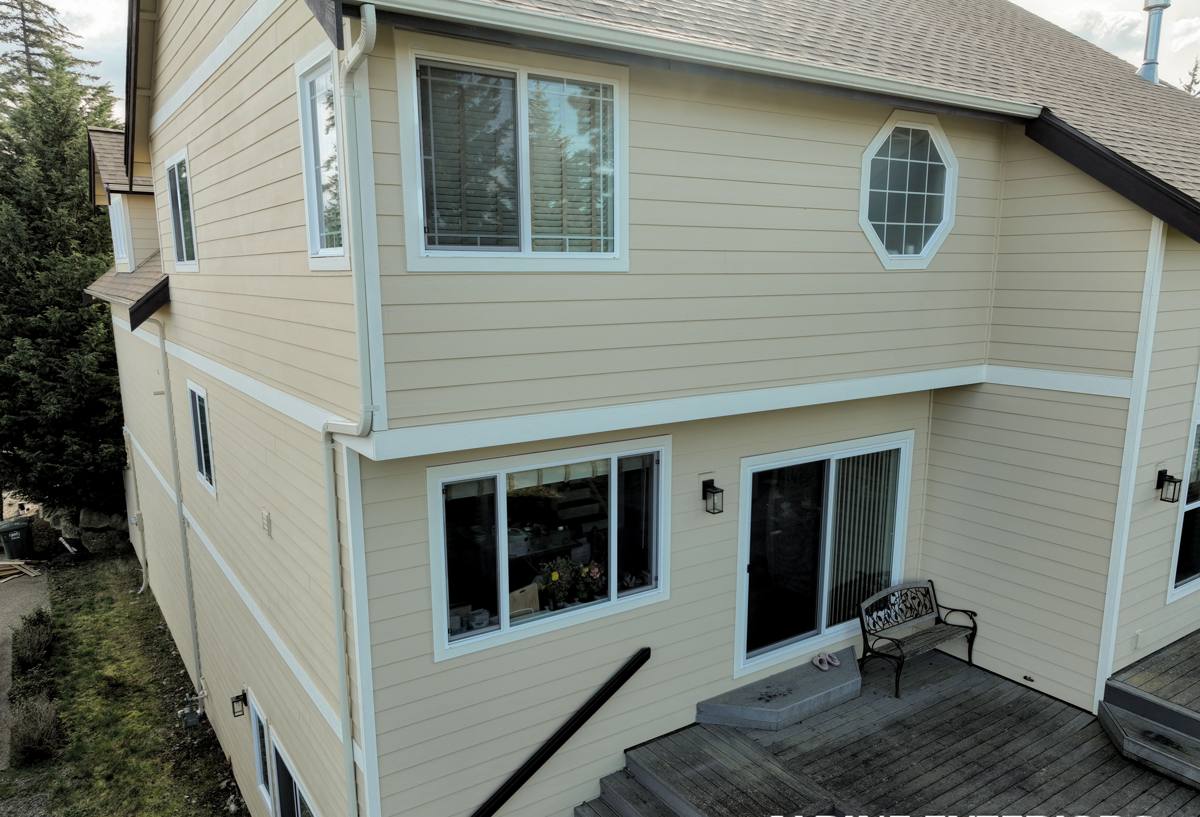
Repair or Replace? Signs You've Crossed the Line
Not every tired deck needs to come out. Boards can often be replaced individually, and railings can sometimes be reinforced. But there's a point where patching a Birch Bay deck is just delaying a bigger, more expensive failure. Here's what tells us it's time to talk about full replacement instead of another repair:
- Soft, spongy, or spring-back decking in more than a few isolated boards
- Rust streaking or crumbling around joist hangers, post bases, or ledger bolts
- The ledger board (where the deck attaches to the house) shows staining, softness, or gaps at the flashing
- Posts or footings that have shifted, settled, or show visible rot at grade level
- Persistent moss or algae growth that returns within weeks of cleaning
- A structure built before current guardrail and stair code requirements, especially on older Birch Bay properties
- Framing lumber that was never rated for ground contact or coastal exposure to begin with
If you're only seeing one or two of these, a repair may genuinely be the right call — we'll tell you that if it's true. If you're seeing several at once, especially anything involving the ledger connection or footings, replacement is usually the more honest recommendation, because those are structural, not cosmetic, problems.
What a Correct Deck Replacement Actually Involves
A deck replacement done right in a coastal Whatcom County setting isn't just swapping old boards for new ones on the same frame. The framing, fasteners, and connection details matter as much as the decking surface — arguably more, since they're the parts you won't see again once the job is closed up.
Ledger Board and Flashing
The ledger is the single most common failure point on any deck attached to a house, and it's where salt air and driving rain do the most damage over time. A proper replacement means removing the old ledger connection entirely, inspecting the rim joist and sheathing behind it for hidden rot, and installing correct flashing that sheds water away from the house rather than trapping it against the wall. This is not a step to shortcut, and it's not visible once the deck is finished — which is exactly why it's worth asking any contractor how they handle it.
Framing and Fasteners
In a salt-air environment, standard galvanized fasteners corrode faster than they would inland. We use stainless steel or heavy-coated fasteners and hardware rated for coastal and ground-contact exposure, and we space joists to match the actual decking material being installed rather than defaulting to a generic layout. Post bases get set above grade and away from standing water wherever the site allows it.
Footings
Footings need to be sized and set to current code depth for our frost and soil conditions, not just poured to match whatever was there before. On older Birch Bay decks, it's common to find undersized or shallow footings that were adequate decades ago but don't meet current requirements — replacement is the right time to correct that.
Decking Surface and Drainage
Board spacing, direction, and the gap left for drainage all affect how well a deck sheds the kind of sideways, wind-driven rain common near the water. Tight or inconsistent gaps trap water and debris, which feeds moss and accelerates rot underneath the surface where you can't see it happening.
Choosing Decking Material for This Climate
There's no single "best" decking material — there's a best material for your budget, your maintenance appetite, and how exposed your deck is to salt air and standing moisture. Here's how the common options actually compare in a Birch Bay setting:
| Material | Salt Air / Moisture Behavior | Maintenance | Typical Lifespan Here |
|---|---|---|---|
| Pressure-treated wood | Performs fine if sealed and maintained; moss and staining show faster without upkeep | Annual cleaning and periodic sealing recommended | 10–15 years with consistent care |
| Cedar | Naturally moisture-resistant, but still needs sealing near the water to hold its color and resist moss | Regular cleaning and re-sealing | 15–20 years with maintenance |
| Composite decking | Resists moisture and moss well; quality varies significantly by product line | Occasional washing, no sealing | 20–25+ years, backed by manufacturer warranty |
| PVC decking | Fully moisture-resistant, holds up well to salt air and wet winters | Lowest maintenance of the group | 25+ years, backed by manufacturer warranty |
We're candid with clients about trade-offs rather than pushing one product line. Composite and PVC cost more up front but remove the moss-and-sealing cycle that wood requires in this climate. Wood costs less initially but only holds up if someone actually keeps up with the maintenance — and in our experience, that upkeep often slips after a year or two, which is when the moss and moisture problems this region is known for start to win.
Permits and Whatcom County Requirements
Most deck replacements in Blaine and unincorporated Whatcom County, including Birch Bay, require a building permit — especially when the deck is attached to the house, elevated more than a modest height off grade, or involves guardrails and stairs. Permit requirements typically cover:
- Footing size and depth appropriate to local soil and frost conditions
- Ledger attachment and flashing details
- Guardrail height and baluster spacing for elevated decks
- Stair rise, run, and handrail requirements
We pull the permits, coordinate inspections, and build to the approved plan — that's part of doing the job correctly, not an upsell. Skipping permits on a replacement can create real problems later, from failed inspections on a future remodel to complications when selling the home.
How Our Replacement Process Works
- On-site assessment — we look at the existing structure, ledger condition, footings, and framing to determine what's actually driving the deterioration.
- Honest scope and estimate — you get a clear breakdown of what needs to be replaced, what materials we recommend for your exposure and budget, and why.
- Permitting — we handle the paperwork with Whatcom County so you don't have to chase it down.
- Demolition and disposal — old decking, framing, and hardware removed and hauled off.
- Structural rebuild — footings, framing, ledger, and flashing done to current code and coastal-rated fastener standards.
- Decking installation — boards, railings, and stairs installed with drainage and spacing appropriate to your material choice.
- Final walkthrough and inspection — we go over the finished deck with you and coordinate the county inspection.
What Affects the Cost of a Deck Replacement
We won't quote a number without seeing the site, but here's what actually moves the price up or down on a Birch Bay project:
| Factor | Why It Matters |
|---|---|
| Deck size and height off grade | Taller decks need more substantial framing, footings, and guardrails |
| Decking material selected | Wood costs less upfront; composite and PVC cost more but reduce long-term maintenance |
| Ledger and framing condition | Hidden rot behind the ledger or in the rim joist adds repair scope once uncovered |
| Footing count and access | More footings, difficult site access, or poor drainage under the deck add labor time |
| Stairs and railings | Multiple stair runs or custom railing details add material and labor |
| Permit and inspection scope | Larger or taller decks may trigger additional engineering or inspection requirements |
Why a Local Crew Matters for This Job
A deck replacement in Birch Bay isn't the same job as one a few miles inland. A crew that already works this area knows which details actually matter here — the fastener grade that holds up to salt air, the flashing detail that stands up to wind-driven rain off the bay, the footing depth that's appropriate for local soil, and the moss-prevention spacing that saves a homeowner from redoing the work in five years instead of twenty. That's knowledge built from working Blaine and Whatcom County properties repeatedly, not from a general contracting manual.
It also means someone who's easy to reach after the job is done. If a question comes up two years from now about maintenance or a warranty item, you're calling a crew that's still working in your neighborhood — not chasing down a company that only showed up once.
If your deck is showing rust at the hardware, softness near the house, or moss that keeps coming back no matter how often it's cleaned, it's worth having someone take a real look before another wet season goes by. We offer free, no-pressure estimates for Birch Bay homeowners — use the form below to get started.