 Blaine Roofing
 Birch Point Decks Work Harder Than Most
If you own a home near Birch Point, you already know your deck isn't just an outdoor living space — it's a structure that takes a daily beating from the water. Salt-laden air off the Strait of Georgia, wind-driven rain that comes in sideways more often than straight down, and a moss season that can stretch from October well into spring all put stress on wood, fasteners, and finishes that a deck fifty miles inland never has to deal with. We repair decks throughout Blaine and Whatcom County, and the decks closest to the water — Birch Point included — consistently show wear patterns that inland decks simply don't.
This page is about deck repair specifically for homes in the Birch Point area: what the local climate does to a deck over time, what a repair actually needs to include to hold up, and how we approach the work so it lasts more than a season or two.
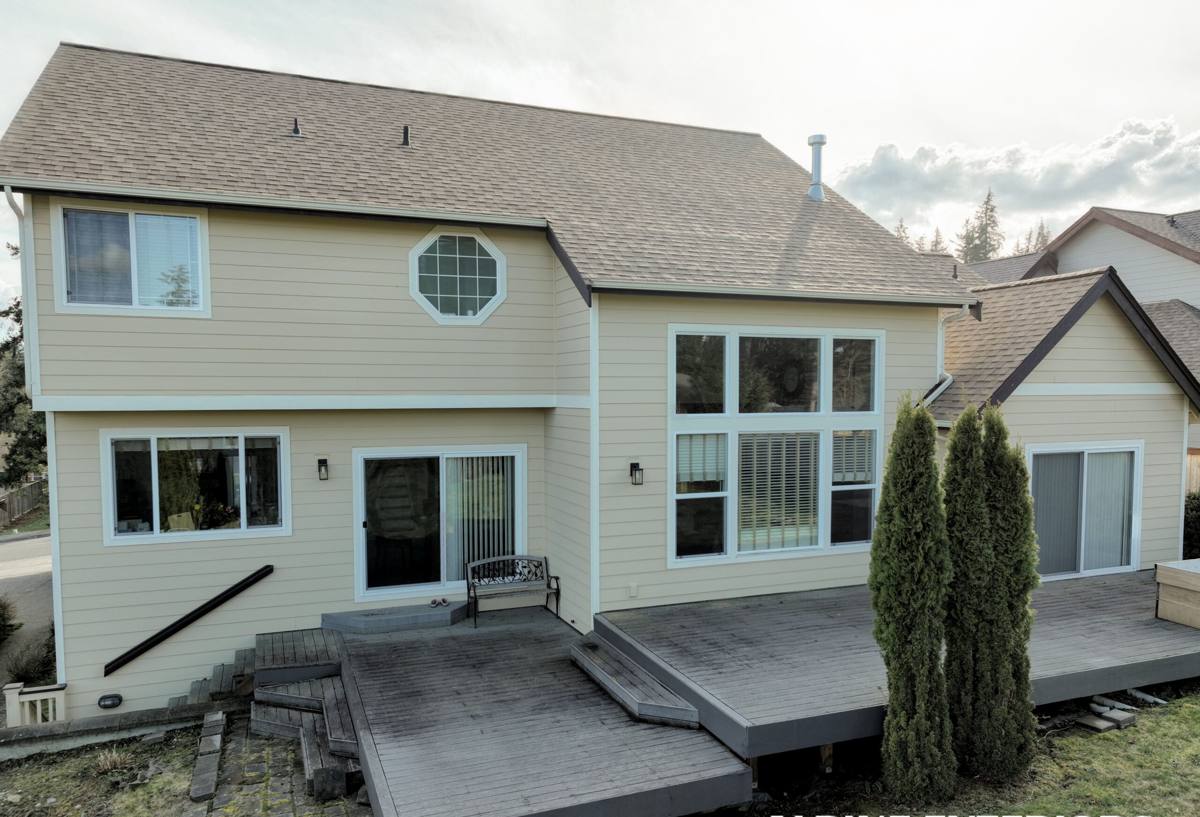
What Salt Air, Rain, and Moss Actually Do to a Deck
Salt Air and Corrosion
Airborne salt doesn't just sit on the surface — it works its way into the microscopic gaps around fasteners, hinges, and metal connectors. Over time it accelerates corrosion on anything that isn't rated for a marine or coastal environment. On a lot of older Birch Point decks we inspect, the wood itself is still sound, but the nails, screws, or joist hangers holding it together have rusted, streaked the decking with dark stains, or lost enough grip strength that boards have started to lift or feel spongy underfoot.
Driving Rain and Trapped Moisture
Rain that comes in at an angle finds its way into places a straight-down rain never would — under railings, behind ledger boards, into end-grain cuts that weren't sealed. Once moisture gets past the surface of a board, especially at a cut end or a fastener hole, it doesn't dry out quickly in this climate. That trapped moisture is what leads to soft spots, rot at the ledger connection to the house, and swelling that eventually cracks or splits boards from the inside out.
Moss and Extended Wet Season
Moss needs shade, moisture, and time — and a long Whatcom County wet season gives it plenty of both. Beyond being slippery and unattractive, moss holds water against the decking surface long after the rain has stopped, which keeps boards damp for extended stretches and speeds up decay underneath. Moss also tends to establish first in the low spots and gaps where drainage is already poor, which is often a sign of a deeper structural or slope issue rather than just a cosmetic one.
Signs Your Deck Needs Repair, Not Just Cleaning
A pressure wash and a fresh coat of stain can make a tired deck look better without fixing what's actually wrong underneath. Here's what tells us a deck needs real repair work:
- Boards that feel soft, spongy, or flex noticeably when you walk on them
- Visible gaps opening up between decking boards or at the rim joist
- Rust streaks bleeding out from screws, nails, or metal connectors
- Railings or guardrail posts that wiggle or feel less solid than they used to
- Persistent moss or dark staining that comes back within weeks of cleaning
- Soft or discolored wood where the deck ledger attaches to the house
- Stairs that feel uneven, bouncy, or have visibly sagging stringers
- A noticeably musty smell coming from underneath the deck
Any one of these on its own might be minor. Several together, especially combined with the deck's age, usually means it's time for a proper structural look rather than another round of surface cleaning.
What a Correct Deck Repair Actually Involves
Structural Framing First
Before we touch a single decking board, we check the framing underneath — the ledger board, joists, beams, and posts. This is the part homeowners can't see and the part that matters most. A deck can have brand-new boards on top and still be unsafe if the ledger connection has rotted or the joists have lost their strength. In a climate like ours, we pay particular attention to ledger flashing, since that's the single most common failure point on older decks near the water.
Decking Boards and Fasteners
Individual board replacement only works when the framing underneath is sound. We match spacing and fastening patterns to the rest of the deck, and we use fasteners rated for coastal exposure rather than standard hardware that will rust out again in a few years and undo the repair.
Railings and Guardrails
Loose or wobbly railings are a safety issue, not a cosmetic one. We re-secure posts to the framing (not just to the decking boards, which isn't strong enough on its own), and we'll flag any railing height or spacing that doesn't meet current code if it's come up during the repair.
Stairs
Stair stringers take concentrated weight and constant flexing, which is why they're often the first thing to show wear. We check stringer condition, footing stability, and connection points as part of any repair scope that includes stairs.
Repair vs. Replace: What Actually Drives the Decision
Not every deck problem means starting over, and not every deck is worth patching. Here's how we think through it:
| Factor | Leans Toward Repair | Leans Toward Replacement |
|---|---|---|
| Framing condition | Solid, dry, no rot at ledger or joists | Rot or soft spots at multiple structural points |
| Extent of damage | Isolated boards, railings, or fasteners | Widespread across most of the deck surface |
| Deck age | Under 15-20 years, original build quality was good | Original materials and hardware near end of service life |
| Material type | Sound cedar or pressure-treated lumber | Older untreated wood or degraded composite |
| Code compliance | Railings, spacing, and footings already meet code | Multiple code issues that would need to be corrected anyway |
We'll walk you through where your deck falls on this before we recommend either path — our goal is an honest answer, not the bigger invoice.
Materials That Actually Hold Up Near the Water
Material choice matters more here than it does further inland. A few honest trade-offs worth knowing before a repair:
Pressure-Treated Lumber
Still the most common decking material and a reasonable choice when properly maintained, but it needs regular sealing in a wet, salty climate or it will check, gray, and absorb moisture faster than it should.
Cedar
Naturally more rot- and insect-resistant than untreated softwoods, and it holds up well here when it's finished and re-sealed on a regular schedule. It's a higher upfront cost with a maintenance commitment attached.
Composite Decking
Lower maintenance and resistant to rot, but not maintenance-free — moss and algae can still grow on the surface in a shaded, damp spot, and composite still needs a sound, properly ventilated frame underneath it. We're upfront that composite trades one kind of upkeep (sealing) for another (surface cleaning and drainage checks), rather than eliminating upkeep altogether.
Fasteners and Hardware
This is where corners get cut most often, and it's the wrong place to save money this close to the water. Stainless steel or coated, coastal-rated fasteners and joist hangers cost more than standard galvanized hardware, but standard hardware is exactly what we find rusted through on repair calls. We don't use it in a repair, because it just means doing the same job again in a few years.
Our Process for Birch Point Deck Repairs
- Inspection. We check the framing, ledger connection, fasteners, and surface condition, and take photos of anything hidden that you'd otherwise never see.
- Honest scope and estimate. You get a clear breakdown of what's structural, what's cosmetic, and what your real options are — repair, partial rebuild, or full replacement.
- Repair work. We fix framing issues first, then move outward to decking, railings, and stairs, using coastal-rated fasteners and hardware throughout.
- Final walkthrough. We check the deck with you before we call it done, including any recommendations for maintenance timing given how the deck sits relative to sun, shade, and wind exposure.
Why Local Experience in Birch Point Matters
A crew that mostly works inland can absolutely repair a deck — but they may not know, without being told, that a joist hanger rated for general use isn't going to last near the water, or that a shaded north-facing deck near the water will need a different moss-prevention approach than one that gets full sun. We work decks throughout Blaine and the surrounding Whatcom County coastline regularly, so we're not guessing at how this climate behaves — we're accounting for it in the materials and methods we use from the start.
That local pattern recognition is also what keeps a repair from becoming a repeat visit. We've seen what fails first on decks in this specific environment, and we build the repair around avoiding that failure again, not just patching what's visible today.
Keeping a Repaired Deck in Good Shape
A good repair lasts a lot longer with a little seasonal attention. A few habits that make a real difference here:
- Sweep leaves and debris off the deck regularly through fall to prevent trapped moisture and moss buildup
- Check and clear gaps between boards so water can drain instead of pooling
- Rinse off salt residue periodically if the deck faces the water directly
- Re-seal wood decking on the schedule recommended for the finish you're using — don't wait until it visibly needs it
- Look underneath the deck once or twice a year for early signs of moisture or soft framing
If you're noticing soft spots, loose railings, rust staining, or moss that keeps coming back on a deck in the Birch Point area, we're happy to take a look and give you a straight answer on what it actually needs. Reach out for a free, no-pressure estimate using the form below.