 Blaine Roofing
 Siding Built for Dakota Creek's Weather, Not Just Any Weather
Homes along Dakota Creek and the surrounding parts of Blaine sit close to Semiahmoo Bay and Drayton Harbor, which means they take on a version of Pacific Northwest weather that's a notch tougher than what you'd find further inland in Whatcom County. Salt-laden air off the water, wind-driven rain that hits siding sideways instead of straight down, and a long, damp moss season that can run eight months or more all work on exterior cladding at the same time. Siding here doesn't just get wet — it gets wet, salted, and shaded, often all in the same week.
That combination is why siding replacement in this neighborhood isn't a one-size-fits-all job. A product or installation detail that holds up fine in a drier inland town can fail early here. We've built our process around what Dakota Creek homes actually face, not a generic checklist.
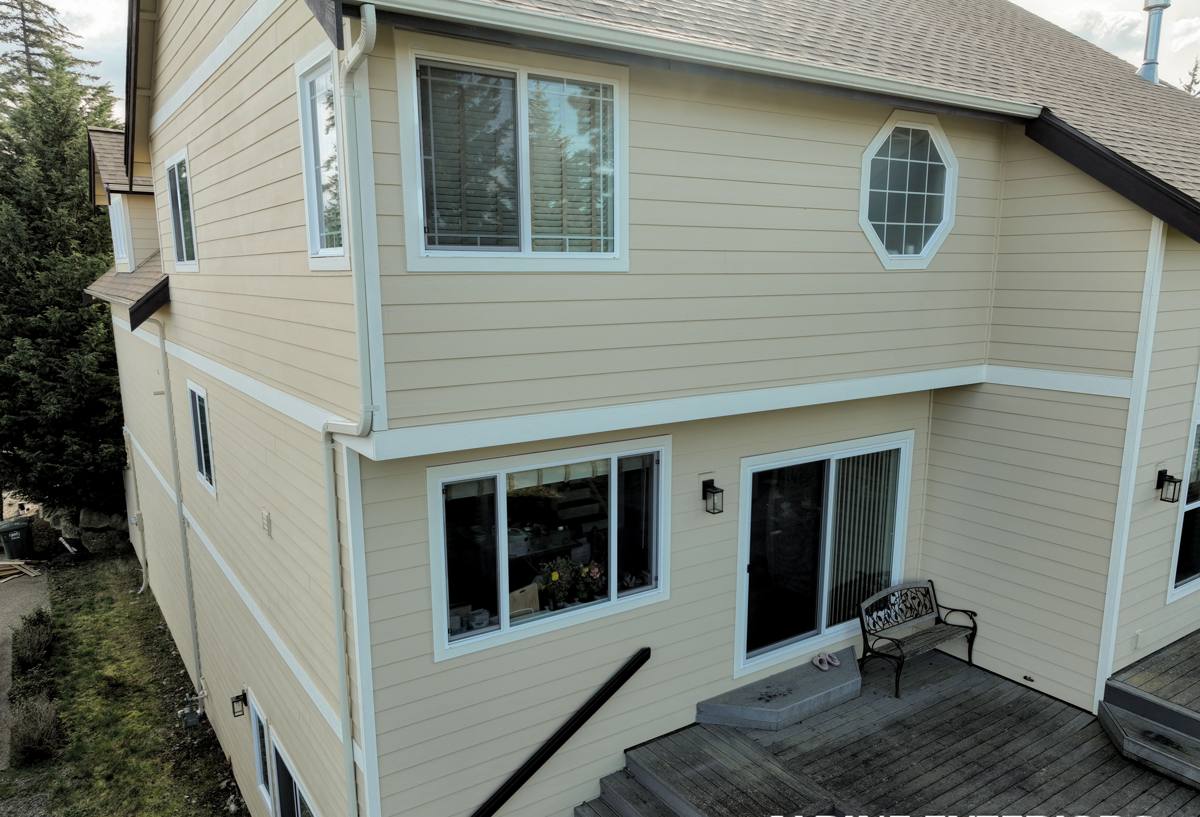
How Salt Air, Rain, and Moss Actually Damage Siding
Salt air
Airborne salt from the bay settles on exterior surfaces and accelerates corrosion of exposed fasteners, trim flashing, and any metal components in the wall assembly. On siding materials that rely on paint film or coatings for protection, salt exposure speeds up chalking, fading, and coating breakdown, which opens the door to moisture intrusion underneath.
Driving rain
Wind off the water doesn't just add volume — it changes the angle of attack. Rain gets pushed up under laps, into butt joints, and around penetrations (hose bibs, vents, light fixtures) that would stay dry in a calmer climate. This is a water-management problem as much as a material problem: the siding, the flashing behind it, and the drainage plane all have to work together.
Extended moss season
Shaded north- and west-facing walls near tree cover stay damp longer here than almost anywhere else in the county. Moss and algae hold moisture against the surface, and on siding with any wood content, that sustained dampness is what eventually leads to swelling, soft spots, and rot — usually starting at the bottom courses and around trim.
Signs Dakota Creek Siding Has Reached the End of Its Life
- Soft, spongy, or crumbling spots when you press on the siding, especially near the bottom edge or under windows
- Persistent moss or algae staining that comes back within weeks of cleaning
- Paint that's peeling, bubbling, or chalking heavily rather than just fading
- Visible gaps, warping, or cupping in individual boards or panels
- Rust streaks below nail heads or trim fasteners
- Rising energy bills with no other explanation, which can point to a failing weather barrier behind the siding
- Interior drywall staining, musty smells, or peeling interior paint on exterior walls
One or two of these on their own might mean a repair. Several at once, especially combined with visible rot, usually means it's time to talk replacement rather than patchwork.
What a Correct Siding Replacement Actually Involves
Replacing siding is not just swapping old boards for new ones. Done right, it's a rebuild of the entire water-management system on that wall:
Tear-off and inspection
We remove the old siding and inspect the sheathing underneath for rot, delamination, or hidden damage — common around window and door openings in a rain-driven climate like this one. Any compromised sheathing gets replaced before anything new goes up.
Weather-resistive barrier
A properly lapped and sealed weather-resistive barrier goes over the sheathing. This is the layer that actually keeps bulk water out if wind-driven rain gets past the siding surface — and it matters more here than in calmer parts of the county.
Flashing at every penetration
Windows, doors, hose bibs, vents, and any other wall penetration get properly integrated flashing, installed so water sheds down and out rather than getting trapped behind the siding. This is the detail that separates a job that lasts twenty-plus years from one that fails in five.
Fastening and clearances
Siding gets fastened to the manufacturer's specifications for exposure and fastener pattern, with correct clearance from grade, roofing, and decks so water doesn't wick up into the material.
Factory-finished siding and trim
We install James Hardie fiber cement with its factory ColorPlus finish system, engineered specifically for this kind of coastal, high-moisture exposure.
Why We Install Only James Hardie
We don't install vinyl, LP SmartSide, or wood siding — not because those products have no place in the market, but because in a salt-air, high-rain, heavy-moss environment like Dakota Creek, they ask homeowners to take on trade-offs we're not willing to put our name behind. Vinyl can warp and fade under sustained UV and temperature swings, and its seams give wind-driven rain more opportunities to find a way in. Wood and wood-composite products need consistent paint maintenance to keep water out, and once that maintenance schedule slips in a climate this damp, rot follows fast.
James Hardie fiber cement is non-combustible, doesn't swell or rot from moisture the way wood-based products can, and comes from the factory with a ColorPlus finish engineered to resist fading and chalking — including the coastal, salt-exposed conditions this stretch of Blaine sees. Hardie also builds specific product lines engineered for different climate zones (HZ5 vs. HZ10), which matters in a region that swings between wet Pacific storms and drier summer stretches. It's backed by a strong transferable warranty when installed to spec, which is exactly what our process is built around.
Material Comparison for This Climate
| Factor | James Hardie Fiber Cement | Vinyl | Wood / Cedar |
|---|---|---|---|
| Salt air resistance | Factory-finished, engineered for coastal exposure | Can chalk and fade with prolonged UV/salt exposure | Depends entirely on paint maintenance |
| Wind-driven rain | Rigid panels, tight installed laps | Seams can allow water intrusion under wind pressure | Joints and seams vulnerable if maintenance lapses |
| Moss/moisture exposure | Does not rot or swell from moisture | Doesn't rot, but traps moisture against sheathing if warped | Prone to rot and softening in shaded, damp areas |
| Fire resistance | Non-combustible | Combustible | Combustible |
| Maintenance | Occasional wash; factory finish holds up | Low, but damage isn't repairable, only replaceable | Regular repainting/sealing required |
Our Process for Dakota Creek Projects
Because we already work regularly in this part of Blaine, we know what to expect before we start: which sides of a house typically see the worst moss buildup, where wind-driven rain tends to concentrate near the water, and what kind of sheathing damage is common on homes of a given age in this area. That local pattern recognition shortens the inspection phase and helps us price the job accurately from the start instead of discovering surprises mid-project.
A typical project runs through these stages:
- On-site inspection and honest assessment of whether repair or full replacement makes sense
- Detailed written estimate covering material, labor, and any sheathing repair contingencies
- Tear-off, sheathing inspection and repair, weather barrier installation
- Flashing installation at every window, door, and penetration
- James Hardie siding and trim installation to manufacturer spec
- Final walkthrough and cleanup
What Drives the Cost
| Cost Factor | Why It Matters |
|---|---|
| Home size and complexity | More wall area, corners, and roof lines mean more material and labor |
| Extent of hidden damage | Rotted sheathing found during tear-off adds repair scope |
| Trim and fascia condition | Trim often fails before the field siding does and may need replacing too |
| Siding profile and finish | Lap width, texture, and color selection affect material cost |
| Accessibility | Waterfront lots, steep grades, or limited access can affect labor time |
We give a firm, written estimate after inspection rather than a rough phone quote — the only way to know real cost drivers like hidden sheathing damage is to actually look at the wall.
Timeline and What to Expect
Most single-family siding replacement projects in this area run from a few days to a couple of weeks depending on home size and how much sheathing repair is needed once tear-off begins. Weather windows matter in a rain-heavy climate like Blaine's, so we plan sequencing to keep walls protected between tear-off and final siding installation rather than leaving sheathing exposed longer than necessary.
After Installation: Keeping It Performing
James Hardie siding is low-maintenance, not no-maintenance. A periodic rinse to knock off salt residue and moss spores, prompt attention to any caulking or sealant that shows wear around trim, and keeping gutters clear so water doesn't pool against the wall will keep the system performing for the long haul. None of this involves the kind of paint upkeep wood siding demands.
Why a Crew That Already Works Dakota Creek Matters
Siding failures in this neighborhood tend to follow patterns tied to sun exposure, wind direction off the water, and tree cover — patterns a crew only sees by working here repeatedly. That familiarity shows up in faster, more accurate inspections, fewer mid-project surprises, and installation details tuned to what actually holds up against Blaine's salt air and driving rain, not just what passes in a drier climate.
If your siding is showing wear, or you just want an honest read on how much life it has left, we're happy to take a look. Request a free, no-pressure estimate using the form below.