 Blaine Roofing
 Roofing in the Dakota Creek Area Wears on Its Own Schedule
Homes in the Dakota Creek area of Blaine sit close enough to the water that the roof over your head is doing more work than a roof twenty miles inland. Salt-laden air off the bay corrodes exposed metal fasteners and flashing faster than plain rain ever would. Driving wind-driven rain finds its way under loose or aging shingles instead of just running off them. And Whatcom County's long, gray, wet season gives moss and algae months at a time to get a foothold on north-facing slopes and shaded valleys. None of that means your roof is doomed early — it means the materials, the details, and the maintenance plan have to be matched to this specific environment, not to a generic roofing spec sheet.
A roof replacement done right in this neighborhood accounts for all three factors at once: corrosion resistance, water-shedding detail work, and moss control built into the install, not bolted on afterward.
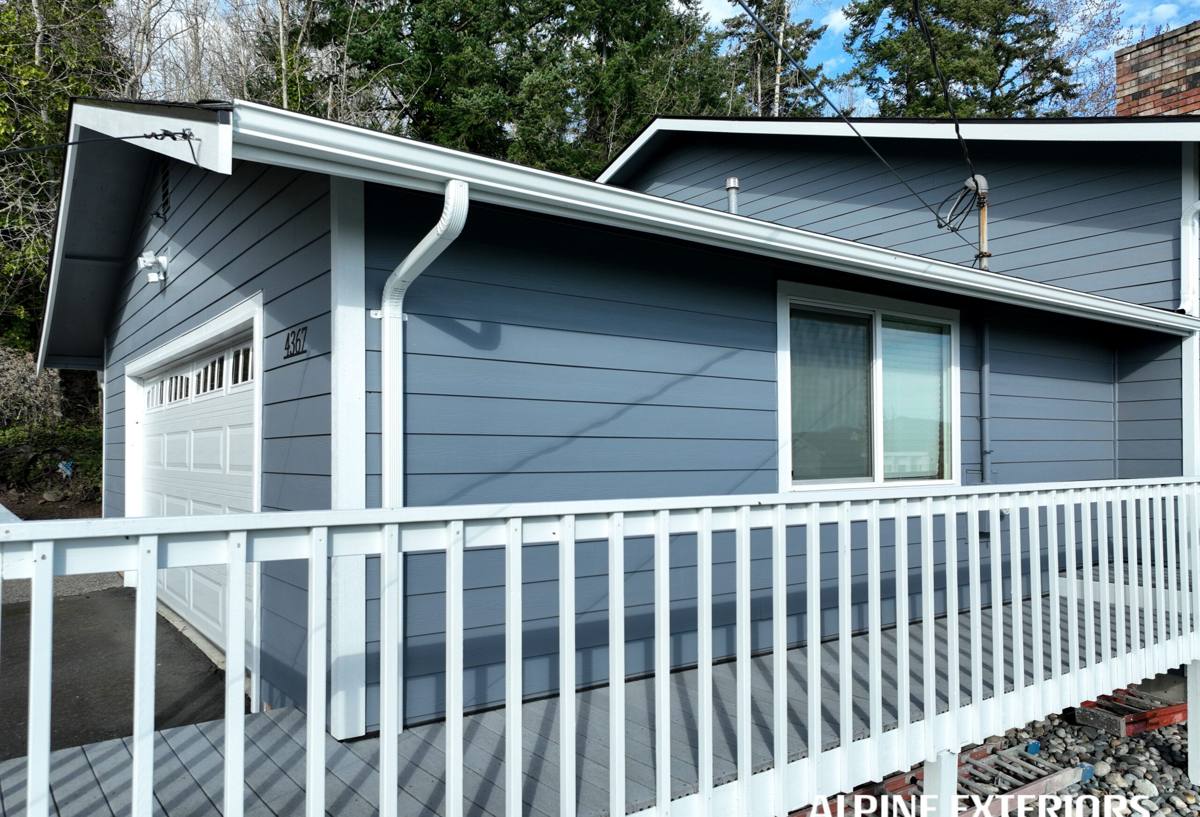
Signs a Dakota Creek Roof Has Reached Replacement Age
Repairs make sense when a roof has isolated problems and years of usable life left. Replacement makes sense when the damage is systemic or the roofing material itself is past its service life. In this area, we typically see roofs pushed toward full replacement by a combination of age and moisture exposure rather than one dramatic failure.
- Granule loss heavy enough that you can see bare, shiny patches on multiple shingles, not just a few
- Moss mats thick enough to hold water against the shingle surface for days after rain stops
- Soft or spongy spots in the decking felt underfoot in the attic or from a ladder inspection
- Curling, cupping, or cracked shingles concentrated on the roof faces that catch the most wind and rain
- Rusted or pitted flashing around chimneys, vents, and valleys
- Daylight visible through the roof deck from inside the attic
- A roof already 20-plus years old with no major work done, regardless of how it looks from the ground
If you're only seeing one or two of these, a targeted repair may still be the right call. If several show up together, replacement is usually the more honest recommendation, because patching a roof that's failing systemically just delays the same expense while risking interior damage in the meantime.
What a Correct Replacement Involves Here
Full Tear-Off and Deck Inspection
We don't recommend layering new shingles over old ones on homes in this area. A full tear-off is the only way to actually see the decking underneath, and given how much moisture this climate pushes through worn roofing over time, that inspection matters. Soft or delaminated plywood gets replaced before anything new goes down — installing a new roof over a compromised deck just hides the problem for another few years.
Underlayment and Moisture Barriers
This is where coastal Whatcom County roofs earn their keep or fail early. We use synthetic underlayment as the standard base layer for its water resistance and durability, and we add self-adhered ice-and-water membrane at the vulnerable points: valleys, eaves, chimneys, skylights, and any low-slope transitions. Those are the spots where wind-driven rain gets pushed backward under standard shingle laps, and they're the first place a cut-rate install shows its age.
Flashing and Fasteners
Salt air is hard on unprotected or lower-grade metal. We spec corrosion-resistant flashing and fasteners for anything near the coast, and we pay particular attention to step flashing at walls and chimneys, since that's where poor material choices show up first as rust streaks and, eventually, leaks.
Ventilation
A roof that can't breathe traps moisture in the attic, which shortens the life of the decking and the shingles from underneath, where you can't see it happening. We check intake and exhaust ventilation as part of every replacement and correct imbalances rather than just replacing the surface and leaving an underlying moisture problem in place.
Material Options for This Climate
There's no single "best" roofing material for every home — it depends on your roof's slope, sun and shade exposure, budget, and how much long-term maintenance you're willing to take on. Here's how the common options stack up specifically against salt air, moss, and driving rain.
| Material | Moss & Moisture Resistance | Salt Air Durability | Typical Lifespan | Maintenance Needs |
|---|---|---|---|---|
| Architectural asphalt shingles | Good with algae-resistant granules; needs periodic moss removal on shaded slopes | Good with corrosion-resistant flashing and fasteners | 25-30 years | Moderate — periodic debris and moss checks |
| Standing seam metal | Excellent — sheds moisture and moss struggles to anchor | Very good with coastal-rated coatings and fasteners | 40-plus years | Low |
| Cedar shake | Poor without diligent upkeep — retains moisture and feeds moss growth | Fair — needs regular treatment near salt air | 20-25 years with upkeep | High — regular treatment and moss control required |
| Synthetic composite shingles | Good — engineered to resist moisture absorption | Good | 30-plus years | Low to moderate |
We install architectural shingles and metal roofing as our primary standards for this area because both hold up to salt air and moss with reasonable, predictable maintenance. We're generally cautious about cedar shake this close to the water — it's a good-looking product, but the maintenance burden to keep it moss-free and watertight in a wet coastal climate is real, and we'd rather be upfront about that trade-off than sell a product that will demand more attention than most homeowners want to give it.
Our Replacement Process
1. On-Site Inspection and Honest Assessment
We walk the roof, check the attic, and tell you plainly whether you're looking at a repair or a replacement — and why.
2. A Written Estimate You Can Actually Compare
Material, underlayment, flashing, ventilation work, and labor spelled out, so you're not guessing what's included.
3. Scheduling Around Weather
We plan tear-off days around forecast windows. A partially torn-off roof and an incoming storm off the Salish Sea is not a situation we put a home into.
4. Tear-Off, Deck Repair, and Installation
Full removal, deck inspection and repair as needed, then underlayment, flashing, and the roofing material itself, installed to manufacturer spec.
5. Site Cleanup and Final Walkthrough
Magnetic sweep for nails, debris removal, and a walkthrough so you can see the finished work and ask questions before we consider the job done.
Why Local Experience in This Area Matters
A crew that only works inland doesn't think about corrosion-resistant fasteners as a default — it's an upcharge they mention if you ask. A crew that regularly works the Dakota Creek area and the rest of Blaine's coastal neighborhoods builds that into the estimate from the start, because we've seen what standard-grade materials look like after a few winters this close to salt air. The same goes for moss: we know which roof orientations in this area tend to hold shade and moisture longest, and we design the underlayment and any preventive treatment around that, rather than treating every roof the same regardless of which way it faces.
Familiarity with local permitting and inspection expectations also keeps a project moving instead of stalling on paperwork you didn't know you needed.
What Affects the Cost of a Replacement
Every roof is different, but the same handful of factors drive most of the cost variation we see on jobs in this area.
| Factor | Why It Matters |
|---|---|
| Roof size and number of facets | More square footage and more valleys, hips, and dormers mean more material and labor |
| Deck condition | Rotten or soft decking found during tear-off adds repair cost that can't be known until the old roof is off |
| Material choice | Asphalt, metal, and composite carry different material and labor costs per square |
| Roof pitch and access | Steep or hard-to-access roofs take longer and require more safety setup |
| Ventilation and flashing corrections | Fixing an underlying airflow or flashing problem adds work but prevents repeat failures |
We'd rather walk you through these factors on your specific roof than quote a broad number that doesn't hold up once we're actually up there. A written estimate after inspection is the only number worth relying on.
Caring for a New Roof in a Wet, Salty Climate
A correctly installed roof still benefits from a little seasonal attention in this climate, especially where moss and salt air are concerned.
- Keep gutters clear so water isn't sitting against the roof edge during heavy rain
- Trim back overhanging branches that keep shaded roof sections damp longer than the rest of the roof
- Have moss growth removed at the first sign of it rather than letting it establish over a full wet season
- Check attic ventilation isn't blocked by insulation or debris
- Have flashing and fastener points glanced at every year or two, particularly after a hard windstorm
None of this is heavy maintenance — it's the kind of upkeep that protects the investment you just made and keeps small issues from becoming roof-age problems again in ten years instead of twenty-five.
Get a Straightforward Estimate
If your roof in the Dakota Creek area is showing its age, we're happy to take a look, tell you honestly whether you're looking at repair or replacement, and put together a clear, no-pressure estimate. Use the form below to get started.