 Blaine Roofing
 Built for What Dakota Creek's Weather Actually Does to a House
Homes in Dakota Creek sit close enough to the water that the weather isn't an abstraction — it's a daily condition. Salt-laden air moves through the trees, driving rain comes in sideways off the bay, and a long, gray moss season keeps north-facing walls damp for months at a stretch. Siding here doesn't get the break between storms that it might further inland in Whatcom County. It gets wet, it dries slowly, and then it's wet again before it's fully recovered.
That combination is hard on a lot of common siding materials. Salt air accelerates corrosion on fasteners and exposed trim. Constant moisture feeds moss, algae, and mildew, especially on the shaded sides of a home that never get direct sun to dry them out. And driving rain finds every gap in flashing, caulking, or panel overlap that wasn't detailed correctly the first time. A siding job that would hold up fine in a drier part of the state can fail years early in Dakota Creek if it isn't built specifically for this exposure.
Dakota Creek is a residential area, and the homes in it face the same coastal reality whether they're older builds or recent construction: the exterior envelope has to manage moisture as a constant, not an occasional event. This page is about one service, done one way, for this one area — James Hardie fiber cement siding, installed correctly, for homes that face Dakota Creek's particular mix of salt, rain, and moss.
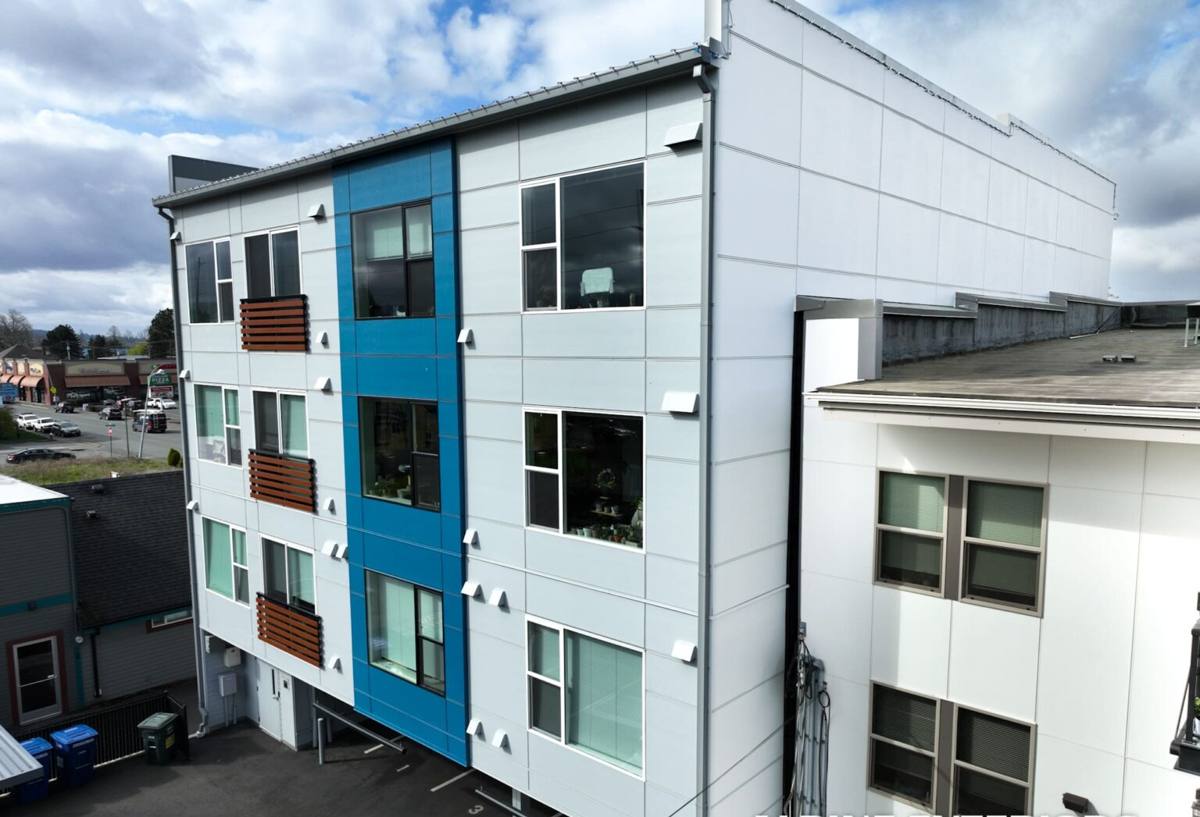
Why We Install Only James Hardie Fiber Cement Siding
Blaine Roofing Co installs James Hardie siding exclusively. We don't install vinyl, LP SmartSide, cedar, primed spruce, or other fiber cement brands like Cemplank or Allura. That's not a marketing position — it's a standard we hold because of what we've seen hold up on this coastline over time, and what hasn't.
Fiber cement as a category is non-combustible and dimensionally stable in a way wood-based products simply aren't. But not all fiber cement is engineered the same way, and James Hardie is the manufacturer that builds region-specific product lines rather than a single one-size-fits-all board. For a marine-influenced climate like Blaine's, that distinction matters more than it would somewhere dry and inland.
HZ5 Engineering for Coastal Exposure
James Hardie's HZ5 product line is engineered specifically for regions with significant moisture exposure, including areas near saltwater. It's formulated to hold up against moisture-related wear better than a generic fiber cement board — which matters when the siding in question is going to sit a few minutes from the water for the next several decades, through every wet winter Whatcom County produces.
ColorPlus Factory Finish
James Hardie's ColorPlus finish is baked on at the factory under controlled conditions, rather than field-painted after installation. That matters here because field-applied paint is more vulnerable to the chalking, fading, and peeling that salt air and sustained UV exposure cause over time. A factory finish also means consistent color across the whole house, including any future repairs or additions.
A Warranty Backed by the Manufacturer
James Hardie backs its siding with a substantial, transferable limited warranty — a real consideration for homeowners who may sell within the life of the siding. That warranty is tied to installation being done to Hardie's specifications, which is one more reason installation quality isn't optional if you want the product to perform the way it's engineered to.
What Correct Fiber Cement Installation Actually Involves
Fiber cement siding is only as good as the installation behind it. The board itself resists moisture, insects, and fire well — but a poorly installed job can still trap water behind the siding, crack panels at fastener points, or leave gaps that driving rain will eventually find. On a Dakota Creek home, those mistakes get exposed faster because the weather here is more aggressive than the manufacturer's baseline assumptions.
Moisture Management Behind the Siding
A correct installation starts with a drainage plane — house wrap or building paper, properly lapped, with a rainscreen or furring strategy where conditions call for it. The siding itself is a weather-resistive layer, not a waterproofing membrane on its own, and the assembly behind it has to be able to shed and dry out any moisture that does get past the surface. In a climate where walls can stay damp for extended stretches, that drainage gap is what keeps trapped moisture from becoming rot.
Fastening, Clearances, and Caulking
James Hardie specifies fastener type, spacing, and placement for a reason — over-driven or under-driven nails, or fasteners placed too close to a panel edge, create weak points that crack under thermal movement or wind load. Ground clearance, deck and roof-line clearances, and proper caulking at trim and penetrations all need to be held to spec, not approximated on-site. In a climate that gets sustained driving rain, these details are what separate siding that lasts thirty years from siding that needs attention again in five.
Trim, Flashing, and Joint Treatment
Butt joints, window and door trim, and horizontal transitions are common failure points when flashed incorrectly. Every horizontal joint and top edge that isn't self-flashing needs to be treated so water is directed out and away from the wall assembly instead of being absorbed into it — a detail that's easy to skip and expensive to fix after the fact.
How We Approach a Dakota Creek Siding Project
On-Site Assessment
We start by walking the exterior and looking specifically at the sides of the home that take the worst of the weather — usually west- and south-facing walls exposed to driving rain, and shaded north-facing areas prone to moss and lingering moisture. We check the condition of the existing wall assembly, not just the visible siding, since what's happening underneath is what determines the real scope of the job.
Installation to Manufacturer Spec
Our crews install to James Hardie's published installation guidelines — clearances, fastener schedules, joint treatment, and flashing details included. We don't treat those specs as a suggestion to work around when a wall doesn't cooperate; the details get solved correctly rather than skipped to save time.
Final Walkthrough
Once installation is complete, we walk the job with the homeowner, checking caulking lines, trim details, and any transitions to roofing, decking, or masonry. Anything that needs adjustment gets handled before we consider the job finished.
Signs Your Current Siding Is Struggling With Dakota Creek's Climate
Not every siding problem is obvious from the ground, and some of the most damaging issues start small and stay hidden behind the surface for a while. Homeowners in this area should watch for:
- Persistent moss or algae growth that returns quickly after cleaning, especially on shaded walls
- Soft or spongy spots when pressed, which can indicate moisture trapped behind the siding
- Visible cracking or splitting at panel edges or fastener locations
- Peeling, chalking, or fading paint that's noticeably worse on the sides exposed to wind-driven rain
- Rust streaking near fasteners or trim, a sign of corrosion from salt-air exposure
- Gaps opening up at caulk lines, trim joints, or window and door surrounds
- Warping or bowing panels, particularly common on wood-based or composite siding
Any one of these on its own might be minor. Several together, especially on the weather-exposed side of a home, usually mean the assembly behind the siding needs a closer look, not just a repaint.
What Affects the Cost of a Fiber Cement Siding Project
Every home is different, and we don't quote a job without seeing it, but a few factors consistently move the cost of a fiber cement siding project up or down:
| Factor | Why It Matters |
|---|---|
| Condition of existing wall assembly | Rot or moisture damage found during tear-off adds repair scope before new siding goes on |
| Home size and wall complexity | More corners, dormers, and trim details mean more labor and material cuts |
| Siding profile and finish | Lap width, shingle-style panels, and specific ColorPlus finishes vary in material cost |
| Access and site conditions | Tight lots, slopes, or limited staging area near the water can affect labor time |
| Trim and detail work | Corner boards, window casings, and fascia detailing add both material and labor |
| Scope of tear-off | Full removal of old siding versus partial replacement changes disposal and labor costs |
The only way to get real numbers is a walk-through of the specific home, but these are the variables worth understanding before comparing quotes from different contractors.
Why Hiring a Crew That Already Works Dakota Creek Matters
Installation manuals are written for average conditions. A crew that regularly works Dakota Creek and the surrounding Blaine coastline has already seen how those average conditions don't quite apply here — where moss builds up fastest, which walls take the worst of the wind-driven rain, and how salt air behaves differently on fasteners and trim than it does even a few miles further inland.
That local familiarity shows up in small decisions during a project: where to be more conservative with clearances, which joints deserve extra attention during flashing, and what a homeowner in this specific area should realistically expect for moss and mildew maintenance year to year. It's the difference between a general contractor doing an adequate job by the book and a local crew building for the actual conditions the siding will face every winter it's out there.
It also shows up after the job is done. A crew familiar with Dakota Creek knows what a normal maintenance rhythm looks like here versus a sign that something was installed wrong, which makes it easier to give homeowners honest answers if a question comes up down the road.
Caring for Fiber Cement Siding After Installation
James Hardie siding is low-maintenance compared to wood-based alternatives, but low-maintenance doesn't mean no maintenance, especially in a climate like this one. A periodic rinse to keep moss and algae from taking hold, particularly on shaded walls, goes a long way toward keeping the finish looking the way it did on installation day. Keeping gutters clear and vegetation trimmed back from the siding reduces the moisture and organic buildup that drives most of the staining homeowners see here. Caulking should be checked periodically as well, since it's the first line of defense at trim and joints and the component most likely to need attention over time.
Done right, a James Hardie installation on a Dakota Creek home is built to handle this environment for decades with minimal fuss — but that starts with the installation being correct on day one, not with anything the homeowner has to do afterward.
If your Dakota Creek home needs new siding, or you're not sure whether your current siding is holding up the way it should, we're happy to take a look. Reach out for a free, no-pressure estimate — we'll walk the property, answer your questions honestly, and give you a straight assessment of what the home actually needs.