 Blaine Roofing
 Deck Replacement Built for Dakota Creek's Conditions
Dakota Creek sits close enough to the water and to the creek corridor itself that homes in this part of Blaine deal with a specific mix of conditions: salt-laden air drifting in off the bay, driving rain that comes ashore with real force, and shaded, tree-lined lots near the creek that stay damp long after the rest of Whatcom County has dried out. That combination is hard on an outdoor deck in ways that aren't always obvious until the structure is a decade or so old and starting to show it.
Deck replacement is a different job than deck repair, and it's a different job than building a first deck on a bare lot. It starts with an honest look at what's actually failed underneath the surface, not just the boards you can see from the yard. This page covers what a Dakota Creek deck replacement should actually involve, what this area's shaded, creekside conditions do to an aging deck, and how our process works when the goal is tearing out a tired structure and replacing it with one built to last here.
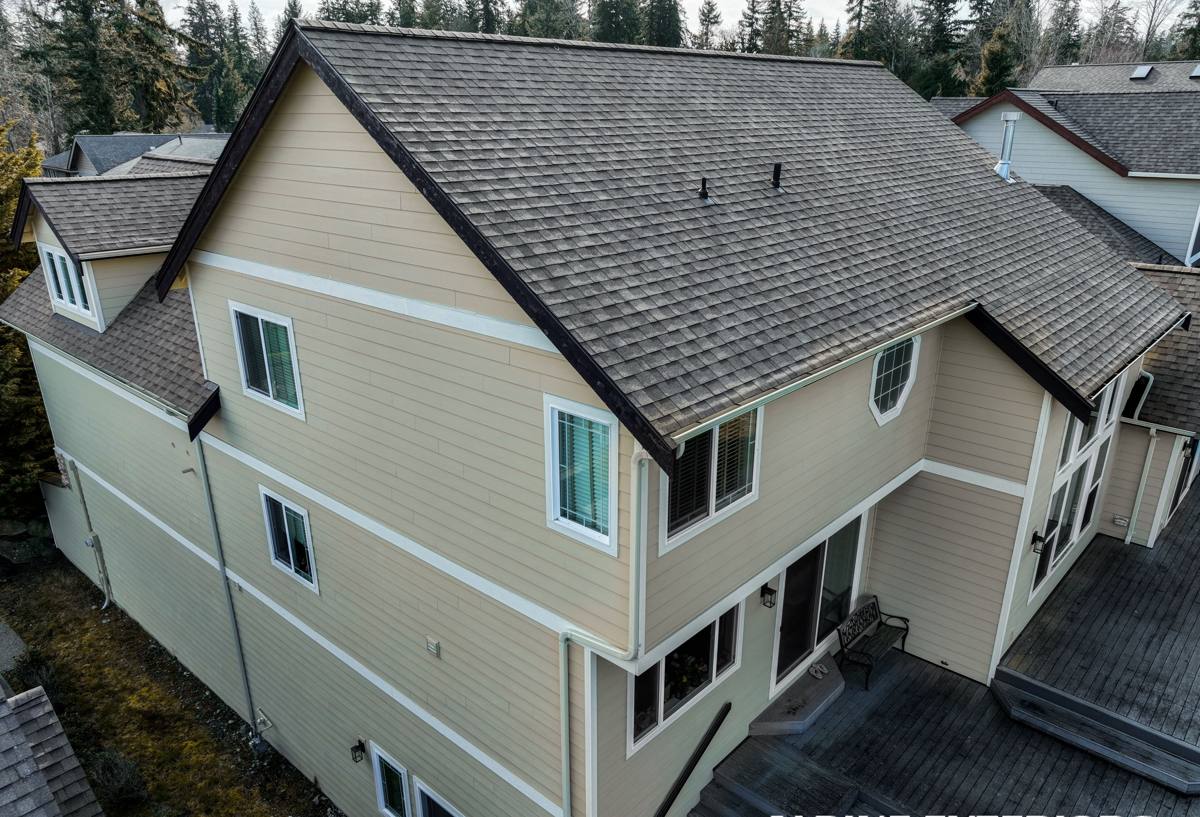
Signs a Dakota Creek Deck Needs Replacing, Not Just Repairing
Homeowners often call about a squeaky board or a wobbly railing and are surprised to learn the fix isn't a quick patch. A few signs point toward full replacement rather than a repair:
- Soft or spongy spots in the decking surface, which usually means moisture has already reached the framing underneath
- Rust staining bleeding out around fasteners, a sign the hardware is corroding faster than it should
- A ledger board connection (where the deck ties into the house) that looks discolored, swollen, or separated from the wall
- Posts or railings that shift or flex more than they used to, even if the boards on top still look fine
- Persistent moss or dark staining that keeps coming back within weeks of cleaning, suggesting the surface is staying wet longer than it should
- A structure old enough that it predates current guardrail height, baluster spacing, or footing requirements
Any one of these on its own might be repairable. Two or three together, especially on a deck original to the house, usually means the substructure has aged out and a patch job would just be delaying the same repair a few years down the road.
What the Dakota Creek Environment Does to an Aging Deck
Shade and Moisture From the Creek Corridor
Lots near Dakota Creek tend to sit closer to tree cover and the creek's drainage than open, bayfront properties elsewhere in Blaine, and that shade keeps decks wetter for longer stretches after each rain. A deck out in full sun dries between storms; a shaded deck near the creek often doesn't get that chance, which is exactly the setup moss, algae, and slow wood decay need to take hold.
Salt Air Layered on Top
Even away from the immediate waterfront, Blaine homes get a steady dose of salt-laden air, and that air accelerates corrosion in exposed metal — fasteners, post brackets, railing hardware. Combine that with the extra moisture retention near the creek and standard hardware corrodes noticeably faster here than it would on a drier, sunnier lot.
Debris and Organic Buildup
Tree cover near the creek means more leaf litter, needles, and organic debris landing on and around the deck. Left to accumulate in the gaps between boards or against the base of posts, that debris holds moisture against the wood and gives moss something to grip, which is a bigger factor here than on open lots with less tree canopy nearby.
What a Correct Deck Replacement Involves
The decking surface is what most homeowners picture when they think "new deck," but replacement is really a structural project first and a finish project second. A correctly done replacement on a Dakota Creek property includes:
- Full tear-out and disposal of the old decking, railing, and any framing that's compromised — not just the boards on top
- Inspection of the ledger board connection to the house, with correct flashing installed on reconnection since that joint is one of the most common failure points on an older deck
- New or reinforced footings sized to current code, especially on older decks originally built to lighter footing standards
- Framing material rated for sustained moisture exposure, sized correctly for the span and load rather than matched to whatever was there before
- Corrosion-resistant fasteners and hardware throughout, given the combination of salt air and creekside moisture this area sees
- Board gapping and layout that accounts for slower drying time under shade, so water actually has a path to drain and air can move underneath
- Guardrail height, baluster spacing, and stair details brought up to current code, since many older decks in this area predate the requirements in place now
Reusing sound existing framing can make sense on some jobs and save real money, but that decision should follow an actual inspection, not an assumption. We'll tell you plainly when something underneath is worth keeping and when it isn't.
Choosing Decking Material for a Shaded, Creekside Lot
Material choice matters more on a shaded Dakota Creek lot than it would on an open, sun-exposed deck elsewhere, because the extra moisture and reduced drying time widen the performance gap between materials.
| Material | Handling Shade & Moisture | Moss Resistance | Upkeep |
|---|---|---|---|
| Cellular PVC | Excellent — no wood fiber to absorb moisture | Strong, smooth non-porous surface | Occasional washing |
| Capped composite | Strong — cap layer resists moisture and staining | Good on most product lines | Occasional washing |
| Uncapped composite | Moderate — some absorption at exposed fiber and cut ends | Fair; more prone to buildup in shade | Periodic cleaning |
| Cedar | Moderate — needs sealing to hold up in sustained shade | Fair when sealed and maintained regularly | Regular oiling or sealing |
| Pressure-treated wood | Weak in shaded, moisture-retentive settings over time | Poor without frequent treatment | Regular sealing or staining |
We don't push one material on every job. A homeowner replacing a rarely-shaded deck section might reasonably choose wood and stay on top of sealing it. On a deck that sits mostly under tree cover near the creek, we'll say plainly that a capped composite or PVC product will save a lot of maintenance headaches over the years, because that's a maintenance and moisture-behavior trade-off, not a sales pitch.
Hidden Fastener Systems
Where the decking product supports it, we install with hidden fastener systems that attach boards from underneath or the side rather than through the top face. Less exposed metal on the walking surface means less surface area for salt-air corrosion to start, and it keeps the deck looking clean without screw heads staining the boards around them over time.
Bringing an Older Deck Up to Current Code
A lot of the decks we're asked to replace in this area are original to houses built decades ago, before current guardrail height, baluster spacing, stair rise-and-run, and footing depth requirements were in place. Replacement is the natural point to correct all of that, since it's far more disruptive and costly to retrofit those details onto an existing structure later. We handle permitting through the City of Blaine and Whatcom County as part of the replacement rather than leaving it for the homeowner to sort out, and we build to the current code from the footings up.
How Our Replacement Process Works
We start with a site visit and an actual inspection of the existing deck — probing the ledger connection, checking footings and posts, and looking for soft framing under the decking rather than just assessing what's visible from a walk-around. That tells us honestly how much of the existing structure, if any, is worth keeping. From there we talk through material options that fit the budget and how the space actually gets used, factoring in how much shade and tree cover the specific lot sees.
Once permitted, tear-out comes first, followed by any footing and framing work, then the new decking surface, railing, and stairs. We finish with a walkthrough of what the material you chose needs going forward — for most modern decking that's minimal, but it's worth fifteen minutes to go over it rather than assume you already know.
Keeping a New Deck Ahead of Moss and Moisture
Even a well-built replacement deck benefits from routine attention in a shaded, creekside setting like this one:
- Clear leaves and organic debris out of the gaps between boards regularly, since shaded lots accumulate it faster than open ones
- Rinse the deck surface periodically to clear moss spores and organic buildup before it works into the surface or cap layer
- Check railing posts and hardware once a year for early corrosion or loosening, particularly heading into the wet season
- Trim back branches that overhang the deck to cut down on debris and let more light and airflow reach the surface
- Address any soft framing or standing water underneath right away — it's a structural issue, and it only gets more expensive the longer it sits
Why It Matters That We Already Work Dakota Creek
A crew that mainly builds on open, sunny lots elsewhere in the county can still do competent work, but a Dakota Creek replacement has variables that don't come up as often on those jobs — shade and moisture retention from the creek corridor, debris load from nearby tree cover, and the layered effect of salt air on top of all of it. Working this specific area regularly means we're not guessing at how those conditions have treated the deck we're replacing, or which materials and fastener grades are actually worth the extra cost here versus elsewhere in Whatcom County.
That familiarity shows up in the judgment calls that matter most on a replacement — knowing which parts of an old structure are salvageable and which aren't, and being straightforward with you about it either way.
Get a Straight Answer About Your Deck
If your deck near Dakota Creek is showing soft spots, corrosion, or just feels tired, we're happy to come take an honest look and walk you through what replacement would actually involve on your property. Reach out below for a free, no-pressure estimate.