 Blaine Roofing
 Building Decks for Sandy Point's Waterfront Conditions
Sandy Point sits right up against the water south of Blaine, and that location shapes almost every decision that goes into a deck out here. Homes in this part of Whatcom County take a steady dose of salt-laden marine air, wind-driven rain off the Strait, and a wet season long enough to grow moss on just about anything that holds moisture. A deck built the same way you'd build one for an inland lot doesn't hold up the same way at Sandy Point — the hardware corrodes faster, the boards stay damp longer, and the framing underneath needs more airflow than most general contractors think to plan for.
This page covers what we've learned building and repairing decks specifically in this community: what the climate actually does to a deck over time, what a correctly built one involves, and how our process works when a Sandy Point homeowner calls us for a new build or a rebuild of something that didn't hold up.
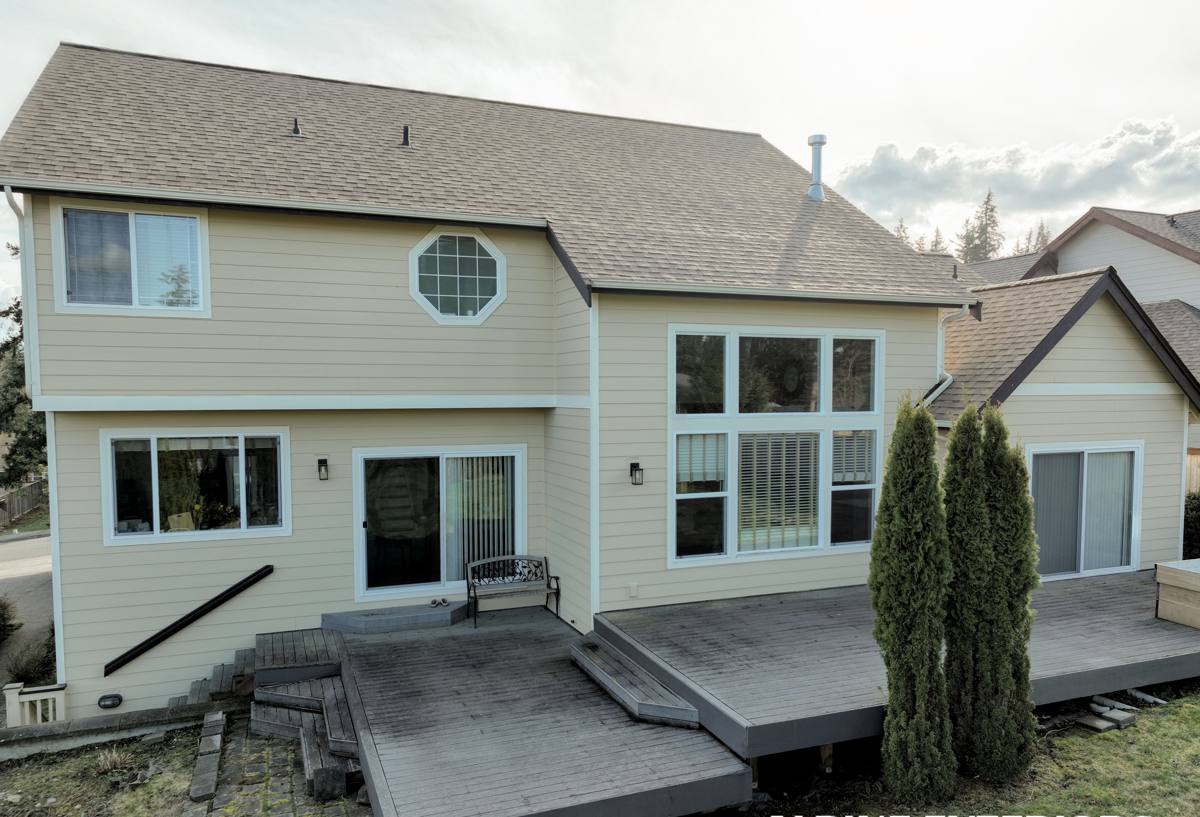
What Sandy Point Homes Need From a Deck
Salt Air and Metal Fasteners
Airborne salt is the single biggest difference between building here and building a few miles inland. It settles on every exposed metal surface — nail heads, screw shanks, joist hangers, railing brackets — and starts a slow corrosion process that ordinary galvanized hardware isn't rated to resist long-term. On a standard build, that shows up as rust streaks bleeding through decking within a few years and, eventually, fasteners that lose their grip. The fix isn't complicated, but it does mean using hardware rated for coastal exposure from the start, not waiting until the cheaper stuff fails.
Wind-Driven Rain and Water Management
Rain here rarely falls straight down. Wind off the water pushes it sideways into ledger boards, under railing posts, and into any gap where end grain is exposed. A deck that isn't detailed for that kind of exposure will trap water in places a drier climate would never test, which is exactly where rot starts — at the ledger connection to the house, around post bases, and at butt joints in the decking itself.
Moss, Algae, and Shade
Whatcom County's long wet season, combined with the shade many Sandy Point lots get from surrounding trees and neighboring structures, gives moss and algae plenty of time to establish on decking surfaces. Beyond looking bad, a mossy deck surface holds moisture against the boards and gets slick underfoot — a real slip hazard on stairs and near hot tubs or outdoor kitchens where people are walking in wet feet.
Choosing the Right Decking Material for This Location
Every decking material handles this climate differently. There's no single "best" choice — it depends on how much maintenance you want to do and what look you're after — but the trade-offs are worth laying out honestly.
| Material | Salt air / moisture behavior | Moss resistance | Maintenance | Typical cost range |
|---|---|---|---|---|
| Pressure-treated wood | Absorbs moisture readily; needs sealing to slow it down | Low — needs regular cleaning | Annual cleaning and re-sealing | Lowest upfront cost |
| Cedar | Naturally moisture-resistant but still needs finish upkeep in salt air | Low to moderate | Periodic cleaning, oiling or staining | Mid-range |
| Composite decking | Doesn't absorb water or rot; caps resist salt staining | Higher — smoother caps shed moss more easily | Occasional washing, no sealing | Mid to upper range |
| PVC decking | Fully synthetic, unaffected by moisture absorption | Highest of the common options | Lowest — soap and water | Upper range |
We've installed all of these materials for Sandy Point clients. For a home right on the water with heavy salt exposure, we typically steer people toward composite or PVC decking simply because the maintenance burden of a wood deck in that setting is real — it's not that wood "fails," it's that keeping it sealed and clean on the schedule salt air demands is more work than most owners want to sign up for. If you want the look and feel of real wood and are willing to stay on top of maintenance, cedar remains a solid, honest choice.
What a Correctly Built Deck Involves Here
Footings and Ledger Attachment
Sandy, low-lying soil is common around Sandy Point, and footings need to be sized and set to the depth local code requires for the soil conditions on your specific lot — this isn't a place to guess. Where the deck attaches to the house, the ledger connection needs proper flashing that sheds water away from the house framing, not just a bead of caulk. This single detail is the most common point of failure we find when repairing older decks in coastal communities.
Fasteners and Hardware
Every piece of exposed hardware — joist hangers, structural screws, post bases, railing brackets — should be rated for coastal or marine-grade use. Stainless steel costs more than standard galvanized hardware, but in an environment where salt air is a daily reality, it's the difference between hardware that lasts the life of the deck and hardware that needs attention in five or six years.
Framing and Drainage
Framing needs enough clearance and airflow underneath to dry out between rain events, and any low spots where water could pool on ledgers, beams, or under railing posts need to be designed out from the start. Decking boards should be spaced and installed to shed water and dry quickly rather than trap it between boards.
Railings and Structural Hardware for Coastal Exposure
Railing systems take a lot of direct weather exposure and structural load at the same time, so they're not a place to cut corners. Aluminum and coated cable railing systems generally hold up better against salt air than uncoated steel. Post bases and anchor bolts should be corrosion-resistant, and any wood railing components need the same attention to sealing and end-grain protection as the decking itself. We spec hardware based on what we've seen actually last in this specific microclimate, not just what meets minimum code.
Our Process for a Sandy Point Deck Project
- Site visit and assessment — we look at sun exposure, wind direction, drainage patterns, and how close the lot sits to open water, since exposure varies even within the neighborhood.
- Design and material selection — we walk through decking and railing options honestly, including maintenance expectations, so you know what you're signing up for long-term.
- Permitting — we handle the permit application and coordinate required inspections before work begins.
- Demo and framing — old structures are removed and new footings, framing, and ledger connections are built to the specs this climate calls for.
- Decking, railing, and finish work — surface materials and railings go in last, with all fasteners and hardware matched to coastal exposure requirements.
- Final walkthrough — we go over the finished deck with you, including basic care and what to watch for over the first year.
Permits and Local Considerations
Sandy Point is an unincorporated community in Whatcom County, so permitting for a new deck or a significant rebuild typically runs through Whatcom County rather than Blaine city hall. Requirements can touch on setbacks, height, and shoreline proximity depending on where your lot sits relative to the water, so it's worth confirming what applies to your specific property before design work locks in. We handle this coordination as part of the build so you're not left tracking down permit requirements on your own.
Maintenance Checklist for Long-Term Performance
Whatever material you choose, a few habits go a long way toward getting the full lifespan out of a deck in this environment:
- Rinse salt residue and debris off the decking surface periodically, especially after storms with onshore wind
- Clear leaves and organic debris from between boards and off railings before they trap moisture
- Check and clear gaps or drains that let water escape from under the deck
- Inspect ledger flashing and post bases yearly for signs of water intrusion or corrosion
- Re-seal wood decking and railings on the schedule the product calls for — don't stretch it another season
- Address moss or algae buildup promptly, before it gets slick or starts holding moisture against the surface
Why a Crew That Already Works in Sandy Point Matters
A lot of the details that make a deck last here — hardware selection, ledger flashing, footing depth for sandy soil, drainage planning for wind-driven rain — aren't things you learn from a general framing manual. They're things you learn by building and repairing decks in this exact environment and seeing, over time, what actually holds up and what doesn't. A crew that's already worked in Sandy Point has seen how the local conditions play out on real decks, not just on paper.
If you're planning a new deck or need an honest look at one that's showing its age, we're happy to come out and take a look. Fill out the form below for a free, no-pressure estimate — we'll walk the site, talk through your options, and give you a straight answer on what your project needs.