 Blaine Roofing
 Roof Repair Built for Custer's Weather, Not Just Any Roof
Custer sits inland from the Strait of Georgia but close enough that salt-laden air still reaches roofs here, especially on days when wind comes off the water. Combine that with Whatcom County's long wet season and the moss growth that comes with it, and you get a roof aging pattern that's different from what you'd see in a drier, inland climate. A repair that doesn't account for this pattern tends to fail again within a season or two.
We work on roofs throughout the Custer and greater Blaine area regularly, which means we're not guessing at how local roofs age — we're looking at the same wear patterns over and over: soft, moss-thickened valleys, corroded fasteners near the coast-facing side of a home, and flashing that was installed correctly but never resealed as it should have been. A repair here needs to solve the actual problem, not just patch the symptom.
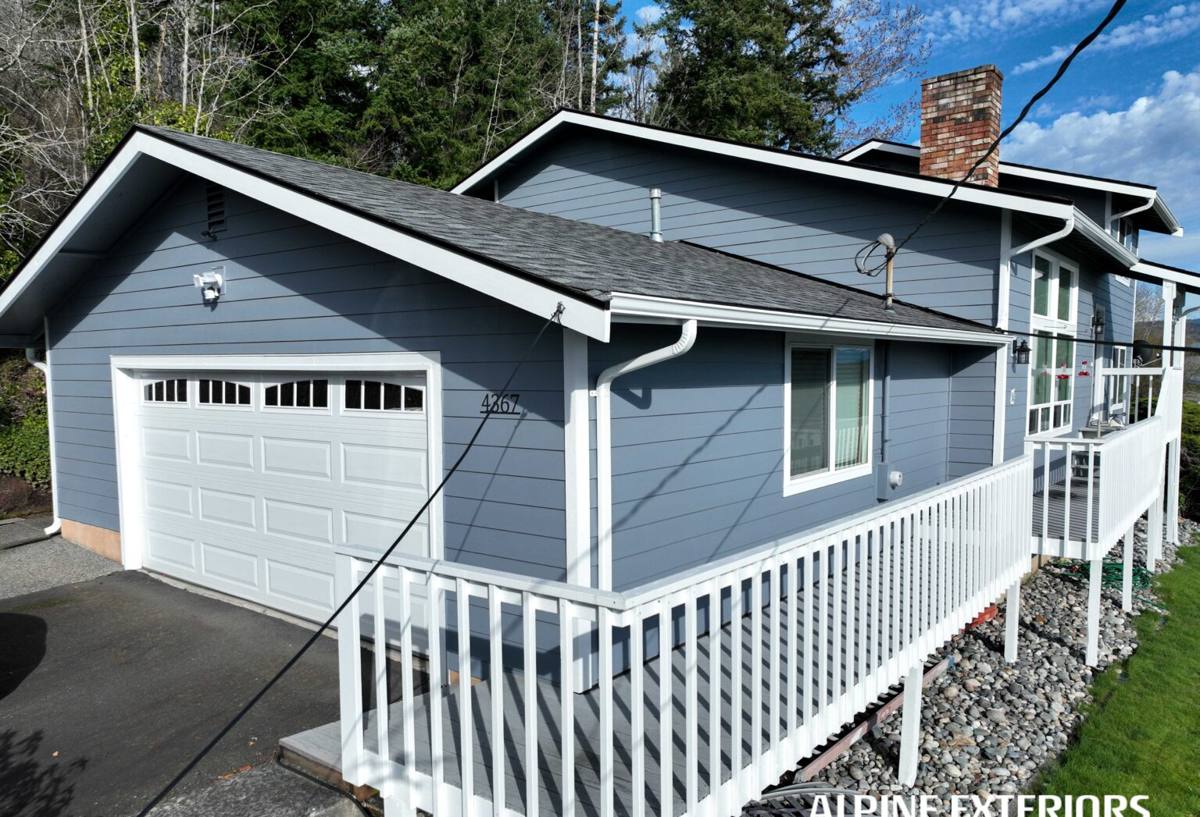
What Salt Air, Driving Rain, and Moss Actually Do to a Roof
Salt Air and Metal Components
Salt in the air accelerates corrosion on exposed metal — flashing, fasteners, gutter hangers, and any exposed nail heads. On an older roof, this often shows up first as rust streaking below flashing joints or around roof penetrations like vent pipes and chimneys. Corroded flashing doesn't have to look dramatic to be failing; a thin rust line is often the only warning before water starts working its way underneath.
Driving Rain and Wind-Driven Water
Rain that comes in sideways behaves differently than rain that falls straight down. It gets pushed up under shingle edges, into valleys, and around any gap in flashing that would be a non-issue in calmer weather. This is why proper lap direction, sealant placement, and valley construction matter more here than they would in a milder climate — a repair that looks fine on a dry day can still leak the next time wind-driven rain hits from the wrong angle.
Moss Season
Whatcom County's wet season runs long, and shaded or north-facing roof sections rarely get enough sun to dry out fully between rain events. That gives moss and algae time to establish, and once moss takes hold it holds moisture against the roofing material, lifts shingle edges, and works its way into seams. A roof that looks mossy but otherwise sound often has more moisture damage underneath than it appears from the ground.
Signs a Custer Roof Needs Repair
- Moss buildup in valleys, along ridge lines, or on the shaded side of the roof
- Rust staining or streaking below flashing, vents, or chimney counterflashing
- Granule loss showing up in gutters, especially after a windy rain event
- Curling, cupping, or lifted shingle edges — often on the side of the house facing prevailing wind
- Interior stains on ceilings or in the attic near valleys, chimneys, or skylights
- Soft or spongy decking felt underfoot near known problem areas
- Daylight visible through the roof deck in the attic, particularly around penetrations
Any one of these on its own might be minor. Two or three together, especially in the same area of the roof, usually means water has already found a path in and the repair needs to address more than the surface.
What a Correct Repair Actually Involves
A roof repair that holds up in this climate isn't just about swapping a few shingles. It involves diagnosing why that section failed in the first place, then fixing the cause along with the visible damage.
Diagnosis Before Anything Else
We start by tracing the leak or damage back to its source, which is often not directly above where the interior stain shows up. Water travels along decking and framing before it drips, so a stain in one corner of a ceiling can trace back to a flashing gap several feet away.
Flashing and Sealant Work
Given how much of the damage we see traces back to flashing, we treat this as the priority. That means replacing corroded step flashing, resealing counterflashing at chimneys, and rebuilding valley flashing where needed rather than just caulking over a gap and calling it done. Caulk is a short-term fix, not a repair.
Decking and Underlayment
If moisture has reached the decking, we replace the affected plywood or sheathing rather than covering over soft or delaminated wood. New shingles over bad decking will fail early no matter how well they're installed. Underlayment gets replaced in the repair area too — it's the layer that protects the deck if wind-driven rain ever gets past the surface material.
Matching Materials
We match shingle type, color, and where possible, manufacturer batch as closely as the market allows, so the repair blends in rather than standing out as an obvious patch. On older roofs where exact matches aren't available, we'll walk you through the closest reasonable option honestly rather than promising an invisible fix that isn't realistic.
Moss and Debris Removal
Any moss or organic debris in the repair area gets cleared, and we treat surrounding areas as needed so the repair isn't undone by moss creeping back over the new material within a season.
Our Process for a Custer Repair
- Inspection: A full look at the roof, not just the reported problem area, since related wear often shows up nearby.
- Honest assessment: We tell you what's actually needed — a targeted repair, a larger section replacement, or in some cases, an honest conversation about whether the roof's age makes full replacement the smarter investment.
- Written scope and estimate: You'll know what's being done, what materials are used, and what it costs before work starts.
- Repair work: Flashing, decking, underlayment, and roofing material addressed together, not piecemeal.
- Cleanup and walkthrough: We clear debris and go over the completed work with you.
Repair vs. Replacement: How We Help You Decide
| Factor | Leans Toward Repair | Leans Toward Replacement |
|---|---|---|
| Roof age | Under 15-20 years, depending on material | Approaching or past expected material lifespan |
| Extent of damage | Localized to one section (a valley, a flashing point) | Multiple areas showing wear, granule loss, or moss simultaneously |
| Decking condition | Solid, dry decking under the damaged area | Widespread soft or delaminated decking |
| Underlying cause | A single identifiable failure point (flashing, a puncture) | General material breakdown across the roof |
| Cost over time | Repair cost is a small fraction of replacement cost | Repeated repairs are starting to add up close to replacement cost |
We'll never push a full replacement when a repair is the honest answer, and we won't recommend patching a roof that's genuinely at the end of its service life. Our job is to give you the facts and let you make the call with accurate information.
Problem Areas We See Most Often on Custer Roofs
Valleys
Valleys collect the most water and the most debris, making them the first place moss establishes and the first place flashing tends to corrode.
Chimney and Skylight Flashing
Any roof penetration is a seam, and seams are where wind-driven rain finds its way in. Chimney counterflashing and skylight perimeters are common repair points.
North-Facing and Shaded Slopes
These sections dry slowest, which means more time for moss to take hold and more sustained moisture exposure on the underlying material.
Low-Slope Sections and Additions
Homes with a porch roof, attached garage, or addition tied into the main roofline often have a lower-slope transition area, which is more vulnerable to standing water and wind-driven rain intrusion than the main roof pitch.
A Simple Checklist Before You Call for a Repair
- Note where you've seen staining, dripping, or daylight — even if it seems minor
- Check the attic (if accessible) for damp insulation, dark spots, or musty smell
- Look at gutters for accumulated granules after a heavy rain
- Note whether the problem area is shaded most of the day or gets more direct sun
- Avoid walking on the roof yourself, especially with visible moss — it's slick and can hide soft decking
Why a Crew That Works Custer Regularly Makes a Difference
A roof repair in this part of Whatcom County needs to account for salt exposure, wind-driven rain angles, and moss growth patterns that don't show up the same way in every climate. A crew that works this area routinely has already seen how local roofs fail and knows where to look first, which means less time spent diagnosing and more time spent fixing the actual cause. We also know that a repair that looks fine in July needs to hold up through a wet Whatcom County winter, and we build every repair with that in mind.
If you're dealing with a leak, visible moss, or just want an honest read on a roof's condition, we're happy to take a look. Reach out for a free, no-pressure estimate using the form below — we'll give you a straightforward assessment and let you decide what's next.