 Blaine Roofing
 Windows Built for the Custer Climate, Not a Catalog
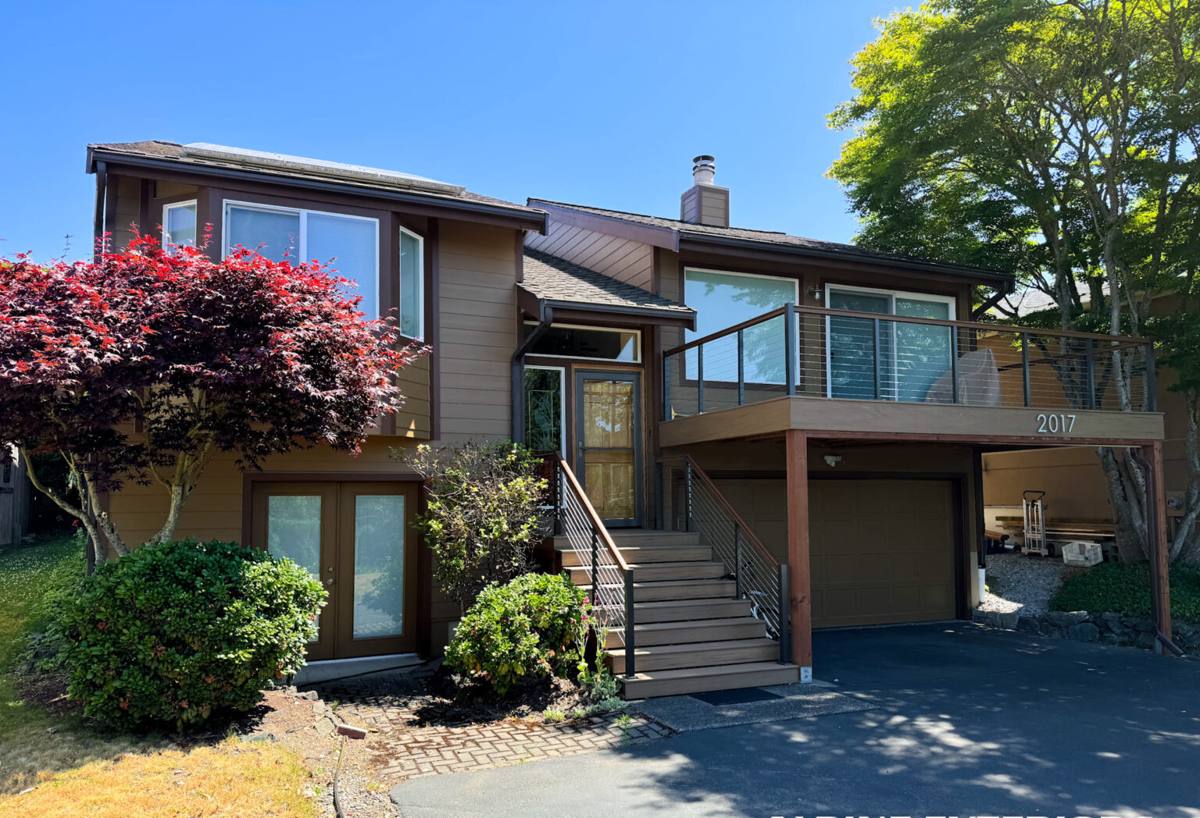
Custer sits in the stretch of Whatcom County between Ferndale and Blaine, close enough to the water that homes here deal with the same marine air, wind-driven rain, and long moss season that batter the rest of the coastline — but with the added exposure of open farmland and fewer windbreaks than a tighter in-town lot. Older farmhouses, newer acreage homes, and everything in between all fight the same battle: moisture finding its way in through worn seals, tired frames, and glass that was never rated for this kind of weather.
A window that works fine in a dry inland climate can fail fast out here. Wood swells and rots at the sill. Vinyl frames warp under repeated soaking and drying cycles. Cheap glazing seals fog up between panes within a few winters. When we talk about "custom windows" for a Custer property, we mean windows sized, built, and installed to handle this specific climate — not just windows cut to fit an odd opening.
What "Custom" Actually Means Out Here
Custom doesn't always mean expensive or unusual-looking. Most of the time it means the window has to be built to a non-standard opening because the house wasn't built to modern standard sizes in the first place. That's common in Custer, where a lot of housing stock includes older farmhouses, additions built over the years, and outbuildings converted to living space.
Common reasons a Custer job needs custom sizing
- Older farmhouse openings that predate standard manufacturer sizing
- Additions or remodels where the rough opening doesn't match anything off the shelf
- Matching a specific sightline or grille pattern across a whole elevation of the house
- Replacing a single failed window in a set where the others still perform fine
- Larger view openings on newer builds that want more glass than a stock unit offers
None of this is exotic work, but it does require accurate field measurements and a supplier who can build to spec rather than pushing a homeowner toward whatever size is easiest to stock. We measure every opening in person before anything gets ordered — a custom window built off a guess is a callback waiting to happen.
Frame Material: The Decision That Matters Most
In a marine climate, frame material has more effect on long-term performance than almost any other choice. This is where we're most direct with homeowners, because the wrong frame in the wrong spot leads to problems years down the road, not next month.
| Frame Material | How It Handles Salt Air & Rain | Maintenance | Best Fit |
|---|---|---|---|
| Vinyl | Good moisture resistance; won't rot, but can warp with big temperature swings over time | Low | Most standard replacement openings, budget-conscious jobs |
| Fiberglass | Excellent — dimensionally stable, doesn't expand/contract like vinyl | Low | Larger openings, exposed elevations, long-term durability priority |
| Wood-clad | Good if the cladding and flashing details are done correctly; the wood core is the risk point if water gets behind it | Moderate — depends on cladding integrity | Homeowners who want a wood interior look and are willing to maintain seals |
| Aluminum | Poor thermal performance and prone to condensation in our humidity unless thermally broken | Low, but condensation issues are hard to fix after install | Rarely our first recommendation for full-time living space here |
We don't push one material on every job. A vinyl window with a good install can easily outlast a premium frame with a sloppy one. What matters is matching the material to the exposure — a west-facing wall that takes the brunt of the weather deserves a different conversation than a sheltered opening under an eave.
Glass Matters As Much As the Frame
Double-pane glass with a quality low-E coating and argon fill is the standard we install on most Custer homes — it balances cost against real-world performance in our climate. Triple-pane adds another layer of insulation and sound dampening, which some homeowners want on exposed, wind-facing sides of the house, but it's a heavier unit and not always necessary on a sheltered wall. We'll tell you honestly where the upgrade earns its keep and where it doesn't.
Why Installation Quality Matters More Than the Window Itself
We say this to every customer: the best window in the world will still leak if it's installed wrong. In a climate with as much driving, wind-blown rain as Whatcom County gets, the flashing and sealing details around the window are just as important as what's specified for the unit itself.
What a correct install includes
- Removing old trim and inspecting the framing and sill for rot or moisture damage before anything new goes in
- Proper flashing tape and a water-resistive barrier integration, not just caulk over the gap
- A sloped sill pan so any water that does get behind the exterior finish drains back out instead of sitting against the framing
- Correct shimming so the window operates smoothly and doesn't rack over time
- Low-expansion foam and backer rod at the perimeter, sized correctly — overfilled foam can bow a frame
- Exterior caulking and trim work that sheds water rather than trapping it
If any of these steps get skipped, you may not see the problem for a year or two — by which time water has already been working its way into the wall assembly. That's a much bigger repair than the window itself.
Our Process for a Custer Job
We keep the process straightforward because homeowners deserve to know what's happening at every step, not just at the estimate and the invoice.
- On-site assessment. We look at every opening being replaced, check for existing moisture or rot damage, and talk through what you actually want out of the windows — views, ventilation, energy performance, look and feel.
- Accurate measurement. Every custom opening gets measured in person. We don't order off estimates or old paperwork.
- Material and glass selection. We walk through frame material and glass options honestly, including trade-offs, based on where each window sits on the house.
- Scheduling around the weather. Openings are exposed during install, so we plan around forecasts where we can and work efficiently to minimize the time a wall is open.
- Installation with full flashing and sealing detail. No shortcuts on the parts you can't see once trim goes back on.
- Final walkthrough. We check operation, sealing, and finish work with you before we call the job done.
Signs Your Current Windows Are Already Failing
A lot of homeowners live with failing windows longer than they need to because the problems show up gradually. Here's what to look for, especially on a Custer property that's taken a few decades of this climate:
- Fog or moisture visible between the panes of glass — the seal has failed and the insulating gas is gone
- Noticeable drafts even when the window is fully latched
- Soft or discolored wood at the sill or surrounding trim
- Windows that are hard to open, close, or lock, or that have started to sag in the frame
- Moss, algae, or persistent black mildew staining around the frame edges
- Condensation forming on the inside of the glass regularly, even in mild weather
Any one of these on its own might not be urgent. Several of them together, especially combined with visible wood damage, usually means water has already gotten past the seal and into the framing — worth having looked at before it becomes a structural repair instead of a window replacement.
What Drives the Cost of a Custom Window Job
| Factor | Why It Matters |
|---|---|
| Number and size of openings | Larger and more numerous windows scale cost directly, plus more labor hours on flashing and trim |
| Frame material | Vinyl is typically the most budget-friendly; fiberglass and wood-clad cost more up front but can offer longer service life |
| Custom vs. standard sizing | True custom-built units cost more than stock sizes due to manufacturing lead time and precision |
| Existing damage | Rot repair at the sill or framing adds labor beyond the window swap itself |
| Glass package | Upgraded low-E coatings, argon fill, or triple-pane glass add cost but also performance |
| Access and site conditions | Second-story openings, tight rural access, or outbuilding conversions can add time |
We give straightforward, itemized estimates so you can see exactly where the money is going and make informed decisions about where to spend and where to save.
Why a Crew That Already Works Custer Makes a Difference
Custer isn't downtown Blaine — it's a more rural stretch of Whatcom County, and that changes a few practical things: driveway and site access on acreage properties, older construction methods you'll find on farmhouses that a crew unfamiliar with the area might not expect, and weather patterns that hit the open fields differently than a sheltered in-town lot. A crew that's already worked jobs in the area shows up knowing what to expect, rather than figuring it out on your dime.
Local also means accountability. We're not driving in from out of the area for one job and disappearing — we're the same crew you'd call if a seal needs a second look down the road. That matters more with window work than almost any other exterior project, because installation quality doesn't show its flaws right away. You want the people who did the work to still be reachable in three years, not just at closeout.
Ready to Talk About Your Windows?
If your Custer home has windows that are drafty, fogged, hard to operate, or just original to a build from decades ago, it's worth having a straight conversation about what's actually going on and what it would take to fix it right. We offer free, no-pressure estimates — use the form below to get a time on the calendar.