 Blaine Roofing
 Cherry Point's Shoreline Climate Is Hard on Exterior Siding
Cherry Point sits right on the water in Whatcom County, a few miles from Blaine, and that shoreline exposure changes what a house needs from its siding. Homes here don't just deal with ordinary Pacific Northwest rain — they deal with wind-driven rain coming off open water, a near-constant salt-laden air that settles on every exterior surface, and a mild, damp climate that keeps moss, algae, and lichen growing on north- and shade-facing walls for most of the year. None of that is unusual for this stretch of coastline, but it's a very different load than siding sees twenty miles inland.
Salt air is corrosive to metal fasteners and trim, it accelerates the breakdown of cheap paint films, and it works its way into any gap or seam that isn't properly sealed. Driving rain doesn't just wet a wall — it pushes water sideways and upward under laps and around penetrations if the flashing and drainage plane behind the siding aren't done right. And moss doesn't just look bad; it holds moisture against the wall surface far longer than an open, sun-exposed wall would ever see, which is exactly the condition that rots wood trim and delaminates cheaper composite sidings. A siding job in Cherry Point has to be built for all three of those conditions at once, not just the general idea of "it rains a lot here."
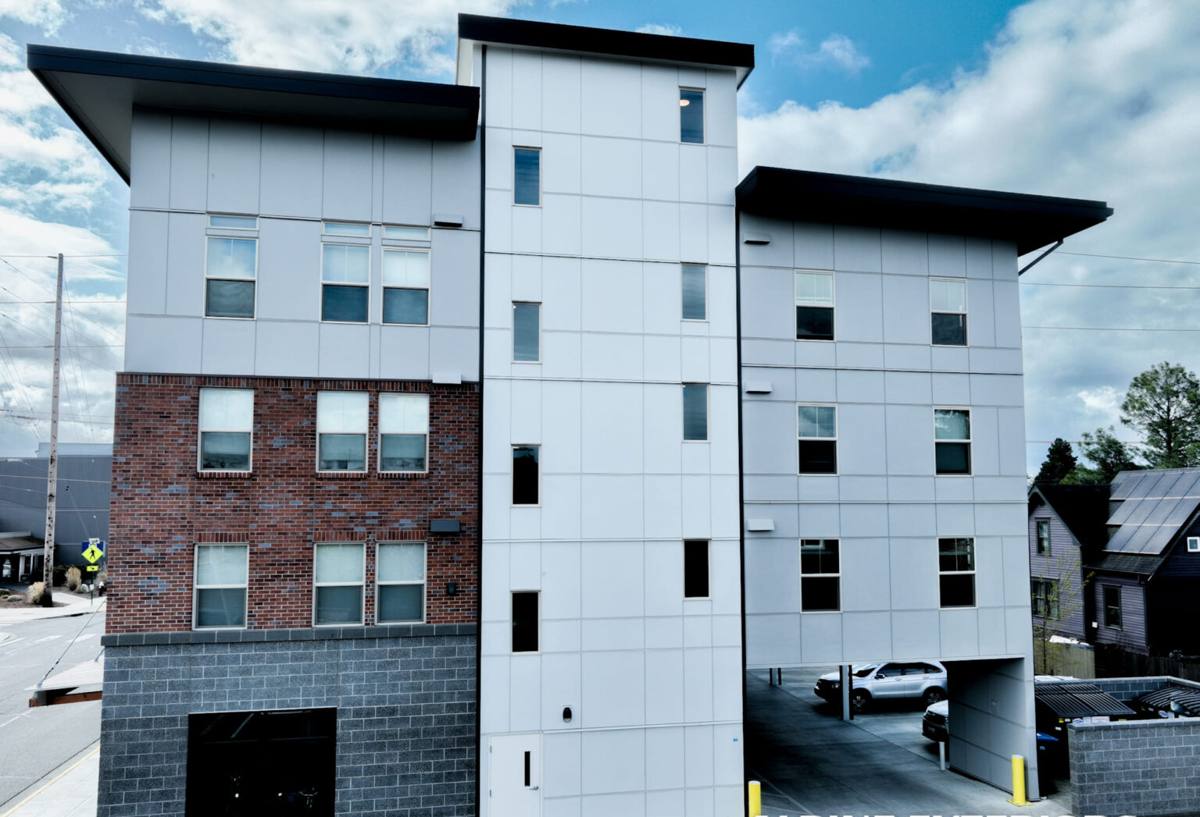
What Correct Fiber Cement Siding Looks Like in This Climate
We install James Hardie fiber cement exclusively, and one reason is that Hardie engineers its siding lines by climate zone rather than selling one product for the whole country. For a marine environment like Cherry Point, that means using the HZ5 product line, which is formulated for regions with sustained moisture exposure. It's not a marketing label — it affects how the board is manufactured to resist moisture-related damage over the long run, which matters a great deal when a wall is getting salt spray and driving rain on a regular basis.
Why the Factory Finish Matters Near Salt Air
Hardie's ColorPlus finish is baked on at the factory under controlled conditions, which gives it more consistent coverage and better adhesion than field-applied paint. That matters here specifically because salt air is one of the harshest environments for paint film breakdown — it accelerates chalking, fading, and peeling on siding that wasn't finished to hold up outdoors long-term. A factory finish with a backed warranty against those failures is a real advantage on a shoreline lot, not just a convenience.
Moisture Management Behind the Cladding
The siding itself is only part of the system. What keeps a Cherry Point wall dry over the decades is the weather-resistant barrier, the flashing at windows and doors, the kick-out flashing where rooflines meet walls, and the clearances left at the bottom of the siding so water has somewhere to go. Fiber cement that's installed tight to a deck surface, or without proper head flashing above openings, will trap the wind-driven rain this area gets instead of shedding it — and that failure has nothing to do with the siding material and everything to do with the installation.
Signs Your Current Siding Is Losing the Fight
Homeowners in Cherry Point often call us after noticing one or two of these, not realizing they're related symptoms of the same underlying moisture problem:
- Persistent moss, algae, or black streaking that comes back within weeks of being cleaned
- Soft or spongy siding near the bottom courses, around outside corners, or below windows
- Paint or finish that's peeling, chalking heavily, or has gone flat and dull faster than expected
- Caulk lines at joints and trim that have cracked, shrunk, or pulled away from the surface
- Visible warping, buckling, or separation at panel seams
- Rust staining bleeding from fastener heads or trim connectors
Any one of these is worth a closer look. Several at once usually means water has been getting behind the cladding for a while, which is a bigger repair than the surface symptoms suggest.
Fiber Cement vs. Other Siding for a Marine Climate
We get asked why we don't install LP SmartSide, vinyl, or cedar on Cherry Point homes. Each of those products has legitimate uses elsewhere, but none of them holds up to sustained salt air and moisture exposure the way correctly installed fiber cement does. Here's the honest comparison:
| Material | Moisture / Salt Air Behavior | Maintenance Burden | Fire Resistance |
|---|---|---|---|
| James Hardie Fiber Cement (HZ5) | Engineered for high-moisture climates; factory finish resists salt-driven paint failure | Occasional wash; no repainting for years with ColorPlus | Non-combustible |
| LP SmartSide (engineered wood) | Wood-based core is vulnerable to sustained moisture and edge swelling if any seal fails | Field-applied finish needs monitoring and touch-up | Combustible |
| Vinyl | Won't rot, but expands/contracts with temperature and can crack or warp in wind exposure | Low, but color is baked into the plastic and fades over time | Combustible; can deform in heat |
| Cedar / Primed Spruce | Natural wood absorbs moisture readily; salt air and moss accelerate decay without diligent upkeep | Highest — regular staining, sealing, and moss treatment required | Combustible |
None of this means those products fail immediately — plenty of them are out there performing fine on drier, more sheltered lots. It means that on an exposed, moisture-heavy site like Cherry Point, the margin for error is smaller, and fiber cement gives homeowners the most durable outcome for the conditions actually present here.
Our Installation Process for Cherry Point Homes
Site and Moisture Assessment
Before we quote a job, we look at how exposed the walls are to prevailing wind and rain direction, where moss and staining are already established, and whether the existing wall assembly shows signs of past moisture intrusion. This tells us where extra attention to flashing and drainage detailing is needed, not just where the old siding needs to come off.
Weather-Resistant Barrier and Flashing
Every opening gets proper head, jamb, and sill flashing, and we pay close attention to roof-to-wall transitions and deck ledger connections — the spots where driving rain finds its way in on shoreline homes. The weather-resistant barrier goes on continuous and lapped correctly before a single piece of siding goes up.
Fastening and Clearances
We fasten to Hardie's published specifications for this climate zone, including proper clearances at the bottom of the siding above grade, decks, and roof lines so water has somewhere to drain instead of wicking up into the board ends.
Trim, Caulking, and Finish Details
Corners, trim boards, and joints get sealed with products rated for the movement and moisture this environment produces, and we finish with Hardie's factory-matched trim and accessories so the whole system — not just the field siding — is built for the same climate.
Cost Factors for a Cherry Point Fiber Cement Project
| Factor | Why It Affects Your Project |
|---|---|
| Tear-off vs. new construction | Removing old siding, repairing any hidden sheathing damage, and disposal add labor beyond a straightforward install |
| Home size and wall complexity | Multiple stories, dormers, and cut-up rooflines increase both material waste and flashing detail work |
| Siding profile chosen | Lap width, shingle-style panels, and board-and-batten each carry different material and labor costs |
| Trim and accessory scope | Fascia, soffit, corner boards, and frieze detailing are often bundled with a siding project and add to total cost |
| Site exposure and access | Waterfront or wind-exposed elevations may call for additional flashing detail or scaffolding versus sheltered walls |
We walk every project through these factors on-site rather than quoting blind, since two homes of the same square footage in Cherry Point can have very different scopes depending on exposure and existing condition.
Maintenance After Installation
Correctly installed Hardie siding with a ColorPlus finish is low-maintenance, not no-maintenance. In this climate we recommend a periodic gentle wash to keep moss and salt residue from building up on shaded or north-facing walls, a visual check of caulk joints every year or two, and keeping gutters and downspouts clear so roof runoff isn't dumping extra water onto siding it wasn't designed to absorb continuously. None of this is heavy work — it's the kind of upkeep that protects the investment rather than fighting an ongoing problem.
Why Hire a Crew That Already Works Cherry Point
Flashing and drainage details that are "close enough" inland aren't close enough on an exposed shoreline lot — the volume of wind-driven rain and the persistence of salt air punish shortcuts faster here than almost anywhere else in Whatcom County. A crew that already installs siding on Cherry Point and the surrounding Blaine area knows which elevations take the worst weather, how the local moss and algae pattern behaves through the year, and what detailing actually holds up rather than what looks fine on installation day. That's the difference between siding that needs attention again in a few years and siding that goes the distance.
If you're weighing a siding replacement or repair on a Cherry Point property, we're happy to walk the exterior with you, point out what we're seeing, and put together a straightforward, no-pressure estimate — no obligation either way.