 Blaine Roofing
 Why Cherry Point Homes Ask About Windows More Than Most
Cherry Point sits right up against the Salish Sea in Whatcom County, and that location shapes everything about how windows perform here. Homes get a steady dose of salt-laden air off the water, wind-driven rain that hits glass and trim at an angle instead of straight down, and a moss season that stretches from fall through spring thanks to the persistent damp. None of that is dramatic on its own, but stacked together year after year, it wears down window seals, frames, and finishes faster than in drier, inland parts of the state. If your windows are original to the house or older than 15-20 years, there's a good chance they're already working against you rather than for you.
We're a Blaine-based crew, and Cherry Point is part of our regular service area — not a stretch job we take once and never see again. That matters for windows specifically, because a lot of what goes wrong with them shows up months or years after installation, and it helps to have a contractor who's still local when that happens.
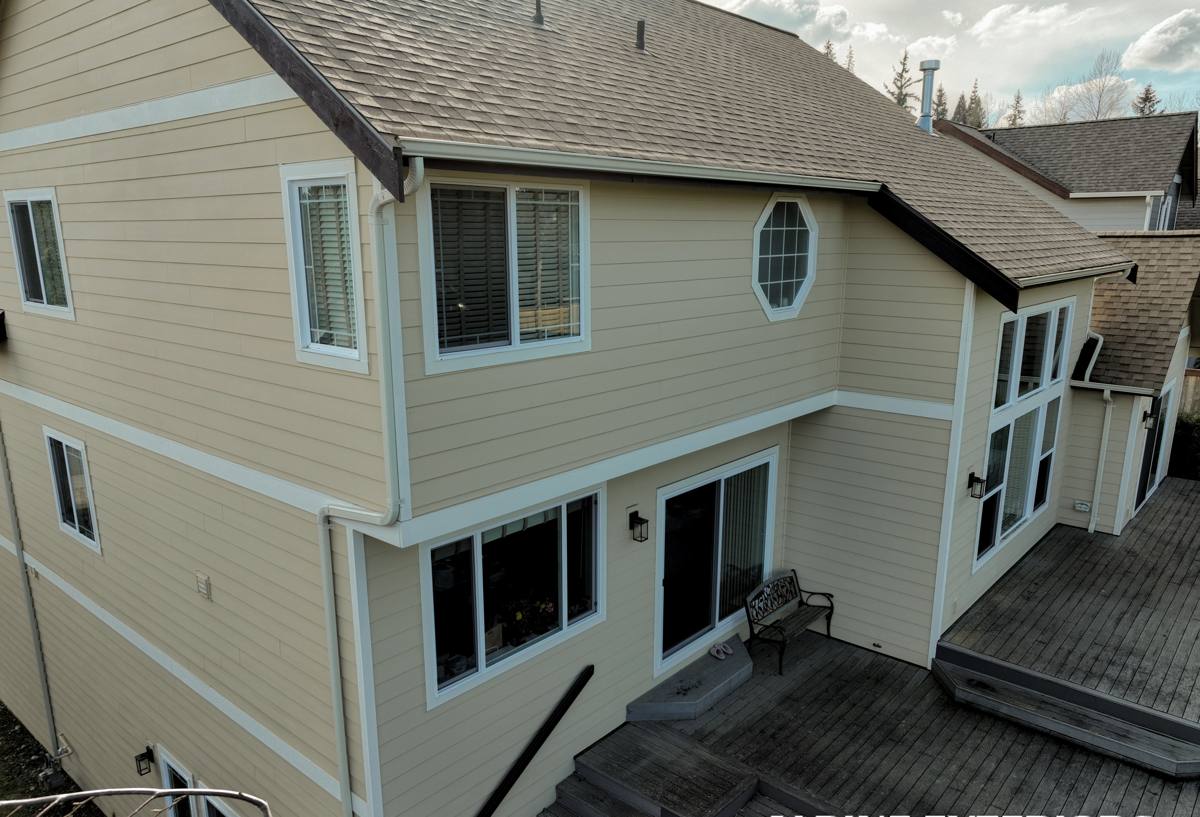
What "Energy-Efficient" Actually Means Out Here
Energy-efficient windows aren't just about keeping heat in during the winter, though that's part of it. In a marine climate like Whatcom County's, the bigger day-to-day issue is often condensation, drafts around the sash, and heat loss during the long stretch of cool, wet months. A window rated for efficiency needs to handle a few things at once:
- Low U-factor — how well the window resists heat transfer; lower numbers mean less heat escaping in winter
- Appropriate Solar Heat Gain Coefficient (SHGC) — how much solar heat passes through, which matters differently depending on which side of the house the window faces
- Low air leakage rating — a tighter seal means fewer drafts and less moist outside air finding its way into wall cavities
- Correct glazing for coastal exposure — multi-pane units with warm-edge spacers hold up better against the freeze-thaw and condensation cycles common near the water
Look for the NFRC label on any window you're considering. It's the one honest, standardized way to compare products, and we're happy to walk through what the numbers mean for your specific house and orientation.
Signs Your Current Windows Are Costing You Money
Most homeowners don't replace windows because they woke up wanting new windows — they replace them because something started bothering them. In this climate, the usual culprits are:
- Fogging or moisture trapped between panes (a failed seal on a double- or triple-pane unit)
- Visible condensation on the inside of the glass during cold mornings
- Drafts you can feel near the frame, especially during winter storms off the water
- Soft or discolored wood trim around the window opening — often a sign water has been getting past the seal for a while
- Rising heating bills without a clear reason
- Difficulty opening, closing, or locking sashes, which usually means the frame has shifted or swollen
Any one of these on its own isn't an emergency. But if you're seeing two or three at once, the window and the moisture management around it are usually failing together, and it's worth having someone look before it turns into trim or sheathing repair.
Salt Air's Specific Effect on Hardware and Finishes
Salt air accelerates corrosion on exposed metal hardware — hinges, locks, and cranks — faster than it does inland. It also breaks down certain exterior finishes over time, which is why we pay attention to hardware quality and finish durability when we spec windows for anyone within a few miles of the water, Cherry Point included.
What a Correct Installation Actually Involves
The window unit itself only does half the job. The other half is how it's installed — flashing, sealing, and integrating with your existing siding and weather barrier. This is where a lot of window problems actually originate, even when the window product itself is fine.
A correct installation in this climate includes:
- Removing the old window carefully and inspecting the rough opening for hidden rot or moisture damage before anything new goes in
- Repairing or replacing any compromised framing or sheathing found during that inspection
- Installing flashing tape and a sloped sill pan so any water that does get behind the window drains back out rather than pooling
- Setting the new window plumb, level, and square, then securing it per the manufacturer's fastening schedule
- Sealing and insulating the gap between the window frame and rough opening — not overfilled with expanding foam, which can bow the frame
- Integrating the flashing with the existing weather-resistive barrier so water sheds correctly, shingle-style, from top to bottom
- Finishing interior and exterior trim, then testing operation and locking function before we call the job done
Skip the flashing and sill pan details, and even a good window will eventually let water into the wall — you just won't see it until there's a problem behind the drywall or siding.
Comparing Frame Materials for a Coastal Setting
There's no single "best" window material for every house — it depends on your budget, your home's style, and how much upkeep you want to take on. Here's how the common options stack up specifically for a salt-air, high-rain environment like Cherry Point:
| Frame Material | Coastal Durability | Maintenance | Typical Trade-offs |
|---|---|---|---|
| Vinyl | Good — won't rust or rot, handles moisture well | Low — occasional cleaning | More limited color/finish options; can expand/contract with temperature swings |
| Fiberglass | Very good — dimensionally stable, resists corrosion | Low | Higher upfront cost than vinyl |
| Aluminum | Fair — needs a quality thermal break and marine-grade coating near the water | Moderate — watch for pitting/corrosion over time | Conducts heat/cold more than other options without a good thermal break |
| Wood-clad | Fair to good depending on cladding quality | Higher — exposed wood or damaged cladding needs prompt attention | Best classic appearance; more sensitive to installation quality in wet climates |
For most Cherry Point homes, we lean toward vinyl or fiberglass because they hold up with the least fuss against salt air and constant moisture. If you want a wood-clad look for a period-correct home, we can still make that work — it just means being more diligent about sealing and periodic inspection, and we'll be upfront about that before you commit.
Our Process, Start to Finish
We keep the process straightforward because window replacement is disruptive enough without added confusion:
- On-site assessment — we look at your current windows, check the framing where accessible, and talk through what's actually driving the problem (drafts, fogging, appearance, energy bills)
- Honest product recommendation — based on your home's exposure, orientation, and budget, not a one-size-fits-all pitch
- Written estimate — clear pricing, no surprise add-ons sprung on you mid-job
- Precise measurement and ordering — accurate measurements avoid delays and ill-fitting units
- Installation with proper flashing and sealing — the details covered above, done the same way every time
- Cleanup and walkthrough — we test every window with you before we consider the job finished
Living With New Windows in a Moss-Season Climate
New windows reduce a lot of the maintenance headaches older units bring, but a few habits go a long way in this climate:
- Rinse frames and glass periodically to clear salt residue, especially after storms
- Keep nearby gutters and downspouts clear so runoff isn't constantly sheeting past window openings
- Check exterior caulking annually, since sealants can break down faster with sustained UV and moisture exposure
- Watch for moss or algae buildup on sills and trim during the wetter months and clean it off before it holds moisture against the frame
Why a Local Blaine Crew Makes a Difference Here
Window installation quality shows up over years, not days. A crew that already works Cherry Point and the surrounding Blaine area knows how this specific stretch of coastline behaves — which exposures take the worst of the driving rain, how fast moss builds up on north-facing trim, and what kind of flashing detail actually holds up against salt air instead of just looking good on installation day. We're not driving in from out of the county for a one-time job; if something needs a follow-up look, we're already local.
If your windows are drafty, fogged, or just old enough that you're wondering whether it's time, we're glad to come take a look. Reach out for a free, no-pressure estimate using the form below — we'll give you a straight read on what your windows need and what it would take to fix it.