 Blaine Roofing
 Deck Repair Built for Cherry Point's Coastal Conditions
Cherry Point sits right where Whatcom County's marine climate does the most damage to exterior wood structures. Homes here take a steady dose of salt-laden air off the Strait of Georgia, long stretches of driving rain through fall and winter, and a moss season that can run eight months or more depending on how much shade and moisture a deck sits in. A deck that would last two or three decades in a drier inland climate can start showing real problems in half that time out here if it wasn't built or maintained with this environment in mind.
Deck repair in this area isn't just about swapping a few gray boards. It's about understanding how salt air accelerates corrosion in fasteners and hardware, how sustained moisture works its way into end grain and ledger connections, and how moss and algae hold water against surfaces long after a storm has passed. A repair that ignores those realities tends to fail again within a season or two.
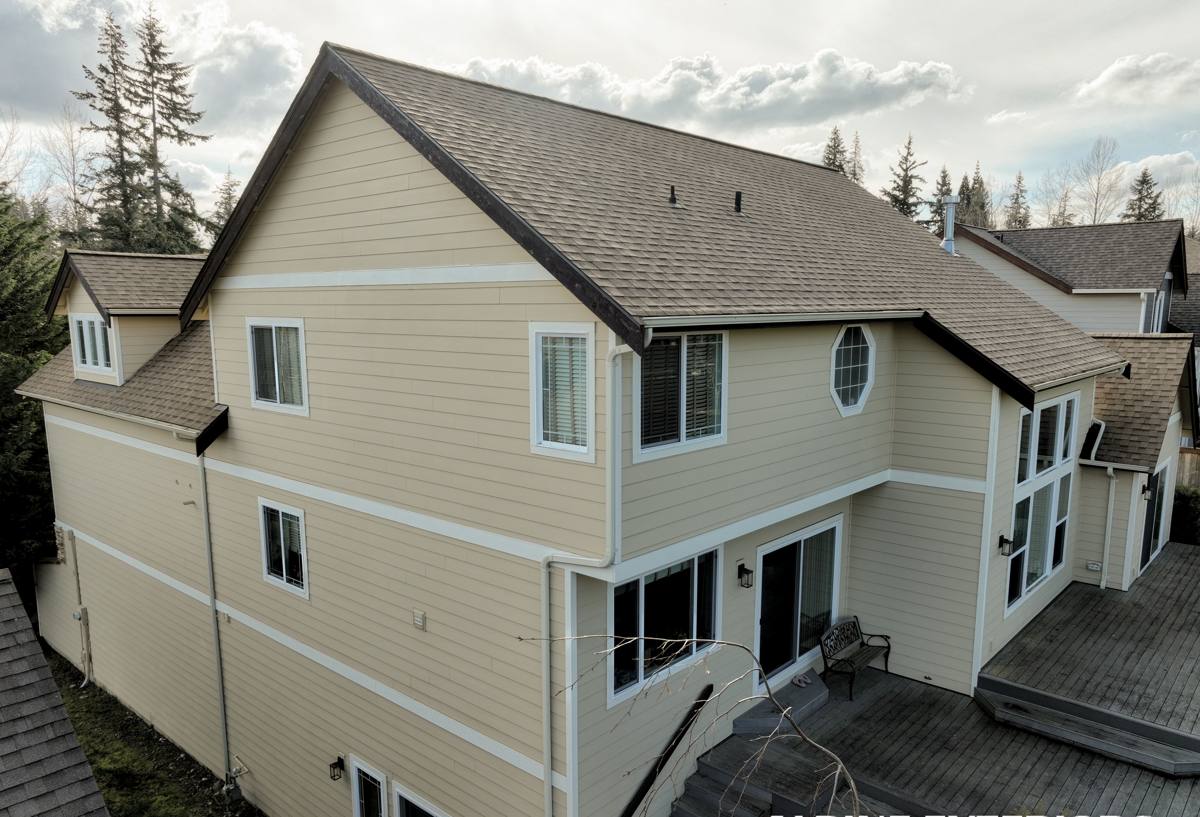
How the Local Climate Attacks a Deck
Salt Air and Metal Fatigue
Airborne salt from the Strait doesn't just affect waterfront properties directly on the water — it travels inland on wind and settles on any exposed metal. Nails, screws, joist hangers, and bolts that aren't rated for coastal exposure start corroding from the inside of the connection outward, often long before any rust is visible on the surface. By the time you see staining around a fastener head, the metal underneath may already be compromised.
Driving Rain and Water Intrusion
Whatcom County's rain doesn't just fall straight down — wind-driven rain gets pushed sideways into ledger boards, stair stringers, and any spot where two pieces of framing meet. Once water gets behind flashing or into a poorly sealed ledger connection, it has nowhere to go and nowhere to dry out quickly, especially through our cooler, cloudier months.
Moss, Algae, and Trapped Moisture
Moss and algae growth on decking boards isn't just cosmetic. A moss layer holds moisture against the wood or composite surface for days after the rain stops, which slows drying, promotes rot in wood decking, and can stain or degrade the surface of composite boards over time. Shaded areas of a deck, and the north-facing side of most Cherry Point homes, tend to hold moss the longest.
Signs Your Deck Needs Repair, Not Just Cleaning
A lot of deck problems get missed because they look like normal weathering from a distance. Here's what to actually check for:
- Soft, spongy, or springy spots underfoot — usually a sign of rot in the decking board or the joist beneath it
- Rust streaks running down from screw or nail heads
- Gaps or movement where the deck ledger meets the house
- Cracked, split, or checking boards, especially near board ends
- Railings or posts that wiggle or flex when you push on them
- Stair stringers that feel uneven or bounce under weight
- Persistent moss or algae that comes right back within weeks of cleaning
- Discoloration or dark staining around fastener heads or board seams
Any one of these on its own might be a minor fix. Several together usually mean the deck's structure has been absorbing moisture damage for a while, and it's worth having someone look underneath, not just at the walking surface.
What a Correct Deck Repair Actually Involves
The visible decking boards are the easiest part of a deck to replace and the least likely to cause a real safety problem. The framing underneath — ledger board, joists, beams, posts, and footings — is where a repair either holds up for years or fails again quickly. A repair done right starts from the structure and works outward:
1. Structural Inspection First
Before replacing a single board, we check the ledger board attachment to the house, look for rot or corrosion in the joists and beam connections, and confirm posts and footings are still sound. Cosmetic damage on top can hide structural problems underneath, and it's not unusual to find one is worse than the other.
2. Ledger and Flashing Work
The ledger board connection — where the deck attaches to the house — is the single most common source of hidden water damage on decks in this climate. If flashing is missing, damaged, or was never properly installed, water gets behind the ledger and rots both the deck framing and sometimes the house's rim joist. Correcting this properly is not optional if you want the repair to last.
3. Fastener and Hardware Upgrades
If your deck was built with standard galvanized hardware, coastal exposure may have already started breaking it down. Repairs are a chance to upgrade to fasteners and connectors rated for this kind of environment, rather than replacing like-for-like with the same hardware that failed the first time.
4. Decking Surface Replacement
Only after the structure is confirmed sound does it make sense to replace the actual walking surface — whether that's matching existing wood decking or switching sections to composite where moisture exposure is worst.
Repair or Replace? What Actually Decides It
Homeowners often assume a deck with visible damage needs full replacement, but that's frequently not true. The framing underneath is usually the deciding factor, not the surface boards.
| Factor | Favors Repair | Favors Replacement |
|---|---|---|
| Framing condition | Joists and beams are solid, only surface boards damaged | Rot or corrosion found in multiple structural members |
| Ledger connection | Attached correctly with intact flashing | Missing flashing or long-term water intrusion behind ledger |
| Age of structure | Under 15-20 years, built to a reasonable standard | Original construction quality was poor or deck is very old |
| Extent of damage | Isolated to a few boards, one stair run, or one railing section | Damage spread across most of the deck's surface and substructure |
| Footings and posts | Stable, no movement or settling | Heaving, settling, or undersized footings for current code |
A straight answer on this only comes from actually getting under the deck and checking connections — not from looking at the surface boards from the yard.
Choosing Materials for This Environment
Not every fastener, board, or hardware option performs the same way in salt air and constant moisture. Part of doing repair work correctly here is making honest recommendations about what holds up and what doesn't, rather than defaulting to whatever's cheapest or most common.
Fasteners and Hardware
Standard galvanized fasteners can work in drier, inland conditions, but in a coastal-influenced climate like Cherry Point's, stainless steel fasteners and connectors are worth the added upfront cost on repairs, especially anywhere near the ledger, stair stringers, or areas exposed to direct salt spray. It's a straightforward trade-off: a higher material cost now versus doing the same repair again in a few years.
Decking Material Trade-offs
Wood decking, properly maintained, can perform well here, but it needs more consistent upkeep — cleaning, sealing, and moss removal — to keep moisture from working into the grain. Composite decking generally resists rot and doesn't need sealing, but it's not maintenance-free either; it still needs regular cleaning to prevent algae and moss buildup, and it has its own installation requirements around ventilation and fastening that matter more in a wet climate than a dry one. Neither is automatically the "right" answer — it depends on your budget, how much upkeep you're willing to do, and the specific conditions of where the deck sits on your property.
Our Repair Process
- On-site inspection — We check the deck from underneath as well as on the surface, looking at framing, ledger attachment, hardware condition, and footings, not just the boards you can see.
- Honest assessment — You get a clear explanation of what's actually failing, what's cosmetic versus structural, and what your realistic repair options are.
- Written scope and estimate — A specific plan for what will be repaired, replaced, or upgraded, with materials and fasteners suited to this climate.
- Structural repairs first — Framing, ledger, and flashing issues get corrected before any cosmetic work begins.
- Surface and finish work — Decking boards, railings, and stairs are repaired or replaced to match your existing deck where possible.
- Final walkthrough — We go over the completed work with you and flag any maintenance steps worth keeping up with going forward.
Why Local Experience in Cherry Point Matters
A crew that regularly works decks in this specific area already knows which connection points tend to fail first in salt-influenced air, which sides of a house hold moss longest through a Whatcom County winter, and what fastener upgrades are actually worth the cost here versus in a drier region. That's different from general deck repair knowledge — it's familiarity with how this particular stretch of coastline wears down a structure over time.
It also means showing up with the right expectations about weather windows for the work itself. Rain-heavy stretches in the Pacific Northwest can affect scheduling and how repairs need to be sequenced and protected while in progress, and a crew used to working in this area plans around that instead of being caught off guard by it.
Keeping a Repaired Deck in Good Shape
Once repairs are done, a little regular upkeep goes a long way toward not needing another repair call in a couple of years:
- Clean moss and algae off the surface at least once or twice a year, more often in heavily shaded spots
- Keep gutters and downspouts near the deck clear so runoff isn't draining directly onto it
- Check fastener heads periodically for early rust staining
- Reseal wood decking on the manufacturer's recommended schedule, not just when it looks dry
- Trim back vegetation that's keeping sections of the deck shaded and damp longer than necessary
- Look underneath the deck once a year, not just at the surface
If you're seeing soft boards, rust streaks, movement in a railing, or a deck that just doesn't feel as solid as it used to, we're glad to take a look and give you a straight answer about what's actually going on. Fill out the form below for a free, no-pressure estimate on deck repair for your Cherry Point home.