 Blaine Roofing
 Building a Deck That Actually Holds Up in Cherry Point
Cherry Point sits close enough to the water that every deck built here is fighting a different fight than a deck built ten miles inland. Salt-laden air moves through the area regularly, driving rain comes in sideways off the Strait for much of the fall and winter, and the shaded, moisture-heavy months of the year turn almost any untreated surface green if it isn't designed to shed water and dry out. A deck that would hold up fine in a drier part of Whatcom County can start showing problems here within a season or two if it wasn't built with this specific environment in mind.
This page is about one thing: building or replacing a deck in Cherry Point the right way, with the materials, fasteners, and framing choices that actually make sense for this stretch of coastline. Not a generic deck-building overview — the specific decisions that matter when your deck sits this close to salt water and gets this much rain.
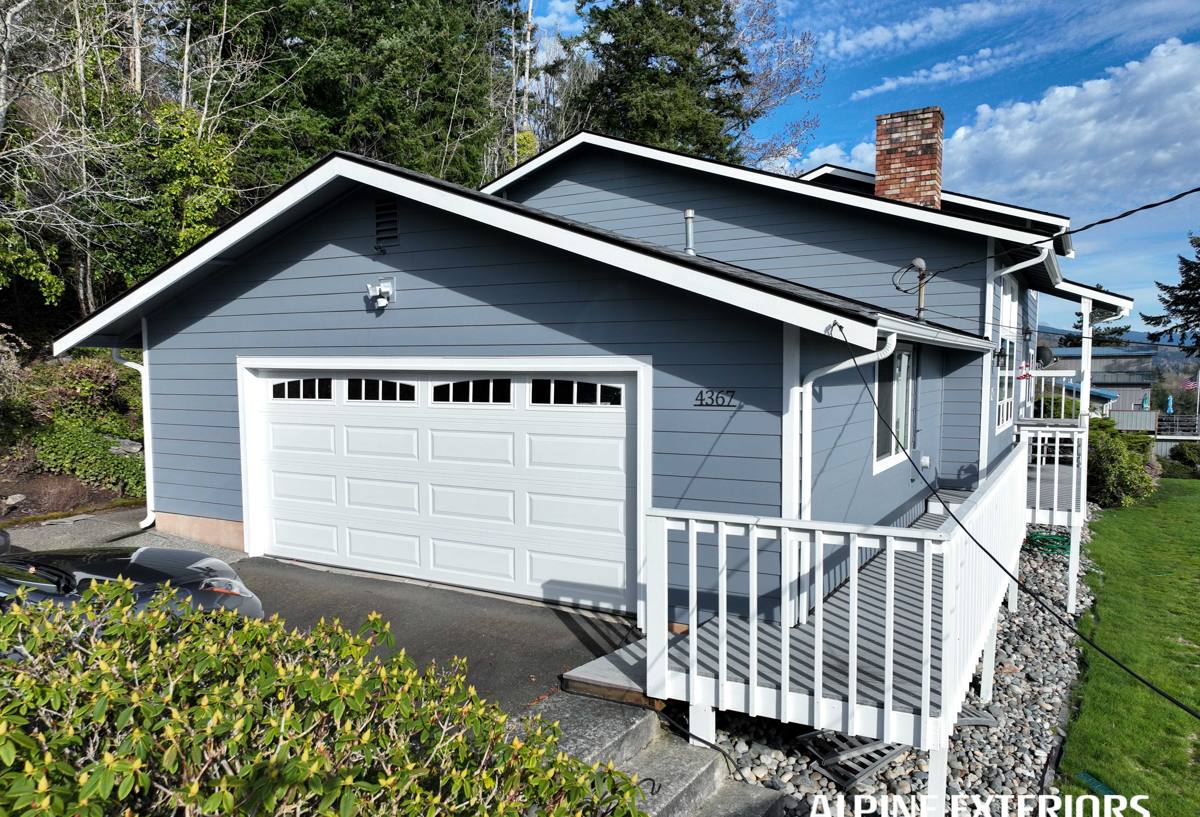
What Cherry Point's Climate Actually Does to a Deck
Three things drive almost every deck problem we see in this area, and they compound each other.
Salt Air
Airborne salt accelerates corrosion on anything metal — fasteners, joist hangers, post bases, even the coating on some pressure-treated lumber connectors. A fastener that's rated for general outdoor use inland can start rusting and staining the decking around it within a couple of years this close to the water. Once a fastener starts to corrode, it loses holding strength long before it looks obviously bad, which is why so many deck failures start below the surface where nobody's looking.
Driving Rain
Rain that comes in at an angle, rather than falling straight down, gets up under fascia boards, into end grain, and behind ledger flashing in ways that vertical rain doesn't. Framing and flashing details that would be adequate in a calmer climate leave gaps here that let water track into places it shouldn't be — especially where the deck attaches to the house.
Moss and Algae
Long stretches of damp, shaded weather give moss and algae plenty of time to establish themselves on any surface that holds moisture. Beyond looking bad, moss holds water against decking boards and framing, keeps surfaces from drying between rains, and turns a walking surface slippery — a real safety issue on stairs and ramps.
None of this means a deck in Cherry Point can't last for decades. It means the build has to account for all three from the framing up, not just at the decking surface.
Decking Material: What Actually Performs Here
There's no single "best" decking material for every homeowner — budget, look, and maintenance tolerance all factor in. But some materials are a better match for this climate than others, and it's worth understanding the trade-offs before you decide.
| Material | Moisture Behavior | Moss/Algae Resistance | Maintenance | Typical Cost Tier |
|---|---|---|---|---|
| Pressure-treated wood | Absorbs and releases moisture; prone to cupping/checking if not sealed regularly | Low without regular cleaning and sealing | High — annual cleaning, periodic sealing | $ |
| Cedar | Naturally moisture-resistant but still needs sealing here | Moderate; still needs cleaning in shaded areas | Moderate to high | $$ |
| Capped composite | Doesn't absorb water or rot | Better resistance, though algae can still grow on the surface film | Low — occasional washing | $$$ |
| PVC decking | Fully moisture-resistant, no wood fibers to break down | Best resistance of the group | Low | $$$ |
We don't push any one product on every job. What we do insist on is being honest about upkeep: if you choose wood because you like the look and the price, we'll tell you upfront what kind of cleaning and sealing schedule this climate is going to demand of you. If you'd rather pay more once and deal with less maintenance, composite or PVC is the more sensible long-term choice for a shaded, damp lot.
Framing and Fasteners — the Part That Determines Whether It Lasts
The decking boards are what you see. The framing and fasteners underneath are what determine whether the deck is still solid in fifteen years. This is where corners get cut on cheaper builds, and it's the first place we focus given the salt exposure here.
- Stainless steel or heavy-duty coated fasteners rated for coastal/high-corrosion exposure — not general-purpose exterior screws
- Joist hangers and structural hardware matched to the same corrosion-resistance standard as the fasteners
- Joist tape or equivalent protection on the tops of joists and beams to keep standing water out of end grain and fastener holes
- Proper flashing where the deck ledger attaches to the house, sealed to shed driving rain rather than trap it against the wall
- Post bases set to keep wood posts off standing water and away from direct soil contact
None of this is visible once the decking goes down, which is exactly why it matters that whoever builds your deck treats it as non-negotiable rather than an upsell.
Drainage, Airflow, and Keeping Moss From Taking Over
Moss and algae need two things to establish themselves: moisture and time without drying out. A deck built with drainage and airflow in mind denies them both.
Board Spacing and Slope
Correct gapping between boards lets water pass through instead of pooling, and a slight slope away from the house keeps water moving toward the edge instead of sitting on the surface.
Under-Deck Ventilation
Skirting and low clearance can trap humid air underneath a deck, which keeps the framing damp and speeds up both rot and moss growth on the underside. Leaving room for air to move under the structure — or building in vents where skirting is wanted for appearance — makes a real difference over the life of the deck.
Surrounding Vegetation and Shade
We can't control your trees, but where a deck sits relative to shade and tree cover changes how often it needs cleaning. It's worth factoring into the design conversation, especially for stairs and any section that stays shaded most of the day.
Permits and Local Requirements
Deck projects in and around Blaine typically require a building permit once you're above a certain height or attached to the house — the exact thresholds and process depend on the jurisdiction and the specifics of your property. We handle the permit process as part of the job rather than leaving it to the homeowner to figure out, and we build to code rather than to whatever gets a project done fastest. If your lot has any specific shoreline or setback considerations given its location, that's something we review with you before design work starts, not after.
How We Approach a Cherry Point Deck Project
- On-site assessment. We look at sun and shade exposure, drainage patterns, existing structure if it's a replacement, and how exposed the site is to wind-driven rain and salt air.
- Material and design conversation. We walk through the trade-offs above in plain terms — what fits your budget, your maintenance tolerance, and how the space will actually be used.
- Permitting. We handle the paperwork and inspections required for the project.
- Framing built for this climate. Corrosion-resistant fasteners and hardware, proper flashing, joist protection, and drainage-conscious layout — done right the first time because it's not accessible again once decking goes down.
- Decking installation and finish work. Correct spacing, fastening, and edge details so the finished surface sheds water the way it's supposed to.
- Walkthrough and care guidance. We explain what maintenance your specific material choice actually needs in this climate — not generic advice, but what applies to your deck.
Signs Your Existing Deck Needs Attention
If you already have a deck in Cherry Point, a few warning signs are worth checking for before they become bigger problems:
- Soft or spongy spots when you walk across the boards
- Rust staining around fasteners or hardware
- Persistent moss or algae that comes back quickly after cleaning
- Gaps or separation where the deck attaches to the house
- Boards that stay wet or slick longer than the rest of the surface after rain
- Visible cupping, checking, or splitting in wood decking
Any of these can be addressed with repairs if caught early. Left alone, they tend to point back to a framing or fastener issue that gets more expensive to fix the longer it sits.
Why Local Experience on This Specific Coastline Matters
A deck built for a dry inland yard and a deck built for a shaded, salt-exposed lot near the water aren't the same project, even if they look identical from the street. Fastener selection, flashing details, board spacing, and even where you place skirting all change based on what the site is actually exposed to. A crew that's already worked on homes throughout this part of Whatcom County has seen which shortcuts fail here and which details are worth the extra time — that's not something you get from a general contractor building their first deck in a coastal microclimate.
If you're planning a new deck or need an honest look at one that's showing its age, we're happy to come take a look. There's no cost and no pressure for an estimate — just a straightforward assessment of what your project actually needs.