 Blaine Roofing
 Decking Built for the Cherry Point Waterfront, Not a Generic Backyard
Cherry Point sits right on the water in Whatcom County, and that changes what a deck has to survive. A deck built with the same materials and details you'd use on a sheltered inland lot in Bellingham or Ferndale won't hold up the same way out here. Salt-laden air off the Strait of Georgia, wind-driven rain that gets pushed sideways into fascia and rim joists, and a wet season that runs long enough to grow moss on nearly anything horizontal — all of that adds up over the life of a deck. Composite decking handles this environment better than wood in most cases, but only when it's designed and installed with these specific conditions in mind.
This page is about one job, done right, in one place: composite deck installation for Cherry Point-area homes. Not a general product pitch — the actual decisions that matter when you're building a few hundred feet from saltwater in Whatcom County.
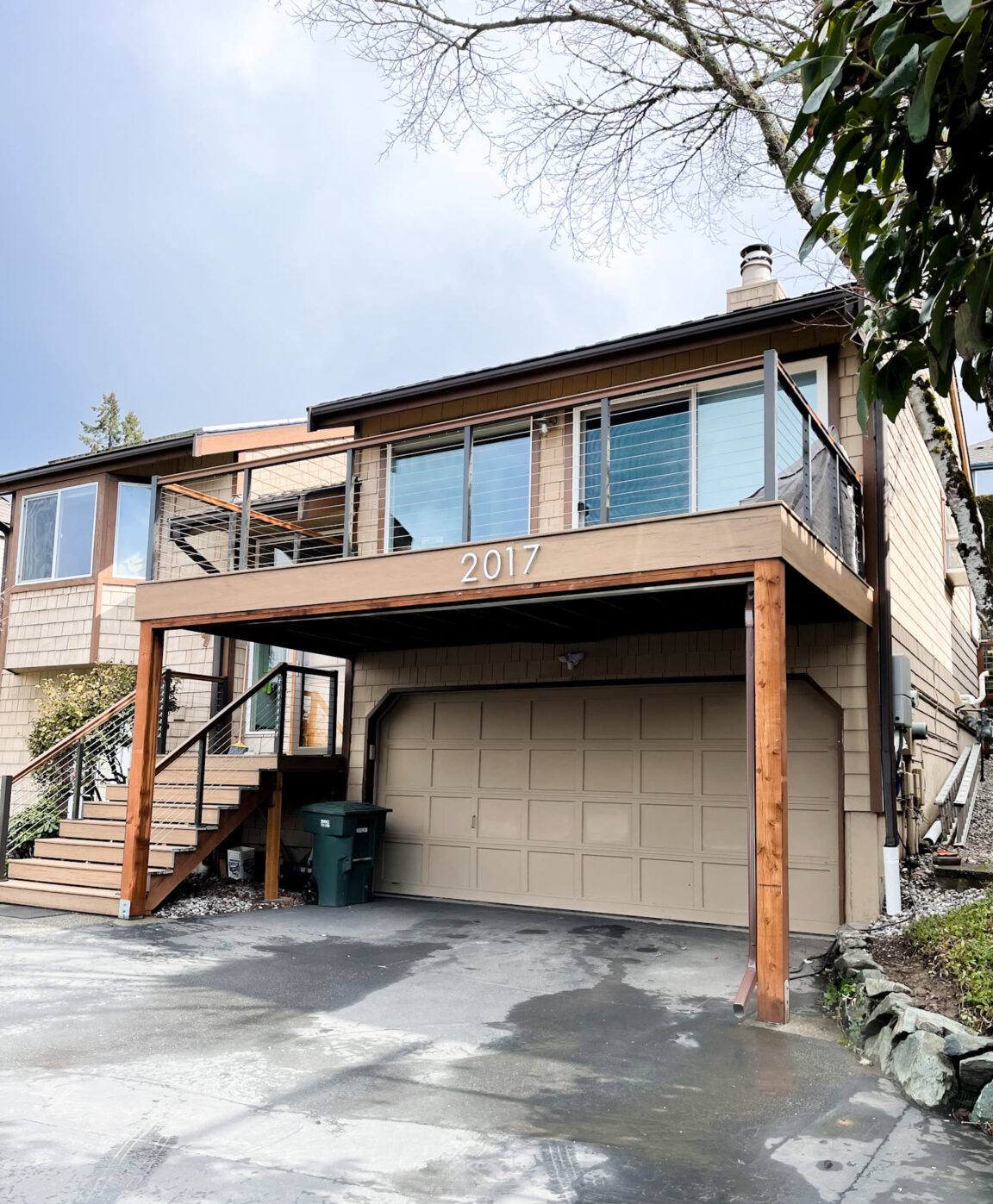
What the Cherry Point Climate Actually Does to a Deck
Salt Air
Salt in the air doesn't just affect boats and metal railings — it accelerates corrosion on every exposed fastener, bracket, and hidden clip in a deck system. Standard carbon-steel hardware will rust faster here than it would ten miles inland. It also settles into wood grain and porous surfaces, which is part of why untreated or lower-grade wood decking tends to gray, split, and degrade faster near the water.
Driving Rain
Storms coming off the water don't just fall straight down — wind pushes rain up under boards, into ledger connections, and behind fascia. A deck that isn't flashed and sloped correctly at the house connection will let water track back into the wall assembly, which is a much bigger and more expensive problem than anything happening on the deck surface itself.
Long Moss Season
Whatcom County's wet stretch runs long, and shaded or north-facing decks in particular stay damp for weeks at a time. Moss and algae need moisture and organic material to take hold. Composite boards resist this better than wood because they don't have the same food source for organic growth, but airflow underneath the deck and gapping between boards still matters — a composite deck built without ventilation can still hold moisture and grow moss in the grooves and seams.
Why Composite Makes Sense for This Location
We recommend composite decking for most Cherry Point projects because it removes several of the maintenance burdens that saltwater-adjacent wood decks carry: no annual staining, no sanding down splinters from salt-dried wood, and much better resistance to the freeze-thaw and wet-dry cycling that this coastal microclimate produces. That doesn't mean composite is maintenance-free — it isn't — but the maintenance shifts from structural upkeep to simple cleaning.
The trade-off is upfront cost and installation precision. Composite boards expand and contract with temperature more than people expect, and they're less forgiving of sloppy fastening or incorrect spacing than wood. A composite deck installed without accounting for that will show gapping, buckling, or fastener pop within a few seasons — problems that are avoidable with correct technique but expensive to fix after the fact.
| Factor | Wood Decking | Composite Decking |
|---|---|---|
| Salt air resistance | Degrades faster near water; needs regular sealing | Resists salt exposure well; color and surface hold up longer |
| Moss/algae resistance | Porous surface holds moisture, feeds growth | Resists organic growth but still needs airflow underneath |
| Annual maintenance | Staining/sealing, sanding, fastener checks | Periodic washing, hardware inspection |
| Upfront cost | Lower material cost | Higher material cost |
| Installation sensitivity | More forgiving of minor gaps/errors | Requires precise spacing for expansion/contraction |
| Typical lifespan in this climate | Shorter without diligent upkeep | Longer with correct install and minimal upkeep |
What a Correct Composite Deck Build Involves Here
Substructure First
The framing underneath a composite deck matters as much as the boards on top, especially this close to the water. That means pressure-treated or corrosion-resistant framing lumber, joist tape or flashing on top of joists to keep moisture out of the wood core, and stainless or coated fasteners throughout — not just at the visible surface. Cutting corners on hardware is one of the most common reasons decks near saltwater fail early, and it's the part homeowners can't see once the boards are down.
Ledger and House Connection
Where the deck meets the house is the single most important flashing detail on the whole structure. Done wrong, it's a direct path for wind-driven rain to get behind siding and into wall framing. We flash this connection to shed water outward, not let it pool or wick back toward the house.
Board Spacing and Fastening
Composite boards need consistent gapping to allow for thermal movement, and fasteners appropriate to the specific board profile — hidden clip systems for grooved-edge boards, or approved face-screw patterns for square-edge boards. Getting this wrong is what causes the buckling and popped fasteners mentioned above.
Airflow Underneath
Especially on lower or ground-level decks common in this area, we make sure there's enough clearance and ventilation beneath the deck so moisture doesn't sit trapped against the underside of the boards and framing — a direct defense against the moss and mildew issues this climate produces.
Railings and Fasteners
Any exposed metal — railing posts, brackets, connectors — gets a corrosion-resistant treatment or material spec suited to salt air, not the base-grade hardware that's fine for an inland build.
Our Process for Cherry Point Projects
- On-site assessment of the existing structure or build site, including sun/shade exposure, drainage, and proximity to the water
- Substructure inspection or design — framing, ledger connection, and drainage plan
- Material selection walkthrough based on your home's exposure and budget, including board profile and color options
- Written estimate covering scope, materials, and timeline before any work begins
- Installation with attention to flashing, fastening, and ventilation details specific to this coastal environment
- Final walkthrough covering care and cleaning specific to the board manufacturer's warranty terms
Why a Crew That Already Works Cherry Point Matters
A lot of deck problems in this area trace back to a build crew treating it like any other job site — using standard hardware specs, standard flashing details, standard board spacing that might be fine forty miles inland but isn't tuned for salt air and driving rain right on the water. A crew that already works in Blaine and along the Cherry Point shoreline knows which fastener grades hold up, which framing details actually keep water out of ledger connections here, and how much ventilation a low deck needs to avoid moss buildup through a wet Whatcom County winter. That's not something you get from a spec sheet — it's from building and repairing decks in this specific environment repeatedly.
Maintaining a Composite Deck Near the Water
- Rinse or wash the deck surface periodically to clear salt residue, pollen, and organic debris before it builds up in board grooves
- Keep gutters and downspouts near the deck clear so runoff isn't dumping extra water onto the deck surface or substructure
- Check railing posts and visible hardware annually for early signs of corrosion, especially after winter storm season
- Keep planters and furniture feet from trapping moisture directly against the board surface for long periods
- Trim back vegetation that shades the deck and slows drying, since prolonged dampness is what invites moss even on composite material
- Address any soft spots, movement, or gapping early — these are structural clues, not cosmetic ones
What Composite Decking Typically Involves Cost-Wise
Composite decking generally costs more upfront than wood, largely due to material price, but the gap narrows over the life of the deck once you account for the staining, sealing, and repair work wood decks near the water tend to need. Actual cost on any given project depends on deck size, framing condition, board tier, railing style, and site accessibility — which is why we walk every site in person rather than quoting off a phone call. There's no honest flat rate for this kind of work in a coastal environment; too much depends on what the substructure looks like once we're actually there.
Signs Your Current Deck Needs Attention
If you already have a deck in the Cherry Point area, a few signs point to problems worth addressing before they get more expensive: soft or spongy spots in decking or framing, visible rust streaking from fasteners, persistent moss or algae that comes back quickly after cleaning, gaps or movement at the ledger board where the deck meets the house, or boards that have cupped, split, or faded unevenly. Any of these can usually be traced back to a moisture or hardware issue underneath the visible surface — worth a look before it turns into a full rebuild.
If you're planning a new composite deck or need an honest look at one you already have near Cherry Point, we're glad to come take a look. Fill out the form below for a free, no-pressure estimate — no obligation, just a straight assessment of what your project actually needs.