 Blaine Roofing
 Siding Installation Built for California Creek's Conditions
California Creek sits on the edge of Blaine, close enough to the water and to Whatcom County's low-lying, tree-shaded terrain that homes here take on moisture in ways a lot of siding installations simply aren't built to handle. Salt-tinged air off the bay, rain that arrives sideways more often than straight down, and a moss season that can stretch through most of the year all put steady pressure on a home's exterior. That combination doesn't mean siding is a losing battle here. It means the installation has to be done by a crew that treats those conditions as the baseline, not as an edge case they'll get to if there's time.
This page is specifically about siding installation for homes in California Creek — new siding and full re-siding projects, not spot repair. We install James Hardie fiber cement exclusively, and everything below reflects that system, since it's the only one we install to spec on homes in this part of the county.
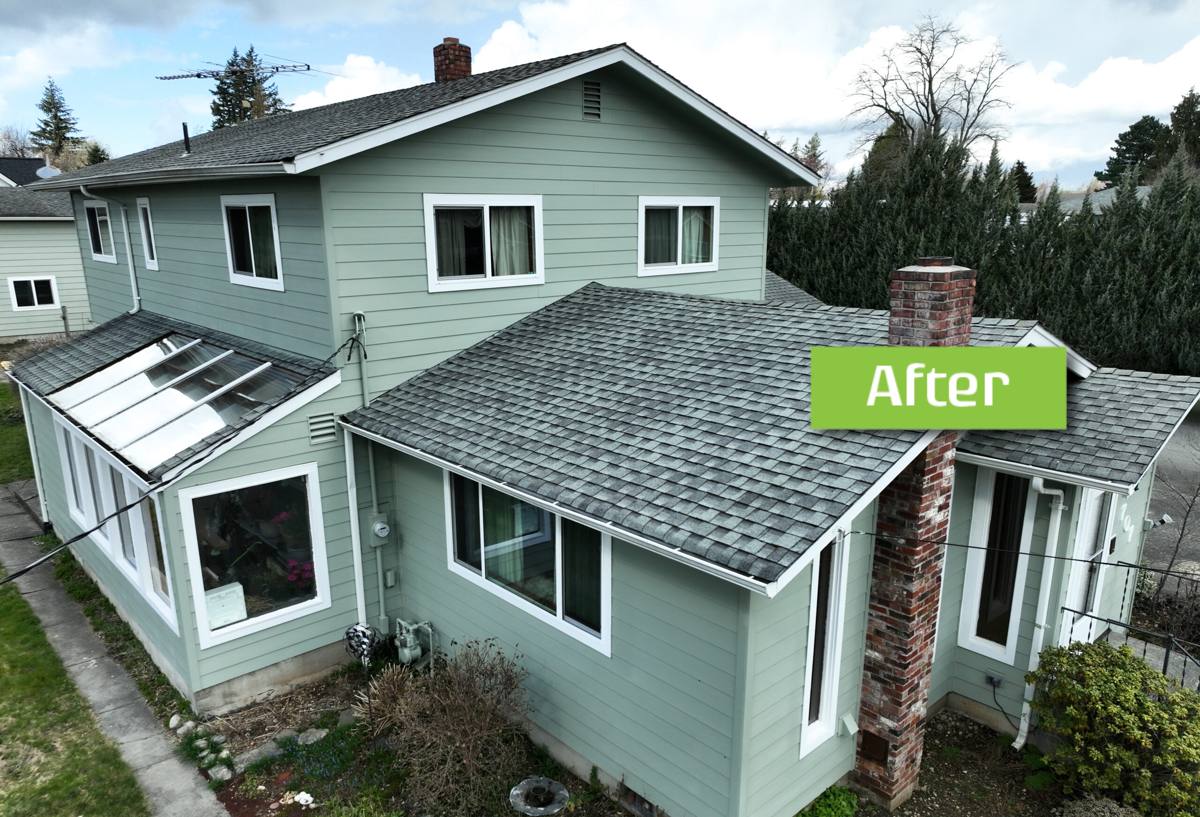
What California Creek's Climate Does to a Home's Exterior
Salt Air Off the Water
Even a modest distance from open water is enough for salt-laden air to become a daily condition rather than an occasional event. That salt exposure accelerates corrosion on exposed fasteners, flashing, and trim hardware, and it wears through lower-grade coatings and finishes faster than a drier, more inland location would. On a siding job, that means hardware choices and finish quality matter more here than the price tag alone would suggest.
Driving Rain and Wind-Driven Moisture
Storms moving through this part of Whatcom County don't just drop rain straight down onto a roof and let it run off. Wind pushes it sideways into wall assemblies, panel joints, and the seams where trim meets field siding, which is a different and more demanding load than a calm, straight-down rain. That sideways-driven moisture is exactly the kind that finds any gap a rushed installation leaves behind, and it's a large part of why the water-resistive barrier underneath the siding matters as much as the siding material itself.
A Long, Shaded Moss Season
California Creek's mix of tree cover and creekside low ground holds moisture longer than more open, sun-exposed parts of Blaine. Mild temperatures combined with near-constant dampness give moss and mildew a growing season that runs most of the year on shaded or north-facing walls. Any siding surface with even a little porosity becomes a growth surface over time in conditions like these, which is one more reason material choice and installation detail both matter more here than they would in a drier climate.
Why We Install Only James Hardie Fiber Cement Siding
We install one siding system, and that's a professional standard built from what we've seen firsthand on tear-offs and service calls in wet, shaded, coastal-adjacent parts of Whatcom County — not a supplier arrangement or a marketing angle.
- Non-combustible core: Fiber cement doesn't feed a fire the way wood-based siding products can, which matters for both safety and insurance considerations.
- Factory-applied ColorPlus finish: The color is baked on under controlled factory conditions rather than brushed on in the field, so it holds its finish longer against fading, chalking, and constant moisture exposure.
- Climate-engineered HZ product lines: Hardie's HZ5 formulation is built for regions with sustained moisture and freeze-thaw cycling, which describes conditions around California Creek well.
- Dimensional stability: Fiber cement doesn't swell, cup, or warp the way engineered wood products can after repeated wet-dry cycling.
- Strong transferable warranty: Hardie backs the product with one of the stronger warranty structures in the industry, provided the installation follows their spec.
We won't install LP SmartSide, vinyl siding, Cemplank, Allura, primed spruce, or cedar. Each has a place in the broader market and homeowners who are satisfied with them. But on a shaded, moisture-heavy lot near a creek, we've made a professional call to install one system we fully stand behind rather than offer something cheaper that quietly shifts maintenance risk onto the homeowner a few years down the road.
What a Correct Installation Actually Involves
Hardie siding performs the way it's engineered to only when the installation follows spec, and on a lot with California Creek's combination of shade, moisture, and occasional wind-driven rain, the details matter more than they would on a drier, more open site.
Rain Screen Gap
A small drainage cavity behind the siding lets any moisture that gets past the exterior surface drain and evaporate instead of sitting against the wall sheathing. On a shaded, slow-to-dry lot, that airflow gap is doing real work most of the year, not just during storms.
Fastening and Spacing
Hardie specifies exact fastener type and placement by product line and exposure. Loose spacing or the wrong fastener type is one of the more common causes of early siding failure we find on tear-offs, and it's also one of the easiest things for a rushed crew to shortcut without it being obvious on install day.
Clearances Above Grade, Decks, and Roofline
Hardie sets minimum clearance between siding and grade, decks, roofing, and other horizontal surfaces so the bottom edge of the siding isn't sitting in standing water or splash-back. On lower-lying, creek-adjacent lots where ground moisture and standing water are more common after heavy rain, that clearance is one of the details we won't compromise on.
Flashing and Sealant at Every Penetration
Windows, doors, vents, hose bibs, and light fixtures all interrupt the siding plane, and each interruption is a place moisture can work its way behind the cladding if it's flashed or sealed incorrectly. This is the slowest, least visible part of the job, and it's the part that decides whether a wall stays dry behind the siding for decades or starts trapping moisture within a few wet seasons.
Sealed Field-Cut Edges
Any panel cut on site — around a window, at a corner, at the end of a run — needs to be sealed or primed to Hardie's specification before it goes up. An unsealed cut edge is one of the more common places fiber cement actually takes on water, not because the material is flawed, but because the field cut wasn't finished correctly.
Comparing Siding Options Homeowners Ask About
| Product | What It Gets Right | Trade-Off in a Climate Like This |
|---|---|---|
| James Hardie fiber cement | Non-combustible, factory finish, engineered for sustained moisture | Higher upfront cost than vinyl; installation must follow spec precisely |
| Vinyl siding | Low upfront cost, minimal maintenance in mild climates | Can warp or crack under temperature swings; seams and panels give moisture more paths in over time |
| LP SmartSide (engineered wood) | Lighter weight, easier field cutting than fiber cement | Wood-based core is more moisture-sensitive; edge sealing and maintenance matter more in a wet, shaded climate |
| Cedar | Natural appearance many homeowners like | Needs ongoing refinishing and is more susceptible to rot and moss in constant shade and moisture |
| Cemplank / Allura fiber cement | Similar core material category to Hardie | Different finish and warranty structure; not the system we've standardized on or install to spec |
This table reflects general product trade-offs, not a claim that every other product fails outright. Plenty of homeowners are happy with vinyl or cedar in the right setting. Our standard reflects what we've consistently seen hold up best on shaded, moisture-heavy lots like the ones common around California Creek.
Cost Factors for a California Creek Siding Project
| Factor | What It Affects |
|---|---|
| Home size and wall complexity | Total material and labor hours required |
| Tear-off vs. new construction | Whether old siding and any hidden substrate damage need removal and repair first |
| Substrate condition | Sheathing repair cost if moisture has already gotten behind existing siding or trim |
| Trim and detail complexity | Number of windows, corners, and architectural features that need flashing and trim work |
| Siding profile and color | Lap width, shingle-style panels, and ColorPlus color selection affect material pricing |
| Site access and shade cover | Tree removal or trimming needs, staging space, and drying time between work phases |
These are general cost drivers, not a quote. Every property around California Creek sits at a slightly different distance from the water, under different tree cover, and on different ground conditions, so we walk the site in person before putting a real number on the work. Two homes on similar-sized lots can need very different scopes once we're actually pulling old siding or inspecting the sheathing underneath.
How Our Process Works
We keep the process straightforward because a project this size on your home deserves clear communication at every stage, not surprises partway through.
- In-person walk-through: We inspect the exterior, existing siding condition, and any visible moisture or moss issues ourselves rather than estimating from a photo or a phone call.
- Written estimate: You get a clear, itemized bid covering tear-off, substrate repair if needed, siding product and color, trim, and flashing scope — not a single vague line item.
- Scheduling around weather: We build reasonable flexibility into the timeline, since wet-season delays are a normal part of working in this region rather than an excuse we reach for later.
- Tear-off and substrate inspection: Old siding comes off completely on re-siding projects, and any sheathing or framing damage we find gets addressed before anything new goes up.
- Water-resistive barrier and rain screen installation: The drainage plane goes in first, lapped and sealed correctly at every seam and penetration, before any siding panel is hung.
- Siding, trim, and flashing installation: Panels go up to Hardie's fastening and clearance spec, with careful attention to flashing at every window, door, and penetration.
- Final walkthrough and cleanup: We review the finished exterior with you in person and do a full site cleanup before we consider the job done.
Signs a California Creek Home May Need New Siding
- Moss or dark staining that returns quickly after cleaning, especially on shaded or tree-covered walls
- Soft or spongy siding, particularly low on the wall or around window and door trim
- Visible warping, cupping, or cracking on wood-based or engineered siding products
- Peeling paint or a chalky, faded finish on sun-exposed walls
- Rust staining around fasteners or trim, more common the closer a home sits to the water
- Gaps opening up at seams, corners, or trim transitions
- A musty smell or visible interior staining on a wall that backs up to older siding
A Practical Checklist Before You Choose a Siding Contractor
- Do they specify the exact siding product and profile in writing, not just "new siding"?
- Does the estimate call out water-resistive barrier, rain screen detailing, and flashing scope separately?
- Do they perform a full tear-off with substrate inspection on re-siding projects, rather than covering over existing problems?
- Do they carry current Washington contractor licensing and liability insurance?
- Can they explain why they install the products they do, in plain terms, without dodging the question?
- Does the bid clearly separate the manufacturer's material warranty from the contractor's own workmanship warranty?
Why Hiring a Crew That Already Works California Creek Matters
A crew that regularly works siding jobs around California Creek and greater Blaine has already seen how salt air corrodes underspecified fasteners, how wind-driven rain exploits a poorly lapped barrier, and which walls hold moss longest through a shaded, damp part of the year. That's practical, earned knowledge that shows up in a dozen small decisions over the course of a job — where extra flashing attention pays off, which side of the house needs the most drying time before work continues, and which details are worth the extra hour so you're not dealing with a callback after the next big storm.
It also matters after the crew packs up. A workmanship warranty only means something if the company behind it is still reachable years later, and a contractor with an ongoing, established presence in the area is one you can actually call if a question comes up down the road.
If your California Creek home needs new siding or a full re-side and you'd like a straightforward, honest look at what that involves, we're glad to walk the property with you. Use the form below to request a free, no-pressure estimate.