 Blaine Roofing
 A deck in California Creek does a different job than a deck fifty miles inland. Between the salt-laden air off the water, long stretches of driving rain, and a moss season that can run from October well into spring, this part of Whatcom County is hard on outdoor wood structures. A deck built to a generic spec — the kind you'd get from a crew that mostly frames patios in drier climates — will show its age fast here: soft spots at the ledger, black streaking on the boards, rust bleeding from fastener heads, and a surface that gets slick the moment the temperature drops. A deck built for this specific neighborhood and this specific climate looks and performs differently for a lot longer.
What California Creek's Climate Actually Does to a Deck
Three things drive almost every deck problem we see in this area, and they compound each other.
Salt Air and Corrosion
Proximity to the water means airborne salt settles on every exposed surface, including fasteners, flashing, and connector hardware. Standard galvanized screws and joist hangers that hold up fine inland will start showing rust streaks within a couple of seasons here. Once corrosion starts on a structural fastener, it's not cosmetic — it's a slow loss of holding strength in the connections that keep the deck attached to the house and the posts attached to their footings.
Driving Rain
Rain that comes in sideways, pushed by wind off the water, gets into places vertical-only rain never reaches: under railing caps, behind fascia boards, into the joint where the deck ledger meets the house siding. That ledger connection is the single most common failure point on decks in this region, because it's also the hardest spot to flash correctly and the easiest for a crew to rush.
Moss and Extended Damp
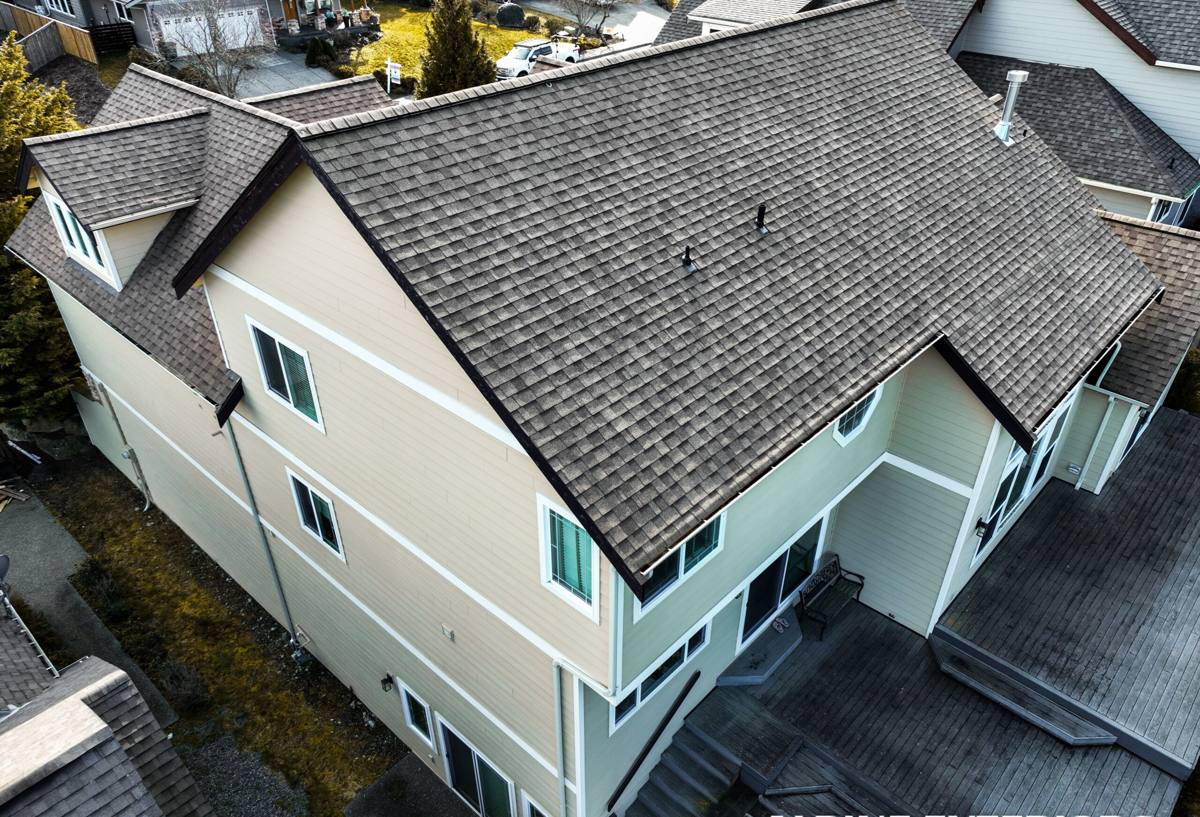
Tree cover and cooler, moist ground common in this neighborhood keep decking surfaces damp for days after a storm has passed. Moss and algae take hold anywhere water sits or sunlight is blocked, and once established they hold moisture directly against the wood or composite surface — accelerating rot in real wood and making any decking surface dangerously slick underfoot.
Choosing the Right Decking Material for This Neighborhood
There's no single "best" decking material — there's a best material for a given budget, maintenance appetite, and site. In a salt-air, high-moisture setting like California Creek, the trade-offs shift compared to a drier inland lot.
| Material | How It Handles This Climate | Maintenance | Typical Lifespan Here |
|---|---|---|---|
| Pressure-treated pine | Budget-friendly; needs consistent sealing to resist moisture and moss | Annual cleaning and re-sealing recommended | 10–15 years with upkeep |
| Western red cedar | Naturally rot- and insect-resistant; still needs finish maintenance near salt air | Periodic cleaning and re-oiling | 15–20 years with upkeep |
| Composite decking | Doesn't rot or absorb moisture; surface texture matters for moss/algae grip and slip | Occasional washing, no sealing | 25+ years, manufacturer-backed |
| PVC decking | Fully moisture-proof; performs well in constant damp, though can feel warmer underfoot in direct sun | Occasional washing | 25+ years, manufacturer-backed |
We install all of the above, and we'll tell you honestly which one fits your situation — a shaded, low-airflow lot near tree cover pushes us toward composite or PVC for the moss resistance alone, while an open, sunnier spot can make cedar a perfectly reasonable choice if you're willing to keep up with the finish.
Structural Details That Matter More Here Than Elsewhere
The visible decking boards get all the attention, but the parts you don't see are what determine whether a deck lasts eight years or twenty-five in this climate.
Ledger Flashing
Where the deck attaches to the house, we install flashing designed to shed water away from the band joist and siding, not just a bead of caulk. Caulk alone fails within a few seasons under this much wind-driven rain; proper metal or membrane flashing is what actually keeps water out of the wall assembly.
Fasteners and Hardware
We use stainless steel or heavy-coated, marine-rated fasteners and connectors rated for corrosive exposure, not standard galvanized hardware. It costs more up front and saves the structural integrity of the connections for the life of the deck.
Footings and Post Bases
Footings are set below frost depth and post bases are elevated off the concrete so wood posts aren't sitting in standing water after every storm — a detail that matters a lot more on a low-lying, moisture-holding lot than it does on well-drained, sloped ground.
Joist Spacing and Board Selection
Tighter joist spacing and properly sized boards reduce the deflection and gapping that let water pool on the surface instead of running off — pooling is exactly what feeds moss growth.
Drainage, Slope, and Moss Prevention Built Into the Design
Moss doesn't grow because a deck is old — it grows because water and shade sit in the same place long enough for spores to take hold. Good deck design fights that from the start.
- A slight slope away from the house so water sheds off the surface instead of pooling against the ledger
- Consistent gapping between boards sized for drainage without becoming a hazard for narrow items or heels
- Under-deck airflow where the design allows it, so the space beneath dries out between storms
- Decking surface texture chosen with slip resistance in mind, since a smooth, mossy board is genuinely dangerous
- Trim and railing details that don't trap leaves and debris against the structure
None of this eliminates the need for occasional cleaning, but it substantially reduces how often moss becomes a real problem instead of a quick wash-off.
Our Deck Building Process, Start to Finish
- On-site assessment. We look at grade, drainage, tree cover, sun exposure, and how the deck will connect to your house before recommending a design or material.
- Design and material selection. We walk through the trade-offs above with you — budget, maintenance tolerance, and how the space will actually be used — and settle on a plan that fits.
- Permitting. We handle the permit application and inspections required for the project.
- Ledger and flashing work. This is done first and done carefully, since it's the part of the job that causes the most long-term problems if rushed.
- Framing, footings, and structural connections. Built to code minimums or beyond, with corrosion-rated hardware throughout.
- Decking, railing, and finish work. Installed with proper gapping and fastening for the material chosen.
- Final walkthrough. We review the finished deck with you, including basic care and what to expect over the first year.
Permits and Local Requirements
Deck construction in Blaine and the surrounding parts of Whatcom County generally requires a building permit once the structure exceeds a certain height or size, and setback rules apply depending on your lot's proximity to property lines and, in some cases, water or critical areas. Requirements vary by exact lot and jurisdiction, so we confirm what applies to your specific property rather than assuming — and we handle the paperwork and inspection scheduling as part of the job so you're not chasing it down yourself.
Repair, Replace, or Rebuild: Knowing Which Your Deck Needs
Not every aging deck in California Creek needs to be torn out. We evaluate the structure honestly before recommending a full rebuild.
| Condition | What It Usually Means |
|---|---|
| Soft or spongy decking boards | Boards likely need replacement; check framing underneath before recovering |
| Rust streaking at fastener heads | Hardware should be upgraded to corrosion-rated fasteners, even if the wood is sound |
| Gap or movement at the ledger | Flashing or ledger attachment needs immediate attention — this is a safety issue, not cosmetic |
| Persistent moss despite cleaning | Points to a drainage or shading issue in the original design, not just a maintenance gap |
| Sound frame, worn surface | Often a good candidate for a resurfacing or decking-only replacement rather than a full rebuild |
A Simple Maintenance Checklist for California Creek Homes
Whatever material you choose, a little seasonal attention goes a long way in this climate.
- Rinse and sweep debris off the deck surface regularly, especially after wind or storms
- Clean moss and algae as soon as it appears rather than waiting for it to spread
- Check and re-seal wood decking on the manufacturer's or installer's recommended schedule
- Inspect fasteners and railing connections annually for rust or looseness
- Confirm the ledger flashing and caulking at the house connection are intact each year
- Keep nearby vegetation trimmed back to improve airflow and sun exposure on the deck surface
Why It Matters to Hire a Crew That Already Works in This Neighborhood
A contractor who mostly builds decks in drier, inland conditions will often use standard hardware, standard flashing details, and a standard slope — because that's what works where they usually build. In California Creek, those standard choices are exactly what shows up as rust, rot, and moss two or three years later. Building decks in and around Blaine day in and day out means we've already seen how salt air, driving rain, and a long wet season affect the materials and connections over time, and we build accordingly from the first footing.
If you're planning a new deck or need an honest assessment of one that's showing its age, we're happy to take a look. Reach out for a free, no-pressure estimate using the form below.