 Blaine Roofing
 Why Blaine Harbor Windows Wear Out Faster Than Windows Inland
Blaine Harbor sits close enough to the water that salt-laden air is a daily fact of life, not an occasional nuisance. That air finds every gap in a window frame, corrodes hardware that isn't rated for it, and slowly breaks down finishes that would last decades a few miles inland. Add in the driving rain that comes off the Strait of Georgia during fall and winter storms, and you have wind pushing water sideways into joints that were only ever designed to shed water falling straight down.
Then there's the moss and algae season, which in Whatcom County runs long — often eight months or more of damp, low-light conditions. Moss doesn't just grow on roofs. It takes hold in window sills, corner joints, and anywhere organic debris collects moisture against wood or vinyl. Left alone, it holds water against the frame year-round, which is exactly the condition that rots wood and clouds vinyl.
None of this means Blaine Harbor is a bad place for windows — it means windows here need to be installed with these specific stresses in mind, not with a generic approach that works fine in a drier climate.
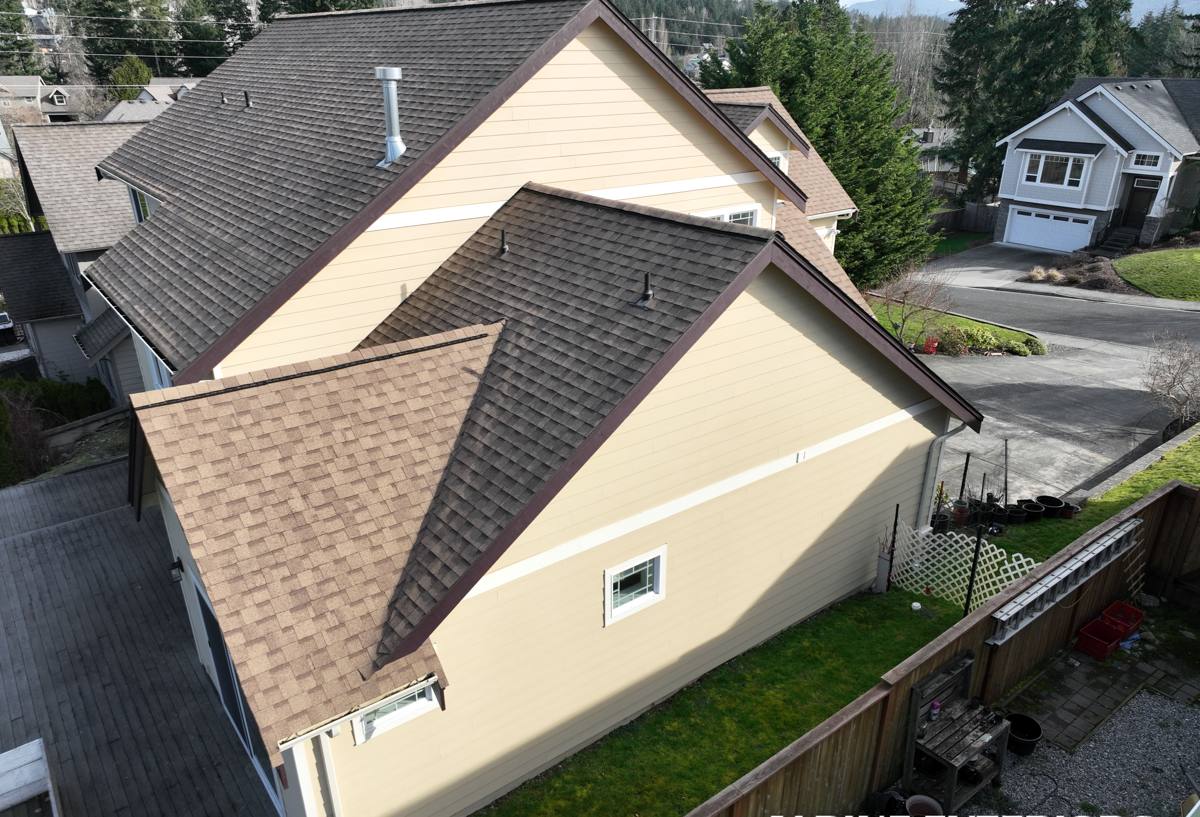
Signs Your Current Windows Are Losing the Fight
Failing Seals and Fogging Glass
Double-pane windows rely on a sealed gas gap between panes. Once that seal breaks — often accelerated by constant humidity and temperature swings off the water — you'll see permanent fogging or moisture between the panes that no amount of cleaning will fix. This is a sign the window's insulating value is gone, not just a cosmetic issue.
Soft or Discolored Sills
Press a thumb into the wood sill or lower frame corners. If it gives at all, or you see dark staining, water has been sitting there long enough to start breaking the material down. This is the single most common failure point we find on older Blaine Harbor homes.
Drafts, Sticking, and Hardware That's Seized
Salt air corrodes cheap hardware — latches, balances, and hinges — faster than most homeowners expect. If a window is hard to open, won't stay up, or you can feel air movement around the frame on a windy day, the frame has likely shifted or the weatherstripping has given out.
What a Correct Window Installation Actually Involves
Swapping an old window for a new one sounds simple, but the installation — not the window itself — is what determines whether it holds up in this climate. A correct install includes:
Flashing and Water Management
Every window opening needs to be flashed so that any water that gets behind the siding is directed back out, not into the wall cavity. This matters more here than in drier climates because wind-driven rain will find and exploit any shortcut in the flashing sequence. We integrate window flashing with the existing weather-resistive barrier rather than just caulking around the new unit and calling it done.
Sill Pan Protection
A sloped sill pan under the window directs any water that does get past the glass and frame back outside instead of letting it pool. On a harbor-adjacent property, skipping this step is one of the most common reasons we see rot show up again within a few years of a previous install.
Fastening and Shimming for a Square, Sealed Fit
A window that isn't shimmed level and square will develop stress points where the frame and sash don't meet cleanly — and that's where drafts and leaks start. Proper fastening also matters for wind load, since coastal gusts put more lateral pressure on a window than typical inland wind.
Choosing Window Materials for Salt Air and Moss Season
Not every window product handles this environment the same way. We steer homeowners toward materials and hardware rated for coastal exposure, and we're upfront about the trade-offs of each option rather than pushing one product for every home.
| Frame Material | Coastal Performance | Maintenance Burden |
|---|---|---|
| Vinyl | Good corrosion resistance; hardware quality varies by manufacturer | Low — occasional cleaning of tracks and weep holes |
| Fiberglass | Excellent — stable in temperature swings, resists salt corrosion well | Low — durable finish, minimal upkeep |
| Wood, unclad | Poor in direct salt exposure without diligent upkeep | High — regular refinishing and moisture checks needed |
| Wood-clad (aluminum or fiberglass exterior) | Good — exterior cladding shields the wood core from weather | Moderate — interior wood still needs occasional attention |
We generally don't recommend unclad wood frames for homes with direct water exposure in this area — not because wood windows are a bad product, but because the maintenance schedule required to keep them sealed against salt air and constant moisture is more than most homeowners want to keep up with. If you love the look of wood, a clad option gives you that appearance with better long-term behavior here.
Our Installation Process
- On-site assessment: We check existing framing, sills, and siding for hidden rot or water damage before quoting anything — problems found after the old window is out cost more to fix as surprises.
- Product selection: We walk through frame material, glass package, and hardware options based on your home's exposure to wind and water, not a one-size-fits-all recommendation.
- Removal and opening prep: Old units come out carefully so we can inspect and repair the rough opening, sheathing, and weather barrier underneath.
- Flashing and sill pan installation: Water management goes in before the new window does, every time.
- Window setting and sealing: The unit is shimmed square, fastened per manufacturer spec, and sealed with materials rated for exterior exposure.
- Interior and exterior finish work: Trim, caulking, and touch-up so the finished job looks right from both sides.
- Final walkthrough: We check operation, seals, and locks with you before we consider the job done.
What Drives Window Installation Cost
Costs vary by home, but the main factors are consistent across most Blaine Harbor projects:
| Cost Factor | Why It Matters |
|---|---|
| Frame material | Vinyl is typically the most budget-friendly; fiberglass and clad-wood cost more upfront but hold up better against salt exposure |
| Number and size of openings | Larger or custom-sized windows require more material and labor |
| Condition of the existing opening | Rot or water damage found during removal adds repair work before the new window can go in |
| Glass package | Upgraded glass (impact resistance, additional coatings) affects both comfort and price |
| Access and site conditions | Second-story or hard-to-reach windows take more time to install safely |
We provide a written estimate that breaks these factors down for your specific home rather than a flat per-window number that doesn't account for what your project actually needs.
Why a Crew That Knows Blaine Harbor Matters
A lot of window problems we get called out to fix weren't caused by a bad window — they were caused by an installation that didn't account for local conditions. Flashing details that work fine in a sheltered inland neighborhood can fail within a few seasons on a home taking direct wind and salt spray off the water. A crew that installs windows regularly in this specific area already knows which details can't be skipped here, and builds the job around that from the start rather than treating it as an afterthought.
We're also familiar with the moss and algae patterns specific to this part of Whatcom County, which shapes how we detail sills and drainage so debris doesn't build up against the frame over time.
Keeping New Windows Performing Long-Term
A correctly installed window still benefits from basic upkeep, especially in this climate:
- Clear debris and moss from sills and tracks a couple times a year, especially after fall storms
- Check weep holes on the exterior sill to make sure they're not blocked and draining properly
- Rinse salt residue off frames and glass periodically, particularly on sides facing the water
- Test locks and operation each season — stiff hardware is often an early warning sign, not just an annoyance
- Inspect exterior caulking annually and have gaps resealed before water finds its way behind the trim
If you're noticing drafts, fogged glass, soft sills, or hardware that's harder to operate than it used to be, it's worth having someone look before those small issues turn into a wall repair. We're happy to come out, take a straightforward look at your windows, and put together a free, no-pressure estimate for what it would take to get them performing the way they should — just fill out the form below.