 Blaine Roofing
 Living Near the Water Changes What Your Siding Has to Survive
Houses near Blaine Harbor don't age like houses ten miles inland. The same salt-laden air that makes the waterfront a nice place to live also works constantly on paint, caulk, and wood fiber. Add Whatcom County's long wet season and the moss and algae growth that comes with it, and you have a siding environment that punishes anything not built or installed for it. This page is about one job, done right, in one place: full siding replacement for homes in and around Blaine Harbor.
A lot of siding advice online is generic — written for a house in a dry climate with none of the coastal exposure Blaine homes deal with. We're not going to repeat that advice here. We're going to talk about what actually happens to siding a few blocks from the water, what a correct replacement looks like in this specific setting, and why we've standardized on one product system instead of offering the full menu.
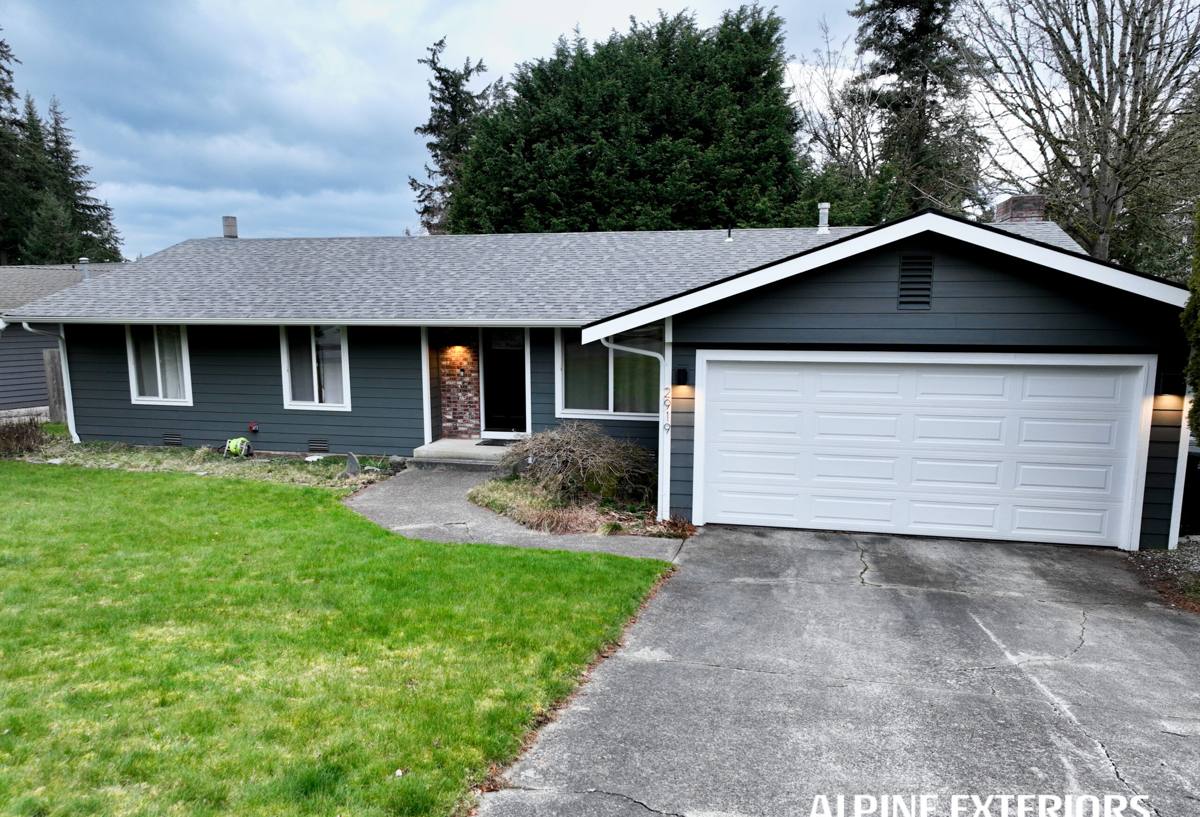
How Salt Air, Driving Rain, and Moss Actually Damage Siding
Three separate stresses hit Blaine Harbor homes at the same time, and most siding products aren't built to handle all three together.
Salt Air
Airborne salt is corrosive and hygroscopic — it pulls moisture out of the air and holds it against whatever surface it lands on. On painted wood or engineered wood siding, that means the paint film breaks down faster, and any point where the coating is thin or scratched becomes an entry point for moisture. On fasteners and trim, it accelerates corrosion. Homes with a direct sightline to the harbor see this fastest, but the effect reaches well beyond the waterfront block.
Driving Rain
Whatcom County storms don't just fall straight down — wind off the water drives rain sideways into wall assemblies, which puts far more stress on laps, seams, and butt joints than a vertical rain ever would. Siding and flashing details that would be adequate in a calmer climate get overwhelmed here, and water finds its way behind the cladding through gaps that would otherwise go unnoticed for years.
Moss and Algae
Long stretches of damp, shaded conditions — common on north-facing walls and under tree cover near the harbor — let moss and algae take hold on siding surfaces. Beyond the cosmetic issue, organic growth holds moisture against the substrate, which is exactly what you don't want happening on a wood-based product for months at a time.
None of these three problems is unique to Blaine. What's unique is having all three working on the same wall, year-round, which is why siding choices that hold up fine in drier or more sheltered parts of Washington can fail early here.
The Warning Signs We See Most in This Area
Most homeowners don't call us because they read about siding failure — they call because something looks or feels wrong. In Blaine Harbor homes, the pattern is fairly consistent:
- Soft or spongy spots when you press on siding, especially near the bottom courses and around window sills
- Paint that's peeling, bubbling, or chalking faster than the rest of the house's exterior
- Persistent moss or dark streaking that comes back within a season of cleaning
- Visible gaps opening at butt joints or corners as material swells and shrinks
- Musty smell or interior wall staining, which usually means moisture has already gotten past the siding
- Fastener heads rusting or "bleeding" rust streaks down the face of the siding
Any one of these can be a localized repair. Several at once, especially on a home that's 15-25 years old, usually means the siding system as a whole is done and patch repairs will just chase the problem around the house.
What a Correct Siding Replacement Actually Involves
Replacing siding is not just swapping old boards for new ones. In a marine climate, the parts you don't see matter more than the parts you do.
Tear-Off and Substrate Inspection
Once the old siding is off, we inspect the sheathing underneath for rot, delamination, or hidden moisture damage — this is often the first time anyone has been able to see the true condition of the wall since the house was built. Any compromised sheathing gets replaced before anything new goes on top of it; installing new siding over damaged sheathing just seals the problem in.
Moisture Barrier and Flashing
A weather-resistive barrier goes on correctly lapped, shingle-style, so water is always directed outward and down, never trapped behind it. Flashing at windows, doors, and any roof-to-wall intersection gets special attention here, because driving rain off the harbor finds weak flashing details faster than calmer inland weather does.
Fastening and Clearances
Correct fastener type, spacing, and penetration depth matter for wind and moisture performance, and they're exactly the details that get skipped by crews trying to move fast. We also hold proper clearance between siding and grade, decks, and roof lines — tight clearances are one of the most common reasons siding rots prematurely near the bottom of a wall.
Finish and Caulking
Cut edges get sealed, joints get caulked with a product rated for the movement and moisture exposure involved, and trim details are finished so water sheds away from the wall rather than pooling at a ledge or sill.
Skip any one of these steps and you can end up with a house that looks good for a year or two and then shows the same problems the old siding had — just with a newer face on it.
Why We Install Only James Hardie Fiber Cement
We get asked why we don't offer vinyl, LP SmartSide, or other engineered wood products. The honest answer is that we looked at how those products perform in exactly this kind of environment — salt air, driving rain, extended damp seasons — and decided we weren't willing to put our name behind installations we expected to need early attention. That's not a knock on every use case for those products; it's a decision about what we're comfortable standing behind on homes exposed to Blaine Harbor conditions.
Built for This Climate
James Hardie's HZ product lines are engineered with different formulations for different climate zones, including versions built specifically for wetter, harsher conditions. Fiber cement doesn't absorb and swell with moisture the way wood-based products can, which matters directly on a wall that's regularly hit with wind-driven rain.
ColorPlus Factory Finish
Hardie's ColorPlus finish is baked on in a controlled factory environment rather than field-applied, which gives it better resistance to fading and wear from constant UV and salt exposure than most site-painted finishes achieve. It also means color is consistent across every board, not dependent on job-site painting conditions.
Non-Combustible Construction
Fiber cement is non-combustible, which is a meaningful advantage in wildfire season conditions that have become more common across the Pacific Northwest, even in areas that don't think of themselves as high fire risk.
A Warranty That Actually Transfers
Hardie backs its products with a strong, transferable warranty — useful if you plan to sell the home down the road, since it's one less question a buyer's inspector will flag.
We're not going to tell you every other product is worthless. We're telling you what we've chosen to put on homes we're responsible for, and why, given what this specific climate does to a wall over time.
Our Process, Start to Finish
- Inspection and estimate — we walk the exterior, check for soft spots and trouble areas, and give you an honest read on whether you're looking at full replacement or targeted repair.
- Scope and product selection — we walk through Hardie's lines, textures, and color options and settle on a plan that fits the house and your budget.
- Tear-off and substrate check — old siding comes off, sheathing gets inspected, and any rot or damage gets addressed before new material goes up.
- Weather barrier and flashing — the parts you won't see again once the job is done, installed to manufacturer spec.
- Hardie installation — correct fastening, clearances, joint treatment, and finish work.
- Final walkthrough — we go over the finished work with you before calling the job complete.
What Drives the Cost of a Siding Replacement Here
| Factor | Why It Matters in Blaine Harbor | Effect on Project |
|---|---|---|
| Extent of hidden damage | Marine humidity and driving rain can rot sheathing years before it shows on the surface | More sheathing replacement adds cost but prevents sealing in a problem |
| Wall exposure to wind and water | Sides facing the harbor or prevailing storm direction take more abuse | May need heavier flashing detail in those areas |
| Home size and complexity | Dormers, multiple stories, and trim details add labor time | More cutting, fitting, and finish work |
| Product line and texture | Hardie offers multiple HZ lines and finishes | Choice affects material cost, not long-term durability |
| Existing moss or organic growth | Common on shaded, damp walls near the water | May require additional prep and cleaning before work begins |
Why Hiring a Crew That Already Works This Area Matters
A crew that mostly works drier, inland jobs can do fine work and still get the details wrong here, simply because they're not used to designing for wind-driven rain and salt exposure every day. A few things worth checking before you hire anyone for a Blaine Harbor siding job:
- Do they have current Washington contractor licensing and insurance they can show you without hesitation?
- Can they explain their flashing and moisture barrier approach in plain terms, not just "we'll seal it up"?
- Do they have experience specifically with homes near the water, not just siding jobs in general?
- Are they installing to the manufacturer's actual specifications, including fastener schedule and clearances?
- Will they show you the sheathing before it's covered, so you know what condition your walls were actually in?
- Is the warranty they're offering backed by the manufacturer, not just a verbal promise from the installer?
None of this is exotic. It's the difference between a crew that treats every job the same and one that adjusts for what Whatcom County's coastal weather actually does to a wall.
Getting Started
If your siding is showing any of the signs above, or you just want an honest read on how much life it has left, we're happy to come take a look. The estimate is free, there's no pressure, and you'll get a straight answer about whether you need full replacement, targeted repair, or nothing at all right now. Use the form below to get in touch.