 Blaine Roofing
 A Harborfront Property Puts Different Demands on Siding
Blaine Harbor sits right at the water's edge on Drayton Harbor, and that changes the math on what a home's siding actually has to survive. A house a mile inland in Whatcom County deals with normal Pacific Northwest weather. A home in Blaine Harbor deals with that same weather plus direct salt exposure off the water, wind that regularly pushes rain sideways instead of straight down, and a marine humidity level that keeps north- and shade-facing walls damp for weeks at a stretch. None of that is unusual for this stretch of coastline — it's just the baseline, and it's the reason a generic siding job that would be fine twenty miles inland can start showing problems within a few winters on a harborfront wall.
We install James Hardie fiber cement siding exclusively, and on a property this close to the water, that choice matters more than it would somewhere more sheltered. This page focuses specifically on what a Hardie siding project looks like for a Blaine Harbor home — the climate factors driving the decisions, what correct installation actually involves this close to saltwater, and how our process runs from first look to finished wall.
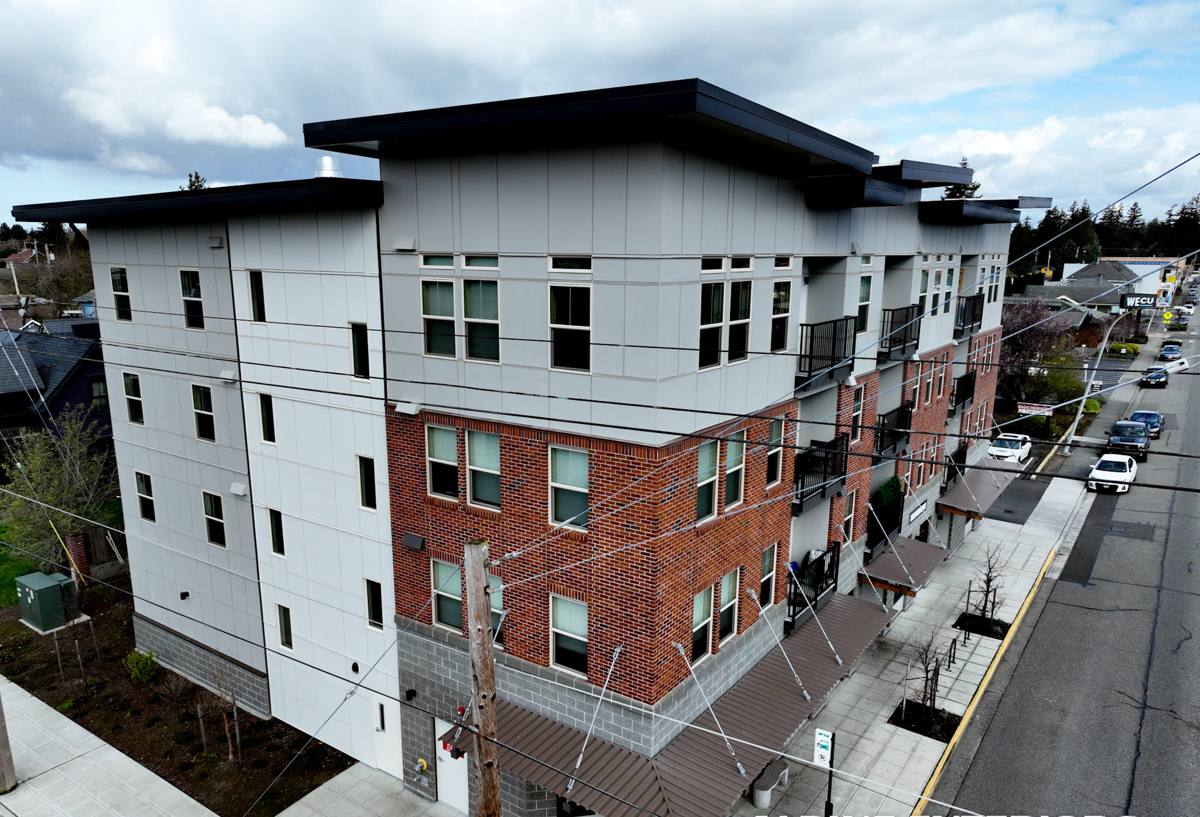
What Blaine Harbor's Climate Actually Does to Exterior Materials
Salt Air, Every Day, Not Occasionally
Homes set back from the water get salt exposure in gusts, during storms, on windy days. A home in Blaine Harbor gets it as a daily condition. Salt-laden air is corrosive to lower-grade fasteners and trim hardware, and it degrades paint and finish coatings faster than the same products would wear inland. Any siding decision here has to account for hardware and finish quality, not just the board itself — a good panel installed with the wrong fasteners still fails early on a harborfront wall.
Wind-Driven Rain Off the Water
Storms moving across Drayton Harbor and the Strait rarely drop rain straight down on a Blaine Harbor home. Wind pushes it sideways, into siding joints, window and door flashing, and the wall-roof transitions where water intrusion usually starts. That wind-driven load is what separates a properly detailed installation from one that looks fine on install day and starts letting moisture behind the cladding two or three wet seasons later.
A Moss Season That Runs Most of the Year
Mild temperatures and near-constant dampness give moss and mildew a long growing window on shaded or north-facing walls, and harborfront lots with any tree cover see it worse than open, sun-exposed walls. A siding material that's porous, or that holds moisture against the wall assembly instead of shedding it, becomes a growth surface. On a single Blaine Harbor property, the water-facing side of the house often dries out fine while the landward, shaded side stays damp — which means the moisture and moss pressure isn't even across the same building.
Why James Hardie Is the Right Fit for This Exposure
We standardized on James Hardie fiber cement across every job we take, and a property with Blaine Harbor's level of exposure is exactly the case that standard was built for.
- Non-combustible fiber cement core — doesn't feed a fire the way wood-based siding can, a factor in both homeowner safety and insurance underwriting.
- Factory-applied ColorPlus finish — baked on under controlled conditions rather than field-applied, so it holds color and adhesion longer under sustained salt air and UV than a site-painted finish.
- HZ5 climate engineering — Hardie's HZ product lines are formulated for regions with heavy moisture exposure and freeze-thaw cycling, which fits this stretch of Whatcom County's coastline.
- Dimensional stability — fiber cement doesn't swell, cup, or warp through repeated wetting and drying cycles the way engineered wood products can.
- A strong transferable warranty — backed by Hardie when installation follows their published specifications, which is part of why we install to spec every time, not just when it's convenient.
We don't install LP SmartSide, vinyl siding, Cemplank, Allura, primed spruce, or cedar. Each has its place in the broader market and plenty of homeowners elsewhere get years of service from them. Our position is specific to the kind of exposure a harborfront home like this faces: we'd rather commit to one system we can fully warranty and stand behind than offer a lower-cost option that shifts maintenance risk onto the homeowner a few years down the line.
Comparing Options Under Harborfront Exposure
| Material | Trade-off this close to the water |
|---|---|
| Vinyl siding | Panel seams give wind-driven rain an entry point; can warp or discolor under sustained salt and UV exposure |
| LP SmartSide / engineered wood | Wood-strand core is more sensitive to moisture at cut edges and fasteners than fiber cement |
| Primed spruce or cedar | Needs ongoing paint and moisture upkeep to avoid rot; salt air shortens the repaint cycle |
| Other fiber cement brands | May not offer an HZ5-equivalent formulation or the same factory-finish warranty depth |
| James Hardie HZ5 | Engineered for this moisture and cycling profile, backed by a factory finish and transferable warranty |
What Correct Installation Actually Involves
The Water-Management System Behind the Boards
Hardie siding is only as good as what's behind it. On a Blaine Harbor job, that means a properly lapped weather-resistive barrier, correctly integrated flashing at every window, door, and roof-to-wall transition, and a drainage plane that lets any moisture that does get behind the cladding find its way back out instead of sitting against the sheathing. This is the part of the job that's invisible once the siding is up, and it's also the part that determines whether the house stays dry for the next thirty years or develops a rot problem behind a wall that looks perfect from the street.
Fastening and Joint Treatment
Hardie's installation spec calls for specific fastener types, spacing, and embedment depth, and on a harborfront home we don't substitute lower-grade hardware to save cost — corrosion-resistant fasteners are non-negotiable this close to salt air. Joints and butt seams get treated according to Hardie's published details rather than just caulked and hoped for, because a joint that's sealed wrong is the first place wind-driven rain finds its way in.
Trim, Caulking, and Paint Lines
The finish details — corner boards, trim reveals, caulk lines at penetrations — matter more here than they would on a sheltered inland lot, because every one of those seams is a potential entry point under sustained wind-driven rain. We treat trim and caulk work as part of the water-management system, not just cosmetic finishing.
Signs a Blaine Harbor Home's Siding Is Already Under Stress
Because exposure here is more aggressive than inland Whatcom County, problems tend to show up earlier and in specific spots. Worth checking for, especially on north-facing and water-facing walls:
- Dark streaking or staining running down from window heads, trim, or the roofline
- Moss or persistent green growth on shaded siding that doesn't dry out between rains
- Caulk that's cracked, pulled away, or missing at joints and trim edges
- Soft or spongy trim boards, especially near the bottom courses close to grade
- Paint or finish that's chalking, peeling, or visibly faded faster on the water-facing side
- Visible corrosion on fasteners, flashing, or hardware
Any one of these on its own isn't necessarily an emergency, but they're worth a professional look before they turn into sheathing or framing damage that costs significantly more to fix than the siding itself.
How Our Process Runs on a Blaine Harbor Job
Inspection and Estimate
We start with an honest walk of the house — current siding condition, any signs of trapped moisture, and how exposure varies wall to wall, since the water-facing and shaded sides of a harborfront property rarely age the same way. That drives the estimate, rather than a flat per-square-foot number that ignores what's actually happening on the house.
Tear-Off and Substrate Check
Once old siding comes off, we check the sheathing underneath for rot or soft spots before anything new goes on. Covering damaged sheathing with new siding just hides a problem that will keep growing behind the wall — we address what we find rather than build over it.
Water Barrier, Flashing, and Drainage
This is where the long-term performance of the job actually gets decided. We install the weather-resistive barrier and flashing details to spec at every penetration and transition, with the drainage plane set up to shed water that gets behind the cladding rather than trap it.
Siding Installation
Hardie boards go up per manufacturer spec — correct fastener type and spacing, proper joint treatment, and attention to how each course ties into trim, corners, and openings. This is where the earlier prep work either pays off or gets undermined by shortcuts, so we don't rush this stage.
Trim, Caulk, and Final Finish
Trim, corner boards, and caulk lines get finished to match Hardie's detailing, since these are the seams that take the brunt of wind-driven rain over the life of the siding.
Walkthrough and Cleanup
We walk the finished job with the homeowner, cover what maintenance looks like going forward, and clean the site thoroughly before we consider the job done.
What Drives Cost on a Harborfront Siding Job
| Factor | Why it affects the estimate |
|---|---|
| Current siding condition | Rot or hidden moisture damage found during tear-off adds sheathing repair before new siding can go on |
| Wall exposure | Water-facing walls may need additional flashing or drainage detail beyond a standard install |
| Trim and architectural detail | More corners, window trim, and transitions mean more labor-intensive flashing and finish work |
| Site access | Harborfront lots with tight access or limited staging space can affect scaffolding and material staging time |
| Siding profile and finish | Lap, shingle, and board-and-batten profiles carry different material and labor costs |
We walk through these factors during the estimate so there's no guessing about where the number comes from.
Why Hiring a Crew That Already Works Blaine Harbor Matters
A contractor who works this stretch of the coastline regularly already knows which walls on a harborfront home take the worst of the wind-driven rain, where moss builds up fastest, and what level of flashing detail actually holds up here versus what merely meets code on paper. That familiarity shows up in decisions made before a single board goes up — which corners get extra flashing attention, which joints need more conservative treatment, where the drainage plane needs to be more forgiving. A crew that mostly works inland and treats a Blaine Harbor job like any other stop on the schedule is more likely to apply a standard approach to a property that doesn't have standard exposure.
Maintenance After Installation
James Hardie siding installed to spec is low-maintenance, not no-maintenance, and that's especially true this close to the water. A yearly walk-around to check caulk lines, clear debris from behind trim, and confirm gutters are draining away from the wall goes a long way toward protecting the investment. Shaded or north-facing walls may need occasional gentle cleaning to keep moss from establishing, even on a material that resists it far better than wood-based alternatives.
If you own a home in Blaine Harbor and want a straight answer on what your siding needs, we're glad to take a look. The estimate is free, there's no pressure attached to it, and you'll get a clear breakdown of what we see and what it would take to fix it — use the form below to get started.