 Blaine Roofing
 Why Blaine Harbor Decks Wear Out Faster Than People Expect
Decks in Blaine Harbor take on a combination of stresses that inland homes rarely deal with all at once. The salt-carrying air off the water accelerates corrosion on fasteners and metal connectors. Driving rain, pushed sideways by wind off the strait, gets up under railings and behind ledger boards instead of just falling straight down. And Whatcom County's long, wet moss season keeps deck surfaces damp for months at a stretch, which is exactly the environment rot and decay organisms need. None of these things alone would be a big deal. Together, over several seasons, they turn small maintenance items into structural problems if nobody catches them early.
This page is specifically about repairing decks in Blaine Harbor — not a general deck-building pitch. If you're dealing with soft spots, rusted hardware, a wobbly railing, or a deck that's just never quite dry, this is what we look at, what we fix, and how we go about it.
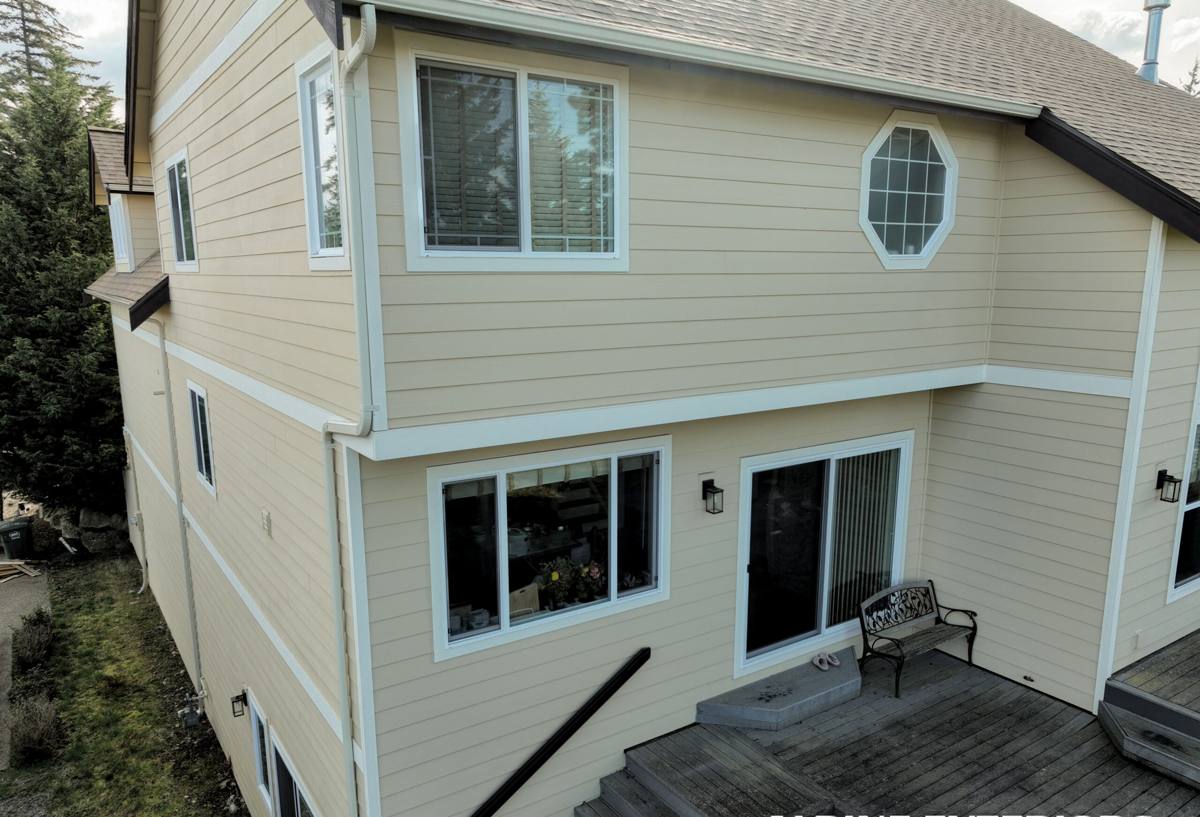
What Salt Air, Rain, and Moss Actually Do to a Deck
Salt Air and Metal Fasteners
Salt in the air speeds up oxidation on anything metal — nails, screws, joist hangers, bolts, and railing brackets. Fasteners that would last decades in a dry inland climate can start showing rust streaks and pitting much sooner this close to the water. Once a fastener corrodes, it loses holding strength before it ever looks obviously broken. That's the tricky part: a deck can still look sturdy while the connections holding it together are quietly weakening underneath.
Driving Rain and Hidden Moisture
Rain that comes in at an angle, rather than falling straight down, finds its way into places a deck wasn't necessarily built to shed water from — behind fascia boards, around post bases, and along the ledger board where the deck attaches to the house. That ledger connection is one of the most important structural points on any deck, and it's also one of the most common places we find hidden water damage, because it's rarely visible without pulling boards or flashing back.
Moss Season and Surface Decay
Moss doesn't just make a deck slick and unattractive. Once it establishes itself on decking boards, it holds moisture against the wood surface far longer than open air would, which speeds up soft-spot formation and fungal decay. On sun-starved decks, or decks under tree cover, moss season can run a good chunk of the year in Whatcom County, giving decay a long runway if the deck isn't cleaned and inspected regularly.
Signs a Blaine Harbor Deck Needs Repair, Not Just Cleaning
A pressure wash and a coat of sealant solves a lot of cosmetic problems, but it won't fix structural ones. Here's what should prompt an actual repair inspection rather than routine maintenance:
- Boards that feel spongy, springy, or noticeably softer underfoot in one area
- Railings or posts that wiggle or flex when you lean on them
- Visible rust streaking below screw heads or joist hangers
- Gaps opening up where the deck meets the house (ledger board area)
- Persistent green or black staining that comes right back after cleaning
- Stairs that feel uneven, bouncy, or have a handrail that's come loose
- Any post base sitting in standing water or visibly darkened/swollen wood at ground contact points
- Fasteners that are backing out, missing, or leave a rust-colored halo in the wood
If you're seeing two or more of these, it's worth having someone look at the framing underneath, not just the decking surface people usually notice first.
What a Correct Deck Repair Actually Involves
Structural Components Come First
Before we touch a single board on the surface, we check what's holding the deck up: the ledger board attachment and its flashing, the joists, the beam, the posts, and the footings. A repair that replaces worn decking but ignores a compromised ledger connection or a rotting post base isn't a repair — it's a cosmetic fix on top of an unresolved problem. In this climate especially, the structural layer is usually where the real damage is hiding, even when the visible surface looks fine.
Then the Surface and Connections
Once the framing is sound, we address decking boards, railings, stair treads, and the fasteners tying it all together. This is also where we look at drainage — whether water is actually shedding off the deck surface and away from the house, or pooling somewhere it shouldn't. A deck that drains poorly will keep generating the same moss and moisture problems no matter how many times individual boards get replaced.
Matching Repairs to What's Already There
Where boards or railings are being replaced rather than the whole deck rebuilt, we match species, dimension, and fastening approach as closely as practical so the repair blends in and performs consistently with the rest of the structure. Mismatched materials — different wood movement rates, incompatible fasteners — are a common source of repeat problems down the line.
Repair vs. Replace: What Actually Drives the Decision
Homeowners often ask us to just tell them a number before we've looked at anything, but the honest answer is that the right call depends on where the damage is and how far it's spread. This table covers the main factors that push a project toward repair versus a fuller rebuild:
| Factor | Leans Toward Repair | Leans Toward Replacement |
|---|---|---|
| Location of damage | Isolated to a few boards or one railing section | Spread across multiple framing members or the ledger |
| Framing condition | Joists, beam, and posts test solid | Soft or rotted framing found in more than one area |
| Age of the deck | Newer deck with a localized issue | Deck near or past typical service life for its materials |
| Fastener condition | Occasional isolated corrosion | Widespread rust on hangers, bolts, and connectors |
| Drainage and grading | Water sheds properly away from the structure | Chronic pooling or moisture trapped against the house |
In practice, a lot of Blaine Harbor decks fall somewhere in the middle — sound framing but a ledger connection or a handful of joists that need attention. That's exactly why we inspect before quoting anything.
Our Process for Deck Repairs in Blaine Harbor
1. On-Site Assessment
We walk the deck, check the framing from underneath where accessible, probe suspect boards and posts, and look closely at the ledger connection and any spots where water has clearly been sitting or running.
2. Straight Answer on Scope
We tell you what we found, what's cosmetic, and what's structural — and we separate those two categories clearly so you're not paying for a full rebuild when a targeted repair will genuinely hold up, or underpaying for a patch job on a problem that needs more.
3. The Repair Itself
We replace what's actually compromised, correct any flashing or drainage issues we found at the ledger or post bases, and reset or replace corroded fasteners with hardware suited to a marine-influenced climate.
4. Protecting the Work
Where it applies, we make sure new wood is properly sealed or finished before it's exposed to another wet season, since untreated cut ends and fresh lumber are especially vulnerable in the first year.
Materials and Fasteners That Make Sense in This Climate
We don't push one decking material as universally "best" — every option is a set of trade-offs, and the right choice depends on your budget, how the deck is used, and how much upkeep you want to do.
Wood Decking
Traditional wood decking is more affordable up front and easy to spot-repair board by board, which is an advantage when only isolated areas are damaged. The trade-off is that it needs regular cleaning and refinishing to keep moss and moisture from getting a foothold, especially in shaded or low-airflow areas.
Composite Decking
Composite boards resist moisture absorption and don't need staining or sealing, which cuts down on maintenance. The trade-offs are a higher material cost and the fact that damaged composite boards typically need full-board replacement rather than a patch or sand-and-refinish.
Fasteners and Hardware
Given the salt air, we favor stainless steel or heavy-duty coated fasteners and connectors over standard galvanized hardware wherever it's a reasonable upgrade, particularly at structural connections like joist hangers and ledger bolts where fastener failure has the biggest consequences.
Why Local Experience in Blaine Harbor Matters
A repair crew that only occasionally works this close to the water doesn't always know to check the ledger flashing first, or to expect corrosion on fasteners that would look fine somewhere twenty miles inland. Working regularly in Blaine and around Whatcom County means we already know where water tends to collect on decks like these, which fastener choices actually hold up, and how long moss season realistically runs here — so we're not guessing or over- or under-building for conditions we don't usually see.
Keeping a Repaired Deck in Good Shape
A repair holds up longer with a bit of basic upkeep afterward: keep debris and standing water off the surface, clean moss and algae growth before it spreads rather than after, and have the deck looked at every year or two so small issues — a loosening fastener, an early soft spot — get caught before they turn into another repair project. Given the climate here, that periodic check is worth far more than it costs.
If you're seeing soft boards, rust stains, a shaky railing, or a deck that never quite seems to dry out, we're happy to take a look and give you a straight assessment — no pressure, no obligation. Use the form below to request a free estimate for your Blaine Harbor deck.