 Blaine Roofing
 Why Birch Point's Waterfront Location Changes the Siding Equation
Birch Point sits close enough to the water that homes here take a different kind of weathering than siding thirty minutes inland in Whatcom County. Salt-laden air moves off the water and settles on exterior surfaces daily, not just during storms. Add wind-driven rain that hits walls at an angle instead of falling straight down, and a moss season that can stretch for months in our marine climate, and you get a siding system that's under near-constant low-grade stress even on a calm week.
None of that means siding fails fast here. It means the margin for error is smaller. A product that's marginal for the material, a flashing detail that's slightly off, or a paint finish that isn't built for coastal exposure will show problems in Birch Point years before the same shortcut would show up on a home set back from the shoreline. That's the frame for everything below.
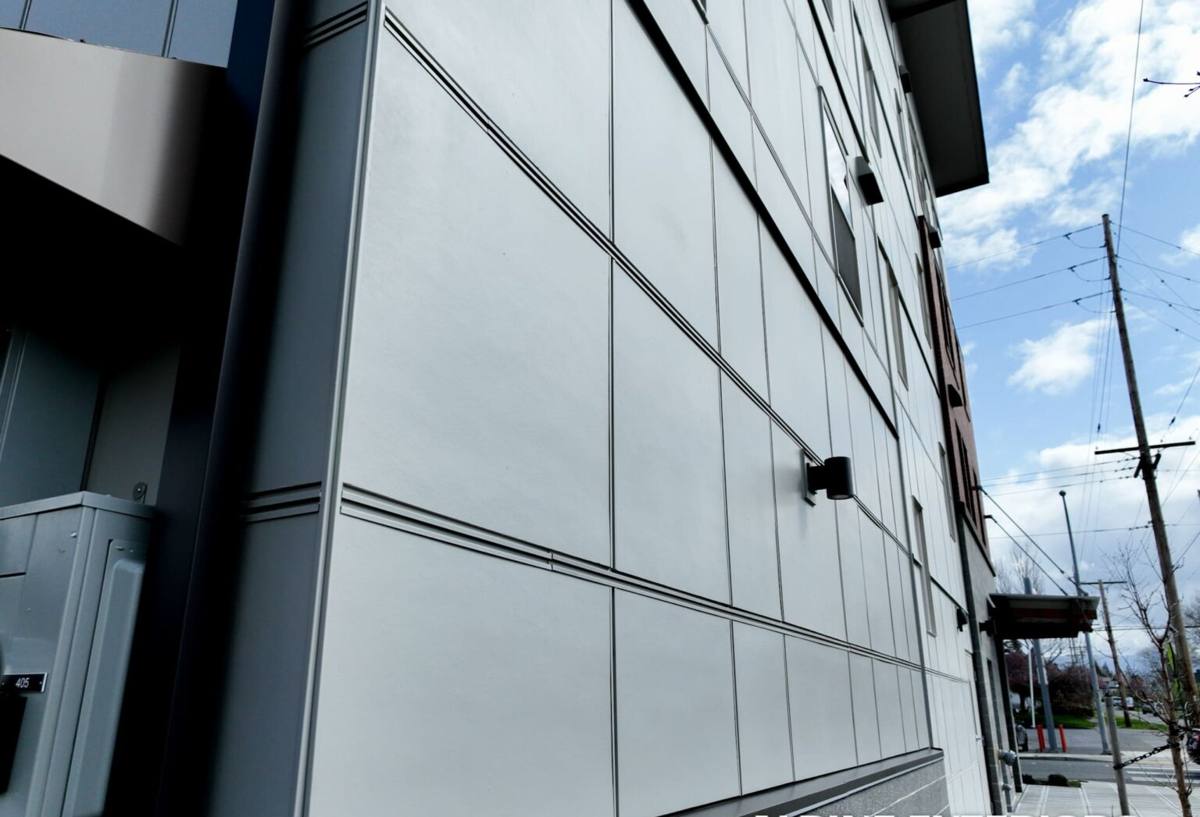
What Salt Air, Rain, and Moss Actually Do to Siding Over Time
Salt air and metal fasteners
Airborne salt accelerates corrosion on any exposed or under-protected metal — fasteners, trim flashing, and hardware. On a well-built siding job this is managed with corrosion-resistant fasteners and properly lapped flashing. On a job where those details were rushed, salt exposure turns a small oversight into a visible rust streak or a loosened panel within a few seasons.
Wind-driven rain and water intrusion
Rain that comes in sideways doesn't behave like rain falling straight down. It gets pushed up under laps, into gaps around trim, and behind panels that aren't held far enough off the wall. Once moisture gets behind siding, what happens next depends entirely on the material. Some products handle incidental moisture and dry out fine. Others swell, delaminate, or start feeding rot in the sheathing behind them.
Moss, algae, and constant surface moisture
A long moss season means siding surfaces stay damp longer between dry stretches than they would in a drier climate. Moss and algae growth isn't just cosmetic — it holds moisture against the surface, which is exactly the condition that punishes moisture-sensitive materials and finishes that aren't formulated to resist mildew growth.
Why We Install Only James Hardie Fiber Cement Siding
We standardized on James Hardie fiber cement for every siding job we do, including in Birch Point, because it's engineered for the failure modes that actually show up in coastal Pacific Northwest weather. Fiber cement doesn't absorb water the way wood-based products can, and it won't rot. It's also non-combustible, which matters to a lot of homeowners regardless of climate. Hardie's factory-applied ColorPlus finish is baked on and formulated to resist fading and mildew, which is a real advantage over field-applied paint in a climate where the surface rarely gets a long uninterrupted dry stretch to cure properly.
We don't install vinyl, LP SmartSide, primed spruce, cedar, or other fiber cement brands. That's a deliberate standard, not a sales pitch — we'd rather install one product system correctly and stand behind it than offer several options we don't fully trust in this climate. If you want to understand the specific trade-offs of the products we won't install, we cover those in detail elsewhere on our site.
What a Correct Siding Replacement Actually Involves
Siding replacement is not just pulling off old panels and nailing up new ones. On a coastal Whatcom County home, the work happening underneath the visible siding matters as much as the siding itself.
- Full tear-off of old siding, not installation over existing material
- Inspection of the sheathing for hidden rot or water damage before anything new goes up
- A properly lapped weather-resistive barrier (house wrap) installed shingle-style so water sheds outward
- Correct flashing at every window, door, and roofline intersection — the details most likely to leak in wind-driven rain
- A rain screen gap where called for, so any incidental moisture behind the siding can drain and dry instead of sitting against the wall
- Corrosion-resistant fasteners set to manufacturer spec, not overdriven or underdriven
- Caulking and touch-up finished to Hardie's installation guidelines, not generic best guess
Skip or shortcut any one of these steps and the siding itself can be the right product and the wall assembly still fails. This is where a lot of "why did my siding fail early" problems actually start — not with the panels, but with what's behind them.
Our Process for a Birch Point Home
Inspection and assessment
We start by walking the exterior and identifying which elevations take the worst of the wind and rain — on a waterfront property that's usually the water-facing side, but wind can wrap a building depending on the lot. We check existing siding for the extent of damage, look for soft spots or staining that suggest moisture has already gotten behind the wall, and check trim, flashing, and window details.
Product and color selection
We help you choose the right James Hardie panel style — lap, shingle, or panel — and the right HZ climate zone engineering and ColorPlus color for your home. This isn't a cosmetic step; the panel profile and finish both affect how the wall performs in salt air and constant moisture.
Tear-off, prep, and installation
Old siding comes off, sheathing gets inspected and repaired where needed, and the weather barrier, flashing, and rain screen go in before a single new panel is hung. Installation follows Hardie's fastening and clearance specifications, which is what keeps the manufacturer warranty valid.
Final detailing and walkthrough
Trim, caulking, and touch-up get finished, and we walk the job with you before we call it done.
Choosing the Right James Hardie Line for a Waterfront Home
James Hardie makes several panel styles and engineers its products for different climate zones (HZ5 and HZ10 are the relevant zones for the Pacific Northwest, depending on the specific product line). For a Birch Point home, the right specification accounts for direct salt exposure and near-constant moisture, not just general Pacific Northwest rain. We'll walk you through which HZ engineering and panel profile fits your home's actual exposure rather than defaulting to whatever's easiest to install.
| Consideration | Why it matters in Birch Point |
|---|---|
| Panel style (lap, shingle, panel) | Affects water-shedding lines and how the wall handles wind-driven rain |
| ColorPlus factory finish | Resists fading and mildew better than field-applied paint that rarely gets a long dry cure window here |
| Fastener material | Corrosion resistance matters more with regular salt air exposure |
| Rain screen detail | Gives incidental moisture a path to drain and dry instead of sitting against the wall |
| Trim and flashing spec | Determines whether wind-driven rain gets diverted or finds a way in |
Cost Factors for Siding Replacement in Birch Point
Every home is different, but the main variables that move the price of a siding replacement here are consistent. We won't quote a number without seeing the house, but this is what drives the estimate up or down.
| Factor | How it affects the job |
|---|---|
| Home size and number of stories | More surface area and more difficult access both add labor |
| Extent of existing damage | Hidden rot behind old siding means sheathing repair before new siding goes up |
| Trim and detail complexity | Homes with more corners, windows, and rooflines take more flashing and cut work |
| Panel style and color | Shingle-style and premium ColorPlus colors run differently than standard lap siding |
| Site access | Waterfront lots with limited staging space can add setup time |
We provide a written estimate after an in-person inspection, so you know exactly what you're paying for before work starts.
Why Hiring a Crew That Already Works Birch Point Matters
Siding installation isn't identical everywhere in Whatcom County, and a crew that mostly works inland jobs may not think about wind orientation, salt exposure, or rain screen detailing the same way a crew that regularly works Birch Point and similar shoreline areas does. Knowing which elevation of a given lot typically takes the worst weather, how to sequence a tear-off around marine weather windows, and which flashing details actually hold up in this environment comes from doing the work here repeatedly, not from a general siding background.
It also matters for accountability. A crew with an ongoing local presence has a reason to get the details right the first time and to be reachable if a question comes up after the job is done.
Signs Your Birch Point Home May Need Siding Replacement Soon
- Visible cracking, warping, or soft spots you can press in with light pressure
- Paint that's peeling or bubbling faster than a normal repaint cycle would explain
- Persistent moss or algae growth that comes back quickly after cleaning
- Staining or discoloration near seams, corners, or under windows
- Rising interior heating costs with no other clear explanation
- Visible gaps, loose panels, or fasteners backing out
Any one of these on its own isn't necessarily an emergency, but in a climate this hard on siding, catching them early usually means a smaller job than waiting.
If you're seeing any of these signs, or you're just planning ahead for a home in Birch Point, we're happy to take a look and walk you through what a correct James Hardie siding replacement would involve for your specific house. The estimate is free, there's no pressure, and you'll get a straight answer about what your siding actually needs.