 Blaine Roofing
 Why Birch Point Siding Wears Differently Than Siding Inland
Birch Point sits close enough to the water that homes here deal with a different set of stresses than a house even a few miles inland in Whatcom County. Salt-laden air moves through the area steadily, driving rain comes in sideways during winter storms, and the moss season stretches long thanks to the Pacific Northwest's damp, shaded conditions. None of that is unusual for this stretch of coastline near Blaine, but it does mean siding here ages on a different clock than siding in a drier climate.
Salt air is corrosive to exposed metal fasteners and trim, and it accelerates the breakdown of finishes that aren't built to handle it. Combine that with wind-driven rain that gets pushed into laps, seams, and butt joints, and you get a recipe for moisture finding its way behind siding that looks fine from the curb. When we're called out to Birch Point for a repair, we're rarely dealing with a single obvious problem — it's usually a combination of small failures that have been quietly compounding for a season or two.
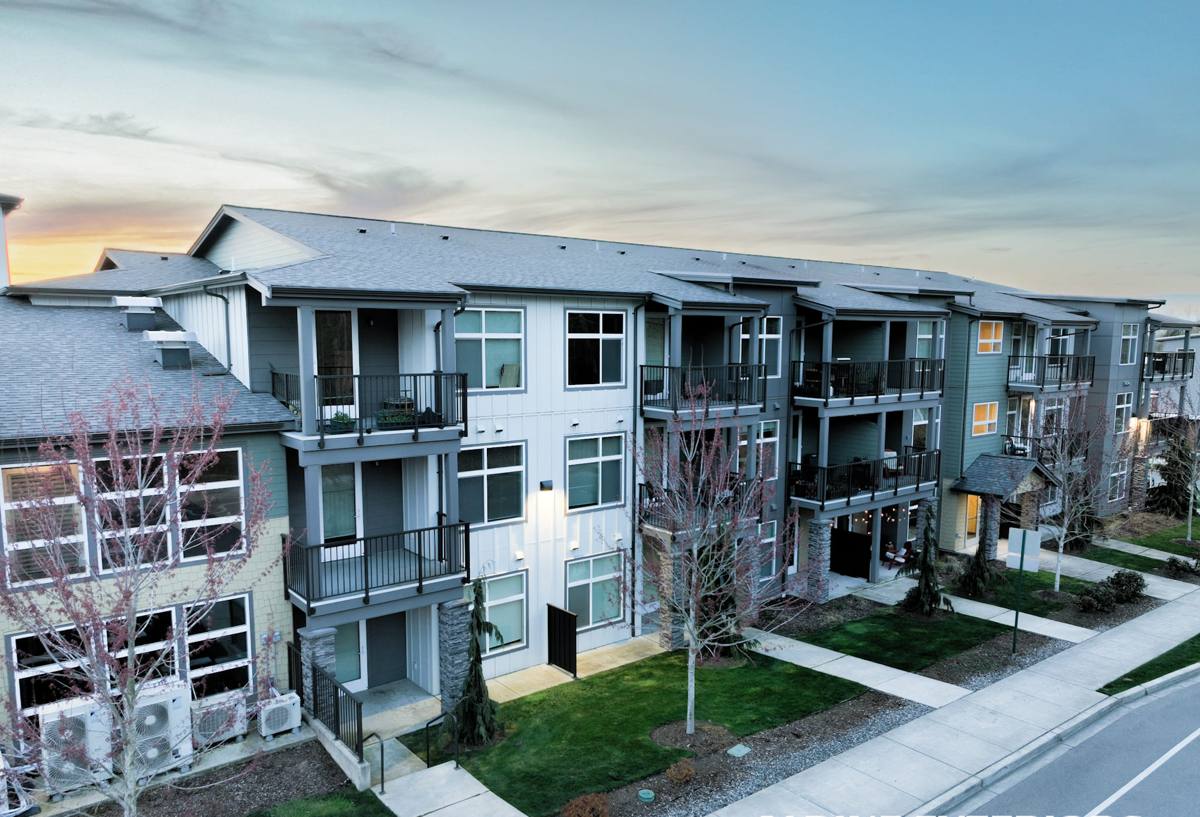
What Moss Season Does to Siding Over Time
Whatcom County's wet months give moss and algae plenty of time to establish themselves on north-facing walls, under eaves, and anywhere siding stays shaded and damp for long stretches. On its own, surface moss is mostly a cosmetic problem. The real damage happens when moss and organic buildup trap moisture against the siding surface longer than the material was designed to tolerate.
For wood-based products, that trapped moisture leads to soft spots, swelling, and eventually rot. For siding with a compromised finish or exposed edges, it accelerates paint failure and lets water track into the substrate. Even well-installed siding can develop problems if gutters overflow, downspouts discharge too close to the wall, or landscaping keeps a section of wall shaded and wet year-round. A repair job in Birch Point almost always includes a look at what's feeding the moisture problem, not just patching the visible symptom.
Common Symptoms We See on Birch Point Homes
- Dark streaking or moss growth concentrated on north- and west-facing walls
- Soft or spongy siding near ground level, deck ledgers, or below windows
- Paint that's bubbling, peeling, or chalking faster than the rest of the house
- Cracked or separated caulk joints around trim, corners, and penetrations
- Warped, cupped, or buckled boards, especially on the weather-facing side of the home
- Rust staining below nail heads or metal trim pieces
- Gaps opening up at butt joints where boards meet end to end
Repair or Replace: How We Make the Call
Not every problem area needs a full re-side, and we don't push homeowners toward more work than the house actually needs. But we also won't patch over rot and call it done — that just buries a problem that will resurface, usually worse, in a year or two. Our approach starts with figuring out how far the damage actually extends, because siding damage is often bigger underneath than what's visible on the surface.
| Situation | Typical Approach | Why |
|---|---|---|
| Isolated damage — a few boards cracked, one section rotted near a downspout | Targeted repair, replace affected boards | Surrounding siding is sound; no reason to touch it |
| Damage concentrated on one elevation (usually the weather side) | Repair or re-side that elevation | Cost-effective when the rest of the house isn't affected |
| Rot traced back to a failed water-management detail (flashing, caulk, grading) | Repair siding AND fix the underlying moisture source | Patching siding without fixing the cause guarantees a repeat visit |
| Widespread cupping, soft spots, or finish failure across multiple walls | Full re-side conversation | Piecemeal repairs on aging material rarely hold up long-term |
| Original material is a moisture-sensitive product nearing end of service life | Re-side with James Hardie | Repeated repairs on failing material cost more over time than one correct re-side |
What a Correct Siding Repair Actually Involves
A repair that's done right goes beyond swapping a damaged board for a new one. Here's what we actually check and do on a Birch Point siding repair:
1. Find the Real Extent of the Damage
We pull damaged boards and check the sheathing and house wrap behind them. If moisture has gotten past the siding, it's often affected more of the wall assembly than what shows from outside. Repairing siding over compromised sheathing just sets up the next failure.
2. Correct the Water Path, Not Just the Symptom
If the damage traces back to a flashing gap, a caulk joint that failed, poor drainage at grade, or a gutter that's been overflowing onto the wall, we address that as part of the repair. Otherwise, new siding in that spot fails again on the same timeline as the last piece did.
3. Match Materials and Reveal
Replacement boards need to match the existing siding's profile, exposure, and butt joint pattern so the repair doesn't stand out and so water continues to shed the way the original installation intended.
4. Rebuild Proper Laps and Fastening
Correct overlap at horizontal laps, proper caulking at butt joints and trim, and fasteners placed and driven to manufacturer spec are what keep water moving down and off the wall instead of behind it.
5. Finish to Match
Whether that's factory-finished color-matched material or field painting to blend with the surrounding wall, the goal is a repair that holds up structurally and doesn't leave an obvious patch.
Why We Repair and Re-Side With James Hardie, Not Whatever Was There Before
We install and repair with James Hardie fiber cement siding exclusively — we don't install vinyl, LP SmartSide, primed spruce, cedar, or other fiber cement brands. When a Birch Point home has an older wood-based or moisture-sensitive product failing, patching it with more of the same material usually just buys a little time before the next round of rot shows up somewhere else on the wall.
James Hardie's fiber cement is non-combustible and engineered to resist the swelling, cupping, and moisture absorption that drives most of the repair calls we get in coastal Whatcom County. Where we're matching into existing Hardie siding, the ColorPlus factory finish is formulated to hold color and resist the kind of UV and moisture exposure this area sees, so a repaired section blends in and stays that way. Hardie's HZ5 product line in particular is built for regions with sustained moisture exposure — which describes Birch Point's winters well.
When a repair reveals that the existing siding is past the point where patching makes sense, we'll say so plainly, and Hardie is what we recommend replacing it with — not because it's the only option on the market, but because it's the product we trust to hold up under these conditions without repeat callbacks.
Our Repair Process for Birch Point Homes
- On-site assessment. We walk the exterior, check the elevations that take the worst weather, and identify both visible damage and likely hidden trouble spots — around penetrations, at grade, near decks and downstairs additions.
- Diagnosis, not guesswork. We pull back damaged material to see what's actually happening behind the siding before quoting a fix.
- Honest scope. We tell you what needs repair now, what's borderline and worth watching, and what's holding up fine. We're not going to recommend a full re-side when a targeted repair will genuinely hold.
- Fix the cause. Any flashing, caulking, or drainage issue that's feeding the damage gets addressed as part of the job.
- Repair and finish. Matched material, correct installation to spec, and a finish that blends with the rest of the wall.
- Walkthrough. We show you what was done and what to keep an eye on going forward.
Why Local Experience in Birch Point Matters
Siding problems in a coastal Whatcom County neighborhood aren't identical to siding problems forty miles inland. A crew that regularly works this stretch near Blaine already knows which elevations tend to take the worst of the driving rain, how aggressive moss growth gets under the tree cover common in this area, and how salt air affects fasteners and trim over time. That familiarity shortens the diagnosis phase and helps us catch problems that a crew unfamiliar with coastal exposure might miss on a first pass.
It also means we're not learning on your house. We've seen how these specific conditions play out on siding repairs up and down this part of the county, and that experience shapes how we scope and execute the work.
Maintenance That Extends the Life of a Repair
A good repair should last, but a few habits make a real difference in a climate like this one:
- Keep gutters and downspouts clear so water isn't overflowing onto walls
- Trim back vegetation that keeps siding shaded and damp
- Rinse moss and algae buildup off siding periodically, especially on north-facing walls
- Check caulk joints at trim and penetrations annually and recaulk when it starts to crack or pull away
- Watch for soft spots or discoloration near ground level and downspout discharge points
- Address small issues promptly — a small repair now is almost always cheaper than a bigger one later
What Drives the Cost of a Siding Repair
| Factor | Why It Matters |
|---|---|
| Extent of hidden damage behind the siding | Sheathing or framing repair adds scope beyond the visible boards |
| Accessibility of the affected area | Second-story or hard-to-reach sections take more time and equipment |
| Material matching | Matching an older or discontinued profile can take more effort than working with current stock |
| Underlying cause | Fixing a flashing or drainage issue adds labor but prevents repeat damage |
| Finish work | Factory-finished matching vs. field painting affects both cost and long-term appearance |
Every Birch Point property is different, and we won't know the real scope until we can see the damage up close. That's why we start with an on-site look rather than quoting sight unseen.
If you're seeing moss buildup, soft spots, or paint failure on your siding, it's worth having it looked at before the next wet season adds to the damage. We offer free, no-pressure estimates for Birch Point homeowners — fill out the form below and we'll take a look.