 Blaine Roofing
 Building a New Roof for Birch Point's Coastal Conditions
Birch Point sits right up against the water in Whatcom County, and that location shapes everything about how a roof should be built there. A new roof installation in this area isn't just a bigger version of what works inland — the salt air, the wind-driven rain coming off the water, and a moss season that runs longer than most of Washington all put specific demands on materials, fasteners, and ventilation. A roof that's correctly built for Bellingham or Ferndale can still fail early at Birch Point if it wasn't designed with the shoreline in mind.
This page covers what a new roof installation should actually include for a Birch Point home, why the details matter more here than in a lot of other Whatcom County neighborhoods, and how our process works from first look to final walkthrough.
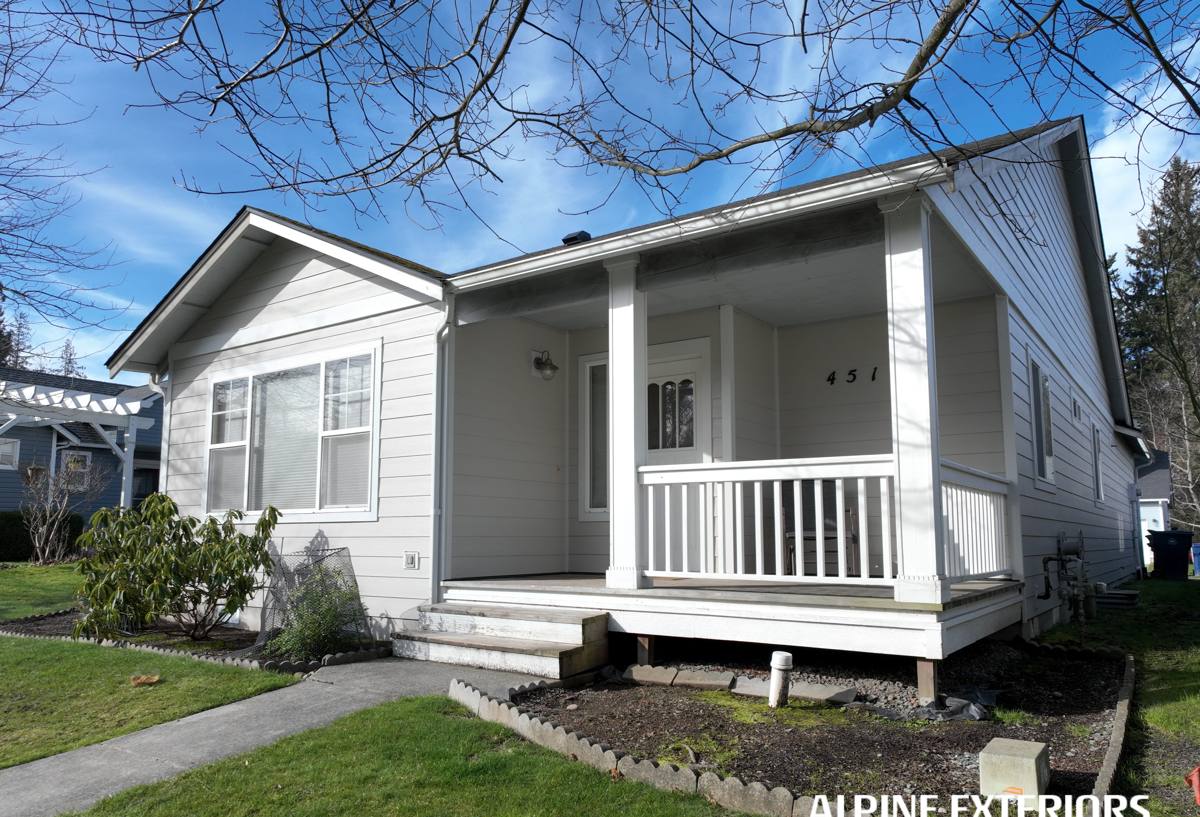
What Birch Point Homes Are Up Against
Salt Air and Metal Components
Homes close to the water deal with airborne salt that accelerates corrosion on anything metal — nails, flashing, vent caps, gutters. A roof built with standard fasteners or bargain-grade flashing will show rust streaks and weakened connections years before a comparable roof further inland. This is one of the biggest reasons material and fastener choice matters more at Birch Point than in a typical Blaine subdivision set back from the shoreline.
Wind-Driven Rain
Rain that comes in sideways off open water behaves differently than rain falling straight down. It gets pushed up under shingle edges, into vent openings, and around chimney and wall flashing that would hold up fine in calmer conditions. A roof here needs underlayment and flashing details built for wind-driven moisture, not just standard coverage.
A Longer Moss Season
Shaded, moisture-heavy conditions along the Whatcom County coastline give moss a much longer growing window than it gets in drier parts of the state. Moss holds moisture against the roof surface, works into shingle edges and joints, and can lift shingles enough to let water underneath. Left unmanaged over several seasons, it shortens the life of an otherwise sound roof.
What a Correct New Roof Installation Actually Involves
A proper installation is a system, not a stack of shingles. Every layer has a job, and skipping or shortcutting one weakens the whole roof — especially in a coastal environment where the margin for error is smaller.
- Full tear-off: old roofing removed down to the deck so the crew can actually see what's underneath, rather than layering new material over hidden problems.
- Deck inspection and repair: soft, delaminated, or water-stained sheathing gets replaced before anything new goes down — covering rotten decking just hides the problem.
- Ice-and-water or self-adhering membrane at vulnerable areas: valleys, eaves, and roof-to-wall transitions get extra protection where wind-driven rain is most likely to find a way in.
- Synthetic underlayment across the field: a water-resistant barrier under the whole roof, not just the high-risk spots, matters more here given how often this area sees driving rain.
- Corrosion-resistant fasteners and flashing: stainless steel or coated fasteners and flashing hold up to salt air far longer than standard galvanized components.
- Proper ventilation: balanced intake and exhaust venting keeps the attic dry and temperature-regulated, which protects the deck from the inside out.
- Correctly installed flashing at every penetration: chimneys, vents, skylights, and wall intersections are where most roof leaks actually start, not the open field of shingles.
Material Choices for This Area
There's no single "best" roofing material for every home — it depends on budget, roof pitch, architectural style, and how much long-term maintenance a homeowner wants to take on. For a shoreline property, though, some trade-offs matter more than they would inland.
| Material | Salt Air Durability | Moss Resistance | Typical Lifespan | Relative Cost |
|---|---|---|---|---|
| Architectural asphalt shingle | Good, with corrosion-resistant fasteners | Fair — benefits from algae-resistant granules | 25–30 years | $ |
| Standing seam metal | Very good, with marine-grade coatings | Good — sheds moisture quickly | 40–50+ years | $$$ |
| Synthetic/composite shingle | Good | Good — resists moisture absorption | 30–50 years | $$ |
| 3-tab asphalt shingle | Fair | Fair | 15–20 years | $ |
We don't install every product on the market, and that's a deliberate call. Some lower-cost or unusual systems look fine on paper but come with maintenance burdens, moisture-handling weaknesses, or installation sensitivities that don't hold up well against salt air and driving rain over the long run. When we steer a homeowner away from a particular product, it's because we've weighed the trade-offs for this specific climate — not because the product is bad everywhere.
Our Process, Start to Finish
- On-site assessment: we walk the roof, check the attic, and look at the specific exposure of the home — how much direct wind and rain it takes off the water, how much shade it holds, and what condition the deck is in.
- Written estimate: a clear breakdown of materials, labor, and scope, with no vague allowances buried in the fine print.
- Material selection: we walk through the trade-offs in the table above based on the home's exposure and the homeowner's priorities.
- Permitting: we handle the permit process required for roofing work in Whatcom County before any tear-off begins.
- Tear-off and deck inspection: old material comes off, the deck gets inspected, and any needed repairs are documented and priced before covering anything up.
- Installation: underlayment, flashing, ventilation, and roofing material go in following manufacturer specifications and the coastal-specific details covered above.
- Site cleanup: a magnetic sweep for stray nails and full debris removal before we consider the job finished.
- Final walkthrough: we go over the completed roof with the homeowner and answer any questions before wrapping up paperwork and warranty registration.
Ventilation and Moisture — the Part You Don't See
A new roof can look great and still cause problems if the attic underneath isn't ventilating properly. Trapped heat and moisture cause condensation on the underside of the deck, which leads to rot, mold, and premature failure of the new roofing material from below — often years before the shingles themselves would have worn out. In a moisture-heavy coastal environment like Birch Point, balanced intake and exhaust ventilation isn't optional; it's part of what makes the whole system last as long as the materials are rated for.
Permits, Warranty, and What "Correct" Looks Like on Paper
Roofing work in Blaine and unincorporated Whatcom County generally requires a permit, and manufacturer warranties on shingles and underlayment typically require the roof to be installed to the manufacturer's specifications by a licensed contractor. A homeowner should end up with three things after a new roof installation: a permit that's been properly closed out, a manufacturer's material warranty registered in their name, and a written workmanship warranty from the contractor covering the labor itself. If any of those three is missing, it's worth asking why before the crew packs up.
Why a Crew That Already Works Birch Point Matters
Roofing crews that spend most of their time inland don't always account for how differently a roof needs to be detailed right up against open water. A crew that's already worked homes in and around Birch Point has a practical sense of which roof faces take the worst of the wind-driven rain, how much moss pressure a shaded north slope is actually going to see, and which fastener and flashing upgrades are worth the extra cost here versus in a drier part of the county. That local pattern recognition doesn't replace a proper inspection of your specific roof, but it does mean fewer surprises and fewer corners that get missed because they weren't expected in the first place.
Homeowner Checklist Before You Book an Installation
- Confirm the contractor is licensed and insured to do roofing work in Washington State.
- Ask whether the estimate includes deck inspection and repair, not just tear-off and reroofing.
- Get the ventilation plan in writing — intake and exhaust, not just "we'll add a vent."
- Ask what fastener and flashing material will be used, given the salt air exposure at Birch Point.
- Confirm who pulls the permit and who's responsible for closing it out.
- Get the manufacturer warranty terms and the separate workmanship warranty in writing.
- Ask about moss and algae resistance if the roof has significant shade.
If you're planning a new roof for a home in Birch Point, we're glad to come take a look and walk you through what your specific roof needs — no pressure, no obligation. Use the form below to request a free estimate.