 Blaine Roofing
 Decking on Birch Point Isn't the Same Job as Decking Ten Miles Inland
Birch Point sits right up against the water, and that changes what a deck has to survive. Homes here take a steady diet of salt-laden wind, driving rain that comes in sideways off the Strait of Georgia, and a wet season that runs long even by Whatcom County standards. A deck built to a generic spec sheet — the kind that works fine in a sheltered inland yard — often shows problems within a few seasons out here: swollen fastener heads, streaking mildew, boards that never fully dry between storms. A deck built for Birch Point specifically holds up because every material and detail was chosen with that exposure in mind, not despite it.
This page covers what that actually looks like: the climate factors driving deck failure in this area, what a correct composite deck build involves from the ground up, how we approach a Birch Point project, and why local experience on this exact stretch of coastline matters more than it would somewhere calmer.
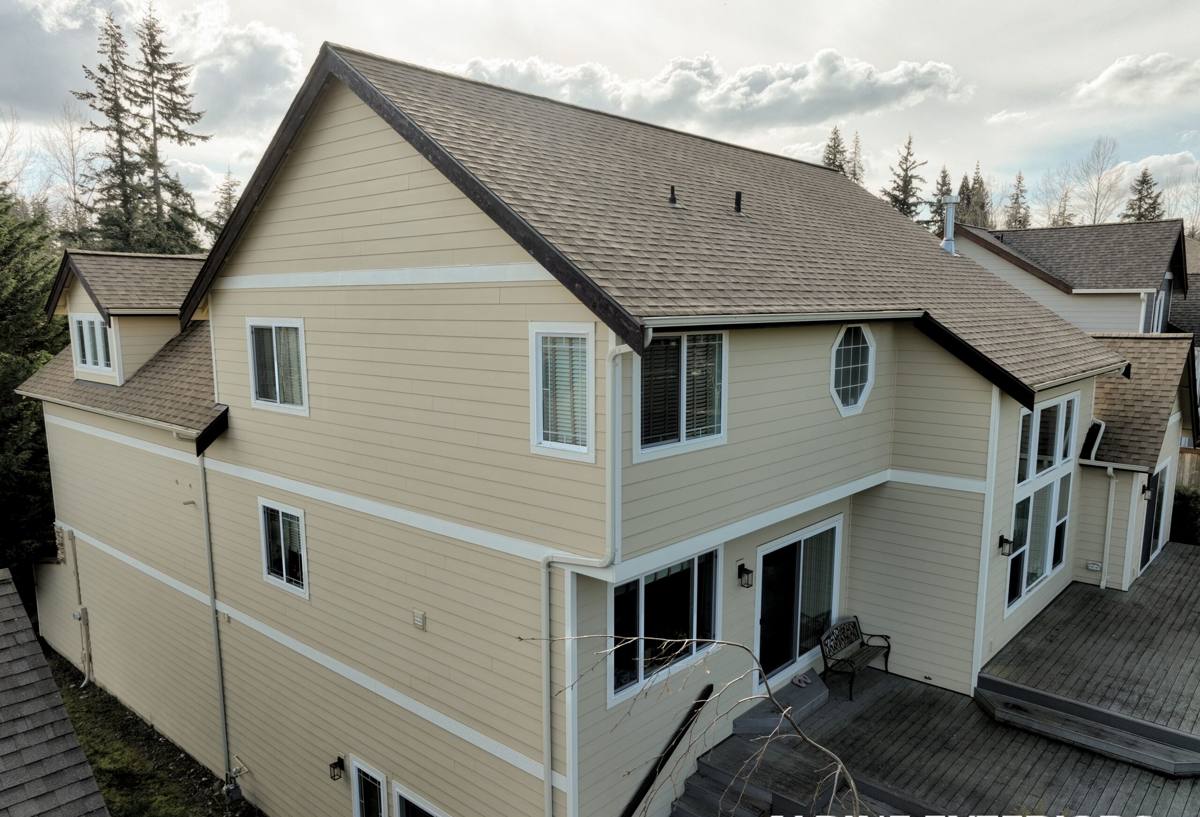
What the Climate Actually Does to a Deck Here
Salt Air and Metal
Airborne salt doesn't just sit on the surface — it works into fastener heads, hinges, screw threads, and any exposed metal hardware. Standard coated deck screws that are perfectly adequate a few miles inland can start showing corrosion streaks on a Birch Point deck within a couple of years. The fix isn't complicated, but it has to be deliberate: stainless steel or marine-grade coated fasteners, and hardware rated for coastal exposure rather than general exterior use.
Driving Rain and Wind-Driven Moisture
Wind off the water pushes rain sideways, which means water finds its way into gaps and joints that would stay dry in a typical rainstorm. Ledger board connections, stair stringers, and any point where the deck meets the house siding need flashing detail that assumes water will be forced at them horizontally, not just falling straight down.
The Long Moss and Mildew Season
Whatcom County's wet season stretches long, and Birch Point's shade patterns, humidity, and salt air together create ideal conditions for moss and mildew growth on any horizontal surface that doesn't dry out quickly. This is less about the decking material failing and more about airflow — a deck built tight to the ground with poor ventilation underneath will stay damp for days after a storm, and that's where moss gets a foothold.
Why We Recommend Composite for This Exposure
Composite decking isn't automatically the right call everywhere, but for a marine-exposure lot like Birch Point, it solves several problems that wood decking struggles with in this specific climate:
- It doesn't absorb water the way wood fibers do, so it isn't as prone to the swell-and-shrink cycle that loosens fasteners and opens gaps over time
- Capped composite boards resist moss and mildew staining better than bare wood, which matters given how long surfaces stay damp here
- It doesn't need annual staining or sealing, which is a real advantage when a coastal deck already demands more maintenance attention on the hardware and substructure side
- Color and texture stay more consistent under UV and salt exposure than unsealed or inconsistently maintained wood
That said, composite is not maintenance-free, and any contractor who tells you it is hasn't been honest about how salt air interacts with any exterior material. The maintenance burden just shifts — away from sanding and staining, toward keeping the surface clean and making sure the structure underneath stays ventilated.
What a Correct Build Looks Like, Piece by Piece
The Substructure Comes First
The decking boards get the attention, but the frame underneath is what determines whether the deck lasts. On a Birch Point lot, we treat the substructure as the priority, not an afterthought:
- Joist tape or a comparable moisture barrier on top of every joist, so the composite boards aren't sitting on bare, unprotected wood
- Adequate clearance and airflow underneath the deck so it can actually dry out between the rain events that come through regularly here
- Joist spacing and blocking that account for board flex in temperature swings, not just the manufacturer's minimum spec
- Ledger board flashing that assumes wind-driven rain, with proper counter-flashing where the deck meets the house
Fasteners and Hardware
Every screw, bracket, and hidden fastener clip on a Birch Point deck should be rated for coastal or marine exposure — not just "exterior grade." This is one of the most common corners cut on decks near the water, because the difference isn't visible on day one. It shows up two or three years later as rust streaking through the decking above it.
Board Selection and Layout
Board direction, expansion gaps, and hidden fastener spacing all need to account for the temperature and moisture swings typical of a marine climate. Composite boards expand and contract with temperature more than people expect, and a layout that doesn't leave proper gapping will buckle or gap unevenly within a season or two.
Comparing Composite Decking Tiers for This Exposure
Not all composite decking is built the same, and for a salt-air lot the differences matter more than they would in a sheltered yard. Here's how the general tiers break down:
| Board Tier | Moisture & Salt Resistance | Maintenance | Typical Installed Cost |
|---|---|---|---|
| Uncapped / early-generation composite | Weaker — more prone to surface staining and moisture uptake at cut ends | Periodic cleaning, more susceptible to mildew staining | Lower end of the range |
| Capped composite (mainstream) | Good — protective outer shell resists staining and moisture better | Occasional washing, no sealing or staining needed | Mid-range |
| Premium capped composite / composite-PVC hybrid | Best — strongest resistance to salt exposure, fading, and moisture at fastener points | Minimal — occasional rinse, longest warranty coverage | Upper end of the range |
As a broad range, composite decking projects in this area typically run somewhere in the neighborhood of $30–$60 per square foot installed, depending on board tier, substructure condition, railing choices, and site access. A waterfront lot with wind exposure and a longer structural life expectation is usually a better fit for the capped or premium tier — the price difference over the life of the deck is smaller than the cost of redoing hardware or addressing moisture damage early.
A Note on Product Choice
We work with several established composite decking manufacturers rather than locking into one brand, because the right board depends on the specific lot — sun exposure, wind direction, how close the deck sits to the water, and what look the homeowner wants. We'll walk through the realistic trade-offs for your situation rather than pushing whatever's easiest to install.
Living With a Composite Deck in a Marine Climate
Even the best composite board benefits from a little seasonal attention out here. None of this is heavy work, but skipping it is how moss gets established and drainage gaps clog up:
- Sweep debris and needles off the deck surface regularly, especially in fall — trapped organic matter holds moisture against the boards
- Rinse the deck a few times a year to clear salt residue and surface grime before it builds up
- Check that drainage gaps between boards stay clear so water can pass through instead of pooling
- Inspect visible fasteners and hardware once a year for early signs of corrosion
- Confirm underdeck ventilation hasn't been blocked by landscaping, storage, or skirting added after the original build
- Address any moss growth early with a gentle wash rather than pressure-washing at close range, which can damage the board's cap layer
Permits and Shoreline Considerations
Decks near the water in Whatcom County can involve additional permitting or setback considerations depending on proximity to the shoreline, so this isn't always a straightforward building-permit-only project. We handle the permitting conversation as part of the estimate process rather than leaving homeowners to sort out county requirements on their own, and we'll flag early if your specific lot looks like it needs anything beyond a standard deck permit.
Our Process for a Birch Point Deck Project
- On-site assessment of the existing structure (if any), sun and wind exposure, drainage, and how the new deck will tie into the house
- Straightforward written estimate covering board tier options, substructure work, and hardware — no vague allowances
- Permit handling, including flagging any shoreline-related requirements specific to your lot
- Substructure build with moisture barrier, proper ventilation clearance, and coastal-rated fasteners throughout
- Decking installation with layout and gapping suited to marine temperature swings
- Final walkthrough covering maintenance expectations specific to a salt-air, high-moisture location
Why Local Experience on This Coastline Matters
A lot of deck problems near the water aren't visible at the time of installation — they show up two or three winters later, after enough storms and enough salt cycles have worked on the hardware and substructure. A crew that's already built and maintained decks along this stretch of coastline has seen which details hold up here and which ones don't, without needing to learn it on your project. That's the difference between a deck spec written for "exterior use" in general and one written for Birch Point specifically.
If you're planning a new composite deck or replacing one that hasn't held up to the salt air and rain, we're happy to come take a look and put together a straightforward, no-pressure estimate using the form below.