 Blaine Roofing
 Why Birch Bay Is a Different Roofing Environment Than "Just Blaine"
Birch Bay sits close enough to the water that homes here take a different kind of beating than roofs even a few miles inland. Salt-laden air off the bay works its way into fasteners, flashing, and shingle mat over time. Wind-driven rain doesn't just fall on a roof here — it gets pushed sideways under poorly sealed edges and around vents. And Whatcom County's long, wet, mild winters mean moss and algae get months of ideal growing conditions rather than a short seasonal window. None of this makes asphalt shingle roofing a bad choice for Birch Bay — it's still the most practical, cost-effective option for most homes here — but it does mean the details of the installation matter more than they would in a drier, calmer climate.
A shingle roof that's installed to a generic standard will usually survive here. A shingle roof that's installed with Birch Bay's specific exposure in mind will hold up longer, need less maintenance, and give you fewer surprises at renewal time.
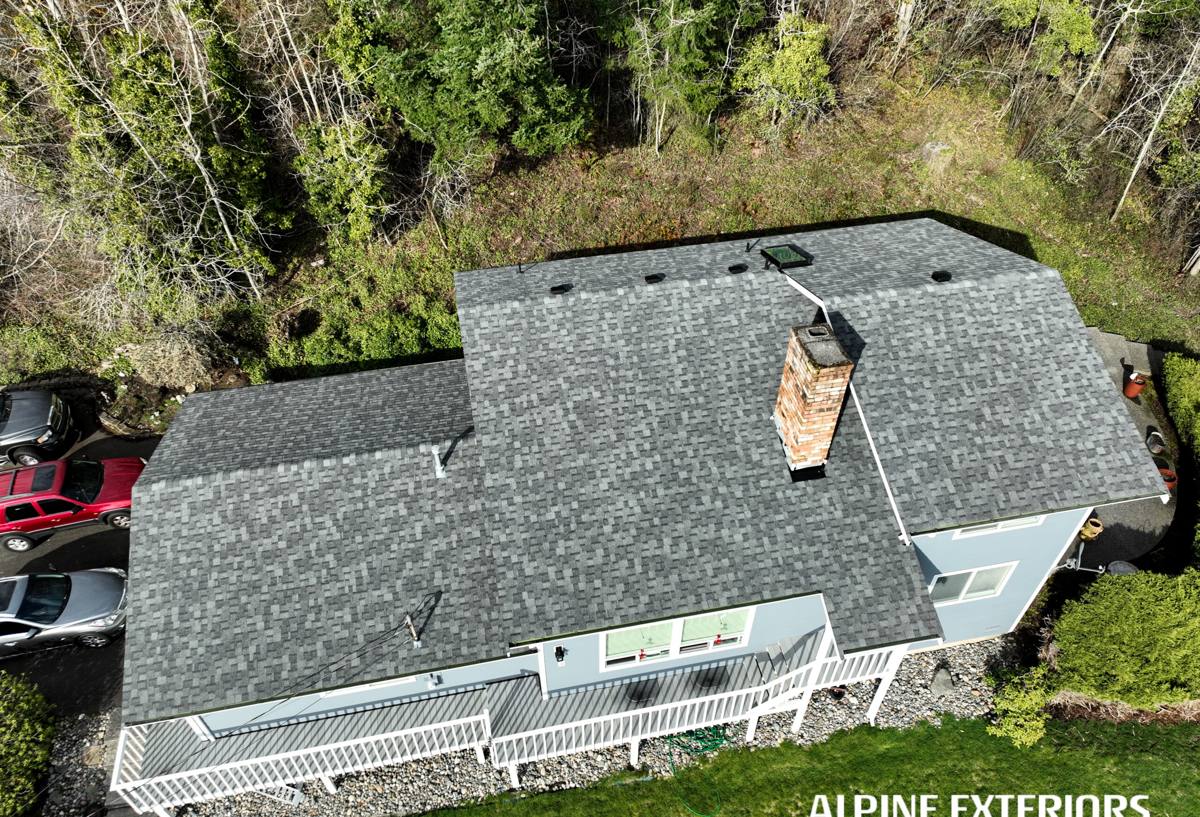
What Salt Air, Rain, and Moss Actually Do to a Roof
Salt Air and Corrosion
Airborne salt accelerates corrosion on exposed metal — flashing, drip edge, nail heads, and vent housings. Once corrosion starts at a fastener or a flashing seam, water finds its way in long before you'd notice a leak from inside the attic. This is why fastener and flashing material choice matters more for a bayfront or near-bayfront property than it would for a roof twenty miles inland.
Wind-Driven Rain
Standard rain falls straight down and sheds off a properly lapped shingle roof without much drama. Wind-driven rain off the water changes the geometry — it can push moisture up and under shingle tabs, into exposed nail heads, and along ridge and hip lines that aren't sealed correctly. Roofs here need attention to sealing detail at every transition point, not just a "shingles on a deck" approach.
Moss and Algae
Whatcom County's damp, mild, shaded conditions are close to ideal for moss growth on north-facing slopes and under tree cover. Moss holds moisture against the shingle surface, lifts shingle edges as it grows, and shortens the life of the roofing mat underneath. Algae staining (the dark streaking you see on older roofs) is mostly cosmetic, but heavy moss is a genuine structural concern if it's left to establish itself over a few seasons.
What a Correctly Installed Shingle Roof Needs Here
A shingle roof built for Birch Bay's conditions isn't a different product — it's the same asphalt shingle system installed with a few non-negotiable details that matter more locally than they do elsewhere.
- Synthetic underlayment rated for extended exposure, not just builder-grade felt, given how much wet weather the roof sits under before it's ever tested by sun and heat
- Ice-and-water shield membrane at eaves, valleys, and any low-slope transitions, since these are the points where wind-driven rain backs up first
- Corrosion-resistant flashing and fasteners at chimneys, vents, and wall transitions, sized for the marine air exposure rather than a standard inland spec
- Balanced intake and exhaust ventilation, so moisture from inside the home doesn't add to what the roof is already dealing with from outside
- Proper nailing pattern and shingle sealant activation, which depends on installing in the right temperature and weather window — rushed installs in wet weather are a common source of early failures
- Attention to north-facing and shaded slopes during layout, since these are the areas that will need moss resistance the most
Skip any one of these and the roof will probably still function for a while. Skip several, and you'll likely be dealing with moss intrusion, edge lifting, or a slow flashing leak well before the shingles themselves are due for replacement.
Choosing a Shingle for a Coastal Whatcom County Home
Not every asphalt shingle product is worth the same consideration here. The biggest factor for Birch Bay isn't brand — it's whether the shingle has algae-resistant (AR) granules and a wind rating that matches actual local exposure, especially on homes with a clear line to the water or open exposure on upper slopes.
| Shingle Type | Typical Lifespan | Best Fit for Birch Bay |
|---|---|---|
| 3-tab (economy) | 15–20 years | Lower cost, but lower wind rating and no algae resistance as standard — usually not our first recommendation this close to the water |
| Architectural / dimensional | 25–30 years | Best overall balance for this area; heavier mat, better wind performance, widely available with AR granules |
| Premium / designer | 30+ years | Worth it on prominent homes or where appearance and longer warranty coverage matter more than upfront cost |
We don't push homeowners toward the most expensive tier by default. For most Birch Bay homes, a good architectural shingle with algae-resistant granules and a wind rating suited to the property's actual exposure is the right balance of cost and performance. Where a home sits fully open to the water or on an exposed rise, we'll talk through the wind-rating difference specifically, because that's the detail that matters most in that situation — not the brand name on the wrapper.
Our Process for a Birch Bay Roof Replacement
1. On-Site Assessment
We walk the roof (not just look at it from the ground), check the deck condition, note moss and algae presence by slope, and look at existing flashing and ventilation. Coastal homes often have deck or fascia moisture issues that aren't visible until the old roofing is off, so we flag what we can see up front and explain what we'll be checking for once tear-off starts.
2. Tear-Off and Deck Inspection
Old shingles, underlayment, and flashing come off completely. We inspect the decking for soft spots, delamination, or rot — this is the step where hidden moisture damage from years of moss or a slow flashing leak actually gets found and fixed, not covered over.
3. Underlayment, Ice-and-Water Shield, and Flashing
New underlayment goes down across the full roof, with ice-and-water shield at eaves, valleys, and vulnerable transitions. All flashing — chimney, wall, vent, and valley — is replaced or verified sound, using corrosion-resistant materials appropriate for the marine air.
4. Shingle Installation
Shingles are installed to the manufacturer's nailing and exposure specs, with extra attention at ridges, hips, and any north-facing or shaded slope where moss is most likely to return. Starter strips and ridge caps are installed correctly rather than treated as an afterthought — these are common points of premature failure when rushed.
5. Ventilation Check
We confirm intake and exhaust airflow is balanced. Poor attic ventilation traps moisture, which shortens shingle life from underneath — a slower, less obvious failure mode than a visible leak, but a real one in a climate this wet.
6. Cleanup and Final Walkthrough
Job site is cleared of debris and nails (magnetic sweep included), and we walk the finished roof with you so you know what was done and what to watch for going forward.
Moss and Algae: Ongoing Care After Installation
A well-installed roof with AR shingles resists moss and algae far better than an older roof, but "resists" isn't "immune" — Birch Bay's conditions are persistent enough that some ongoing attention pays off.
- Keep overhanging branches trimmed back to reduce shade and debris buildup on north-facing slopes
- Clear gutters and valleys of needles and leaf debris at least twice a year so water has a clear path off the roof
- Have moss physically removed (not scraped aggressively) rather than left to spread once it appears
- Avoid pressure washing shingles — it strips granules and shortens shingle life faster than the moss itself would
- Schedule a roof check after major wind events, since wind-driven rain and gusts off the water are what typically expose a weak seal or lifted shingle first
What Affects the Cost of a Shingle Roof Here
Every roof is priced on its own specifics, but the factors that move the number are consistent. We walk through these with every estimate so there's no guesswork.
| Factor | Why It Matters |
|---|---|
| Roof size and pitch | More surface area and steeper pitch both increase labor time and material use |
| Number of existing layers | Tear-off of multiple old layers takes longer and generates more disposal cost than a single-layer removal |
| Deck condition | Rot or soft decking found during tear-off needs repair before new roofing goes on — this is the most common source of cost changes mid-project |
| Shingle tier chosen | 3-tab, architectural, and premium products carry different material costs and warranty coverage |
| Roof complexity | Valleys, dormers, chimneys, and multiple penetrations all add flashing and labor time |
| Access and site conditions | Steep lots, limited driveway access, or tree cover near the roofline can affect staging and disposal logistics |
We give a written estimate before work starts, and we flag likely deck repair risk upfront if we can see signs of it during the initial assessment — you shouldn't be surprised by a number mid-project if we've done our job right at the start.
Signs a Birch Bay Roof Needs Replacement, Not Just Repair
Not every roofing issue means a full replacement. But a few signs, especially in combination, usually mean repair is a short-term fix rather than a real solution.
- Shingles that are cupping, curling, or losing granules across large areas rather than one isolated spot
- Moss established across multiple slopes rather than a light surface film
- Soft spots or visible sagging in the roof deck
- Repeated flashing leaks in the same area despite prior repairs
- A roof already at or past the expected lifespan for its shingle type, combined with any of the above
If a roof is showing isolated wear, a targeted repair is usually the honest answer, and we'll say so. Replacement makes sense when the underlying materials — deck, underlayment, and flashing — are wearing out together, not just the shingles on top.
Why Local Experience in Birch Bay Matters
A roofing crew that regularly works Birch Bay and the surrounding Blaine area already knows which slopes tend to hold moss, how exposed a given lot is to wind off the water, and what flashing and fastener choices actually hold up under Whatcom County's marine conditions year after year. That's different from a generic install based on manufacturer minimums. It also means we're familiar with local permitting requirements and the realistic weather windows for a clean, dry installation — which matters in a region where a poorly timed install in wet weather can compromise shingle sealant activation before the roof ever gets tested by its first real storm.
If you're weighing repair versus replacement, comparing shingle options, or just want a straight answer about what your roof actually needs, we're glad to take a look and give you a free, no-pressure estimate — no upsell, just an honest read on your roof's condition and what it would take to get it right for another 20-plus years in this climate.