 Blaine Roofing
 Storm Damage in Bellingham: Why the Climate Makes This a Different Job
Bellingham sits close enough to the water that every roof in the area deals with the same combination of stresses: salt-laden air off the Strait of Georgia and Bellingham Bay, wind-driven rain that comes in sideways during winter storms, and a moss season that runs longer here than almost anywhere else in the state. None of these things damage a roof on their own in a dramatic way. What they do is wear down a roof's defenses quietly, so that when an actual storm hits — high wind, heavy rain, or a sudden gust event off the water — the roof has less margin left to absorb it.
That's the real story behind most "storm damage" calls we get in this part of Whatcom County. It's rarely a single catastrophic event on an otherwise perfect roof. It's a storm finding the weak point that salt air corrosion, trapped moisture, or a moss mat had already created. Repairing storm damage correctly here means treating both the immediate damage and the underlying condition that let it happen.
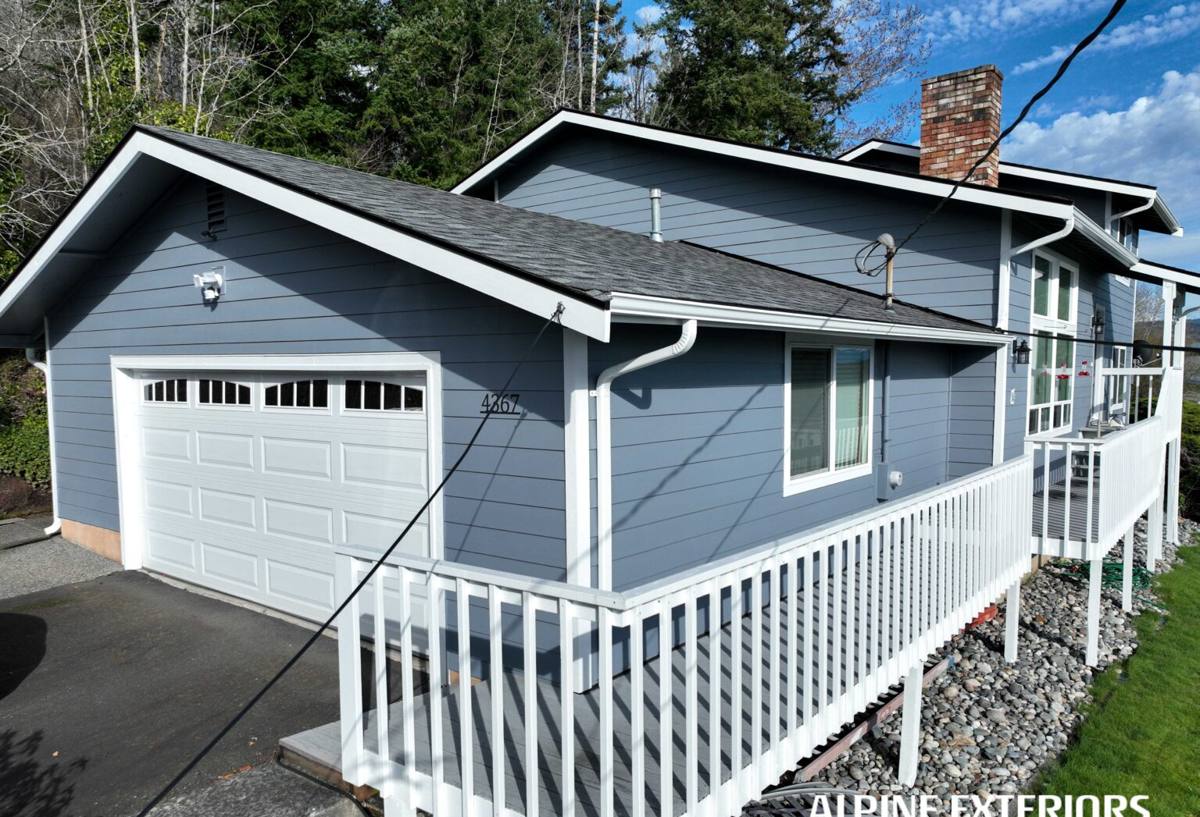
What Storm Damage to a Roof Actually Looks Like
Wind and Wind-Driven Rain
Whatcom County storms don't usually bring the straight-line wind speeds you'd see in other parts of the country, but the wind here often comes off the water at an angle, which is worse for a roof than a straight headwind. Wind-driven rain gets pushed up and under shingle edges, into exposed nail heads, and around flashing that's already lifted slightly from age. You'll often see staining on an attic deck or interior ceiling days or even weeks after the storm that caused it, because the water traveled sideways along the sheathing before it dripped through.
Debris Impact
Fir and cedar are everywhere in this region, and a windstorm brings down branches, cones, and sometimes whole limbs. Impact damage can crack shingles, dent metal flashing, or knock granules loose in a way that isn't obvious from the ground but exposes the asphalt mat underneath to sun and moisture.
The Damage You Can't See From the Ground
Lifted shingle tabs, a flashing seam that's pulled a quarter inch, or a soft spot in the underlayment don't show up in a drive-by look. This is the category of damage that turns into a real problem if it's not caught, because it keeps letting water in with every rain event, not just the one that caused it.
Why Delayed Repairs Cost More Here Than Elsewhere
In a dry climate, a small storm-damaged area can sit for months without getting meaningfully worse. That's not how it works in Bellingham. Between fall and spring, this area gets a steady run of rain, and moss season overlaps most of that window. A cracked shingle or lifted flashing left unrepaired becomes an entry point that moss and moisture exploit together — moss holds water against the roofing material, and that constant dampness accelerates rot in the decking underneath. Salt air adds a second layer to this: any exposed fasteners or metal flashing at a damaged spot corrode faster near the coast than they would inland, which weakens the repair point further even before a contractor gets to it.
The practical takeaway is that storm damage here is time-sensitive in a way it isn't in drier regions. A repair that would cost a few hundred dollars right after the storm can turn into a decking replacement a season later if it's ignored.
What a Correct Storm Damage Repair Involves
A proper storm damage repair isn't just swapping out the shingles that are visibly torn. It has to account for what's underneath and around the damaged area, since that's usually where the real vulnerability is.
- Full inspection of the damaged section plus the surrounding field, not just the obvious spot
- Check of the underlayment and decking for moisture intrusion, not just surface shingle damage
- Inspection of flashing at nearby penetrations — vents, chimneys, valleys — since wind damage often loosens flashing seams near the primary damage
- Matching replacement materials as closely as possible to the existing roof, both in shingle type and in exposure/nailing pattern
- Re-securing or replacing any lifted but not-yet-torn shingles adjacent to the damaged area, since those are the next ones to fail
- Clearing moss or debris from the repair area before closing it up, so it isn't sealed in against the new work
- A final water test or close visual check of seams before calling the repair complete
Skipping any of these steps is how a "repaired" roof ends up with a slow leak six months later that looks unrelated to the original storm, but isn't.
Our Process, From the Call to the Completed Repair
Inspection and Documentation
We start with a full inspection of the affected area and the roof generally, since storm damage rarely stays contained to one spot. We document what we find with photos, which matters both for our own repair plan and for insurance purposes if you're filing a claim.
The Repair Itself
We explain what we're seeing and what the repair involves before we start, including whether we think the damage is contained to a repair or whether it's pointing at a larger issue worth knowing about. Repairs are done with materials matched to your existing roof, and we don't cut into more of the roof than the damage actually requires.
Follow-Up
After the repair, we check the surrounding area one more time and let you know if there's anything to keep an eye on — for example, if moss growth nearby is likely to become a problem again given how this region's wet season runs.
Repair or Replace? Cost Factors to Weigh
Not every storm-damaged roof needs a full replacement, but not every case is a simple patch either. These are the factors that actually determine which side of that line a given roof falls on.
| Factor | Favors Repair | Favors Replacement |
|---|---|---|
| Age of roof | Under 12–15 years, otherwise in good condition | Near or past expected lifespan |
| Extent of damage | Isolated to one section or slope | Spread across multiple sections |
| Decking condition | Dry, solid underneath the damage | Soft spots or rot found during inspection |
| Moss/moisture history | Minor, addressed with cleaning | Long-term moss mats affecting multiple areas |
| Material availability | Matching shingles still available | Discontinued product, visible mismatch likely |
We'll tell you honestly which category your roof falls into. A repair that's likely to need another repair in a year isn't a good use of your money, and we'll say so rather than patch something that needs a bigger conversation.
Working With Your Insurance Company
Many storm damage repairs in this area are at least partially covered by homeowners insurance, depending on your policy and the cause of damage. Our documentation — photos of the damage, a written scope of the repair, and dated inspection notes — is built to support a claim if you choose to file one. We're not a public adjuster and we don't negotiate your claim for you, but we can walk you through what we found and answer a claims adjuster's questions about the roofing side of things if that's helpful.
One thing worth knowing: insurers sometimes push for the cheapest like-kind repair rather than what actually restores the roof's performance. If that happens, we'll tell you plainly whether the proposed scope is adequate or whether it's likely to leave you back here again next storm season.
What To Do Right After a Storm
- Check the attic and upstairs ceilings for new staining, damp spots, or drips
- Look at gutters and the ground below rooflines for shingle granules, torn shingle pieces, or bent flashing
- Note the date and approximate storm event — this matters for insurance timelines
- Avoid climbing onto the roof yourself, especially after rain when surfaces are slick with moss or algae
- Get an inspection promptly rather than waiting to see if a small leak gets worse
- Hold off on temporary tarps or DIY patches unless water is actively entering — improper patching can trap moisture and hide the real extent of damage
Why Hiring a Crew That Already Works Bellingham Matters
After a bad storm, this region sees the same thing every other coastal area sees: traveling crews going door to door offering fast repairs. Some are legitimate. Many are gone by the time a problem shows up. A crew that's based here and works Bellingham and Blaine roofs regularly has a stake in the repair holding up, because it's a roof we might be back on for a maintenance check or a different job down the line. We also know what this climate does to a roof over years, not just what a storm did to it last week — which shapes how we repair, not just what we repair.
If a recent storm left you with damage, a suspicious stain, or just questions about whether your roof is holding up the way it should, we're glad to take a look. Reach out for a free, no-pressure estimate using the form below.