 Blaine Roofing
 Bellingham's Climate Is Hard on Siding — Here's Why
Bellingham sits close enough to the water and deep enough into Whatcom County's marine weather pattern that homes here take on a specific kind of punishment year-round. Salt-tinged air off the water accelerates corrosion on fasteners and metal trim. Driving rain, often pushed sideways by wind off the Strait, finds its way behind siding that isn't detailed correctly. And the long, overcast wet season — sometimes stretching from fall through spring with barely a dry week — gives moss, algae, and mildew months to take hold on anything that stays damp.
None of this means siding fails quickly here. It means siding has to be the right product, installed the right way, or the climate will find every weak point over time. That's the lens we bring to every Bellingham project: not "what looks good today" but "what holds up through twenty Whatcom County winters."
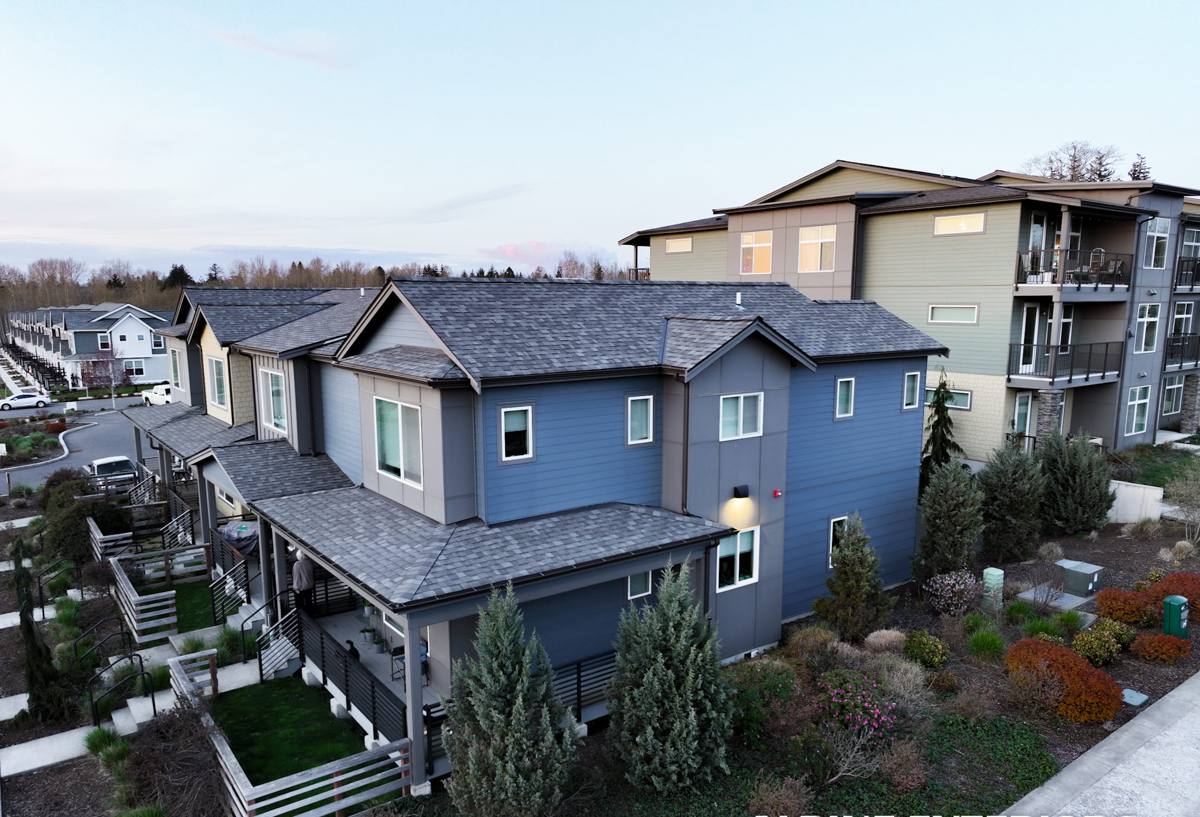
Why We Only Install James Hardie Fiber Cement
We standardized on James Hardie siding for every home we work on, including Bellingham. It's non-combustible, dimensionally stable in wet-dry cycling, and holds a factory-applied finish instead of relying on field-applied paint that has to survive the same weather it's meant to protect against. We don't install vinyl, LP SmartSide, or other fiber cement alternatives — not because those products have no place in the market, but because we've made a professional call to specialize in one system we can install to spec every time and stand behind with confidence.
That specialization matters more in a climate like this one. A product that performs fine in a drier region can behave differently after a decade of Pacific Northwest moisture exposure, and we'd rather build deep expertise in the system best suited to local conditions than spread that expertise thin across several product lines.
Climate-Engineered Formulations
James Hardie doesn't sell one formulation everywhere. The company engineers its HardieZone products differently depending on regional climate demands — broadly split between a line built for regions with heavy freeze-thaw cycling and a line built for warm, wet, moisture-heavy coastal climates. Western Washington's marine climate, with its mild temperatures but high year-round moisture load, typically calls for the moisture-focused engineering rather than the freeze-thaw-focused one used in colder inland climates. Getting this match right at the ordering stage is part of doing the job correctly — it's not a detail homeowners should have to catch themselves.
| Climate Factor | Freeze-Thaw Focused Line | Moisture Focused Line |
|---|---|---|
| Primary design concern | Repeated freezing and thawing of moisture in the material | Sustained humidity, rain exposure, and biological growth |
| Typical fit | Colder inland/mountain climates | Coastal and marine climates like Whatcom County |
| What it means for your home | Not usually the right match for Bellingham | Matched to the salt air and driving rain most Bellingham homes face |
ColorPlus Factory Finish: Why It Matters Near the Water
Paint failure is one of the most common siding complaints in this region, and it's usually not the paint's fault — it's that field-applied paint has to bond and cure in exactly the damp conditions that make bonding difficult. James Hardie's ColorPlus finish is baked on in a controlled factory environment before the boards ever reach the jobsite, which gives you a more consistent, more UV- and moisture-resistant finish than most site-applied paint jobs can match, backed by its own finish warranty separate from the substrate warranty.
For a Bellingham home, that translates to fewer repaint cycles and less worry about chalking, fading, or peeling driven by the area's long wet stretches and salt-laden air.
What a Correct Installation Actually Involves
The product is only half the equation. James Hardie siding installed without attention to detail can still develop moisture problems in a climate like this one — and a lot of the siding failures we get called out to inspect trace back to installation shortcuts, not the material itself.
Rainscreen Gap and Drainage Plane
Siding needs a way to shed water that gets behind it, and a way for that space to dry out. A proper rainscreen gap, correctly flashed weather-resistant barrier, and unobstructed drainage path at the bottom of the wall are non-negotiable in a climate that sees this much sustained rain. Skipping or shortcutting this step is one of the fastest ways to trap moisture against the wall assembly.
Flashing, Fasteners, and Joints
Every window, door, and roofline intersection is a potential water entry point. Corrosion-resistant fasteners matter more here than in drier inland markets because of the salt content in the air. Butt joints, corners, and trim intersections need to be sealed and flashed to manufacturer specification, not just caulked over and hoped for.
Clearance and Ventilation
Siding installed too close to grade, decking, or roofing traps moisture and invites the moss and algae growth this region is known for. Correct clearances and attention to airflow around the wall assembly reduce how much biological growth takes hold and how often the siding needs a wash-down.
Moss, Algae, and the Long Wet Season
Moss and algae aren't a defect in James Hardie siding — they're a fact of life anywhere with Bellingham's combination of shade, moisture, and mild temperatures. What installation can control is how much of a foothold they get. Proper drainage, clearance from soil and vegetation, and avoiding low spots where water pools against the siding all reduce growth significantly compared to a rushed install. Periodic gentle washing helps too, but it's far more effective on siding that was set up correctly from day one than on siding fighting a bad drainage detail underneath.
Our Bellingham Installation Process
- Inspection and assessment — We look at your existing siding, sheathing, and any signs of trapped moisture or prior damage before recommending a scope of work.
- Product and color selection — We help you choose the right HardiePlank, panel, or shingle profile and ColorPlus color matched to the correct climate-engineered formulation for this area.
- Tear-off and substrate check — Old siding comes off and we inspect the sheathing underneath for rot or water damage before anything new goes up.
- Weather barrier and rainscreen installation — This is the step that determines how the wall performs for the next several decades, and we don't shortcut it.
- Hardie installation to manufacturer spec — Correct fastener spacing, flashing, and joint treatment throughout.
- Trim, caulking, and final detailing — The finishing work that keeps water out of seams and corners long-term.
- Final walkthrough — We review the completed work with you before calling the job done.
Cost Factors for a Bellingham Siding Project
Every home is different, but these are the variables that most often move the price up or down on a James Hardie project in this area:
| Factor | Why It Affects Cost |
|---|---|
| Existing siding removal | Tear-off, disposal, and any sheathing repair add labor and material cost |
| Home size and wall complexity | More corners, gables, and dormers mean more cutting, flashing, and labor time |
| Moisture damage found underneath | Rotted sheathing or framing discovered during tear-off needs repair before new siding goes up |
| Trim and detail level | Custom trim work, accent bands, and multiple siding profiles add material and labor |
| Access and site conditions | Steep lots, tight setbacks, or limited equipment access can add time |
We provide a written estimate that spells out these factors for your specific home rather than a generic per-square-foot number that doesn't reflect what we actually find on your walls.
Signs Your Current Siding May Already Be Failing
- Soft or spongy spots when you press on the siding
- Visible warping, buckling, or gaps between boards
- Persistent moss or algae that returns quickly after cleaning
- Peeling or bubbling paint, especially on lower walls or shaded sides
- Water stains or discoloration on interior walls near exterior corners
- Visible rot or soft trim around windows and doors
If you're seeing more than one of these, it's worth having the wall assembly looked at before it turns into a larger repair.
Why Hiring a Crew That Already Works in Bellingham Matters
A crew that regularly works in Whatcom County already knows how to plan around the wet season instead of getting caught by it mid-project, understands which clearance and drainage details actually hold up against this area's rain patterns, and has a feel for how salt air affects fastener and trim choices over time. That local pattern recognition is hard to replicate from a crew that only occasionally works this far north or this close to the water. It shows up in fewer callbacks and siding that still looks and performs the way it should years after installation.
Warranty Protection Worth Understanding
James Hardie backs its siding substrate and its ColorPlus finish with separate manufacturer warranties, both of which are transferable if you sell your home within the coverage period — a detail future buyers and their inspectors do notice. Proper installation matters here too: manufacturer warranties are generally tied to installation following their published specifications, which is another reason installation quality isn't optional if you want that protection to mean something down the road.
If you're weighing a siding replacement or repair in Bellingham, we're happy to take a look and walk you through what your home actually needs — no pressure, no obligation. Use the form below to request a free estimate.