 Blaine Roofing
 Deck Repair for Bellingham Homes: A Local Perspective
Bellingham sits close enough to the Salish Sea, and gets enough of the same weather pattern that rolls through Blaine and the rest of Whatcom County, that decks here age differently than decks fifty miles inland. Salt-tinged air, long stretches of driving rain, and a moss season that can run from October through April put a specific kind of wear on outdoor structures. We work on decks throughout this corridor regularly, and the damage we find in Bellingham backyards tends to follow a pattern: it's rarely one big failure, and almost always a slow combination of moisture, corrosion, and neglected maintenance that finally catches up with a deck all at once.
This page is about deck repair specifically — not new deck builds, and not a generic checklist that could apply to a deck in Arizona. It's about what actually goes wrong with decks in this climate, what a proper repair looks like, and why it matters to hire a crew that already understands how Whatcom County weather behaves.
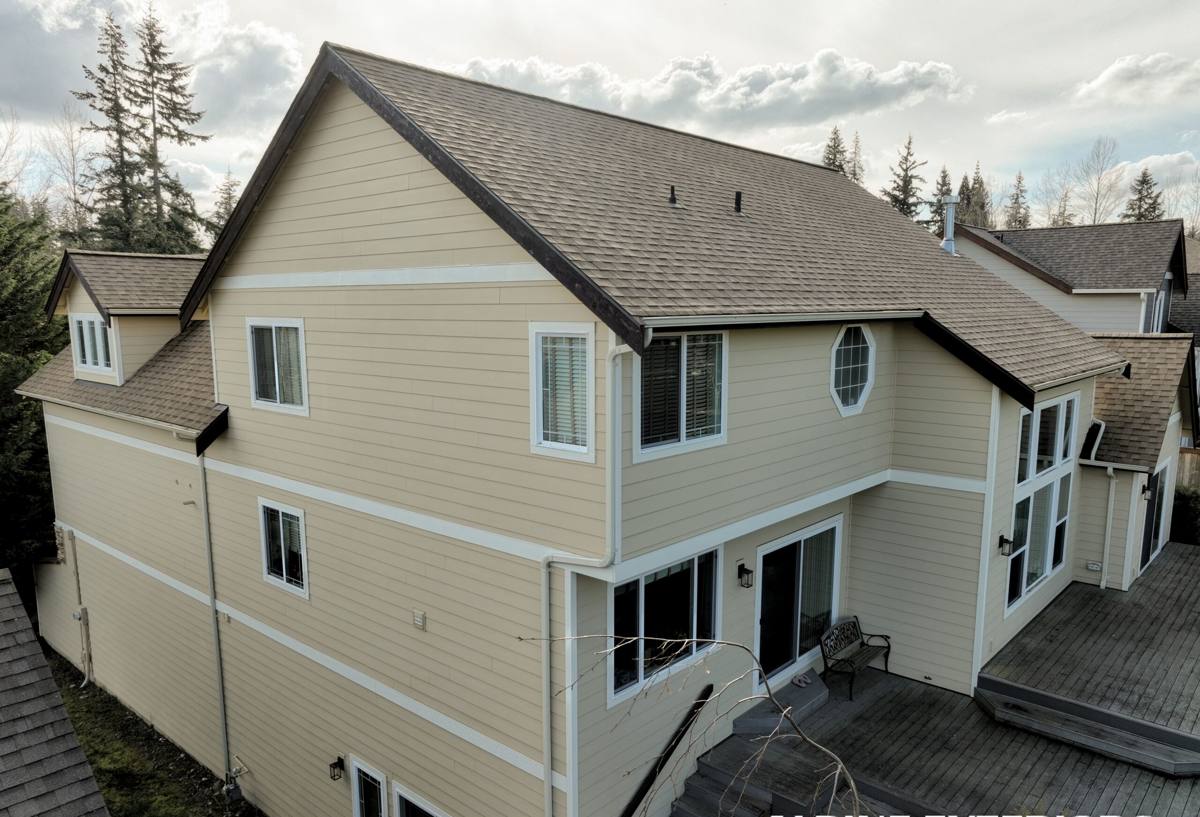
Why Bellingham's Climate Is Hard on Decks
Salt Air and Metal Fatigue
Coastal proximity means airborne salt finds its way onto exposed metal — joist hangers, structural screws, bolts, and flashing. Standard zinc-coated fasteners can start showing corrosion well before a homeowner notices anything wrong with the visible boards. Once a fastener weakens, the connection it's holding weakens with it, even if the surrounding wood still looks fine.
Driving Rain and Water Intrusion
Rain here doesn't just fall straight down — wind-driven rain pushes water sideways, into gaps, under ledger boards, and behind rim joists where it doesn't dry out quickly. Decks attached to the house are especially vulnerable at the ledger board connection, which is one of the most common points of hidden rot we find during inspections.
Moss, Algae, and Trapped Moisture
A long, damp moss season means organic growth isn't just a cosmetic problem. Moss and algae hold moisture directly against decking boards and stair treads, slowing evaporation and accelerating decay underneath a surface that can still look intact from a few feet away. On stairs and low-traffic areas especially, this buildup also becomes a slip hazard long before it becomes a structural one.
Signs Your Deck Needs Attention
Most Bellingham homeowners call us for one of two reasons: something is visibly failing, or they want an honest read on a deck they're not sure about before it becomes a bigger problem. Common warning signs include:
- Soft or spongy spots underfoot, especially near the house or stair landings
- Rust streaks below joist hangers, bolts, or screw heads
- Boards that have cupped, split, or pulled away from fasteners
- Persistent moss or dark staining that returns quickly after cleaning
- Railings or stair stringers that feel loose or flex under weight
- Gaps or separation where the deck ledger meets the house siding
- Standing water that doesn't drain within an hour or two after rain
Any one of these on its own might be minor. Several together, especially near the ledger board or main support posts, usually means it's time for a proper inspection rather than a patch job.
What a Correct Deck Repair Actually Involves
It Starts Below the Surface
A repair that only replaces damaged deck boards without checking the framing underneath is incomplete. In this climate, the framing — joists, beams, posts, and especially the ledger connection — is where the real damage tends to hide. We check for soft wood with a probe, not just a visual look, because rot can travel well past where discoloration is visible.
Fasteners and Hardware Matter as Much as Lumber
Given the salt air factor, we don't treat hardware as an afterthought. Corrosion-resistant, coated structural screws and stainless or heavily galvanized connectors cost more upfront than standard hardware, but in a coastal climate, cheaper fasteners are often the first thing to fail — and when a fastener fails, it can take a board, a railing, or worse with it.
Proper Flashing and Water Management
Where a deck meets the house, flashing needs to actually shed water away from the ledger board, not just sit there decoratively. A large share of the hidden rot we find traces back to missing, damaged, or improperly installed flashing at this exact connection.
Structural Connections Get Priority
Loose or corroded joist hangers, undersized ledger fasteners, and posts that aren't properly anchored are safety issues, not cosmetic ones. We prioritize these repairs even when they're less visible than a stained deck board, because they're what actually keeps a deck safe to stand on.
Repair or Replace? A Practical Comparison
Not every deck problem needs a full rebuild, and not every deck is worth repairing piecemeal. Here's how we generally weigh the decision:
| Condition Found | Usually Repairable | Often Needs Replacement |
|---|---|---|
| Surface boards | Isolated cupping, splitting, or staining | Widespread soft spots across most boards |
| Framing | Localized rot near one joist or post | Rot found at multiple structural points |
| Ledger board | Flashing failure with sound wood underneath | Ledger itself is soft or pulling from the house |
| Fasteners/hardware | Scattered corrosion, structure otherwise sound | Corrosion throughout, connections feel loose |
| Age | Under 15 years, built with adequate framing | Older deck built to outdated code or spacing |
When a deck is a borderline case, we'll tell you honestly which side of that line it falls on, including the trade-offs of each option, rather than defaulting to the more expensive answer.
Our Deck Repair Process
- On-site assessment. We walk the full deck, probe suspect areas, and check the ledger connection, posts, and stairs — not just the parts that are visibly worn.
- Honest scope and estimate. You get a clear picture of what needs to be fixed now, what can wait, and what the repair will realistically cost — no inflated scope to pad the job.
- Structural repairs first. Framing, hardware, and flashing issues get addressed before cosmetic work, since they affect safety and protect whatever surface work comes after.
- Surface and finish work. Damaged boards, railings, and stair components are replaced or repaired to match the existing deck as closely as possible.
- Final walkthrough. We check the completed work with you on-site so you know exactly what was done and what to watch for going forward.
Materials: What We Use and Why
For structural framing repairs, we use pressure-treated lumber rated for ground contact where applicable, paired with fasteners and connectors chosen to hold up against coastal air rather than the cheapest option available. For visible decking, the right material depends on the homeowner's priorities:
- Treated or cedar lumber — lower upfront cost, natural look, but requires more regular maintenance (cleaning, sealing) to resist moss and moisture in this climate
- Composite decking — higher upfront cost, less ongoing maintenance, and generally more resistant to moisture absorption and moss staining over time
We don't push one material as universally "better" — it's a real trade-off between upfront cost, maintenance commitment, and appearance preferences. What we do insist on is that whatever surface material is chosen, the framing and fasteners underneath are suited to a coastal, high-moisture climate, since that's what determines how long the repair actually lasts.
Maintenance That Extends a Repaired Deck's Life
A repair is only as good as the upkeep that follows it. For Bellingham and Blaine-area homes, we generally recommend:
- Clear leaves and debris from between boards regularly, especially heading into fall
- Clean moss and algae off decking and stairs at least once a year, before it gets a foothold
- Check the ledger board area and flashing visually each spring for staining or gaps
- Reseal or restain wood decking on the manufacturer's recommended schedule, not just when it looks faded
- Tighten or inspect railings and stair connections annually, since these see constant stress
- Keep gutters and downspouts near the deck clear so runoff isn't directed onto or under it
Why a Crew That Already Works Bellingham Matters
Deck repair advice that works for a dry inland climate doesn't always translate here. A crew that regularly works Bellingham and the surrounding Whatcom County area already knows which fasteners hold up, where ledger boards tend to fail first, and how aggressive the moss season really gets on north-facing or shaded decks. That familiarity means fewer surprises during the repair and a better read on what will actually last, rather than a generic fix that looks fine for a season and fails again the next.
We also believe an honest assessment matters more than an upsell. If a repair will genuinely extend your deck's safe life for several more years, we'll say so. If the underlying structure is too far gone to justify patching, we'll tell you that too, along with why.
Get an Honest Look at Your Deck
If your Bellingham-area deck has soft spots, corroded hardware, moss that won't quit, or you just want a second opinion before winter weather sets in, we're glad to take a look. The estimate is free, there's no pressure attached to it, and you'll get a straight answer about what your deck actually needs. Use the form below to get started.