 Blaine Roofing
 Asphalt Shingle Roofing for Peace Arch Homes
The Peace Arch area sits about as close to the water and the border as a neighborhood in Blaine can get, and that location shapes what a roof has to put up with year-round. Homes here take a steady mix of salt-laden air off the Strait of Georgia and Semiahmoo Bay, wind-driven rain that doesn't just fall straight down but gets pushed sideways under eaves and flashing, and long stretches of gray, damp weather that give moss and algae months at a time to get established. Asphalt shingles remain one of the most practical roofing choices for this kind of climate when they're specified and installed correctly — but "correctly" is doing a lot of work in that sentence, and it's the part that gets skipped more often than homeowners realize.
This page covers what an asphalt shingle roof needs to actually hold up in Peace Arch's conditions, what our installation process looks like, and why local, hands-on experience in this specific stretch of Whatcom County matters more than it might seem.
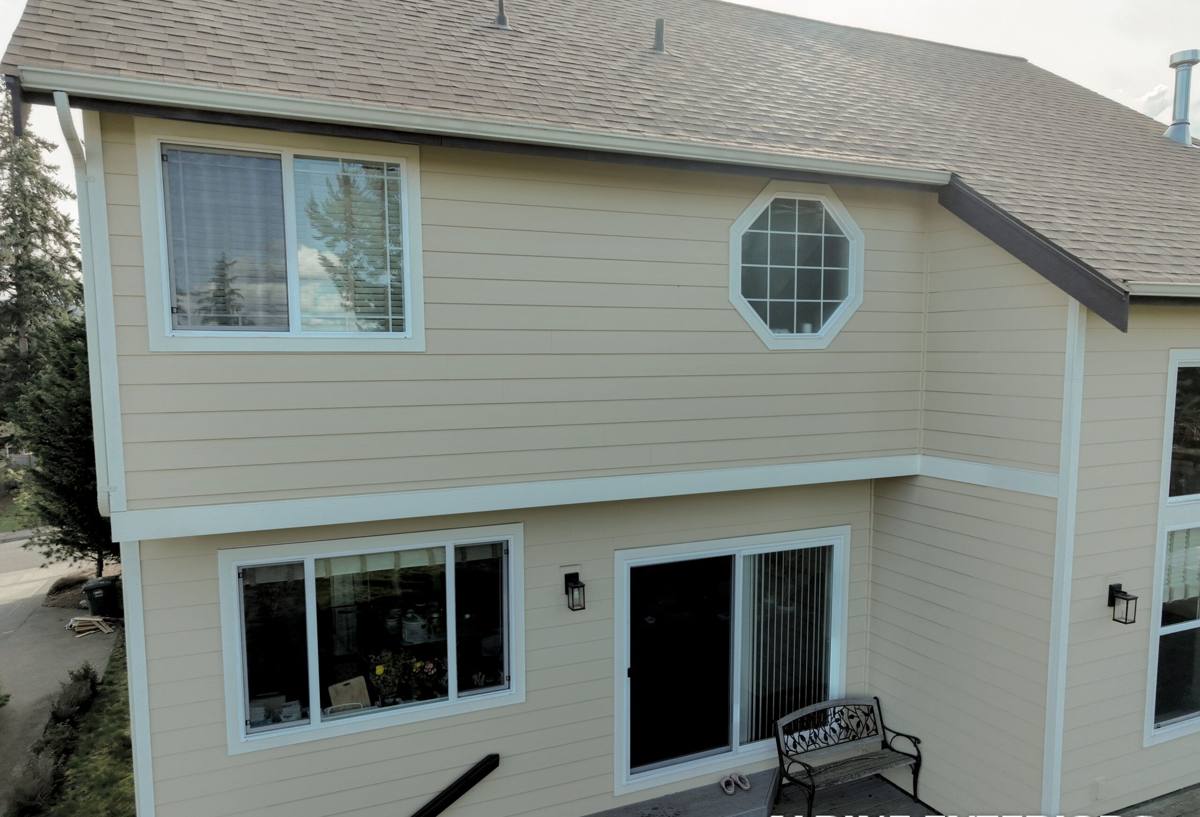
Why This Climate Is Harder on a Roof Than It Looks
Blaine's weather doesn't produce the kind of dramatic storm damage you see in other parts of the country, which is part of the problem — the damage here is slow and cumulative, not sudden. A few things stack up against a roof in this area:
Salt Air
Proximity to saltwater accelerates corrosion on exposed metal — nails, flashing, vent stacks, and gutter hardware — faster than it would inland. Once fasteners or flashing start to corrode, water finds a way in long before the shingles themselves are the problem.
Wind-Driven Rain
Rain that's pushed horizontally by wind off the water behaves differently than rain falling straight down. It gets up under shingle tabs, around vents, and into any seam that isn't properly lapped and sealed. A roof that would perform fine in a calmer climate can leak in Blaine simply because the water is coming from a different angle than the shingle layout was built to shed.
Extended Moss and Algae Season
Cool temperatures, shade from mature trees, and near-constant moisture give moss and algae a long growing window in this part of Whatcom County — often close to year-round on north-facing slopes. Moss doesn't just look bad; as it grows, it lifts shingle edges, holds water against the roof deck, and works its way under the shingle layer over time.
None of these on their own destroys a roof quickly. Together, over years, they're what separates a shingle roof that makes it to 25-30 years from one that starts failing at 12-15.
What a Correct Asphalt Shingle Installation Actually Involves
A shingle roof is a system, not a single product. The shingles get the attention, but in a climate like this one, the layers underneath and around them are just as important to how long the roof lasts.
- Roof deck condition — soft, delaminated, or water-stained decking gets replaced before anything new goes down, not covered over.
- Underlayment — a synthetic or self-adhered underlayment suited to a wet climate, with extra protection (ice-and-water membrane) at eaves, valleys, and other vulnerable points.
- Flashing — new metal flashing at valleys, chimneys, walls, and roof-to-wall transitions rather than reusing old, corroded pieces.
- Ventilation — balanced intake and exhaust ventilation so moisture from inside the home doesn't get trapped against the underside of the deck, which speeds up rot and shortens shingle life from below.
- Fastening — corrosion-resistant nails, correctly placed per the manufacturer's nailing pattern, since under-nailing or misplaced nails is one of the most common causes of premature wind and water damage.
- Shingle selection and layout — matched to the home's exposure, roof pitch, and wind rating needs, with proper starter strips and ridge caps rather than shortcuts at the edges.
Skipping or rushing any one of these doesn't usually show up right away — it shows up as a leak two or three winters later, which is exactly why it matters to get it right the first time.
Shingle Tiers and What They Trade Off
| Shingle Type | Typical Lifespan | Wind/Impact Performance | Best Fit |
|---|---|---|---|
| 3-tab (standard) | 15-20 years | Lower wind rating, thinner profile | Budget-conscious re-roofs, simpler roof lines |
| Architectural / laminate | 25-30 years | Higher wind rating, better impact resistance | Most Peace Arch homes — the standard recommendation |
| Premium / designer laminate | 30+ years | Highest wind rating, heavier and more rigid | Homes prioritizing longevity and appearance, steeper rooflines |
For most homes in this area, we point people toward architectural shingles as the practical middle ground — the added durability and wind performance over 3-tab shingles matters more here than it would in a calmer, drier climate, without the added cost of the premium tier.
Our Process for a Peace Arch Re-Roof
- Inspection and estimate — we look at the current roof from the deck up, note any soft spots, flashing condition, and ventilation issues, and give an honest read on what's actually needed versus what can wait.
- Tear-off — old roofing is removed down to the deck so we can see the real condition of the wood, not installed over.
- Deck repair — any damaged sheathing gets replaced before underlayment goes down.
- Underlayment and ice-and-water protection — installed with extra attention to valleys, eaves, and any low-slope transitions where wind-driven rain is most likely to find a way in.
- Flashing — new flashing at all penetrations, valleys, and wall transitions.
- Shingle installation — installed to manufacturer spec for nailing pattern and exposure, with attention to starter strips and ridge caps.
- Ventilation check — intake and exhaust balanced so the attic space isn't trapping moisture against the new roof.
- Cleanup and final walk-through — site cleaned, debris and old materials hauled off, and a walk-through so you can see the finished work before we consider the job done.
Signs a Peace Arch Roof Needs Attention
Because damage in this climate tends to be gradual, it helps to know what to watch for before a small issue becomes a ceiling stain:
- Granules collecting in gutters or at the base of downspouts
- Shingle edges curling, cupping, or lifting, especially on north-facing slopes
- Visible moss or dark algae streaking on the roof surface
- Rusty or corroded flashing around vents, chimneys, or valleys
- Daylight visible through the attic roof deck
- Musty smell or visible moisture in the attic space
- Missing or displaced shingles after a windy stretch of weather
Any one of these on its own isn't necessarily urgent, but if you're seeing two or three together, it's worth having someone take a look before the next wet season.
Choosing Shingles for Salt Air and a Long Moss Season
Not every asphalt shingle is built with the same priorities, and in a climate like this, a few product characteristics matter more than they would elsewhere.
Algae-Resistant Granules
Many manufacturers now offer shingles with granules treated to resist the growth of algae, which shows up as dark streaking rather than the greener moss growth. In a climate this damp, this feature earns its keep — it doesn't stop moss on its own, but it meaningfully slows algae staining on north- and shade-facing slopes.
Wind and Impact Ratings
Given the exposure many Peace Arch homes have to wind off the water, we generally steer people toward shingles with a higher wind rating rather than the baseline product, even when it costs a bit more up front. The maintenance and repair burden of wind-lifted shingles over the life of a roof usually outweighs the modest difference in upfront cost.
Warranty Structure
Manufacturer warranties on asphalt shingles vary in what they actually cover — material defects versus labor, and whether coverage is prorated over time. We walk homeowners through what a given warranty does and doesn't cover before installation, since this is where a lot of confusion happens after the fact.
Maintenance That Actually Matters in This Climate
A shingle roof in Blaine benefits from a different maintenance rhythm than the same roof would need in a drier region:
- Keep gutters and downspouts clear so water isn't backing up under the shingle edge
- Trim back tree limbs that shade the roof and keep it damp longer after rain
- Have moss or algae growth treated before it spreads across a full slope
- Check attic ventilation periodically, since blocked vents trap moisture against the deck from below
- Have flashing and vent boots inspected every few years for corrosion or cracking sealant
None of this requires constant attention — a check once a year, plus after any unusually windy storm, catches most of what would otherwise turn into a bigger repair.
Why Local Experience in Peace Arch Matters
A roofing crew that works this specific stretch of Whatcom County regularly knows things a crew from further inland has to learn the hard way — which slopes in this neighborhood tend to hold moss longest, how much of a difference the wind off the water actually makes to shingle choice, and which flashing details tend to fail first given the salt exposure here. That's not a marketing point, it's just what repeated, local experience gives you: fewer surprises, and a roof specified for the conditions it will actually face rather than a generic national average.
If you're weighing a repair versus a full replacement, or just want an honest read on where your current roof stands, we're happy to take a look. Fill out the form below for a free, no-pressure estimate on your Peace Arch home.