 Blaine Roofing
 Birch Bay sits right on the water, which is exactly why windows here don't age the way they do a few miles inland in Whatcom County. Homes along this stretch of coastline take a steady dose of salt-laden air, wind-driven rain that comes in sideways instead of straight down, and a shaded, damp season that keeps moss and mildew active for a good part of the year. None of that is unusual for the neighborhood — it's just the baseline. But it does mean window installation here has less margin for error than it would somewhere calmer and drier.
We install windows in Birch Bay regularly, on everything from older cottages that were never built with this kind of exposure in mind to newer homes designed to take advantage of the water view. This page covers what that work actually involves — what the climate does to windows over time, what a correct installation looks like, and what to ask before you hire anyone to do it.
What Salt Air, Driving Rain, and Moss Season Actually Do to Windows
Each of these three factors wears on a window in a different way, and together they add up faster than most homeowners expect.
Salt air is corrosive. It settles on hardware, fasteners, and any exposed metal components, and it works faster on lower-grade materials than a drier inland environment would. Hinges stiffen, locks bind, and screws that would last decades elsewhere can start showing corrosion within a handful of years on a home that sits close to the water.
Wind-driven rain is a weatherproofing problem, not just a water problem. Rain that's being pushed sideways by wind finds gaps and seams that gravity-fed rain never tests. A flashing detail that would be fine on a sheltered, inland wall can fail on a Birch Bay home simply because the water is arriving from a different angle and under more pressure.
Moss and mildew season adds a slower, quieter kind of damage. Shaded, north-facing walls and trim in this part of Whatcom County can stay damp for months at a time. That moisture doesn't rot a window frame overnight, but it breaks down paint, caulk, and lower-grade wood trim gradually, and it's often the first visible sign that a window's seals or finish are past their useful life.
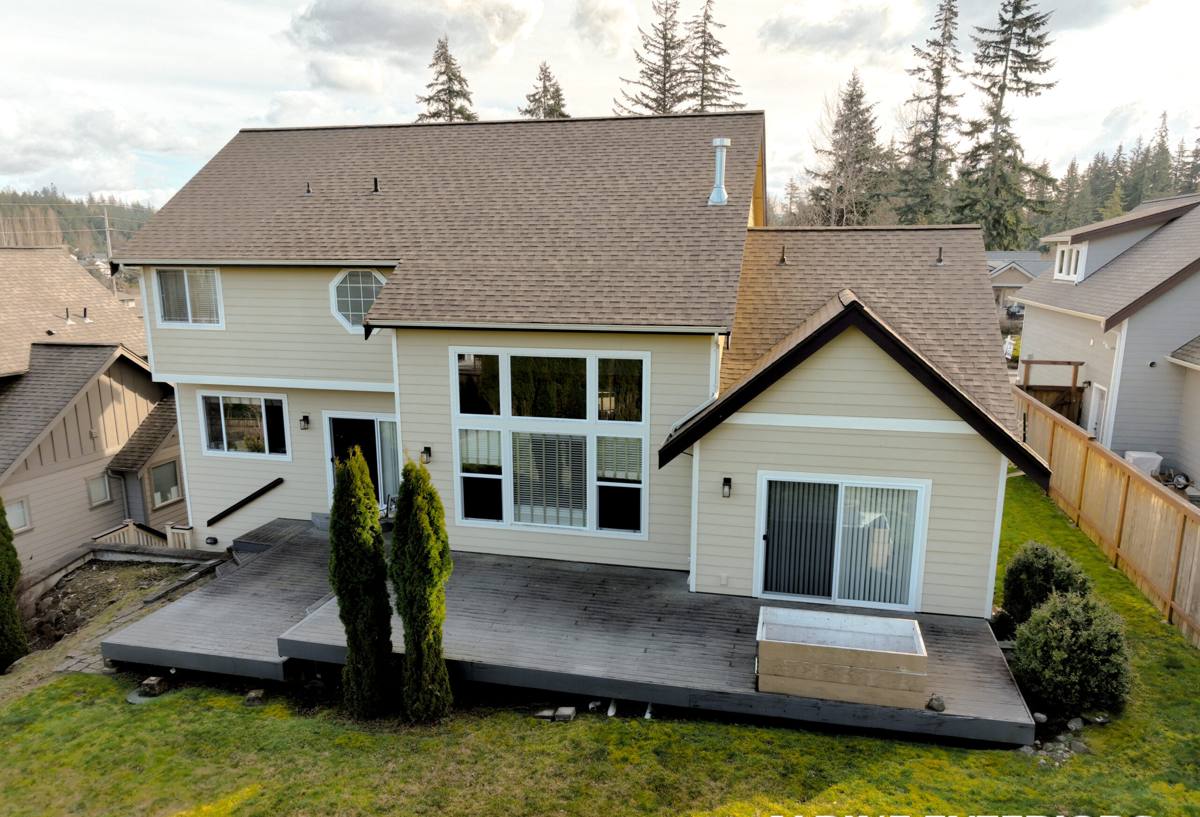
Signs a Birch Bay Home Needs New Windows
Windows rarely fail all at once. The signs usually show up gradually, and they're easy to write off individually before you notice the pattern.
- Drafts you can feel near the frame, even with the window fully latched
- Condensation or fogging between the panes of a double-pane unit, which means the seal has failed
- Wood trim or sills that feel soft, spongy, or stained, especially on north- or west-facing walls
- Hardware — locks, cranks, hinges — that's stiff, corroded, or difficult to operate
- Visible gaps, cracked caulk, or daylight showing around the frame
- Noticeably higher heating bills without another clear explanation
- Persistent moss or mildew growth on the sill or surrounding trim that keeps coming back after cleaning
Any one of these can be a minor fix. Several of them together, especially on an older home, usually mean the windows are past the point where sealant and touch-ups are doing much good.
What a Correct Window Installation Involves
The window unit itself is only part of the job. In a coastal environment like Birch Bay, the installation details around it — flashing, sealing, and how the opening is prepped — matter as much as the product going in.
Removal and Opening Prep
Before a new window goes in, the old one has to come out carefully enough to expose what's actually happening in the wall. This is where we typically find out whether there's hidden water damage, soft framing, or old flashing that needs to be corrected before a new window can perform correctly. Skipping this step and installing a new window into a compromised opening just repeats the same failure on a delay.
Flashing and Weatherproofing
This is the step that matters most given the exposure in Birch Bay. Flashing has to be layered so water sheds outward and downward at every point, with the house wrap or siding integrated correctly above and around the opening. Wind-driven rain will find any gap in that sequence, so it isn't a step to rush or shortcut, and it's the detail that separates a window that performs for decades from one that starts leaking within a few years.
Insulation and Air Sealing
The gap between the window frame and the rough opening needs to be filled correctly — not overpacked, not left with voids. Done right, this stops drafts and keeps moist air from condensing inside the wall cavity, which is a slower but real risk in a damp coastal climate.
Trim and Finish
The exterior trim and finish work is what actually sheds water long-term and what you'll look at every day. It needs to be sealed correctly at every joint and matched cleanly to the surrounding siding, not just caulked and left.
Frame Materials Worth Considering on This Coastline
Frame material is one of the bigger decisions in a window project, and it's worth more weight in Birch Bay than it would be somewhere less exposed. There's no single right answer for every home — it depends on your budget, your home's style, and how much upkeep you're willing to take on.
| Frame Material | How It Handles This Climate | Maintenance |
|---|---|---|
| Vinyl | Doesn't corrode or rot; performs consistently in salt air and sustained moisture | Low — occasional cleaning, no painting or refinishing |
| Fiberglass | Very stable in temperature swings and moisture; holds up well to coastal exposure over the long term | Low — durable finish, minimal upkeep |
| Aluminum | Strong and slim-profile, but a poor insulator and prone to condensation in a damp climate unless thermally broken | Moderate — watch for pitting near the water |
| Wood (unclad) | Classic appearance, but exposed wood is the most vulnerable material to sustained coastal moisture and moss | High — regular painting, sealing, and inspection |
| Wood-clad (exterior-protected) | Interior wood warmth with a low-maintenance exterior shell; performs well if the cladding and flashing are installed correctly | Low to moderate — depends on cladding quality and installation |
We lead with vinyl or fiberglass on weather-facing installations in Birch Bay because they hold up to sustained salt air and moisture with the least ongoing upkeep. That said, a wood-clad option can still be the right call when the interior look matters to you and the exterior cladding is installed correctly — it's a trade-off worth discussing against your specific home, not a one-size answer.
Our Installation Process
- On-site assessment — we look at your current windows and openings, note any hidden damage risk, and talk through what's actually needed versus what's optional
- Honest recommendation — frame material, glass package, and scope, explained in plain terms with the reasoning behind it
- Measuring and ordering — precise field measurements and a realistic delivery timeline, since most windows are ordered to your specs rather than pulled off a shelf
- Removal and opening prep — the old unit comes out carefully, and any framing or flashing issues found underneath get addressed before the new window goes in
- Installation and flashing — the new unit is set, shimmed level and square, and flashed in a sequence built for wind-driven rain, not just a generic manufacturer diagram
- Trim, finish, and cleanup — exterior trim is integrated to match your siding, seams are sealed, and the site is left clean
What Affects the Cost of Window Installation in Birch Bay
We won't quote a number without seeing your windows and openings in person, but the factors that actually move a project's cost are consistent from job to job.
| Factor | Why It Matters |
|---|---|
| Number of windows | Per-unit cost usually drops on a full-home project compared to a single replacement |
| Frame material | Vinyl is typically the most budget-friendly; fiberglass and wood-clad options cost more upfront |
| Window size and type | Standard double-hung units cost less than large picture windows, bays, or custom shapes |
| Condition of the opening | Hidden rot or damaged framing found during removal adds repair work before installation can proceed |
| Glass package | Upgraded low-E coatings or gas fills add cost but can help with energy performance and condensation control |
| Access and site conditions | Second-story windows or difficult access can add labor time |
The most common cost surprise on older Birch Bay homes isn't the window itself — it's what gets found once the old unit comes out. We flag that possibility upfront rather than let it show up as a surprise mid-project.
Why a Crew That Already Works Birch Bay Matters
Manufacturer installation instructions are written for average conditions in a moderate climate. They're not written with Birch Bay's salt air, wind-driven rain, or extended moss season specifically in mind. A crew that has actually installed windows on this stretch of coastline knows which parts of that generic guidance are worth following to the letter here, and where extra time on flashing or sealant is worth spending even when it isn't strictly required somewhere calmer.
That experience shows up in decisions that don't come up in a sales pitch — how much flashing lap a given wall assembly actually needs, when a sill needs a sloped detail instead of relying on caulk alone, and what an older Whatcom County home's framing tends to hide once the siding comes off around an opening. Those are the calls that decide whether a window installation is still performing cleanly in fifteen years or showing drafts and soft trim in five.
What to Ask Before Hiring for Window Installation
- Ask how long they've worked specifically in Birch Bay or comparable coastal parts of Whatcom County
- Confirm current Washington contractor licensing and insurance
- Ask how they handle hidden rot or framing damage found during removal, and how that affects cost
- Get a written scope of work, including which frame materials and glass packages are included
- Ask how the window unit's warranty and the installation labor warranty are each structured — they're usually separate
- Ask for a realistic timeline, including lead time for ordering the windows themselves
Keeping New Windows Performing in This Climate
A correct installation is most of the battle, but a little seasonal attention keeps windows performing for the long haul on a home this close to the water.
- Rinse salt residue off frames and glass periodically, especially after storms
- Check exterior caulk lines once a year and touch up before small gaps become active leaks
- Clear moss or debris from sills and tracks before it holds moisture against the frame
- Operate locks and cranks a few times a year so hardware doesn't seize from disuse
- Watch for condensation between panes, which signals a failed seal rather than a cleaning problem
If your windows in Birch Bay are drafty, fogging, or just past their useful life, it's worth having someone take a look before winter storm season puts more strain on them. We offer free, no-pressure estimates for window installation in Birch Bay and the surrounding Blaine area — use the form below to get a time on the schedule.