 Blaine Roofing
 Decking in Sumas Takes a Different Kind of Beating
Sumas sits in a stretch of Whatcom County where the weather doesn't do decks any favors. Wet, mild winters and cool, damp springs mean a lot of days where a deck simply doesn't get the chance to fully dry out between rain events. Add in the marine-influenced air that moves through this part of the Pacific Northwest, carrying enough moisture and salt content to work on exposed metal and softwood over the years, and you've got a recipe for decks that rot, gray out, and grow moss faster than most homeowners expect.
That moss problem in particular is a long-season issue here, not a once-a-year nuisance. Shaded yards, tree cover, and north-facing decks can stay damp enough to support algae and moss growth for eight months or more out of the year. On a traditional wood deck, that means ongoing power-washing, staining, and board replacement. It's one of the biggest reasons Sumas homeowners look at composite decking in the first place, but composite only delivers on that promise when it's installed correctly for this climate, not just installed.
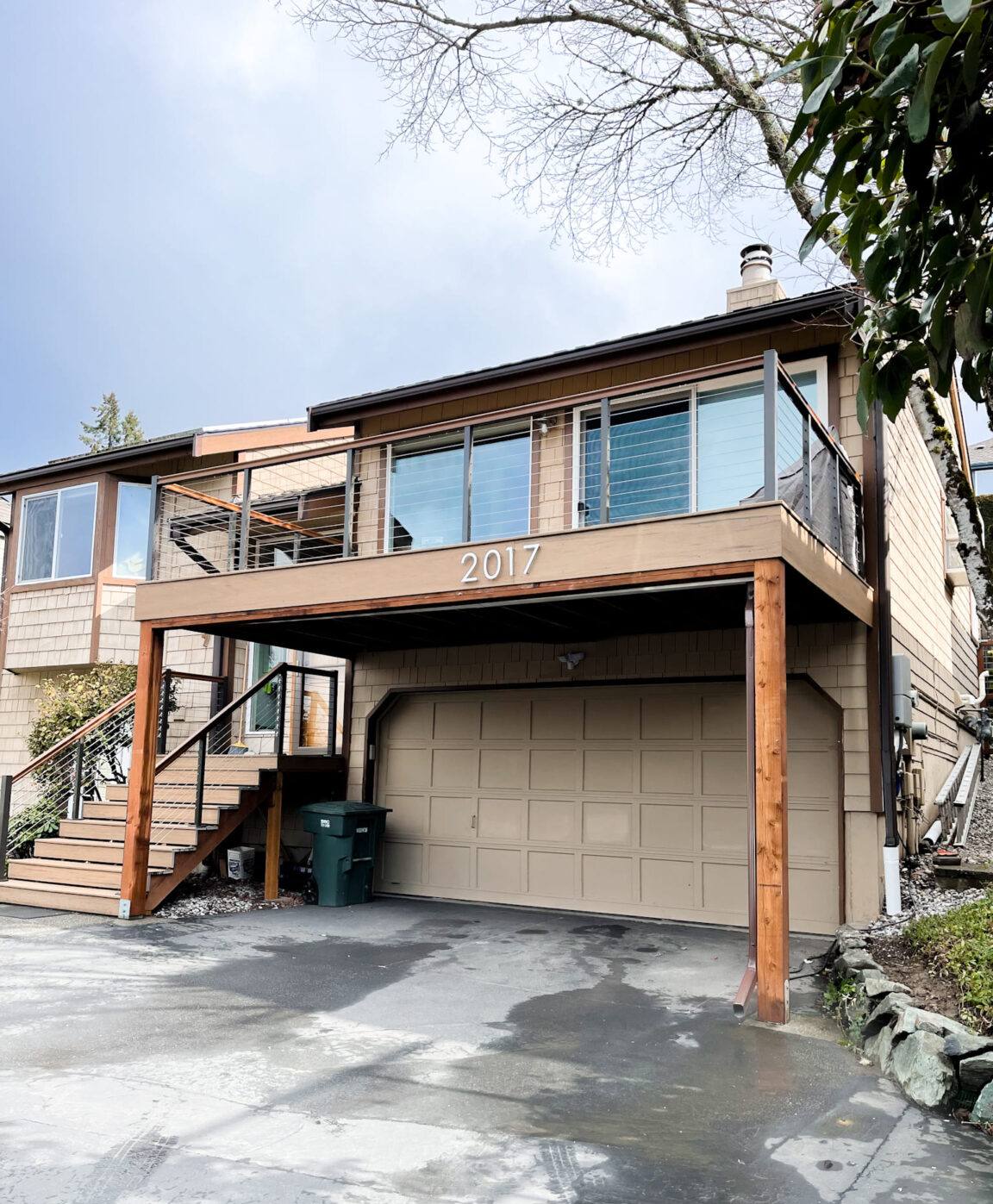
Signs It Might Be Time to Replace a Wood Deck
Homeowners in Sumas often start looking at composite decking after noticing the same handful of problems on an aging wood deck. None of these are emergencies on their own, but together they usually mean the deck is past the point where another round of staining will fix it.
- Boards that stay damp or spongy for days after rain, even in open sun.
- Persistent green or black staining that comes back within weeks of cleaning.
- Splintering or checking (surface cracking) across multiple boards, not just one or two.
- Nail or screw heads backing out, or visible rust streaks around fasteners.
- Soft spots near the house connection or around post bases, which often point to hidden rot in the framing below.
If you're seeing more than one of these, it's worth having the substructure checked before deciding between a repair and a full replacement. Sometimes the framing is fine and only the surface boards need attention, and sometimes it's the other way around.
What a Correct Composite Deck Build Looks Like Here
Composite boards are more forgiving than wood in a wet climate, but the installation still has to account for how much water this area sees and how long it sits around. A build that would hold up fine in a drier climate can fail here if a few details get skipped.
Substructure and Framing
The frame underneath the decking does most of the real work. We use pressure-treated or naturally resistant framing lumber, protect the tops of joists with a moisture barrier so water can't sit against the wood, and set beam and post spacing to match the specific composite board being installed. Every manufacturer publishes span requirements, and skipping them shows up as bounce and sag within a few years, not right away.
Fasteners and Hardware
Given the amount of moisture and airborne salt this area sees, we don't cut corners on hardware. Stainless steel or heavy coated fasteners, joist hangers, and structural screws hold up far longer than standard galvanized hardware, which can start showing corrosion within just a few seasons this close to the water.
Ventilation and Drainage
Composite decking still needs airflow underneath it. Skirting that seals the underside of a deck completely, or grading that lets water pool near the footings, traps moisture right where you don't want it. We build in ventilation gaps and make sure water sheds away from the foundation, not just off the deck surface.
Composite Decking Options and How They Compare
Not all composite decking is built the same way, and the differences matter more in a wet climate than a dry one. Here's a general comparison of what's out there:
| Decking Type | Moisture Resistance | Maintenance | Typical Lifespan |
|---|---|---|---|
| Capped composite | High, outer shell resists moisture absorption | Occasional soap-and-water cleaning | 25+ years |
| Uncapped/traditional composite | Moderate, core can absorb moisture over time | More frequent cleaning; watch for swelling at cut ends | 15-20 years |
| Cellular PVC | Very high, no wood content to absorb water | Low; occasional cleaning | 25+ years |
| Pressure-treated wood (for comparison) | Low to moderate; depends on ongoing sealing | Annual cleaning, staining, or sealing | 10-15 years with upkeep |
Our general standard for this climate is capped composite or PVC for any deck that doesn't get regular sun exposure or takes a lot of runoff. The added moisture resistance is worth the difference in material cost. That's a professional judgment call based on how this area behaves, not a knock on any single manufacturer. There are reputable options in more than one product line, and we'll walk through what fits your specific site and budget rather than pushing one brand by default.
What Drives the Cost of a Composite Deck
Every deck is priced around a handful of factors, and it helps to know what's actually moving the number before you start comparing estimates.
| Factor | Why It Matters |
|---|---|
| Square footage and shape | More complex layouts (multiple levels, angles, curves) add labor beyond simple material cost. |
| Board tier | Capped composite and PVC cost more upfront than standard composite but need less upkeep over time. |
| Substructure condition | An existing frame in good shape costs less to reuse than one that needs partial or full rebuilding. |
| Railing type | Composite, aluminum, cable, and glass railing systems all price differently and affect the overall look. |
| Height and stairs | Elevated decks and multi-step stairs add framing, footings, and code requirements that ground-level decks don't need. |
| Permitting | Local permit requirements add time and a fee, but protect you if the work is ever inspected or the home is sold. |
We don't quote a job off square footage alone. A site visit lets us account for what's actually under the existing deck, or what the ground looks like if there isn't one yet, before we put a number in writing.
Our Process, From Estimate to Finished Deck
- On-site assessment - we look at the existing structure (if there is one), drainage patterns, sun exposure, and any moss or rot already present.
- Design and material selection - board type, railing style, and layout based on how you'll use the space and what the site demands.
- Written estimate - a clear breakdown of materials and labor, no vague allowances.
- Permitting - where required, we handle the paperwork rather than leaving it on you.
- Demolition - removal of the old deck, checking ledger boards and framing for hidden rot before anything new goes up.
- Framing and substructure work - corrected spacing, moisture barriers, and hardware upgrades where needed.
- Decking, railing, and fascia installation - following manufacturer spec for fastening and gapping.
- Final walkthrough - we go over the finished deck with you, including basic care, before we consider the job done.
Keeping Moss and Mildew Off a New Deck
Composite decking resists rot, but it isn't moss-proof. Organic growth can still form on the surface if debris and moisture sit there long enough. A little routine care goes a long way toward keeping a new deck looking like a new deck through a Whatcom County winter.
- Sweep leaves and needles off the deck regularly, especially in fall and through the wet months.
- Keep gutters and downspouts clear so runoff doesn't sheet directly across the deck surface.
- Trim back overhanging branches to let in more sun and airflow, which slows algae and moss growth.
- Rinse the deck periodically with plain water or a manufacturer-approved cleaner, and avoid harsh chemicals not rated for composite.
- Check railing posts and fastener points once a year for movement or corrosion.
- Go easy on the pressure washer. High pressure at close range can etch or damage the board surface even on capped composite.
Railings, Fascia, and the Rest of the System
A deck is more than its walking surface. Railing posts need to be anchored into solid framing, not just the decking itself, especially given how wind and rain load a structure over time in this area. Fascia boards, the trim that hides the framing edge, take direct weather exposure and are worth matching in material quality to the decking itself rather than treating them as an afterthought. On raised decks, we also pay attention to what happens to water underneath: proper flashing where the deck meets the house, and drainage that carries water away from siding and the foundation rather than letting it collect.
Why It Matters to Hire a Crew That Already Works in Sumas
A lot of deck problems around here trace back to a build that was done correctly for a drier region but not for this one. A crew that regularly works in and around Sumas and Blaine already knows which yards tend to hold water, how local permitting works, and what hardware actually holds up through a full Whatcom County winter rather than just looking fine on installation day. That local familiarity also matters after the job is done. If a warranty question or a follow-up adjustment comes up, you're dealing with a crew that's still working in the area, not chasing someone down from out of town.
If you're weighing composite decking for a home in Sumas, we're glad to take a look and put together a straightforward, no-pressure estimate. Just fill out the form below.