 Blaine Roofing
 Siding Repair Built for California Creek's Conditions
California Creek sits close enough to Drayton Harbor and Semiahmoo Bay that salt-laden air reaches siding on a regular basis, even on properties that aren't waterfront. Add in the driving rain that blows off the Strait of Georgia through the fall and winter, plus a long stretch of the year when shaded, wooded lots stay damp enough to grow moss, and you have a combination that wears on exterior siding faster than most homeowners expect. This isn't a climate that punishes siding all at once — it's one that finds every small gap, every failed caulk joint, and every spot where water can sit, and slowly turns a minor issue into a real repair.
We work on siding repair for homes in and around California Creek regularly, which means we're not guessing at what this area does to a wall system. We know what a first-year problem looks like versus a five-year problem, and we know which repairs actually hold up out here versus which ones just look fine until the next wet season.
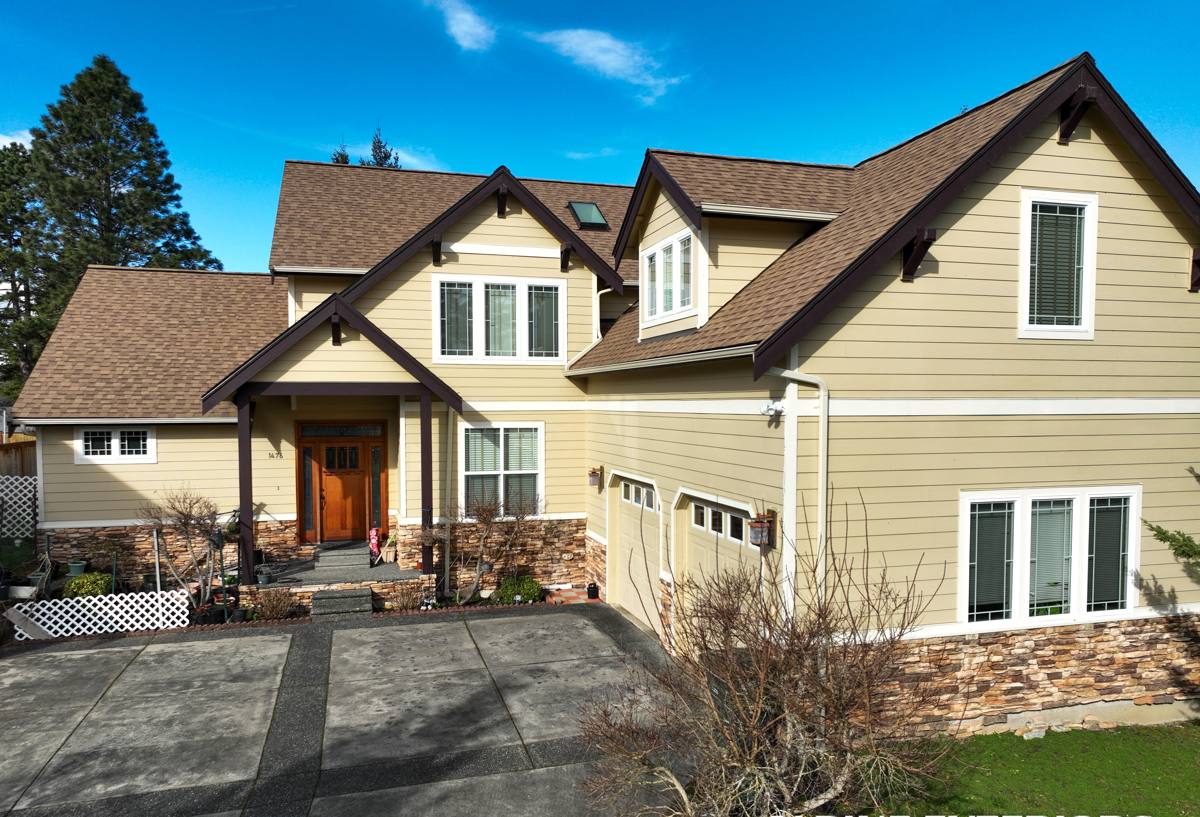
Signs Your Siding Needs Repair — Not Just a Look-Away
Early warning signs
Most siding problems in this area start small and quiet. Homeowners often don't notice until the damage has already spread behind the surface.
- Soft or spongy spots when you press on a siding panel or board, especially near the bottom courses or around windows
- Persistent moss or algae staining that keeps returning after cleaning, particularly on north-facing or shaded walls
- Cracked, bubbling, or peeling paint that reappears in the same location year after year
- Visible gaps at seams, corners, or trim where caulk has shrunk or pulled away
- Discoloration or dark streaking below window sills, which usually points to water tracking down the wall
Signs that need attention now
Some issues can't wait for a routine maintenance pass. Warped or buckled panels, visible rot, siding that's separated from the wall, or a musty smell inside near an exterior wall are all signals that moisture has already gotten past the siding and into the structure. Waiting on these usually means a bigger repair bill later, and sometimes hidden framing damage.
Why This Particular Area Complicates Siding Repair
Wooded, shaded lots and moss season
A lot of properties in California Creek sit under mature tree cover, which is great for privacy and shade but keeps north- and east-facing walls damp far longer than open lots nearby. That extended dampness is exactly what moss and algae need to take hold, and once organic growth is established on siding, it holds moisture against the surface even between rain events. Repairs on these walls have to account for that ongoing exposure, not just fix the visible damage.
Open and waterside exposure
Properties with more open exposure toward Drayton Harbor or Semiahmoo Bay deal with a different problem: wind-driven rain that gets pushed sideways into seams, trim, and fastener points that were never designed to take water head-on. Salt air also accelerates corrosion on exposed fasteners and metal flashing, which is often the real reason a siding repair keeps failing in the same spot — the fastener or flashing underneath gave out before the siding itself did.
Because California Creek has both of these conditions within a few miles of each other, we don't treat every repair the same way. A shaded, moss-prone wall and a wind-exposed wall near the water need different fixes even when the visible damage looks similar.
What a Correct Siding Repair Actually Involves
A lot of "siding repair" in this region is really just a cosmetic patch — caulk over a gap, a fresh coat of paint over a stain, a panel screwed back down without checking what's behind it. That kind of fix might look fine for a season, but it doesn't address the moisture path that caused the problem, and the same issue tends to come back within a year or two, often worse.
| Patch Job | Correct Repair |
|---|---|
| Caulks over visible gaps without checking for trapped moisture | Opens the area to inspect for water intrusion, rot, or damaged sheathing before closing it up |
| Paints over staining to hide it | Identifies the moisture source and corrects drainage or flashing so staining doesn't return |
| Reuses existing fasteners and flashing | Replaces corroded fasteners and damaged flashing with materials suited to salt-air exposure |
| Matches color by eye | Uses manufacturer color-matched or factory-finished material for a consistent, lasting match |
| Addresses only the damaged panel | Checks adjacent panels and seams for early-stage damage that hasn't surfaced yet |
A correct repair starts with removing the damaged material, not covering it. That's the only way to know whether the underlying sheathing, house wrap, or framing has been affected, and it's the difference between a repair that lasts and one that's a temporary cover-up.
Repair vs. Replacement: How We Make the Call
Not every siding problem in California Creek means a full re-side, and we won't tell you it does. The right call depends on how much of the wall is affected, how old the existing siding is, and whether the damage is isolated or spreading.
| Factor | Usually Points to Repair | Usually Points to Replacement |
|---|---|---|
| Extent of damage | Limited to a small area, one wall, or a handful of panels | Spread across multiple walls or a large percentage of the exterior |
| Underlying structure | Sheathing and framing are sound once opened up | Rot or moisture damage has reached the structure in multiple areas |
| Age of existing siding | Siding is relatively young and otherwise in good condition | Siding is near or past its expected service life |
| Material availability | Matching material or color is available | Discontinued product or no reasonable match exists |
We'll always give you a straight answer here. If a repair will genuinely hold up, we'll recommend it — there's no reason to sell a full re-side when a targeted fix solves the problem.
What We Repair With — and Why We Standardized on One Material
Our company installs and repairs with James Hardie fiber cement siding exclusively. We don't install vinyl, LP SmartSide, primed wood, or other fiber cement brands, and that standard applies to repair work too. When we patch into an existing wall or replace a damaged section, we use James Hardie product matched to your existing line and ColorPlus factory finish wherever possible, because a repair is only as good as how well it performs — and blends in — over the next decade.
The reason we hold this line is straightforward: fiber cement that's engineered and factory-finished to a consistent standard behaves predictably in this climate. It doesn't absorb moisture the way wood-based products can, it isn't prone to the expansion and contraction issues that show up with some vinyl products in temperature swings, and the factory finish holds color better than field-applied paint — which matters a great deal when you're trying to match a repair into existing siding without a visible patch line. For a repair specifically, that consistency is what keeps a fix from standing out or failing early.
Our Siding Repair Process for California Creek Homes
1. On-site assessment
We start by inspecting the damaged area and the surrounding wall, not just the spot you called about. Given how often moisture problems in this area extend past what's visible, we check adjacent panels, trim, and flashing before scoping the job.
2. Honest scope and estimate
You'll get a clear explanation of what we found, whether it's a repair or something larger, and a written estimate before any work starts. No pressure, no upsell to a full replacement unless the damage genuinely warrants it.
3. Removal and inspection behind the siding
We remove the damaged material and check the sheathing, house wrap, and framing underneath. This step is what separates a real repair from a cosmetic patch.
4. Correct the moisture path first
Before any new siding goes on, we address the actual cause — damaged flashing, a failed sealant joint, poor drainage, or a fastener that let water in. Fixing the siding without fixing this just resets the clock on the same problem.
5. Install and finish
New James Hardie material goes in, matched to your existing product line and finish as closely as possible, with fasteners and flashing suited to the salt-air and driving-rain exposure common in this area.
Why Hiring a Crew That Already Works in California Creek Matters
Siding repair here isn't the same job as siding repair twenty miles inland. A crew that hasn't worked this area might not think to check fastener corrosion caused by salt air, or might not recognize how much longer a shaded wall stays wet after a storm compared to an open one. We work in Blaine and the surrounding Whatcom County communities regularly, so we're not learning the local conditions on your project — we already know what this stretch of coastline and its wooded lots do to exterior materials, and we scope repairs accordingly.
That local familiarity also means fewer surprises during the job. We know which product lines and colors are common in this area, which speeds up sourcing a matching repair, and we understand the permitting and inspection expectations in Whatcom County for exterior work.
After the Repair: Keeping It From Happening Again
A good repair should buy you years, not months. A little seasonal attention goes a long way in this climate, especially for homes with shaded walls or exposure toward the water.
- Rinse moss and algae off siding before it builds up thick enough to hold moisture against the surface
- Trim back tree branches and vegetation that keep a wall shaded and damp longer than necessary
- Walk the exterior once a year and check caulk joints around windows, doors, and trim for cracking or shrinkage
- Keep gutters and downspouts clear so water isn't overflowing directly onto siding below
- Address small staining or soft spots right away instead of waiting for them to spread
If you're seeing signs of trouble on your siding in California Creek, we're happy to take a look and give you a straight assessment — no pressure, no inflated scope. Fill out the form below for a free estimate and we'll get back to you to schedule a time to come out.