 Blaine Roofing
 Blaine Harbor Is a Different Exposure Than the Rest of the City
Blaine has a lot of variation in how hard its climate hits a house, and the homes closest to the harbor sit at the far end of that range. A house a few blocks inland gets weather in bursts — a windy afternoon, a rainy week, a cold snap. A house near the harbor gets salt air and moisture as a background condition that barely lets up, with marina traffic, moored boats, and open water adding a steady layer of dampness that inland streets don't deal with in the same way. That's not a reason to avoid building or re-siding here — it's a reason to treat the installation differently than a standard inland job.
This page is specifically about siding installation for homes in and around Blaine Harbor — new construction and full re-siding, not spot repair — and what changes about that work this close to open water. We install James Hardie fiber cement exclusively, and everything below assumes that system, since it's the only one we install to spec on homes in this area.
A Concentrated Version of Blaine's Coastal Conditions
Salt air, driving rain, and a long moss season affect the whole city, but the harbor concentrates all three. Salt-laden air off the water doesn't come and go with the tide — it's a near-constant presence on walls facing the marina. Rain arrives with wind behind it more often here than on more sheltered inland lots, forcing water sideways into joints and seams instead of letting it run straight down. And the extra humidity off the water keeps moss and algae conditions favorable for more of the year than a drier, more sheltered site would see.
Older Homes and What's Already Behind the Siding
A fair number of homes near the harbor were built well before current water-resistive barrier and flashing standards were common practice. That matters for a re-side: what's actually behind the existing siding — the sheathing condition, whether a barrier is present at all, how old flashing was detailed — is often an unknown until tear-off starts, and it's worth going in expecting to find something that needs addressing rather than assuming the wall underneath matches modern assumptions.
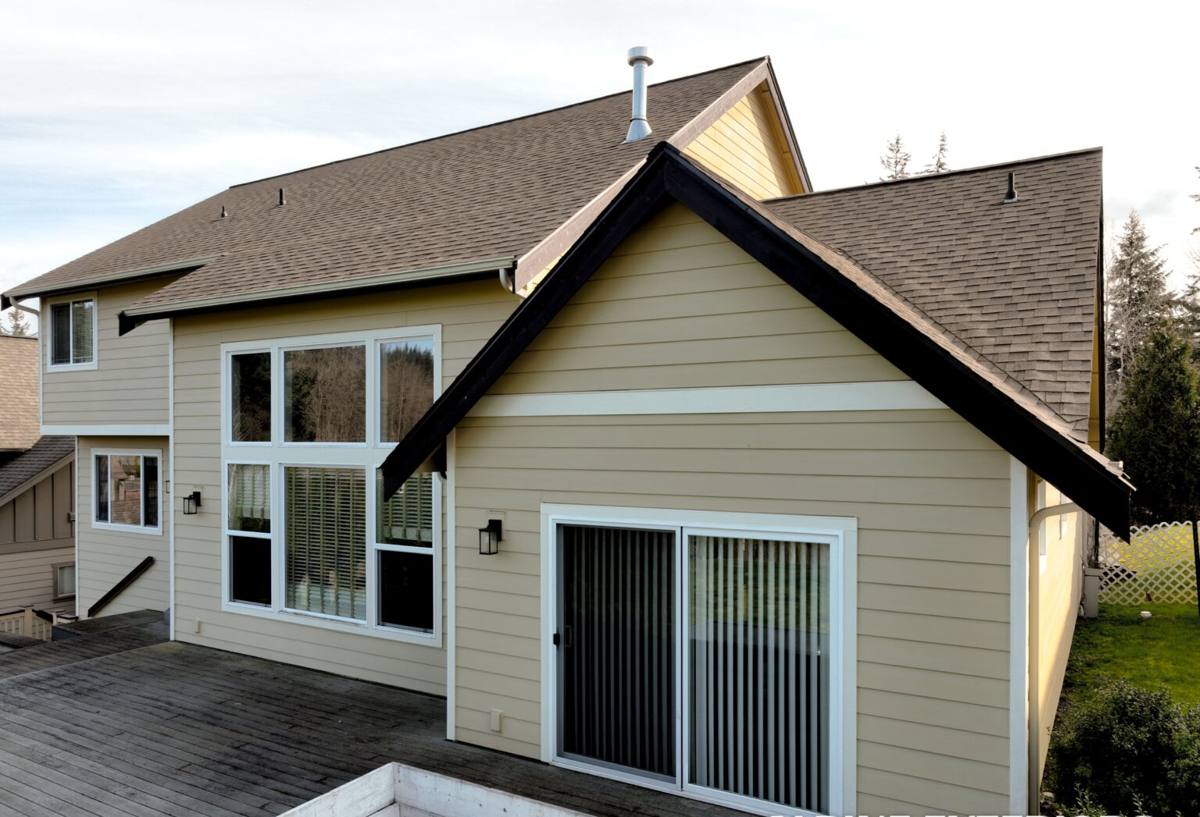
What the Harbor's Climate Actually Does to a Wall
Salt Air as a Constant, Not a Storm Event
On inland Blaine lots, salt exposure is a real but intermittent factor. On a harbor-facing wall, it's closer to continuous. That accelerates corrosion on fasteners, flashing, and trim hardware faster than standard-grade material is built to handle, and it does it on every wall facing the water, not just the ones that catch an occasional storm.
Wind-Driven Rain Off the Water
Open water in front of a house means less wind buffering than an inland lot with trees or neighboring structures in the way. Rain gets pushed into panel joints, window flashing, and trim seams with more force and more regularity. The water-resistive barrier underneath the siding — how carefully it's lapped and taped at every seam and penetration — ends up doing more of the real work here than the visible siding material itself.
Fog, Humidity, and a Long Moss Season
Marine fog and generally higher humidity near the harbor keep walls damp longer after a rain event than they'd stay damp a few blocks inland. That extends the window for moss and algae growth across most of the year, and it makes clearance, drainage detail, and airflow behind the siding matter more than they would on a drier site.
Why We Install Only James Hardie Fiber Cement Here
We don't install vinyl, LP SmartSide, or cedar on any home we work on, and the reasoning is more pointed on a harbor-facing wall than it is elsewhere. Vinyl can warp and become brittle under sustained heat and cold cycling, and its butt-jointed seams give wind-driven rain more entry points over time. Engineered wood products depend on an intact factory coating to resist moisture; once that coating is compromised at a cut edge or a fastener point, the wood-based core underneath is exposed to exactly the kind of sustained dampness a harbor wall sees. Cedar looks the part on a waterfront home, but it needs ongoing refinishing to keep moisture out, and skipping a cycle in a climate this consistently damp shows up as cupping, splitting, or rot faster than it would on a drier inland lot.
James Hardie fiber cement is non-combustible, doesn't rely on a surface coating to keep moisture out of a wood core, and comes in an HZ5 formulation engineered for exactly this kind of cool, wet, moisture-heavy marine climate. The factory-applied ColorPlus finish is baked on under controlled conditions rather than field-applied, which matters on a wall that's rarely fully dry long enough for site-applied paint to cure evenly. None of that makes the material immune to the harbor's conditions — installation still has to be correct — but it starts from a material that's suited to the exposure instead of one that's working against it from day one.
What a Correct Installation Involves on a Harbor Home
Fastener and Hardware Selection
James Hardie publishes fastener type, spacing, and placement requirements that vary by product line and exposure category. On a harbor-facing wall, that spec has to be followed at the higher end of what's called for, not the minimum — standard-grade fasteners corrode visibly faster this close to salt air, and loosened trim or streaking shows up years before it would inland.
Clearance at Grade, Decks, and Water-Adjacent Structures
Hardie specifies minimum clearance between the bottom of the siding and grade, decks, walkways, and other horizontal surfaces. On waterfront lots, where landscaping, retaining features, or a deck built after the original siding can eat into that clearance over time, checking it — and correcting it where it's been lost — is part of doing the job right, not an optional extra.
Flashing and Sealant at Every Penetration
Windows, doors, vents, and any fixture that interrupts the siding plane is a place water can get behind the cladding if it's flashed or sealed incorrectly. This is the least visible part of the job and the part that decides whether a wall stays dry behind the siding for decades or starts trapping moisture within a few wet seasons — and on a wall facing open water, the margin for error is smaller.
Field Cuts, Sealed On the Spot
Every panel cut on site — around a window, at a corner, at the end of a run — needs its cut edge sealed or primed per spec before it goes up. Left raw, even briefly, a cut edge is one of the more common places fiber cement actually takes on water, and a damp marine environment shortens how long an unsealed cut can sit before it matters.
Installation Considerations for Tight Waterfront Lots
Harbor-area lots tend to be smaller and more closely spaced than lots further inland, which changes practical parts of the job beyond the wall assembly itself — staging, material storage, and protecting a neighbor's property during tear-off all take more planning on a tight lot than on a spacious inland site. None of that affects the finished wall, but it affects how smoothly the job runs day to day.
| Factor | Why it matters on a Blaine Harbor installation |
|---|---|
| Direct exposure to open water | Walls facing the harbor typically warrant closer attention to flashing, fastener grade, and drainage detail than walls facing away from it |
| Lot size and setback from neighboring homes | Tighter lots require more careful staging, material handling, and debris containment during tear-off |
| Age of the existing structure | Older homes are more likely to need sheathing repair or corrected flashing discovered during tear-off, which adds scope before new siding goes up |
| Access for equipment and material delivery | Narrow waterfront streets or shared driveways can limit how material gets staged and moved on site |
| Product line and finish selection | James Hardie offers multiple panel styles, textures, and ColorPlus finishes at different price points |
Our Process, Step by Step
Exposure Assessment Before Pricing
We look at which walls face the water directly, which sit in more sheltered positions behind the house or neighboring structures, and whether existing moss buildup or staining points to a chronic moisture issue rather than a cosmetic one. That assessment shapes the estimate, not just the schedule.
Tear-Off and an Honest Look Underneath
Old siding comes off and the sheathing gets inspected before anything new goes up. On older harbor homes especially, we'd rather find and address rot, missing barrier, or outdated flashing at this stage than bury it under new siding and let it keep working on the wall unseen.
Weather Barrier and Flashing First
The water-resistive barrier goes on with full overlap and taped seams at every penetration before any flashing or siding covers it. This layer is completely hidden once the job is done, and it's the layer doing most of the real work keeping wind-driven rain out of the wall.
Installation to Manufacturer Spec
Fastening, spacing, and clearance follow Hardie's published requirements as the baseline for every panel, with field cuts sealed as they're made rather than left for later.
Final Walkthrough
We walk the finished job with the homeowner, confirm it matches what was estimated, and cover what maintenance looks like specifically for a wall this close to the harbor.
Maintenance That Protects the Investment After Installation
A correct installation gets a harbor home most of the way to a long-lasting exterior, but a wall exposed to this much salt air and moisture still benefits from basic upkeep that an inland home can skip. A periodic rinse-down of walls facing the water clears accumulated salt film before it has a chance to sit on trim and hardware. A yearly look at fastener heads, trim joints, and caulking catches early corrosion or a failed seal while it's still a small fix. And keeping an eye on moss or algae buildup — and addressing it early rather than letting it establish — keeps the wall drying out properly between wet stretches instead of staying damp continuously.
A Checklist Before Considering an Installation Done
Whether you're evaluating our work or getting a second opinion, these are reasonable things to confirm on a harbor-area siding job:
- Fasteners and hardware rated for coastal or marine exposure on every wall facing the water
- Documented clearance between the bottom of the siding and grade, decks, and any water-adjacent structures
- Flashing visible and properly lapped at every window, door, and penetration before siding covers it
- All field-cut edges sealed or primed, none left raw
- A continuous, properly lapped water-resistive barrier underneath the siding
- Sheathing inspected and any rot or damage addressed before new siding goes up, not buried under it
- A final walkthrough where the crew explains the work, not just an invoice
Why a Crew That Already Works Blaine Harbor Matters
Installation quality on paper and installation quality on a specific wall aren't always the same thing, and the gap shows up fastest in a demanding waterfront environment. A crew that regularly works on homes this close to the harbor has already made the judgment calls that matter here — how much fastener grade to specify on a direct water-facing wall, how to stage material and protect neighboring property on a tight lot, and which older-home surprises during tear-off are common enough to plan for instead of treat as a change order every time. That familiarity comes from doing this specific work in this specific place repeatedly, not from applying a generic installation checklist to a harbor lot for the first time.
If you're planning new siding for a home near Blaine Harbor, or want a straightforward second opinion on an existing installation, we're glad to take a look. Reach out using the form below for a free, no-pressure estimate.