 Blaine Roofing
 Building New in Birch Point? Get the Windows Right the First Time
New-construction windows are a different job than a replacement. There's no old frame to work around, no compromise dictated by an existing rough opening — the window gets installed directly into open framing, tied into the weather-resistive barrier, and flashed before siding ever goes on. Done right, that's the best possible setup for long-term performance. Done wrong, it's the kind of mistake that doesn't show up for two or three years, and by then it's hidden behind finished walls.
Birch Point sits right up against the water on Blaine's coastline, and that location is exactly why this stage of the build matters so much. Salt-laden air, wind-driven rain off the Strait, and Whatcom County's long, damp moss season put more stress on a window's air and water seals than almost anywhere else in the region. We install new-construction windows on homes in this neighborhood regularly, and the details we get right at framing are the same details that keep those homes dry and comfortable for decades.
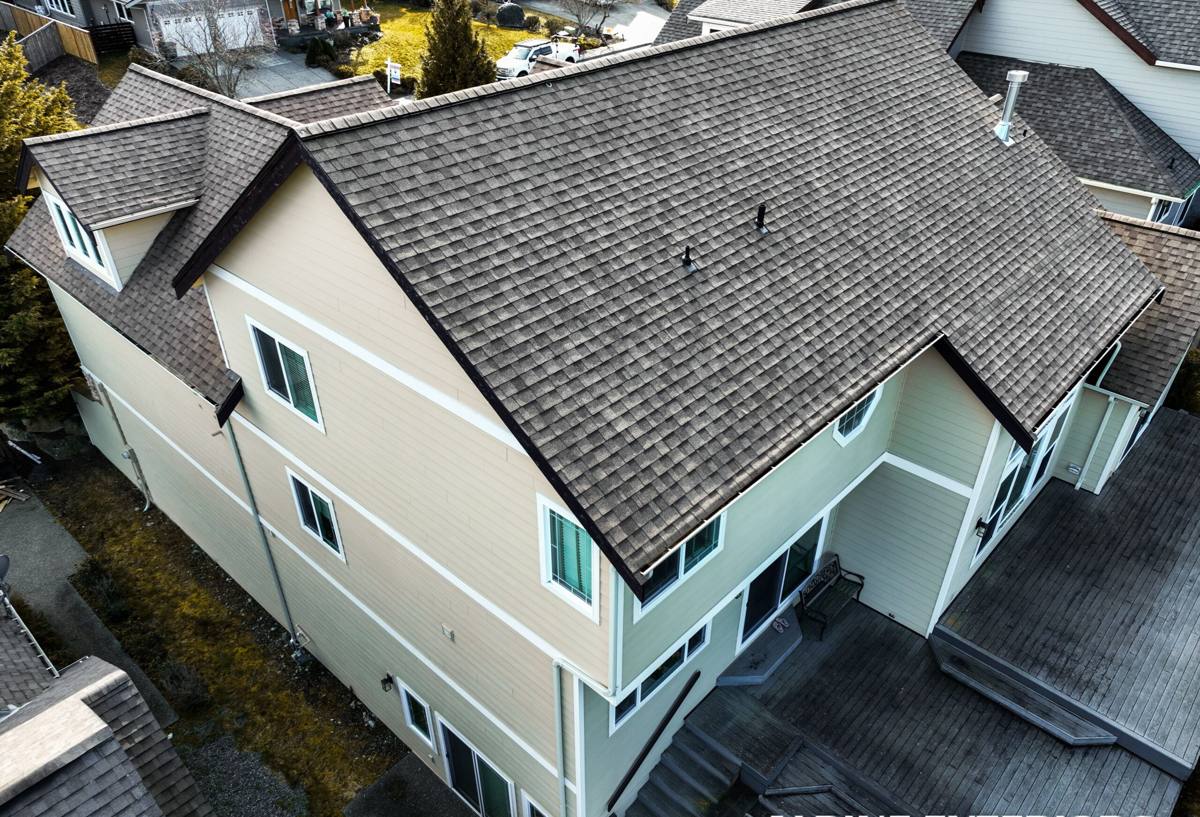
What Birch Point's Climate Actually Does to a Window Assembly
Salt Air
Proximity to saltwater accelerates corrosion on anything with exposed metal — hardware, cladding fasteners, and lower-grade flashing tape can degrade faster here than they would ten miles inland. It's not dramatic, it's cumulative: a slow breakdown of finishes and seals that shows up as pitting, staining, or hardware that starts sticking a few years before it should.
Driving Rain
Wind off the water doesn't just fall as rain — it pushes it sideways, straight into the wall assembly. A window that would perform fine in a sheltered, inland yard can leak in Birch Point if the sill pan, flashing laps, and sealant joints aren't built to shed water that's actively being driven uphill by wind pressure rather than just falling by gravity.
Moss Season
Whatcom County's wet season runs long, and constant moisture without much drying time is what lets moss, algae, and mildew get a foothold — not just on roofs, but on horizontal window sills, trim, and any spot where water sits instead of draining. An assembly that traps moisture instead of shedding it will grow something green in that damp stretch, whether or not there's an actual leak.
None of this means Birch Point needs exotic materials. It means the installation details — the ones nobody sees once the siding is on — have to be done correctly and in the right order, every time.
What a Correct New-Construction Window Install Involves
This is where the job is actually won or lost. The window unit itself matters, but the water management system around it matters more.
- Sill pan flashing — a sloped, sealed pan under the rough opening that catches any water that gets past the window and directs it back outside, not into the wall cavity.
- Proper shingle-lap sequencing — flashing and weather-resistive barrier layers installed so every layer overlaps the one below it, so water always drains down and out, never behind the previous layer.
- Correct fastening and shimming — the unit set plumb, level, and square, with shims at the right load points so the frame doesn't rack or bind over time.
- Continuous, compatible sealant joints — sealants and tapes chosen to actually bond to the specific WRB and cladding being used, not just whatever's on the truck.
- Back-dammed and end-dammed sills — details that stop water from migrating sideways or backward under wind pressure instead of just running off the front.
- Insulation and air-sealing around the rough opening — gaps packed correctly so the window isn't a cold spot or a condensation point once the home is closed in.
Skip any one of these steps and the window can still look perfect from inside the finished room. The failure shows up later, in the wall, where it's expensive to trace and fix.
Choosing Frame Materials for a Waterfront-Adjacent Property
There's no single "best" window material — the right choice depends on budget, exposure, and how much upkeep the homeowner wants to take on. For a property near Birch Point's salt air and rain exposure, here's how the common options generally compare:
| Frame Material | Salt Air Behavior | Moisture Behavior | Maintenance |
|---|---|---|---|
| Vinyl | Doesn't corrode; UV and coastal exposure can affect finish over many years | Won't rot; performance depends entirely on installation quality | Low — occasional cleaning |
| Fiberglass | Very stable in salt air; minimal expansion/contraction | Excellent moisture resistance | Low |
| Aluminum-clad wood | Exterior clad resists weather well; interior wood needs protection from any interior condensation | Good if sealed and flashed correctly | Moderate |
| Solid wood | Attractive but most vulnerable to sustained moisture without diligent upkeep | Requires consistent maintenance to prevent rot | Highest |
We don't push homeowners toward the priciest option — we tell you honestly what a given material will ask of you in upkeep over the next 15-20 years in this specific location, and let you weigh that against the look and budget you want.
Our New-Construction Window Process
- Plan review — we look at window schedules, rough opening sizes, and elevations before framing is finalized, so nothing gets caught mid-build.
- Rough opening verification — checked for square, level, and correct sizing before any window goes near the opening.
- Sill pan and flashing installation — built out to the specifics of the cladding and WRB system being used on that home.
- Window setting — units shimmed, fastened per manufacturer spec, and checked for plumb, level, and proper reveal.
- Perimeter sealing and lamination — flashing tape and sealant applied in the correct shingle-lap order so the whole assembly drains outward.
- Interior air sealing — rough opening gaps insulated and sealed before drywall closes the wall.
- Final inspection — every unit checked for operation, seal, and squareness before we sign off.
We coordinate directly with the general contractor or builder on timing, since window installation has to happen at exactly the right point in the framing sequence — too early or too late, and the water management details don't line up correctly with the rest of the wall assembly.
Mistakes We See on Coastal New-Construction Jobs
Most of these aren't due to bad intentions — they're due to crews that don't regularly work this close to the water and don't build in the extra margin it calls for.
- Flashing tape applied in the wrong order, so laps direct water inward instead of outward.
- Sealant used as a substitute for proper flashing instead of a backup to it.
- Sill pans skipped entirely on the assumption that "the window itself is watertight."
- Fasteners or hardware chosen without accounting for salt-air corrosion over time.
- Rough openings framed slightly out of square, forcing the window to be shimmed unevenly and stressed at the corners.
Every one of these is invisible on install day and expensive to trace once trim and siding cover it up.
A Checklist Before You Sign Off on Window Installation
Whether you're a homeowner or a builder overseeing subcontractors, these are worth confirming before drywall closes the walls:
- Sill pans installed and sloped to drain outward, not just flat sealant beads
- Flashing tape sequenced in proper shingle-lap order, verified layer by layer
- Window unit checked plumb, level, and square — not just "close enough"
- Sealant and tape products confirmed compatible with the specific WRB and cladding in use
- Rough opening insulated and air-sealed on the interior side before cover-up
- Hardware and fasteners rated for coastal/marine exposure where applicable
- Manufacturer installation instructions followed for that specific window line
Why a Crew That Already Works Birch Point Matters
Whatcom County covers a wide range of exposure conditions, from sheltered inland lots to homes sitting right at the edge of the Strait of Georgia. A crew that mostly works inland jobs isn't necessarily used to building in the extra margin that salt air, driving rain, and a long moss season demand. We work in and around Blaine and Birch Point regularly, which means we're not guessing at how much wind-driven rain a given elevation will see, or which details matter most on a lot with heavy salt exposure — we've built that judgment from doing the work here, on homes with the same conditions yours will face.
That familiarity also shows up in scheduling and coordination. New-construction window installation has to slot into a tight build sequence, and a crew that's worked with local builders and inspectors before tends to move through that stage with fewer surprises.
Cost Factors to Expect
Pricing for new-construction window packages varies by unit count, size, glass package, and frame material — there's no honest flat number to quote without seeing the plans. Generally, the biggest cost drivers are the number and size of openings, the glass performance package (standard dual-pane versus higher-performance coatings), and frame material choice. Labor for correct flashing and sealing is a smaller line item than the windows themselves, but it's the part that determines whether the investment holds up through Birch Point's wet seasons. We'd rather walk through your specific plans and give you real numbers than throw out a broad range that doesn't mean much.
Get a Straight Answer on Your Project
If you're building new in Birch Point and want a window package suited to the site's salt air and rain exposure, we're happy to look at your plans and walk through the options honestly — what fits the budget, what fits the exposure, and what tradeoffs come with each. Reach out for a free, no-pressure estimate using the form below.