 Blaine Roofing
 Windows Built for a Waterfront Neighborhood
Sandy Point sits close enough to the water that its homes deal with a different set of stresses than houses further inland in Whatcom County. Salt-laden air off the Strait, wind-driven rain that comes in sideways during winter storms, and a long, damp moss season that can stretch from fall through spring all put extra demand on a home's windows. A window that would hold up fine in a more sheltered part of Blaine can start showing problems years earlier out here — sticking sashes, foggy glass, soft trim, corroded hardware.
Custom windows for a Sandy Point home aren't just about matching a size or a style. They're about choosing materials, seals, and installation details that are appropriate for a coastal exposure, and installing them in a way that actually keeps water out over the long run, not just on install day. This page walks through what that looks like in practice — what local homes need, what a correct installation involves, and why it matters to work with a crew that already understands this stretch of Whatcom County.
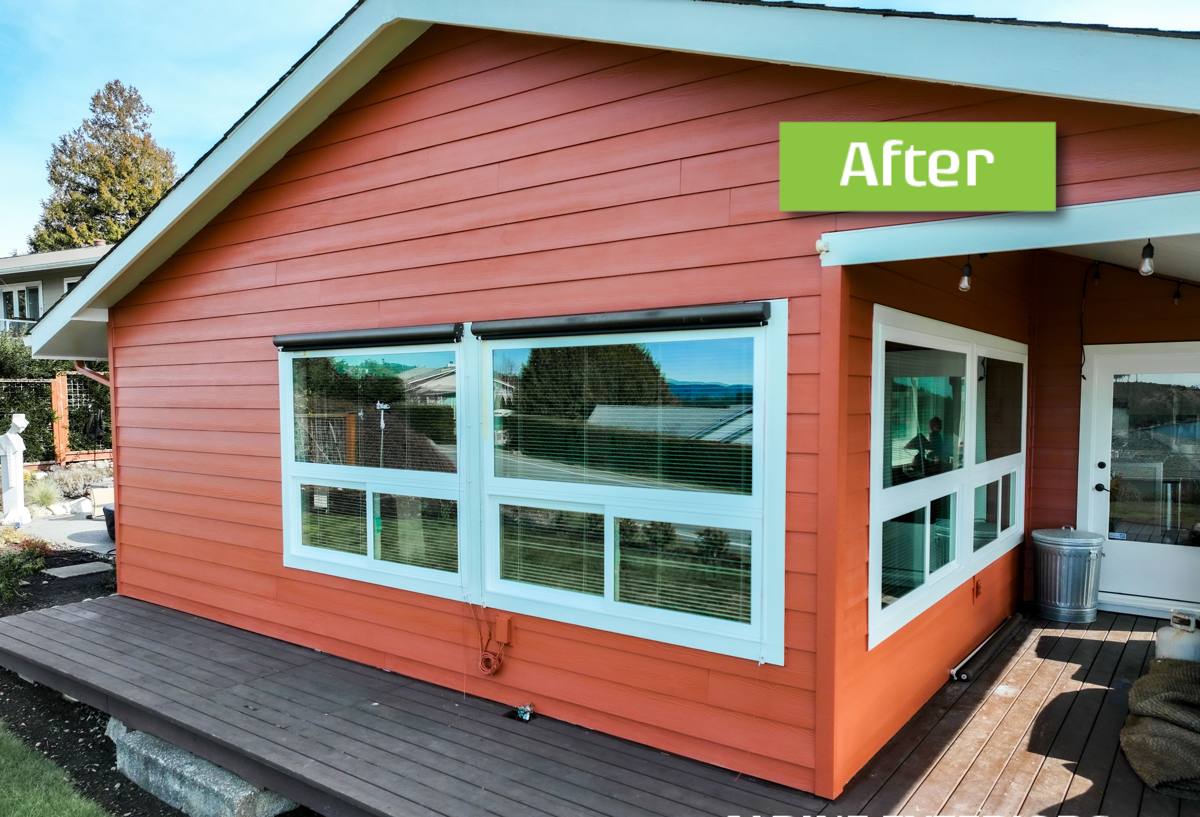
What Salt Air and Driving Rain Actually Do to Windows
It helps to understand the specific mechanisms at work, because they shape almost every material and installation decision that follows.
Salt Air and Corrosion
Airborne salt settles on exterior surfaces and, combined with moisture, accelerates corrosion of metal components — hinges, balance systems, screws, and lesser-grade aluminum or steel hardware. Over time this shows up as stiff or sticking operation, pitted finishes, and hardware that seizes up long before the glass or frame itself has any problem.
Wind-Driven Rain
Storms coming off the water don't just drop rain straight down — they push it horizontally against the building envelope, forcing water into gaps that would stay dry in a calmer setting. This is a test of the window's weatherstripping, sill design, and — just as important — how well the installer flashed and sealed the rough opening. A premium window installed with sloppy flashing will still leak.
Moss Season and Prolonged Dampness
Whatcom County's moss season means long stretches where wood trim, sills, and nearby siding stay damp instead of drying out between rain events. That sustained moisture is what lets rot and mold get a foothold, particularly at horizontal surfaces like sills and at any joint where caulking has failed or wasn't done correctly in the first place.
Choosing Materials That Make Sense for This Exposure
There's no single "correct" window brand or material for every home — it depends on the home's exposure, the homeowner's maintenance preferences, and budget. Here's an honest comparison of the main options we discuss with Sandy Point homeowners.
| Material | How It Handles Salt Air & Moisture | Maintenance | Trade-offs |
|---|---|---|---|
| Vinyl | Won't corrode or rust; performs well in salt air | Low — occasional cleaning | Frame color/finish options more limited than wood; can look less premium on higher-end homes |
| Fiberglass | Very stable in moisture and temperature swings; strong resistance to coastal conditions | Low | Higher upfront cost than vinyl |
| Aluminum (uncoated or standard finish) | Prone to corrosion and pitting near salt air unless heavily coated/anodized | Moderate to high | We typically steer homeowners away from standard aluminum this close to the water unless it's a marine-grade finish |
| Wood or wood-clad | Handsome, but exposed wood needs real upkeep in a damp, salty climate | High — regular painting/sealing | Best reserved for interior-facing or well-protected exposures, or clad exteriors with wood only on the interior side |
For most Sandy Point exposures, we lean toward vinyl or fiberglass frames with corrosion-resistant (often stainless or coated) hardware, and we're candid with homeowners about why: it's less about brand preference and more about not setting them up for hardware and finish problems five years down the road.
What a Correct Installation Actually Involves
The window unit itself is maybe half the equation. The other half is installation detail, and this is where a lot of window problems actually originate — not from a bad window, but from a rough opening that wasn't properly prepared.
Flashing and Water Management
Every opening needs a drainage plane that directs any water that does get past the window back out, not into the wall cavity. That means correctly lapped flashing tape at the sill, jambs, and head, in the right order, integrated with the home's existing weather-resistive barrier — not just caulk smeared around the edges.
Sill Pan Detailing
A sloped sill pan under the window unit gives any incidental water a clear path back outside instead of pooling at the sill. This matters everywhere, but it matters more in a location that takes regular wind-driven rain.
Sealant Selection and Placement
Not all sealants are equal, and placement matters as much as product. We use exterior-grade sealants rated for the movement and moisture exposure the joint will actually see, and we're careful not to seal in a way that traps moisture inside the wall assembly — a mistake that can make things worse, not better.
Shimming and Squaring
A window that isn't shimmed level and square will bind, won't seal evenly against its own weatherstripping, and will wear unevenly at the corners. This is a basic step, but it's one that gets rushed on low-bid jobs.
Glass and Hardware Choices Worth Discussing
Beyond frame material, a few other choices are worth walking through for a Sandy Point home specifically:
- Weatherstripping quality — dual or triple weatherstripping systems handle wind-driven rain better than a single basic seal.
- Hardware finish — stainless steel or heavily coated hardware resists salt-air corrosion far longer than standard-grade fasteners and balance hardware.
- Glass package — a good low-E, argon-filled insulated unit helps with both energy performance and condensation resistance during the wetter, colder months.
- Screen and track material — components that will be handled seasonally (screens, sliding tracks) should be corrosion-resistant, not just the fixed frame.
Our Process for a Sandy Point Window Project
We keep the process straightforward and give homeowners a clear picture of what's happening at each stage:
- On-site assessment — we look at existing window condition, current flashing/sealant state, and any signs of moisture intrusion around each opening before recommending anything.
- Material and product selection — we walk through frame material, glass package, and hardware options suited to the home's specific exposure, not a one-size answer.
- Opening preparation — removal of old units with a close look at the framing and sheathing underneath for any hidden rot or moisture damage before it's covered back up.
- Flashing and sill pan installation — done in the correct sequence, integrated with the existing weather barrier.
- Window installation — shimmed, squared, and fastened to manufacturer specification.
- Sealing and finish work — exterior sealant, interior trim, and a final operational check on every unit.
- Walkthrough — we go over care and operation with the homeowner before we consider the job done.
Signs Your Current Windows May Need Attention
Homeowners often live with small issues for years before addressing them. Here are the signs worth acting on sooner rather than later, particularly in a Sandy Point exposure:
- Sashes that stick, bind, or need extra force to open and close
- Visible corrosion or discoloration on hinges, locks, or balance hardware
- Fogging or moisture between panes of double-pane glass (a sign the seal has failed)
- Soft, discolored, or spongy wood at the sill or surrounding trim
- Persistent drafts felt near the frame during windstorms
- Visible gaps in exterior caulking or sealant around the window perimeter
- Moss or algae buildup on sills and trim that never fully dries out between rains
Any one of these on its own might just need a repair. Several together, especially on a home that's a few decades old, usually points to a broader window replacement conversation being worth having.
Maintenance That Extends Window Life Out Here
Even the right window and a correct installation benefit from basic seasonal upkeep in this climate:
| Task | Why It Matters Here | Frequency |
|---|---|---|
| Rinse frames and hardware with fresh water | Removes accumulated salt residue before it can promote corrosion | A few times a year, more in exposed locations |
| Clear sills and tracks of debris and moss | Keeps drainage paths open so water doesn't pool | Seasonally, especially entering moss season |
| Inspect exterior caulking | Failed sealant is one of the most common entry points for water | Annually |
| Lubricate hardware and balances | Prevents salt-air stiffness from turning into hardware failure | Annually |
| Check for condensation between panes | Early sign of a failed insulated glass seal | Ongoing, visual check |
Why Local Experience with Sandy Point Specifically Matters
A lot of window problems we see in this neighborhood trace back to installations done by crews without a real feel for what this exposure demands — standard flashing details from a subdivision job inland, hardware and materials that were fine for a more sheltered lot, or corners cut on sealant and sill pan work that don't show up as a problem until a few winters of driving rain and salt air have had their say.
Working with a crew that already does this kind of work regularly in Blaine and the surrounding Whatcom County waterfront areas means the flashing sequence, material choices, and hardware selection aren't guesswork — they're based on what actually holds up here, not what holds up in a catalog photo or a calmer part of the county.
Getting Started
If your Sandy Point home has windows that are sticking, showing early hardware corrosion, or just due for an honest look given their age and exposure, we're happy to come take a look. We'll walk the exterior with you, point out anything we see — good or bad — and put together a straightforward estimate with no pressure attached. The form below is the easiest way to get that started.