 Blaine Roofing
 Ferndale's Coastal Climate and What It Does to a Roof
Ferndale sits at the western edge of Whatcom County, close enough to the marine waters of the Salish Sea to catch salt-laden air on windy days, and low enough in elevation to sit under a heavy blanket of cloud cover for much of the year. That combination is hard on roofs in ways that don't always show up right away. Salt air accelerates corrosion on exposed fasteners and metal flashing over time. Driving rain off winter storms pushes water sideways under shingle tabs and around penetrations instead of simply running straight down the slope. And the long stretch of damp, shaded weather from fall through spring gives moss and algae months to establish themselves before a good dry spell ever interrupts them.
None of this means a roof in Ferndale needs to be exotic or over-built. It means the installation has to account for water that doesn't behave the way it does in drier inland climates, and for materials and fasteners that hold up to salt exposure and sustained moisture, not just heat and UV.
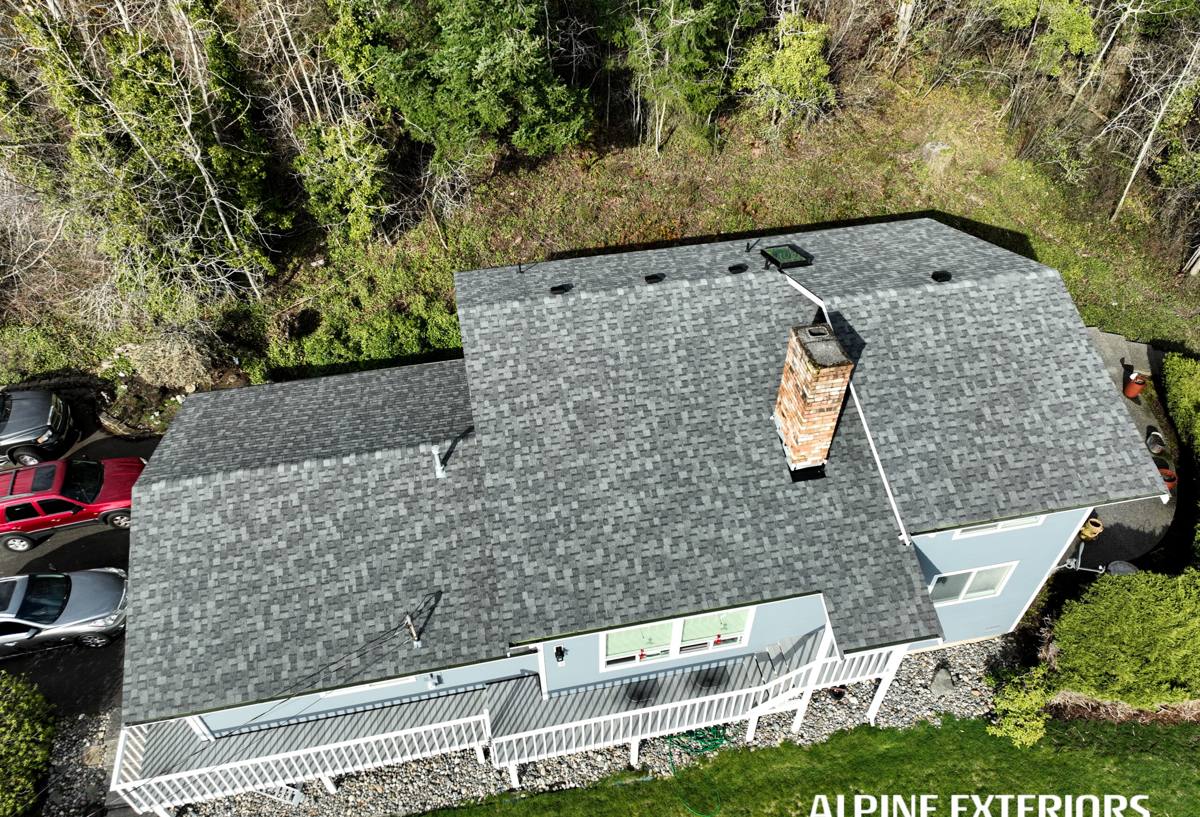
What a New Roof Installation Should Actually Include
"New roof" covers a lot of ground, and the difference between a roof that lasts and one that fails early almost always comes down to what happens underneath the shingles, not the shingles themselves.
Tear-Off and Deck Inspection
A proper installation starts with removing the old roofing down to the deck, not layering over it. That's the only way to actually see the plywood or plank sheathing underneath. In this climate, we routinely find soft or delaminated decking near valleys, chimneys, and eaves — spots where slow leaks go unnoticed for years under an intact-looking shingle surface. Any compromised sheathing gets replaced before anything new goes down; installing new roofing over a soft deck just hides the problem and shortens the life of the new roof.
Underlayment Built for Wet Winters
Standard felt underlayment is a minimum, not a plan. For Ferndale homes we typically recommend synthetic underlayment for its tear resistance and water shedding, paired with self-adhered ice-and-water membrane at eaves, valleys, and around every penetration — chimneys, vents, skylights. That membrane is what keeps wind-driven rain and any wintertime ice damming from finding a way into the deck at a roof's most vulnerable seams.
Flashing Details That Get Skipped
Flashing is where most roof leaks actually originate, and it's also where corners get cut on a rushed install. Step flashing at walls, counter-flashing at chimneys, and properly lapped valley metal all need to be installed in the correct sequence with the underlayment and shingle courses — not caulked on afterward as a shortcut. In salt-influenced air, flashing material matters too; some metals corrode faster than others in this environment, and using the wrong one turns a long-lasting roof into one with early failure points at the flashing.
Balanced Ventilation
A roof deck that can't breathe traps moisture from the inside, which is just as damaging as rain from the outside. Proper installation includes checking that intake (soffit) and exhaust (ridge or box vents) are balanced for the size of the attic. Get this wrong and condensation can rot the deck from underneath even on a roof that never leaks from above.
Matching Materials to Ferndale Conditions
There's no single "best" roofing material — the right choice depends on the home's roof pitch, budget, and how much upkeep the owner wants to do. Here's how the common options perform under Ferndale's particular mix of salt air, rain, and moss pressure.
| Material | Moss/Algae Resistance | Wind & Rain Performance | Typical Local Lifespan |
|---|---|---|---|
| Architectural asphalt shingle | Good with algae-resistant (AR) granules; still benefits from periodic cleaning | Strong when properly nailed and flashed; rated for local wind exposure | 25–30 years |
| Standing seam metal | Excellent — smooth surface sheds moss and debris | Excellent; handles driving rain and wind very well | 40–50+ years |
| Synthetic/composite shake | Good; won't rot like wood shake but still benefits from cleaning | Strong; engineered for wind and moisture resistance | 30–40 years |
We steer most Ferndale homeowners away from traditional cedar shake and bare-minimum three-tab shingles for similar reasons: both hold moisture against the deck longer than this climate rewards, and wood shake in particular takes real, ongoing maintenance to keep moss from taking hold. That's not a knock on either product in general — it's a judgment call based on what holds up best under this area's rainfall and moss pressure with the least amount of upkeep for the homeowner.
Roof Pitch, Shade, and Orientation
The same material can perform differently on two roofs a mile apart. A steep, sun-exposed south-facing roof sheds water fast and dries between rains; a low-pitch roof tucked under tree cover on a north-facing slope holds moisture much longer and is where we spend the most time thinking about moss prevention. Part of an honest installation quote is looking at your specific roof's pitch and exposure, not just applying a standard spec to every house.
Moss and Algae Prevention Starts During Installation, Not After
By the time moss is visible on a roof, it's already been growing on the surface and holding moisture against it for a while. A new install is the best opportunity to build in prevention rather than treat it as a maintenance chore later. That includes installing zinc or copper strips near the ridge on shaded or north-facing slopes, where rain washing over the metal releases ions that discourage moss and algae growth down the field of the roof. It also means choosing algae-resistant shingles where asphalt is the material of choice, and being upfront with the homeowner about which parts of the roof — usually the shaded sections under overhanging trees — will need more attention over time regardless of material.
Keeping gutters and valleys clear matters just as much as anything installed on the roof surface itself. Trapped leaves and debris hold water against shingles and give moss spores a place to establish, so we talk through gutter maintenance as part of the install conversation, not as an afterthought once the crew has left.
Our Installation Process
- Inspection and estimate. We walk the roof and attic, check the deck where accessible, and put together a written scope and estimate — no guessing from the ground or from a photo.
- Material selection. We go over the tradeoffs for your roof's pitch, sun/shade exposure, and budget so the choice fits the house, not just the price point.
- Permitting. We handle the required City of Ferndale or Whatcom County permit for the scope of work before anything starts.
- Tear-off and deck repair. Full removal of old roofing, deck inspection, and replacement of any soft or damaged sheathing before anything new is installed.
- Underlayment, flashing, and roofing installation. Ice-and-water membrane at vulnerable areas, synthetic underlayment across the field, correctly sequenced flashing, and the roofing material itself.
- Ventilation check. Confirming intake and exhaust venting are balanced for the attic before calling the job done.
- Cleanup and walkthrough. Magnetic sweep for stray fasteners, full site cleanup, and a walkthrough so you know exactly what was done and what maintenance to expect going forward.
What Affects the Cost of a New Roof in Ferndale
Every roof is priced from its own specifics, but the main cost drivers are consistent from house to house:
- Roof size and pitch — steeper roofs take longer and require more safety setup
- Number of layers to tear off — some homes have more than one roof layer to remove
- Deck repair needed — soft or rotted sheathing found during tear-off adds material and labor
- Material choice — asphalt, metal, and composite carry different material and labor costs
- Roof complexity — valleys, dormers, chimneys, and skylights all add flashing work
- Access — steep sites, limited driveway access, or multi-story homes affect setup and labor time
Because of how much these factors vary, we don't quote a new roof over the phone or from a satellite photo. A written estimate after an actual roof and attic inspection is the only honest way to price the job, and it costs nothing to get one.
Why It Matters to Hire a Crew That Already Works Ferndale
A crew that works this part of Whatcom County regularly already has a feel for how local wind and rain patterns hit different roof orientations, which streets and neighborhoods sit in enough shade to need extra moss prevention, and how the local permitting process works so a project doesn't stall waiting on paperwork. That familiarity shows up in small decisions — which flashing metal holds up best in salt-influenced air, how much ice-and-water membrane a particular roof design calls for, where ventilation tends to run short on homes built in a certain era — that a crew passing through the area for a single job is more likely to standardize away or get wrong.
Being local also means accountability doesn't end when the crew packs up. If a question comes up two years after the install, you're calling a company that's still working in the neighborhood, not chasing down a contractor that only passed through once and moved on.
Signs a Ferndale Home Needs a New Roof, Not Another Repair
Not every roof problem calls for full replacement, but there's a point where repeated repairs stop making financial sense. Signs it's time to talk about a new roof instead of another patch:
- Shingles that are curling, cracking, or losing granules across large sections, not just one spot
- Daylight visible through the roof deck from inside the attic
- Soft or spongy spots underfoot when walking the roof
- Moss or algae covering large areas rather than a few shaded patches
- Repeated leaks in different locations after previous repairs
- A roof approaching or past its material's expected lifespan, especially heading into fall storm season
If even a couple of these sound familiar, it's worth having a roof looked at before the next round of fall storms rather than after.
If you're weighing a new roof for a Ferndale home, we're happy to take a look and walk you through what your specific roof needs — no pressure, no obligation. Use the form below to request a free estimate.