 Blaine Roofing
 Why Lynden Roofs Need to Be Built for the Weather They Actually Get
Lynden sits a little inland from the water, but the weather that rolls through Blaine and the rest of Whatcom County doesn't stop at the city limits. The same systems that push salt-tinged air and driving rain off the Salish Sea reach Lynden too, usually after picking up extra moisture over farmland and tree cover on the way. The result is a roofing environment that's wetter, for longer stretches of the year, than most manufacturers' installation guides assume.
Add in a moss season that can run from fall through spring, and you've got a combination that punishes roofing that wasn't detailed correctly at the seams, valleys, and penetrations. Metal roofing can handle this climate very well — but only when it's installed with methods that account for how water, wind, and organic growth actually behave on a Whatcom County roof, not just how they behave in a showroom.
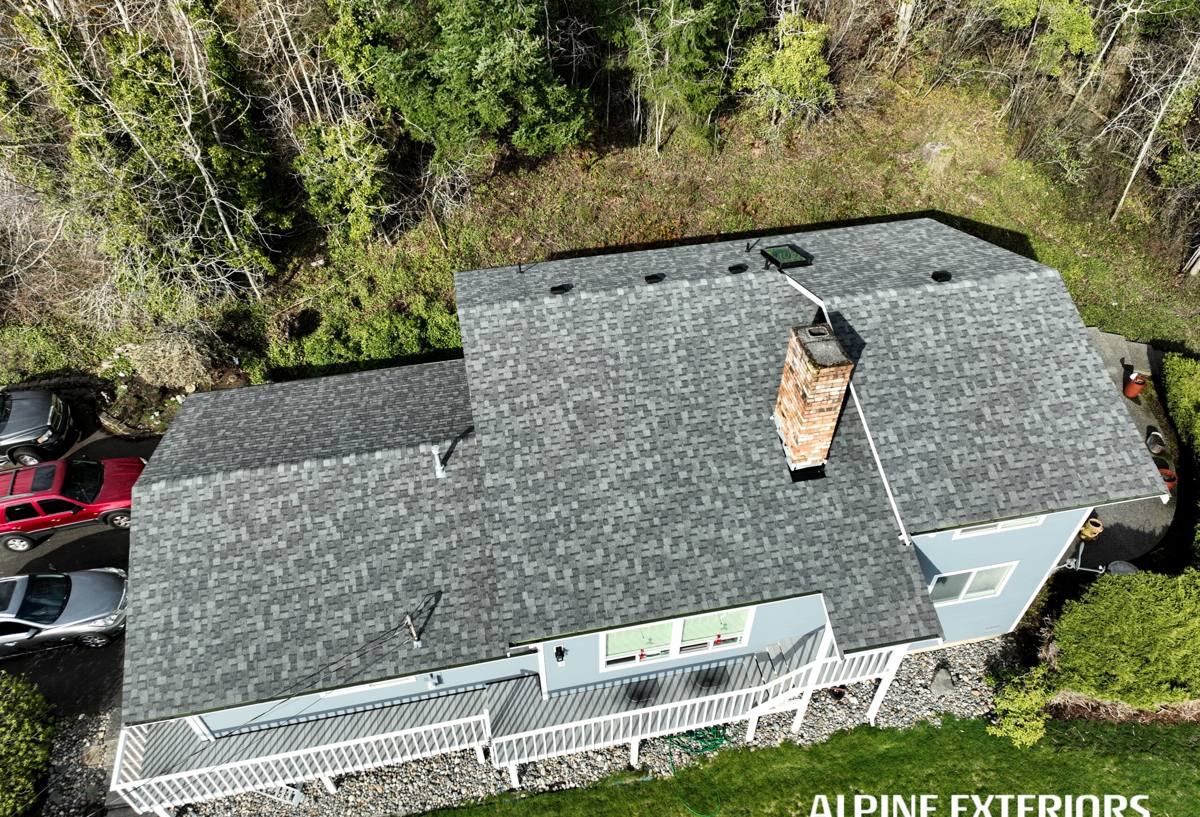
What Metal Roofing Needs to Do Differently Here
Shedding Water Fast, Not Just Eventually
Driving rain in this area rarely falls straight down. Wind pushes it sideways and up under laps, ridge caps, and flashing that were installed to a minimum-code standard instead of a regional one. A metal roof's biggest advantage — its steep, slick surface and long unbroken panel runs — only pays off if the underlayment, fastening pattern, and flashing details are built to back it up when wind-driven rain tests every seam.
Resisting Moss and Organic Buildup
Moss doesn't take hold on metal the way it does on shingles, but it can still build up on a metal roof in shaded valleys, around chimneys, and anywhere debris collects and holds moisture against the panel. Left alone through a long wet season, that buildup can trap water against fasteners and finish coatings. Panel profile, valley design, and how clean the roof is at installation all affect how much of a problem this becomes over time.
Standing Up to Salt-Influenced Air
Even away from the immediate coastline, airborne salt content can accelerate corrosion at fasteners, cut edges, and any spot where a protective coating has been nicked or scratched during handling. The fix isn't complicated, but it does require using the right fastener and flashing metals together, sealing cut edges properly, and not cutting corners on coating quality just to save a little on material cost.
Choosing the Right Metal Roofing System
Not every metal roof is the same product wearing a different color. The three systems homeowners in this area typically consider each have real trade-offs worth understanding before you commit.
| System | How It's Fastened | Typical Lifespan | Best Fit |
|---|---|---|---|
| Standing seam | Concealed clips, no exposed fasteners on the field | 40-60+ years | Homeowners who want the fewest long-term maintenance points and the cleanest look |
| Exposed-fastener panel | Screws driven through the panel face | 25-40 years | Budget-conscious projects, outbuildings, or roofs with simpler geometry |
| Stone-coated steel | Concealed or clipped, depending on profile | 40-50+ years | Homeowners who want a shingle or tile look with metal's underlying durability |
Standing seam has become the most common recommendation for homes in wetter, moss-prone areas because it has no exposed fasteners to work loose or leak over decades of expansion and contraction. Exposed-fastener panels can still perform well here, but the fasteners themselves need to be checked and occasionally re-torqued or replaced over the roof's life — a maintenance item worth factoring in, not a reason to rule the product out.
What a Correct Installation Actually Involves
The panels are the visible part of a metal roof, but most leaks and premature failures trace back to what's underneath and around them, not the panel material itself.
- A high-temp, self-adhered underlayment at eaves, valleys, and any low-slope transition — standard felt isn't enough backup for this much sustained moisture
- Fastener and flashing metals that are compatible with the panel metal, so you don't get galvanic corrosion where two different metals touch
- Closed-cell foam or metal closures at ridge and eave to keep wind-driven rain and debris from working up under the panel
- Properly sized and placed roof ventilation, since metal roofs shed heat and moisture differently than shingles and can trap condensation if venting is an afterthought
- Valley details built for volume, not just flow — Whatcom County storms can dump a lot of water into a valley in a short window
- Clean panel cuts with sealed edges, especially anywhere salt-influenced air can reach exposed steel
Skipping or rushing any one of these doesn't usually cause an immediate problem. It shows up two, five, or ten years later as a leak that's hard to trace back to its real cause — which is exactly why we treat these steps as non-negotiable rather than optional upgrades.
Our Process for a Lynden Metal Roof Project
1. On-Site Assessment
We look at your existing roof structure, current roofing material, ventilation, and any trouble spots — valleys, chimneys, skylights — before recommending a system. A metal roof that's wrong for your roof's geometry will underperform no matter how well it's installed.
2. Straightforward Proposal
You get a clear breakdown of the system, underlayment, flashing plan, and ventilation approach — not just a panel color and a total. If tear-off is needed, we'll say so and explain why.
3. Tear-Off or Overlay Decision
Metal can sometimes go over an existing roof in the right conditions, but we don't default to that option just because it's faster. If your decking has hidden moisture damage from years of moss and standing water, that needs to be addressed first — covering it up doesn't fix it.
4. Installation
Underlayment, flashing, and venting go in before a single panel is fastened. Panels are cut, fitted, and fastened to the manufacturer's spec and the region's actual weather demands, not just the minimum required by code.
5. Final Walkthrough
We walk the roof and the ground-level sightlines with you, confirm flashing and trim details, and make sure you understand basic upkeep before we consider the job finished.
What Affects the Cost of a Metal Roof in This Area
Metal roofing costs more up front than asphalt shingles, and the price range on any given home depends on a handful of factors that matter more here than in drier climates.
| Factor | Why It Matters Locally |
|---|---|
| Panel system chosen | Standing seam costs more than exposed-fastener panel but needs less long-term maintenance in a wet climate |
| Roof complexity | More valleys and penetrations mean more flashing work, and flashing is where wet-climate roofs typically fail first |
| Tear-off vs. overlay | Moss and moisture retention over time can hide deck damage that only shows up once old roofing is removed |
| Ventilation upgrades | Older homes often need ventilation improvements to pair correctly with a metal roof's different heat and moisture behavior |
| Underlayment grade | A wetter climate calls for higher-grade underlayment at eaves and valleys, which adds material cost but reduces leak risk |
We'd rather walk you through these factors on your specific roof than quote a number that doesn't hold up once we're actually up there.
Signs Your Roof Is Ready for a Metal Roofing Conversation
You don't need to wait for an active leak to start thinking about your roof. Some early signs worth a look:
- Heavy moss growth returning within a season or two of cleaning
- Granule loss or bald patches on an aging asphalt shingle roof
- Daylight or staining visible in the attic near valleys or chimneys
- Rusting or loosening fasteners on an older metal or exposed-fastener roof
- Consistently high moisture or musty smell in attic spaces after wet weeks
- Curling, cracking, or missing shingles after wind events
Why It Matters That We Already Work in This Area
A metal roof installed to a generic national spec can still underperform on a Whatcom County home if the crew installing it hasn't dealt with this region's rain patterns, moss cycles, and salt-influenced air on other local roofs. We size ventilation, valley capacity, and flashing details based on what actually holds up on homes in and around Blaine and Lynden — not just on what a manufacturer's manual assumes for an average climate.
That local familiarity also shows up in smaller, practical ways: knowing which roof orientations on a given lot tend to hold moss longest, which valley designs handle heavy seasonal rain without backing up, and where past roofs in the area have failed early because a detail got skipped. None of that comes from a product brochure — it comes from working on roofs here, season after season.
If you're weighing metal roofing for a home in Lynden, we're glad to take a look and walk you through what your specific roof would need. Reach out for a free, no-pressure estimate using the form below.