 Blaine Roofing
 Composite Decking in Lynden: What This Climate Actually Requires
Lynden sits inland in the Nooksack River valley, in the northern reaches of Whatcom County near the Canadian border. It doesn't take the direct salt spray that our waterfront service areas deal with, but it still sits inside the same marine-influenced weather pattern that shapes exterior work across this whole corner of Washington. Rain here is frequent, often driven sideways by wind rather than falling straight down, and the mild, damp stretches between storms give moss and algae a long season to take hold on any surface that stays shaded or wet. A deck built without that specific combination in mind — salt air, driving rain, and a moss season that runs most of the year — tends to show problems faster than homeowners expect, usually starting with the framing underneath rather than the decking surface itself.
Blaine Roofing Co works on roofs, siding, windows, and decks, and we treat a deck build the same way we treat a roof: as a system where the visible surface is only part of the job. Composite decking has become the standard choice for homeowners in Lynden who want a low-maintenance outdoor space that doesn't demand annual staining or sealing, but composite only delivers on that promise when it's installed correctly for this climate. Get the substructure, drainage, and fastening wrong, and even a premium composite board will trap moisture, stain, or loosen years before it should.
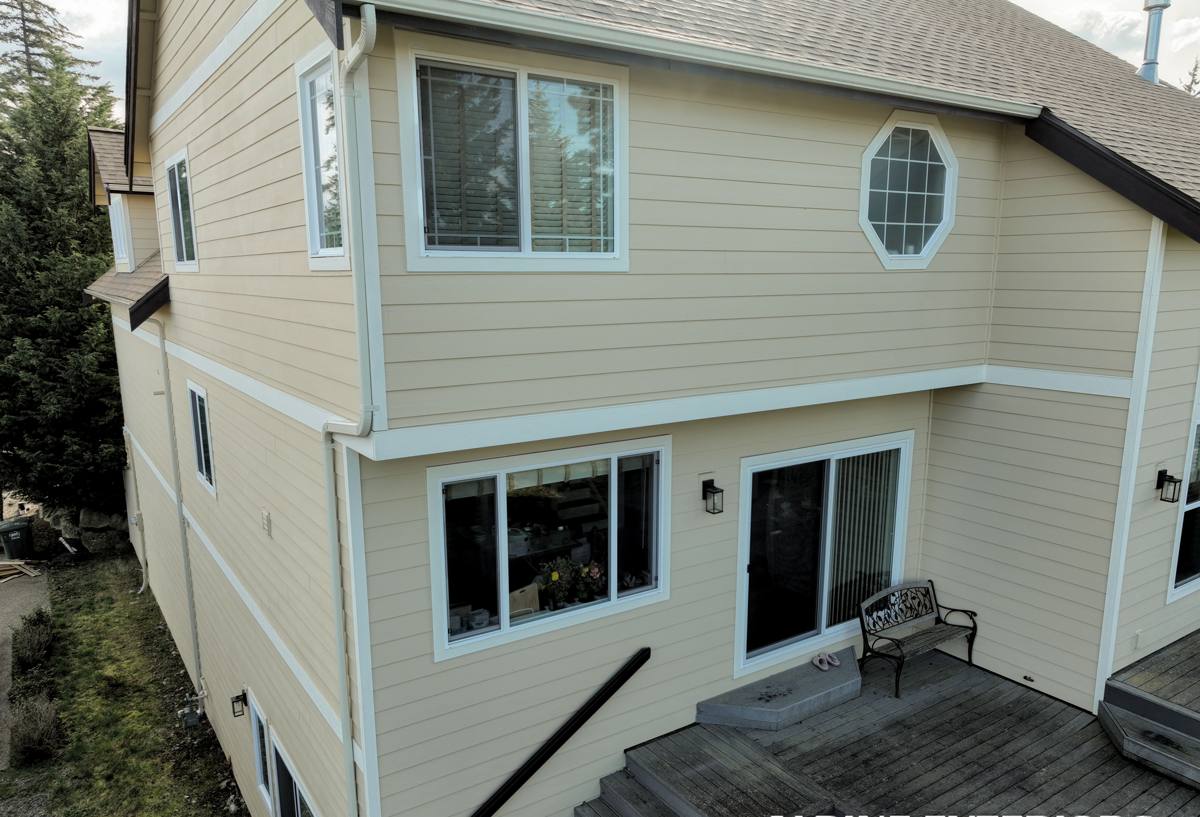
Why Composite Makes Sense for Lynden Homes Specifically
Traditional wood decking — cedar, pressure-treated fir, whatever's available — has to be sealed and maintained on a schedule to hold up here. Skip a year in a climate this damp and you're looking at graying, splintering, and moss finding a foothold in the grain. Composite decking is manufactured from a blend of wood fiber and plastic, which means it doesn't absorb moisture the way solid wood does, doesn't need annual staining, and resists the kind of surface mold and mildew growth that a shaded wood deck in the Nooksack valley develops within a season or two.
That doesn't mean composite is maintenance-free — no exterior product in this climate truly is — but it shifts the maintenance burden from a yearly chore to occasional cleaning. For homeowners who want their deck to actually get used rather than treated like a project that's always overdue, that trade-off is usually worth the higher upfront material cost.
What Composite Doesn't Fix on Its Own
A common misunderstanding is that switching to composite decking solves moisture problems by itself. It doesn't. The decking boards are only the top layer. If the framing underneath is undersized, spaced too far apart, or built without proper drainage and airflow, you'll still get soft spots, mold growth on the framing, and premature fastener failure — the composite boards will just hide the problem longer before it becomes visible, which can actually make it worse by the time it's caught.
What a Correct Composite Deck Build Involves
Substructure First
The framing underneath a composite deck has to be built to handle sustained moisture exposure, not just support the weight of furniture and foot traffic. That means joist spacing rated for composite's specific span requirements (composite typically needs tighter joist spacing than solid wood decking to avoid deflection over time), pressure-treated or naturally durable framing lumber, and proper flashing where the deck ledger board attaches to the house — a detail that, done wrong, is one of the most common sources of hidden water damage behind a deck.
Drainage and Airflow
Water needs somewhere to go, and air needs to move underneath the deck surface so anything that does get wet can dry out between storms. Low-clearance decks or decks built tight against grade without adequate airflow are exactly where we see moss, algae, and framing rot show up first in this valley. Proper grading beneath the deck, adequate joist-to-ground clearance, and gaps between boards for drainage are not optional extras — they're what keeps a deck dry enough, long enough, between the region's frequent rain events.
Fasteners and Hardware
Composite decking is typically installed with hidden fastener systems or specific composite-rated screws, and every piece of metal hardware on the build — joist hangers, ledger bolts, fasteners — needs to be corrosion-resistant. In a climate with sustained moisture and, in areas closer to the water, salt-laden air, standard-grade hardware corrodes faster than homeowners expect, and a corroded fastener buried inside the structure is a much bigger problem to fix later than it would have been to spec correctly on install day.
Ledger Attachment and Flashing
Where a deck attaches to the house is the single highest-risk point for water intrusion into the home itself, not just the deck. Proper ledger flashing directs water away from the house band joist and framing instead of letting it wick in behind the siding. This is a detail that's easy to rush and expensive to fix after the fact, since a failure here can mean hidden rot inside a wall, not just a deck problem.
Composite Decking vs. Other Decking Materials
There's no universally "best" decking material — it depends on budget, how much upkeep you're willing to do, and how long you plan to stay in the home. Here's how the common options actually compare for a Whatcom County property.
| Material | Moisture & Moss Behavior | Typical Maintenance | Realistic Lifespan Here |
|---|---|---|---|
| Composite decking | Resists moisture absorption and moss growth better than wood; performance varies by product quality | Periodic cleaning; no staining or sealing | 25-30+ years |
| Cedar decking | Absorbs moisture readily; needs airflow underneath and regular treatment to resist moss | Annual or biannual staining/sealing | 15-20 years with consistent upkeep |
| Pressure-treated fir/pine | Resists rot chemically but still absorbs surface moisture; prone to graying and splintering | Regular sealing to prevent cracking and moss | 15-20 years with consistent upkeep |
| PVC decking | Fully synthetic; sheds moisture well, resists moss | Low; occasional cleaning | 25-30+ years |
Composite and PVC both perform well against this climate's moisture and moss pressure. The main differences between them come down to appearance, feel underfoot, and cost — we'll walk you through which fits your project and budget rather than defaulting to whichever is easiest to sell.
Composite Decking Fundamentals We Don't Treat as Optional
Most composite deck problems we get called out to inspect didn't start with a bad board. They started with shortcuts in the framing and details that don't show up until a few wet seasons in. On every build, that means:
- Joist spacing and framing sized specifically for composite's span requirements, not generic deck framing
- Properly flashed ledger attachment with a drainage gap between the ledger and the house
- Corrosion-resistant fasteners and hardware throughout, not just at the visible surface
- Adequate ground clearance and airflow beneath the deck for drying between rain events
- Board spacing and hidden fastener systems installed to the manufacturer's specification, not shortcut for speed
- Grading and drainage beneath the deck that moves water away from the structure
None of this adds significant cost relative to the composite material itself, but skipping it is exactly what turns a thirty-year deck into a fifteen-year deck with a soft, rotting substructure underneath a deck surface that still looks fine from above.
Signs an Existing Lynden Deck Needs Attention
- Boards that feel spongy, bounce, or flex more than they used to
- Visible moss or algae buildup on the deck surface, especially in shaded corners
- Gaps opening up between boards or fasteners backing out
- Staining or discoloration at the ledger board where the deck meets the house
- Rust streaking from hardware or visible corrosion on fasteners
- A musty smell or visible mold on the underside of the deck or on framing
- Railings that feel loose or posts that wobble
Any of these is worth a professional look before it's ignored through another wet season. Caught early, most issues are localized repairs. Left alone, moisture problems in the framing tend to spread and eventually call for a rebuild rather than a patch.
Repair, Resurface, or Rebuild? How We Help You Decide
Not every aging deck needs a full tear-out, and we don't default to recommending one. We look at the condition of the framing first, since that's what actually determines whether a deck is sound — a deck with solid, dry framing and worn or outdated decking boards is often a good candidate for resurfacing with composite over the existing structure, assuming the framing meets composite's span and spacing requirements. A deck with soft or rotting joists, corroded hardware, or a failed ledger connection needs to be rebuilt from the framing up, because resurfacing over compromised structure just hides the problem under new boards. We'll walk the deck with you, explain what we find, and give you the honest trade-offs rather than pushing toward whichever option is more profitable for us.
Cost Factors Worth Understanding Up Front
Composite decking costs more upfront than pressure-treated wood, and the total project cost depends on more than just square footage. Deck height and whether railings or stairs are involved, the condition of any existing structure being replaced, and the specific composite product line you choose all move the number. We'll give you a clear, itemized estimate before any work starts rather than a vague ballpark.
Why a Local Whatcom County Crew Matters for a Deck Build
A crew that builds decks across this county through every season sees how moisture, moss, and salt-influenced air actually behave on real structures over years, not just how a composite product performs on a manufacturer's data sheet. That shows up in practical decisions on a Lynden project: how much ground clearance a specific yard's drainage actually calls for, which ledger flashing details are worth the extra time so you're not dealing with a callback in a few winters, and how framing needs to be spec'd differently for a shaded, tree-covered lot versus a more open one. It also means someone who already understands the difference between building for an inland valley climate and building for direct waterfront exposure, and doesn't apply the same generic approach to both.
Beyond the Deck: Roofing, Siding, and Windows
Decks are one part of what we build in Lynden, but the same climate that wears on a deck's framing and fasteners wears on the rest of a home's exterior too. We also handle roofing, siding, and window replacement, and we install James Hardie fiber cement siding as our standard, chosen specifically for how it holds up against sustained moisture and moss compared to lower-cost alternatives. If a deck project turns up moisture damage at the house's band joist or siding near the ledger connection, we can address it as part of the same conversation instead of sending you to find a second contractor.
A Practical Checklist Before You Hire a Deck Contractor
- Ask what joist spacing they use for composite and whether it matches the manufacturer's requirements for your chosen product
- Ask specifically how they'll flash and detail the ledger board connection to your house
- Confirm the fasteners and hardware they use are rated for corrosion resistance, not just standard-grade
- Ask how they handle ground clearance and drainage for your specific yard and lot
- Get a written scope and itemized estimate, not just a total price
- Confirm current Washington contractor licensing and active liability insurance
Get a Free, No-Pressure Estimate
If you're planning a new composite deck in Lynden or need an existing deck evaluated, we're glad to take a look and give you a straightforward, honest read on what the project actually needs. Reach out using the form below to schedule a free estimate — no pressure, no upsell script.