 Blaine Roofing
 Siding in Dakota Creek Has to Work Harder Than Siding Inland
Dakota Creek sits close enough to Drayton Harbor and Semiahmoo Bay that salt-laden air is a constant, low-grade presence on exterior surfaces here, even on lots that feel tucked away under trees. Add Whatcom County's long, wet winters — driving rain that comes in sideways off the water more often than it falls straight down — and you have a climate that punishes siding choices that were never engineered for it. Homes on wooded or shaded lots in this area also deal with a moss season that can run from late fall through spring, when damp bark, needles, and airborne spores settle onto north-facing walls and stay there.
None of this is unusual for the area — it's just the baseline. But it means the siding on a Dakota Creek home is doing more work, more of the year, than siding on a house forty miles inland. Material that's marginal in a dry climate becomes a real problem here within a decade.
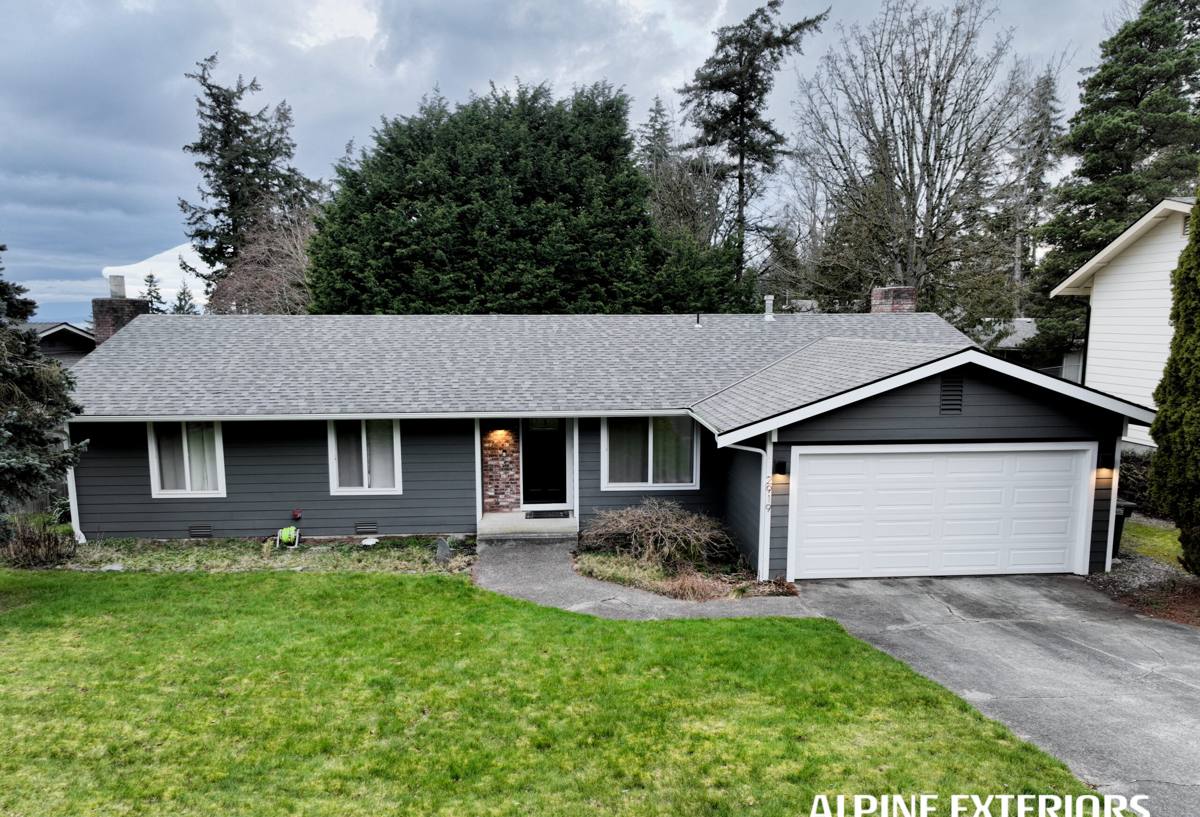
What Salt Air, Rain, and Moss Actually Do to a Wall System
Each of these factors attacks siding differently, and understanding the mechanism matters when you're deciding what to put on your house:
- Salt air accelerates corrosion of fasteners, trim, and any metal flashing that isn't properly rated or protected, and it can pit and dull painted finishes faster than inland exposure.
- Driving rain finds every gap, seam, and undersized flashing detail. Wind-driven moisture doesn't just run down a wall — it gets pushed into joints and behind trim, which is where rot and hidden water damage actually start.
- Moss and organic growth hold moisture against the surface far longer than open sun exposure would. On wood-based or wood-look products, that sustained dampness is exactly the condition that leads to swelling, delamination, and rot at the edges.
A siding material that can't shed water quickly, resist moisture at the core, and hold a factory finish under these conditions is going to need paint, caulking, or board replacement well before its expected lifespan is up.
Why We Standardized on James Hardie Fiber Cement
We install James Hardie fiber cement siding exclusively. We don't offer vinyl, LP SmartSide, Cemplank, Allura, primed spruce, or cedar — not because those products have no place in the industry, but because after years of working on homes in this exact climate, Hardie is the one system we've found consistently holds up to salt air, sustained rain exposure, and moss-prone shade without the recurring maintenance calls the others generate.
Fiber cement is fundamentally different from wood-based siding: it's made from cement, sand, and cellulose fibers, so it doesn't have the wood-sugar content that feeds rot and pest activity, and it won't swell or delaminate the way engineered wood products can when they take on moisture at a cut edge or a failed seam. It's also non-combustible, which matters to insurers and to homeowners thinking about wildfire exposure even on the wetter west side of the state.
James Hardie backs its ColorPlus factory finish with a real, transferable warranty, and the company engineers region-specific product lines rather than selling one formulation everywhere. That climate-specific engineering is the part that matters most for a property like a Dakota Creek home, sitting in the path of coastal weather.
The HZ5 Line and Why the Climate Rating Matters
James Hardie makes different formulations for different climate zones — HZ5 for the colder, wetter regions like the Pacific Northwest, and HZ10 for milder, drier climates. The HZ5 formulation is engineered with freeze-thaw cycling and sustained moisture exposure in mind, which is precisely what Whatcom County winters deliver. Installing the correct zone-rated product isn't a marketing detail — it affects how the board performs over its service life and what the manufacturer's warranty actually covers.
For Dakota Creek specifically, that means:
- HardiePlank lap siding in an HZ5 formulation for the primary wall surface
- HardieTrim boards engineered to resist moisture wicking at corners, window returns, and fascia
- ColorPlus factory-applied finish, which cures under controlled conditions and holds up to salt air and UV exposure better than field-applied paint
What a Correct Installation Involves in This Climate
Fiber cement siding is only as good as the installation behind it. In a high-moisture, salt-exposed area like Dakota Creek, a few details separate a job that lasts decades from one that fails early despite using the right material:
Water management behind the siding
A drainage plane — typically a weather-resistant barrier with a rainscreen gap — gives any moisture that does get past the siding a way to drain and dry out instead of sitting against the sheathing. This is one of the most commonly skipped details on budget installs, and it's the one that matters most in a climate with this much sustained rain.
Flashing at every penetration
Windows, doors, hose bibs, vents, and roof-to-wall transitions all need properly lapped, corrosion-resistant flashing. Salt air shortens the working life of the wrong metal choice at these details, so material selection here isn't optional.
Manufacturer-spec fastening and clearances
James Hardie publishes exact fastener spacing, clearance from grade, roof lines, and decks, and required gaps at butt joints. Following these specs to the letter is what keeps the transferable warranty valid — installers who don't follow them can void coverage the homeowner is counting on.
Caulking and sealant discipline
Correct sealant at joints and trim, applied to a clean, dry substrate, keeps wind-driven rain from being pushed into seams. Sealant is cheap; redoing it because it was rushed is not.
Our Process for a Dakota Creek Project
Every home on a wooded, shaded, or water-adjacent lot has its own quirks, so we start with a walk of the property rather than a generic quote:
- On-site assessment — checking current siding condition, moisture readings where rot is suspected, tree cover and shade patterns that drive moss growth, and existing flashing and trim conditions.
- Scope and product selection — confirming HZ5 product lines, trim profiles, and ColorPlus color for the specific exposure of each elevation (north walls under tree canopy get treated differently than south-facing walls in more open sun).
- Tear-off and substrate check — removing existing siding and inspecting sheathing for hidden damage before anything new goes up, since covering rot instead of fixing it just delays the same problem.
- Weather barrier and rainscreen installation — the drainage plane described above, done before a single piece of Hardie board goes on.
- Siding, trim, and flashing installation — to manufacturer spec, with attention to fastener pattern, clearances, and joint treatment.
- Final walkthrough — reviewing caulking, trim lines, and cleanup with the homeowner before calling the job done.
Comparing Siding Behavior in a Salt-Air, High-Moisture Climate
| Factor | James Hardie Fiber Cement (HZ5) | Vinyl | Engineered Wood (e.g. LP SmartSide) |
|---|---|---|---|
| Moisture at core | Cement-based, does not swell or delaminate | Doesn't absorb, but seams and J-channels trap water | Wood-fiber core can swell if moisture reaches cut edges or seams |
| Salt air exposure | Holds factory finish well; corrosion-resistant fastening specified | Can chalk and become brittle over time | Finish and edge treatment more exposure-sensitive |
| Fire resistance | Non-combustible | Combustible, can melt or warp | Combustible |
| Moss/organic growth | Resists sustained surface moisture better than wood-based cores | Growth sits on surface, can be pressure-washed | Sustained dampness at moss-covered areas is a rot risk |
| Warranty structure | Long-term, transferable when installed to spec | Varies widely by manufacturer | Often shorter, with installation caveats |
This table reflects general product behavior, not a claim that every non-Hardie installation will fail — it's simply the reasoning behind why we've standardized on one system rather than offering several.
Maintenance in a Moss-Prone, Salt-Air Environment
Even the right siding benefits from a little seasonal attention, especially on shaded or water-adjacent lots. A simple annual check can catch small issues before they become expensive ones:
- Look for moss or algae buildup on north-facing and shaded walls, and rinse gently before it thickens — avoid high-pressure washing directly at seams
- Check caulking at trim, windows, and joints for cracking or gaps, particularly after the first hard freeze of the season
- Clear debris and organic buildup from where siding meets the roofline, gutters, and grade — these are moisture traps
- Watch for any soft spots, staining, or discoloration near ground level or under overhangs, which can indicate a flashing or drainage issue
- Confirm gutters are directing water away from the foundation and not overflowing onto wall surfaces during heavy rain events
Why It Matters to Hire a Crew That Already Works This Area
A contractor who mainly works drier, inland jobs can install fiber cement siding competently and still miss the details that matter here — rainscreen gaps, corrosion-resistant fastener choices, and flashing details sized for wind-driven rain rather than occasional showers. Crews who regularly work Blaine and the surrounding Whatcom County waterfront communities have already seen how a north wall under tree cover behaves differently than a south-facing wall in the open, and they know which trim and sealant choices actually hold up to salt air rather than just looking good on install day.
Local experience also means fewer surprises during the project itself — knowing typical soil and drainage conditions near the creek, understanding how the weather window works for tear-off and dry-in timing, and having a realistic sense of what a given lot's shade pattern will do to a wall over the following ten years.
Get a Straight Answer for Your Home
If your Dakota Creek home is dealing with peeling paint, soft trim, persistent moss staining, or siding that's simply past its service life, we're happy to take a look and give you an honest read on what's actually going on and what it would take to fix it right. There's no pressure and no obligation — just a straightforward assessment and a written estimate for James Hardie siding built for this exact climate. Use the form below to request your free estimate.