 Blaine Roofing
 Custer sits in the stretch of Whatcom County between Blaine and Ferndale, close enough to the water that salt air is a factor in almost every outdoor build, and far enough into open, rural terrain that decks here take a beating from wind-driven rain and shade-grown moss in equal measure. A deck built to a generic spec sheet from a big-box store rarely holds up to that combination for long. A deck built with this climate in mind can go decades before it needs more than routine care.
We build and repair decks throughout the Blaine and Custer area, and this page covers what actually matters for a deck project out here: material choices that hold up, the structural details that get skipped on rushed jobs, and what our process looks like from first call to final walkthrough.
Why Custer's Climate Is Hard on Decks
Three things work against decks in this part of Whatcom County, and they don't act alone — they compound each other.
Salt Air
Proximity to the Strait of Georgia and Boundary Bay means airborne salt reaches well inland, especially on windy days. Salt accelerates corrosion in fasteners, hardware, and any metal connectors used in framing. A deck built with the wrong fastener grade can start showing rust streaks and loosening hardware years before the wood itself is a problem.
Driving Rain
Rain here rarely falls straight down. Wind pushes it sideways into ledger connections, under railing posts, and into any gap where flashing was skipped or done poorly. Water that gets trapped behind a ledger board or pools around a post base is the single biggest cause of rot and structural failure in decks we're called out to repair.
Moss Season
Long, wet, low-light stretches of the year let moss and algae take hold on any deck surface that doesn't drain and dry quickly. Beyond looking bad, moss holds moisture against the decking surface and makes boards slick and dangerous underfoot — a real concern on stairs and near entry points.
None of this means a deck in Custer can't last. It means the build has to account for these conditions from the footings up, not just at the surface.
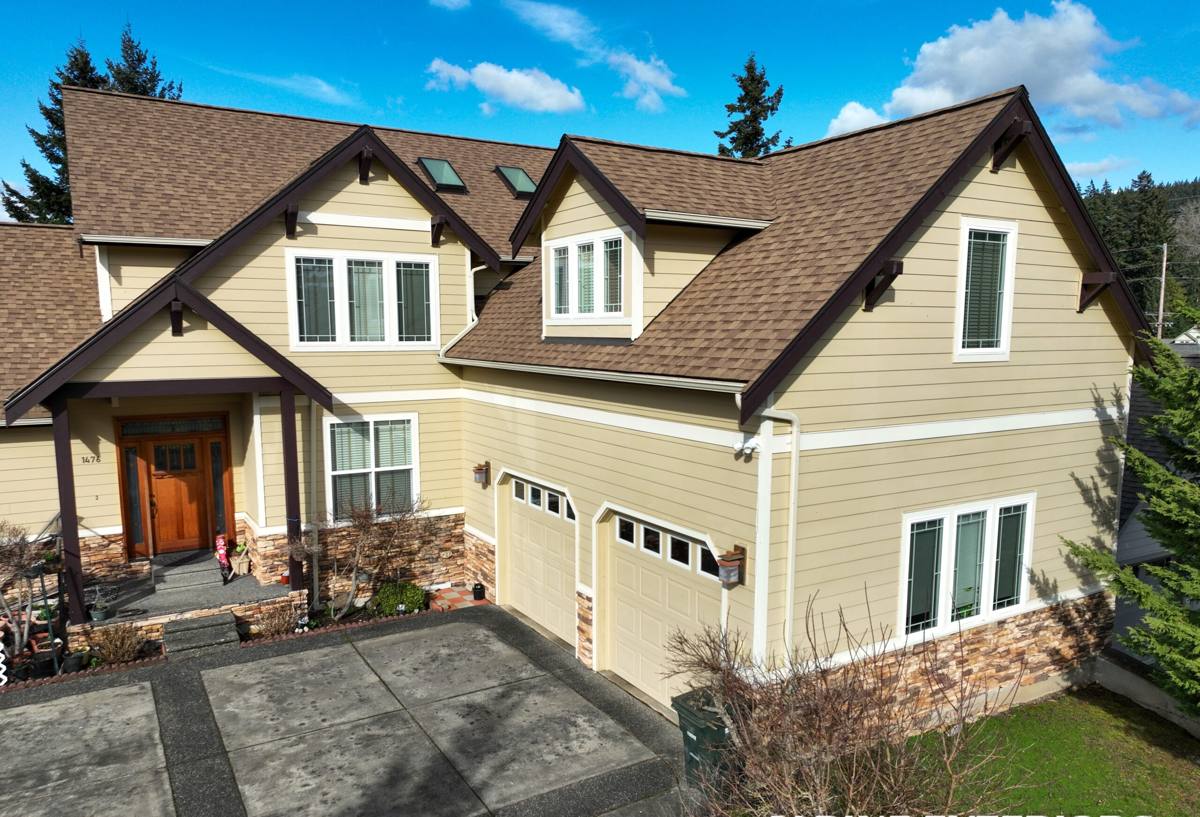
What a Correctly Built Deck Looks Like Here
Footings and Framing
Footings need to be sized and set below frost depth and on undisturbed, well-draining soil — a shortcut here shows up later as a deck that shifts or settles unevenly, especially in areas with heavier clay content, which is common around Custer's more rural lots. Framing lumber should be pressure-treated and rated for ground contact where it's within splash range of soil or standing water, not just treated for general exterior use.
Ledger Attachment and Flashing
The ledger board — where the deck attaches to the house — is the single most important detail on the whole structure. It needs proper flashing that directs water away from the house sheathing, not just a bead of caulk. This is also the connection point most often done wrong on older or DIY decks, and it's the one we check first on every repair call.
Fasteners and Hardware
Given the salt air, we use fasteners and structural hardware rated for coastal or corrosive environments — typically stainless steel or heavy hot-dip galvanized, not the standard coated screws sold for general framing. It costs more upfront and saves the deck from hardware failure a decade sooner than it should happen.
Decking Material
Every material has real tradeoffs. We lay them out honestly rather than pushing whichever product has the best margin.
| Material | Moisture & Moss Behavior | Maintenance | Typical Lifespan Here |
|---|---|---|---|
| Pressure-treated wood | Absorbs water, needs to dry between rain events; moss-prone in shaded spots | Annual cleaning, periodic staining/sealing | 15-20 years with upkeep |
| Cedar | Naturally moisture-resistant but still needs sealing to resist graying and moss | Regular sealing, occasional board replacement | 15-25 years with upkeep |
| Composite decking | Doesn't absorb water like wood, but surface texture affects how quickly algae/moss gets a foothold | Periodic washing, no staining or sealing | 25-30+ years |
| PVC/capped polymer | Fully moisture-resistant surface, sheds water and resists moss best of the group | Occasional washing | 25-30+ years |
We don't push one material as universally "best" — a shaded, low-sun lot near tree cover will treat any wood product harder than an open, sun-exposed one, and that should factor into the recommendation as much as budget does.
Railings, Stairs, and Code
Railing and stair details are where a lot of older decks fall out of compliance, and they're also where safety issues actually show up — a loose rail post is a much bigger risk than a cosmetic board issue. Current code generally requires guardrails at a minimum height for any deck surface elevated above a certain threshold, with baluster spacing tight enough to prevent a small child from passing through, and stair railings with graspable handrails on open stairways. Whatcom County permitting follows the state building code, and because Custer is unincorporated, permits for decks here typically go through Whatcom County rather than the City of Blaine — something worth confirming early since it affects timeline and required inspections.
Drainage and Under-Deck Considerations
Given how much rain this area gets, what happens under and around the deck matters as much as the surface. A deck built tight to grade without a plan for water runoff will hold moisture against framing and footings longer than it should. Options worth discussing on a Custer property include:
- Grading the ground beneath the deck away from the house foundation
- Gapping decking boards adequately for airflow and drainage rather than butting them tight
- Adding an under-deck drainage system if the space below will be used as dry storage or a patio
- Keeping vegetation and mulch pulled back from framing to reduce trapped moisture and reduce a food source for moss
Our Process for a Custer Deck Project
1. On-Site Assessment
We walk the property, look at drainage patterns, sun/shade exposure, and how the deck will tie into the house, and talk through how you'll actually use the space — entertaining, grilling, hot tub, simple access point — since that shapes size and layout decisions.
2. Material and Design Discussion
We go over the material tradeoffs above in the context of your specific lot, budget, and maintenance preferences, and settle on a layout, railing style, and stair placement.
3. Permitting
We handle the permit submission and coordinate required inspections through Whatcom County, so you're not stuck figuring out the process yourself.
4. Build
Footings and framing first, with ledger flashing and structural connections done to hold up against this area's wind-driven rain, then decking, railing, and stairs.
5. Final Walkthrough
We walk the finished deck with you, confirm everything's solid, and go over what basic maintenance will look like for the material you chose.
Maintenance That Actually Matters Here
Whatever material you choose, a few habits go a long way against moss season and salt air:
- Clean debris out of gaps between boards before it holds moisture through winter
- Wash the surface at least once a year to knock back moss and algae before it gets established
- Check railing posts and hardware annually for looseness or corrosion, especially near coastal-facing sides
- Reseal wood decking on the manufacturer's recommended schedule — skipping a cycle in this climate shows up fast
- Keep gutters and downspouts near the deck clear so runoff isn't dumping extra water onto the structure
Repair, Replace, or Rebuild?
Not every deck problem means starting over. If the framing and footings are sound and the issues are limited to surface boards, railing, or fastener corrosion, a repair or partial rebuild is often the right call. If the ledger connection has been compromised by trapped moisture, or footings have shifted, that's usually a sign the structure needs to come down to the frame — patching around a compromised ledger is not something we'll recommend, because it doesn't solve the underlying problem. We'll always tell you honestly which situation you're in before quoting a project.
Why Hire a Crew That Already Works This Area
A contractor who builds decks across different climates might not think twice about fastener grade or ledger flashing detail, because it doesn't matter as much where they usually work. Out here, those details are the difference between a deck that needs real repair in eight years and one that's still solid in twenty-five. Working regularly in Blaine, Custer, and the surrounding Whatcom County communities also means we already know the county permitting process, the typical soil conditions on rural lots in the area, and how exposed a given site is likely to be to wind and salt depending on its orientation.
If you're planning a new deck or dealing with an older one that's showing its age, we're happy to come take a look and put together a straightforward, no-pressure estimate. Use the form below to get started.